ФБР обвинило криптобизнесмена в подкупе полицейских и вымогательстве

cryptonews.ruPublicado em 2023-11-27Última atualização em 2024-09-27

Глава криптоторговой платформы Zort Адам Иза платил трем сотрудникам Департамента шерифа Лос-Анджелеса (LASD) $280 000 в месяц за незаконную выдачу ордеров на обыск и доступ к данным полиции. Об этом говорится в обвинении ФБР.
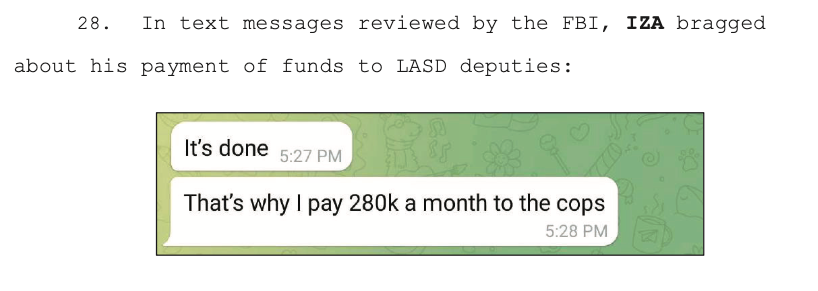
Признание в том, что Иза платил $280 000 в месяц полицейским. Данные: ФБР.

Он обвиняется в использовании полицейской информации с целью принудить предполагаемую жертву (в документах идентифицируется как E.Z.) передать ноутбук, который применялся для хранения криптовалют.

Неудачная сделка

Согласно отчету департамента шерифа округа Риверсайд от ноября 2021 года, E.Z. был знаком с Изом два года и занимался криптобизнесом. Однажды он подвозил партнера и тот попросил остановиться для покупки еды. После этого к ним подъехал внедорожник, из него вышли двое мужчин, один с пистолетом. Он сказал обоим садиться в машину.

E.Z сбежал и вызвал полицию, полагая, что его пытаются похитить для кражи криптовалюты.

Иза рассказал прибывшему на место происшествия офицеру, что E.Z. согласился отдать $300 000 за цифровые активы, но он для подстраховки позвал с собой телохранителей.

Приехавшие во внедорожнике мужчины были бывшими сотрудниками LASD, один из них — экс-помощник шерифа — владеет охранной фирмой и работает на Иза. Он держал пистолет наготове, поскольку его якобы предупредили, что E.Z. вооружен.

Шантаж

После инцидента E.Z. подвергся «запугиваниям и преследованиям» со стороны Иза. Он утверждает, что получал устрашающие сообщения с информацией о нем из полицейской базы данных. На фотографиях были «верхняя часть визитной карточки LASD», семья и машины жертвы.
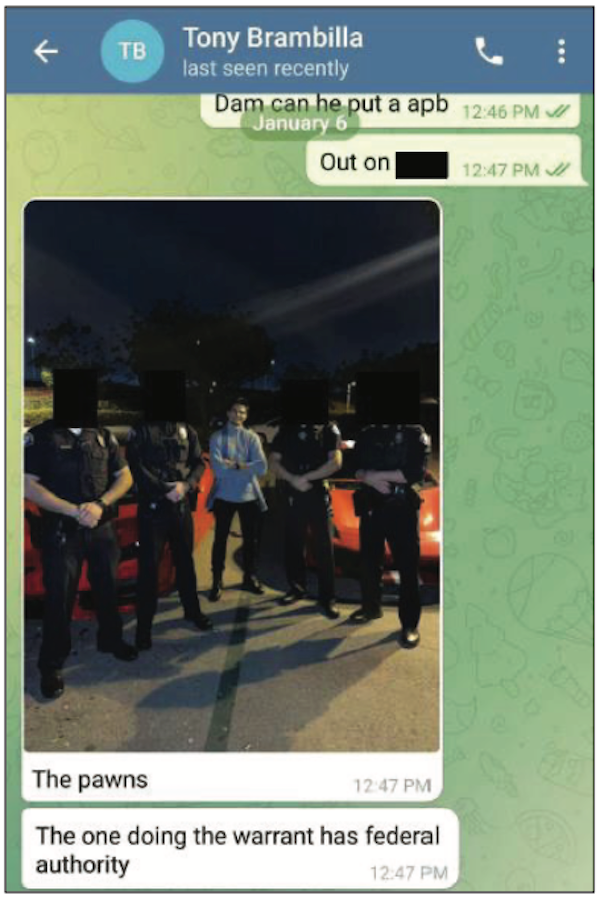
После инцидента E.Z. подвергся «запугиваниям и преследованиям» со стороны Иза. Он утверждает, что получал устрашающие сообщения с информацией о нем из полицейской базы данных. На фотографиях были «верхняя часть визитной карточки LASD», семья и машины жертвы.

В одном из сообщений Иза назвал сотрудников правоохранительных органов «пешками». Данные: ФБР.

ФБР заявило, что позже обнаружило ордер на обыск с номером E.Z., который выдал заместитель LASD. Его обвинили в получении денег от Иза.

Обвинение

В жалобе говорится о платежах трем заместителям шерифа Лос-Анджелеса, которые иногда достигали почти $200 000, через криптокомпанию Иза и другие предприятия, принадлежавшие тогда его подруге.

Один из опрошенных властями людей заявил, что Иза и E.Z. проникли в его дом, первый выдавал себя за агента ФБР. Иза обвинили в краже ноутбука с криптовалютой и удержании предполагаемой жертвы под дулом пистолета для получения пароля.

Соучредителя Zort также обвиняют в сокрытии десятков миллионов долларов доходов и уклонении от уплаты налогов.

Напомним, в сентябре киберполиция Украины задержала четверых граждан, подозреваемых в вымогательстве 250 000 USDT (10 млн гривен) у владельца онлайн-бизнеса.


Leituras Relacionadas

You Use Claude and Codex Every Day, but Meta Has Restricted Internal Use

In May, Meta imposed internal restrictions on its engineers regarding the use of Claude Code and Codex, two widely used AI programming tools. Despite being a major client, Meta's guidelines, still in effect, prohibit these external models from being used for specific tasks to prevent potential "escalations with partners." The core concern is "distillation"—the risk that outputs from Claude or Codex could inadvertently contaminate the training data and evaluation processes for Meta's in-house AI coding assistant, MetaCode. If MetaCode is trained or evaluated using data generated by these external models, it risks learning their capabilities rather than developing its own, blurring the line of intellectual origin. The restrictions are precise: engineers cannot use the external models to generate test questions, debug source code, or suggest test cases. AI-generated content is also barred from environments accessible to MetaCode. However, AI can still assist with peripheral tasks like workflow setup and code organization, provided all outputs are manually reviewed. This caution reflects a broader industry dilemma. While distillation is a common technique, using a competitor's model output for training raises legal and ethical questions about the ownership of derived capabilities. Contractual terms from companies like OpenAI and Anthropic explicitly forbid using their outputs to build competing products, putting enforcement power in the hands of rivals. The move is also financially motivated, as Meta seeks to reduce its hefty internal AI spending, estimated in the billions this year. Meta's policy illustrates the delicate balance companies must strike: leveraging powerful external AI tools while safeguarding the integrity and independence of their own AI development. As AI systems increasingly help build other AIs, distinguishing the origin of capabilities becomes a fundamental challenge for the entire industry.

marsbitHá 1h

You Use Claude and Codex Every Day, but Meta Has Restricted Internal Use

marsbitHá 1h

Why Do We Need an AI Content Perspective Today?

The article "Why Do We Need an AI Content Perspective Today?" explores the complex and often contentious integration of AI into the cultural and creative industries, particularly film and television. It begins with the cancellation of Amazon's AI-generated animation "Punky Duck," highlighting the ethical debates surrounding AI content. AI's rapid advancement is transforming video production, enabling cost-effective, full-length AI films (e.g., "RAPHAEL," "Dreams of Violets") while sparking industry resistance over issues like "synthetic actors." The core debate has shifted from whether to use AI to how to use it responsibly. The article analyzes why AI's entry into film is uniquely unsettling. It distinguishes between "cultural fast food" (short-form, fast-paced content like micro-dramas) and "cultural main courses" (traditional, long-form film/TV). AI currently excels at the former, matching its fragmented narratives, shallow emotional needs, and free-to-consumer models. However, venturing into the latter challenges the human-centric essence of storytelling—creativity, emotional depth, and the unique value of human labor and experience. While AI can generate massive volumes of content and lower costs, it risks devaluing human creativity, leading to homogenized output, and creating unfair competition through potential intellectual property infringement. Its efficiency also amplifies content safety risks, making preemptive governance crucial. To counter these risks, the article proposes establishing clear boundaries guided by a human-centered AI content perspective. It outlines four principles: 1) Amplify, rather than displace, human creative space; 2) Respect and protect human creative output; 3) Ensure human creative control and responsibility remain paramount; and 4) Guarantee transparency and traceability in AI creation. The conclusion emphasizes that humans must act as the "helmsmen" of technology, steering AI development to enhance, not replace, the core human values at the heart of cultural expression.

marsbitHá 2h

Why Do We Need an AI Content Perspective Today?

marsbitHá 2h

Trading

Spot
活动图片