代币化推动金融包容性:无银行账户也能参与全球投资

marsbitPublicado em 2024-09-24Última atualização em 2024-09-25

了解 RWA 代币化如何提高可访问性、促进金融包容性并使各个领域的投资机会民主化。

现实世界资产 (RWA) 代币化是一个新兴概念,可追溯到区块链技术的出现。这一旅程始于2009 年比特币的推出,它揭开了去中心化、安全且透明的账本系统。

这项突破性技术为将实物资产转化为区块链上记录的数字代币奠定了基础。然而,真正的飞跃来自 2015 年以太坊的出现,它引入了智能合约——直接在区块链上编码的自动执行协议。

有了智能合约,人们就可以将房地产、艺术品和商品等实物资产数字化,从而弥合物理世界和数字世界之间的差距。这项技术对全球经济和社会结构的影响潜力很快就显现出来。

为什么 RWA 很重要?

要理解RWA 代币化的重要性,请想象一下你想与朋友分享一个大披萨。你不必把整个披萨分给每个朋友,而是将其切成小块,每片代表整体的一部分。

资产的代币化工作方式类似。当资产被代币化时,它会被分成更小的部分,称为“代币”,每个部分代表资产的一部分。这些代币可以代表任何有价值的东西,从房地产到知识产权。这些代币使用区块链技术进行管理和交易,可确保所有权记录安全透明,使资产​​在全球范围内更易于获取、流动和交易。

代币化的影响

以纽约或伦敦等城市的房地产市场为例。价值 1000 万美元的房产可以分割成 1000 万个代币,每个代币 1 美元。这样一来,个人只需投资 100 美元,就能拥有一部分高价值的房地产。

代币化为房地产市场带来了流动性,而房地产市场传统上流动性较差,小投资者难以进入。据 MarketsandMarkets 称,全球房地产代币化市场预计到 2026 年将达到 1.4 万亿美元,年复合增长率为 22.8%。

同样的原则也适用于大宗商品。一盎司价值 2,000 美元的黄金可以代币化为 2,000 股,每股 1 美元。这降低了进入门槛,让更多投资者无需大量资本即可接触大宗商品。Grand View Research 预测,到 2025 年,代币化大宗商品市场将达到 45 亿美元。

代币化还使创作者能够将其知识产权货币化。价值 100 万美元的专利可以分成 100 万个代币,每个代币价值 1 美元。投资者可以购买这些代币并分享产生的收入,奖励创作者,同时为更广泛的受众提供投资机会。Juniper Research 预测,到 2025 年,代币化知识产权的市场规模将达到 3.2 亿美元。
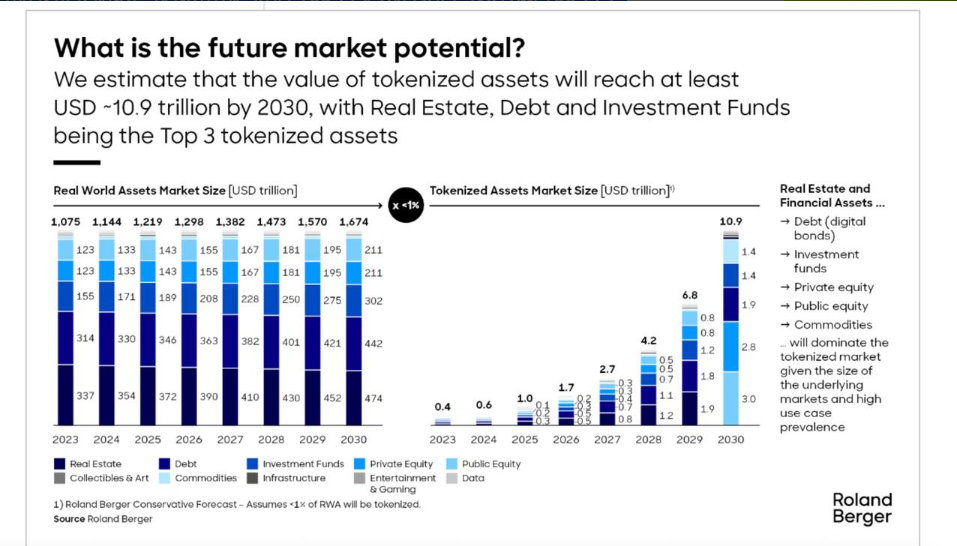
RWA

报告一致认为 RWA 市场的未来前景乐观。资料来源:罗兰贝格

即使是传统上只为富人保留的私募股权和风险投资,也可以通过代币化实现民主化。1 亿美元的风险投资基金可以分成 1 亿个代币,每个代币价值 1 美元,使小投资者能够参与以前无法触及的早期投资机会。波士顿咨询集团 (Boston Consulting Group) 预计,到 2030 年,代币化的私募股权市场将达到 1.7 万亿美元。

RWA 代币化的社会层面

除了经济收益之外,RWA 代币化还具有深远的社会影响,特别是在促进金融包容性方面。在世界许多地方,进入传统金融市场受到地理位置、收入和基础设施的限制。代币化可以弥合这些差距,使来自各种经济背景的人只需使用智能手机和互联网连接即可参与财富创造。RWA
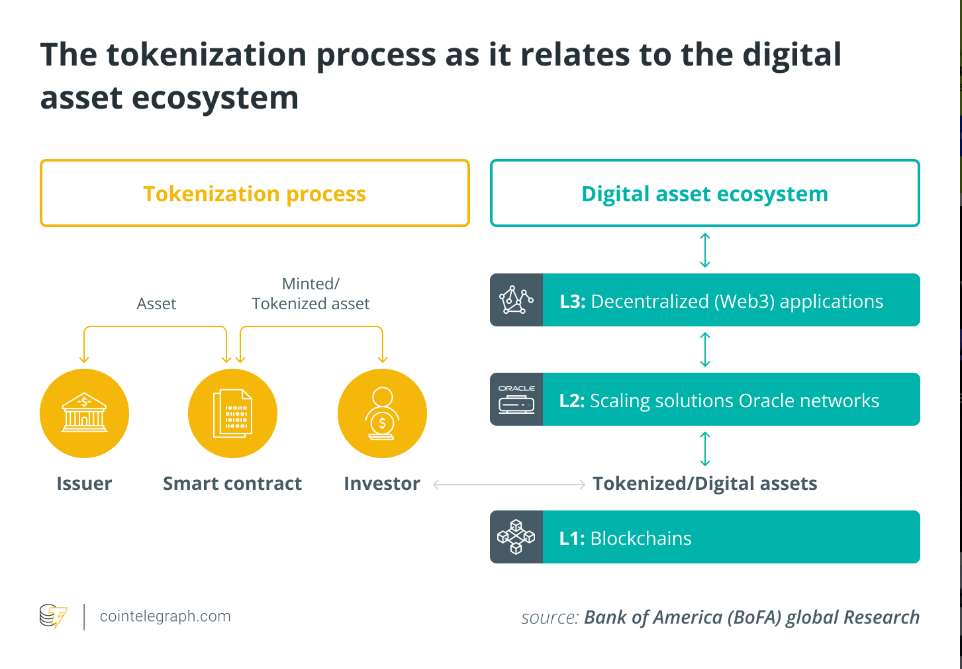
在银行基础设施缺乏的发展中经济体中,这种赋权可以帮助数百万人积累财富并改善其经济状况。它可以带来更广泛的社会效益,例如减少贫困、增加获得教育和医疗保健的机会。通过使投资机会民主化,代币化可以促进更具包容性和公平性的全球经济。

数字说明了一切。世界经济论坛估计,到 2030 年,代币化的现实世界资产市场规模可能达到 16.1 万亿美元,约占全球 GDP 的 10%。

为什么 RWA 代币化对于产生社会和经济影响至关重要?

现实世界资产代币化对改变全球金融的潜力巨大。从房地产和艺术品到商品和知识产权,代币化使来自不同经济背景的个人能够参与财富创造和资产增值。
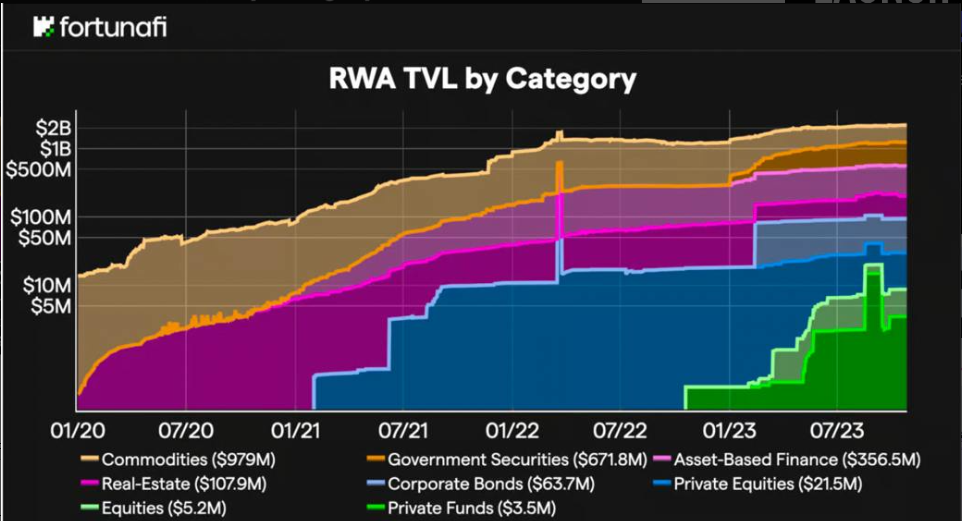
RWA

不同 RWA 类别锁定的总价值。资料来源:Fortunafi

采用 RWA 可以而且将会减少经济差距,为没有银行账户和服务不足的人群提供金融包容性。从法律上讲,它挑战了传统的所有权结构,有可能带来更公平的产权。从政治上讲,它可能会通过更广泛地分配经济影响力来改变权力格局。从经济上讲,它可以通过释放本地资产价值和吸引全球投资来刺激新兴市场的增长。

监管合作、技术创新和广泛教育对于实现这些好处至关重要,特别是在金融基础设施有限的地区。

在这个不断变化的环境中,像Brickken这样的公司处于将 RWA 代币化变为现实的前沿。自 2020 年以来,Brickken 已在 11 个国家/地区将价值超过 2.3 亿美元的资产代币化。通过提供创建、销售和管理数字资产的工具,他们正在积极塑造一个金融机会真正民主化的未来。

Brickken 的工作体现了如何利用技术来创建更具包容性和公平性的金融体系。他们不仅参与了这场革命,还引领了这场革命,为创造一个无论经济背景如何,每个人都可以参与并从现实世界资产中受益的世界铺平了道路。

Leituras Relacionadas

From Issuer to Infrastructure Owner: Circle's Arc Strategy and the Fatal Gap in the GENIUS Act

Circle raised $222 million for its proprietary Layer-1 blockchain, Arc, positioning itself not just as a stablecoin issuer but as the owner of the settlement infrastructure USDC relies on. This move, backed by investors like BlackRock and Apollo, highlights a significant structural conflict unaddressed by the GENIUS Act of 2025. While the act focuses on stablecoin reserves and issuer oversight, it remains silent on the market structure implications of an issuer controlling the underlying network—a scenario akin to a currency issuer also owning the payment rails. Traditionally, financial regulations separate issuers from settlement infrastructure to ensure neutrality. With Arc, Circle gains control over transaction ordering, fees, and network rules, potentially favoring USDC over competitors. The article argues that this creates a permanent structural temptation, even if no abuse occurs. The solution lies in applying established market infrastructure principles: mandating neutral transaction ordering, transparent fee schedules, and governance separated from Circle’s commercial interests. The current pre-mainnet phase offers a critical window for regulators to establish these rules before Arc becomes entrenched. Once operational, enforcing changes would be costly and disruptive. The core question remains: should a regulated stablecoin issuer be allowed to own the settlement network its competitors must use? The GENIUS Act doesn’t answer this, but Circle’s Arc strategy makes it urgent.

marsbitHá 4m

From Issuer to Infrastructure Owner: Circle's Arc Strategy and the Fatal Gap in the GENIUS Act

marsbitHá 4m

What Are the Key Variables Determining the AI Bull Market?

Title: What Determines the AI Bull Market? Key Variables Revealed Despite rising oil prices above $100/barrel, persistent inflation, and fragile Fed rate cut expectations—a traditionally hostile environment for high-valuation tech stocks—the AI sector continues to drive the market to new highs. According to analysts, the current AI boom is in a phase of "rational fervor": while bubbles exist, they are not yet out of control. The crucial shift is the emergence of Agentic AI, which is evolving from an assisting tool (Copilot) to an autonomous execution tool (Autopilot), creating a clearer commercial path from investment to revenue. This shift accelerates Token consumption and inference computing demand while boosting revenue forecasts for leading firms. The market is now rewarding capital expenditure as it transforms from a burden into a competitive moat, supporting hardware chains like GPUs, optical modules, and storage. However, valuations have already priced in growth expectations for 2027-2028. The forward P/E ratio for the "Magnificent Seven" tech giants is about 35x, compared to 25x for the rest of the S&P 500. This premium implies AI adoption must occur 5 to 8 times faster than past technological revolutions—a scenario with little room for error. The sustainability of the AI bull market hinges on three key variables: 1. **Short-term liquidity shocks**: Risks include sustained high oil prices, resurgent inflation, rising interest rates, and potential unwinding of the yen carry trade. The critical question is whether the upward revision speed of Annual Recurring Revenue (ARR) can outpace the rise in interest rates. 2. **Mid-term industry realization**: Can the actual pace of AI adoption and commercialization match the current lofty valuations? Historically, general-purpose technology revolutions follow a non-linear path with periods of acceleration and deceleration. 3. **Long-term structural constraints**: These include energy and power grid limitations, employment displacement and consumer purchasing power, social acceptance and potential backlash, and potential hardware technology breakthroughs that could disrupt current supply chains. While the long-term prospects for AI remain optimistic with potential for significant productivity gains, the stock market's pricing depends not just on the vision but on the actual speed of realization amid these growing constraints. The direction is clear, but the pace of execution will determine whether the bubble remains controlled or spirals out of control.

marsbitHá 4m

What Are the Key Variables Determining the AI Bull Market?

marsbitHá 4m

The AI Industrial Revolution: Where Are We Now?

This article explores the current stage of the AI industrial revolution, arguing we are still merely attaching new tools to old workflows rather than fundamentally redesigning production. The author compares this to the early Industrial Revolution, where factories simply replaced waterwheels with steam engines without changing their core structure. Similarly, today we embed AI chat windows into existing software but leave organizational processes unchanged. While massive investment floods into AI infrastructure (data centers, chips), akin to railway manias of the past, the real transformation lies in "dismantling the old workshop"—reorganizing companies around AI. Examples include Notion's use of hundreds of AI Agents and Y Combinator's experiments with self-improving AI systems that operate autonomously. The author notes a critical gap: while China has vast AI user growth, few companies have rebuilt core workflows. AI is beginning to impact entry-level jobs, and early adopters are gaining a compounding advantage. The conclusion is that the pivotal moment will not be the invention of better models, but when organizations decide to tear down old structures and rebuild around AI, shifting the bottleneck from human coordination to computing power. The future workplace and job titles are yet to be defined, but the imperative is to move away from legacy processes and position oneself where the new "railway" is being built.

marsbitHá 37m

The AI Industrial Revolution: Where Are We Now?

marsbitHá 37m

Morning Post | Hyperliquid Launches Off-chain Event Prediction Market Contract; Strategy Completes $1.5 Billion Debt Buyback; Kelp DAO Announces rsETH Fully Restored

Crypto Market Digest (May 27, 2026) Ondo Finance's founder Nathan Allman has passed away, with President Ian De Bode taking over as CEO. In regulatory news, Hong Kong authorities concluded a consultation on virtual asset service provider licensing, aiming to align rules with traditional finance. Kelp DAO announced its rsETH token has fully recovered five weeks after a $293 million hack by Lazarus Group, though the incident caused significant damage to DeFi lending protocols like Aave. Key industry developments include Hyperliquid launching off-chain event prediction market contracts, and the CME introducing futures for Avalanche and Sui. A report highlights the rise of AI Agent payments, with over $73 million settled on-chain in a year, predominantly using USDC. Meanwhile, blockchain detective ZachXBT exposed market manipulation involving several BSC tokens. In investment news, a firm referred to as "Strategy" completed a $1.5 billion debt buyback. Political contributions from the crypto sector for the 2026 U.S. elections have surpassed $500 million, heavily favoring Republican candidates. BitMEX founder Arthur Hayes revealed Zcash is his second-largest holding, citing the growing necessity for monetary privacy. The digest concludes with trending memecoins on Ethereum, Solana, and Base networks, and highlights in-depth articles covering the impending SpaceX IPO, Polymarket's regulatory challenges, and an analysis of the on-chain treasury landscape.

链捕手Há 38m

Morning Post | Hyperliquid Launches Off-chain Event Prediction Market Contract; Strategy Completes $1.5 Billion Debt Buyback; Kelp DAO Announces rsETH Fully Restored

链捕手Há 38m

Trading

Spot
Futuros
活动图片