14 亿美元的 Crypto 预测市场是如何崛起的?

深潮Publicado em 2024-09-20Última atualização em 2024-09-20

‍以 Azuro 和 Polymarket 为代表,预测市场的未来似乎充满希望。

来源:cryptoslate

编译:区块链骑士

随着 Polymarket 等平台的发展,Crypto 预测市场正在不断增长。

Castle Capital 在其最新的深度调查报告中指出,预测市场使用户能够使用 Crypto 资产对未来事件下注,将传统博彩转移到去中心化领域

这种转变使参与者可以相互交易,而不是由中心化的机构进行交易,从而提高了透明度和抵制操纵的能力。

Castle Capital 概述了预测市场在历史上是如何被中心化的,从而限制了用户的参与性和灵活性。

区块链技术的引入使这些市场变得去中心化,允许用户创建自己的市场和条件

自 2015 年另一个预测市场 Augur 推出以来,预测市场已被公认为区块链技术的一个突出应用,尽管主流关注度最近才有所加强。

该行业锁定的总价值已达 1.62 亿美元,用户参与度和交易量显著提高。

Azuro 和 Polymarket 等平台通过提供不同的方法促进了这一增长。

Polymarket 以 Polygon 为基础,采用订单簿模式运营,重点关注重大政治和新闻相关事件

目前,Polymarket 已经处理了超过 14 亿美元的交易量,成为美国总统大选等事件的重要投注平台。
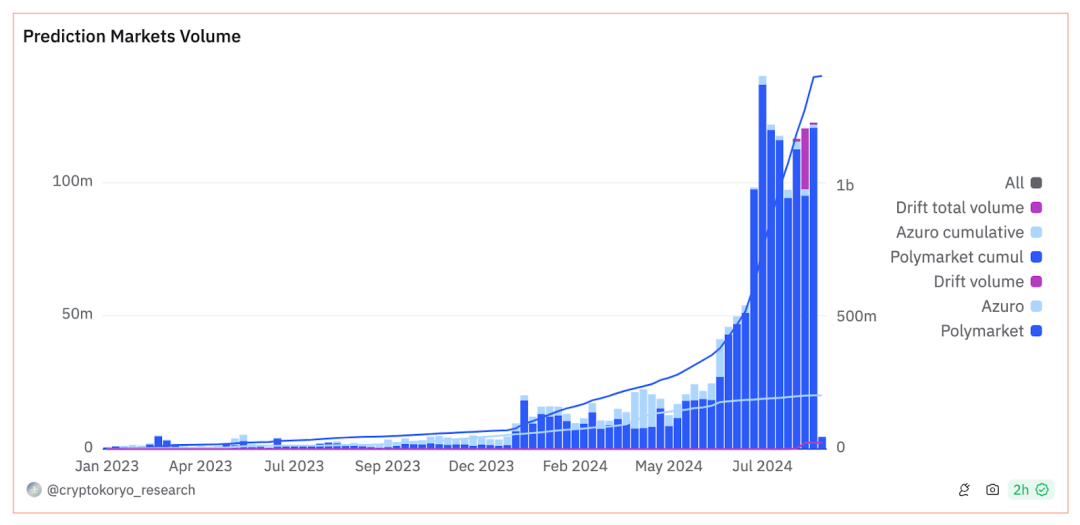
Castle Capital 解释说,Azuro 采用点对点池设计,允许用户为服务于多个市场的池提供流动性。这种模式分散了风险,提高了资本效率,主要针对体育博彩。

Azuro 已经处理了超过 2 亿美元的预测量,吸引了在各种体育赛事中进行重复投注的用户。

这两个平台的目标都是扩大市场份额

Polymarket 试图通过增加更多样化的市场来减少对政治事件的依赖,而据报道,Azuro 则计划在体育市场之外增加政治和新闻市场。

这些平台的发展凸显了人们对去中心化预测市场作为衡量公众情绪的工具的兴趣与日俱增。

Castle Capital 概述了主流应用仍面临的挑战,包括流动性问题、监管不确定性以及改善用户体验的必要性

确保可靠的谕令和数据准确性至关重要,解决区块链网络的可扩展性问题也是如此。克服这些障碍需要创新和与监管机构的合作。

正如 Castle Capital 所指出的那样,预测市场有可能就各种话题提供准确的公众情绪,从而超越季节性炒作,成为决策不可或缺的工具。

整合人工智能和扩大市场产品可能会增强其实用性和吸引力。预测市场可以为新闻机构提供分散的情绪数据,并影响政治言论。

以 Azuro 和 Polymarket 这样的平台为代表,预测市场的未来似乎充满希望。

它们的持续增长和适应性可能会巩固其在 Crypto 资产领域的地位,为预测未来事件的用户提供有价值的见解和机会。

Castle Capital 的报告指出,预测市场的发展反映了越来越多地采用去中心化应用的大趋势

然而,这些平台能否保持发展势头,应对未来挑战,获得主流认可,还有待观察。
Leituras Relacionadas

StarDynamics Secures 2.5 Billion in Two Months, State-Owned Capital Consortium Joins In

Star Era Raises 25 Billion Yuan in Two Months with State Capital Leading the Charge. Chinese humanoid robotics leader Star Era has secured a new 10-billion-yuan funding round led by state-owned capital, including funds like Chengtong Fund under the SASAC, marking 25 billion yuan raised within two months. The company, a spin-off from Tsinghua University, has built a comprehensive capital matrix combining state guidance, top-tier financial backers, and industrial partners. Founded in 2023 by Dr. Chen Jianyu, one of Tsinghua's youngest doctoral supervisors, Star Era stands out for its early and pioneering work on "world models" for embodied AI, notably releasing its PAD world action model ahead of major global players. The company follows an AI-native, full-stack R&D strategy from data and AI brain to control, dexterous hands (XHAND series), and robot bodies (bipedal L7, wheeled Q5). A core innovation is its fully direct-drive dexterous hands, which act as high-fidelity data collectors for training its AI models like the ERA-42 and VLAW, creating a virtuous cycle of data and intelligence. Star Era claims to possess one of the world's largest real-world dexterous hand datasets. Commercially, Star Era has achieved product-market fit, most notably in logistics, with robots operating 24/7 in distribution centers for partners like SF Express and China Post, handling over 1,200 parcels per hour. It is also expanding into high-end manufacturing (Samsung, Geely) and commercial services. Its hardware components are used by nine of the global top ten tech firms and leading research institutions. The article positions 2026 as an inflection point where success shifts from model capabilities to proven, scalable commercial deployment. Star Era's rapid funding and industrial traction highlight its position in this competitive race.

marsbitHá 1m

StarDynamics Secures 2.5 Billion in Two Months, State-Owned Capital Consortium Joins In

marsbitHá 1m

U.S. Stock Market Trend (July 6th): Gold and Crypto Lead Rebound Ahead of Stocks, Fed Minutes Set Weekly Direction

**U.S. Market Trends (July 6): Gold & Crypto Lead, Fed Minutes to Set Tone** Markets rebounded ahead of the U.S. Independence Day holiday, with Nasdaq 100 futures rising over 1% as AI sector concerns eased. Gold posted its best week in over a month, breaking a four-week losing streak despite ongoing Russia-Ukraine tensions, as Middle East risk premiums faded. Brent crude extended its decline for a fourth week. The week ahead is packed with key events. On Tuesday, SpaceX makes a record-fast entry into the Nasdaq 100 index, forcing passive fund flows, while U.S. tariff hearings and the Sun Valley Conference—notably missing NVIDIA's Jensen Huang and Tesla's Elon Musk—add complexity. OpenAI's scheduled GPT-5.6 release intensifies the AI model rollout race. The main focus is Thursday's release of the first Fed meeting minutes under Chair Wash. With half the FOMC already leaning toward a rate hike this year per the June dot plot, the minutes' tone will be critical for market direction. Hawkish confirmation could reverse recent risk-on sentiment, likely signaled first by a pullback in high-volatility assets like Bitcoin and Ethereum, which significantly outperformed last week. Other events include SK Hynix's large U.S. ADR listing and the start of the Q2 earnings season with reports from PepsiCo and Delta Air Lines. The market's path hinges on whether the liquidity and optimism built during the holiday can withstand the combined tests of Fed policy, trade tensions, and major corporate events.

marsbitHá 2m

U.S. Stock Market Trend (July 6th): Gold and Crypto Lead Rebound Ahead of Stocks, Fed Minutes Set Weekly Direction

marsbitHá 2m

World's Largest Data Center Project Scrapped

Blackstone Abandons Plans for World's Largest Data Center, Signaling Wider AI Infrastructure Headwinds Blackstone has halted construction of its massive "Digital Gateway" data center campus in Virginia, which was planned to be the world's largest. The project's cancellation follows a five-year battle with local residents concerned about historical preservation, environmental impact, and strain on local resources. A procedural error in the zoning approval process ultimately led a state court to invalidate the project's permits. This move comes shortly after Blackstone sold other mature data center assets, suggesting a strategic pivot by the asset management giant. Industry analysts see this as a potential sign of "peak" investment enthusiasm, mirroring Blackstone's past exits from overheated sectors like office real estate. The cancellation highlights significant bottlenecks facing the AI-driven data center boom across the U.S. Key challenges include severe power grid constraints, with data centers' electricity demand projected to triple nationally by 2035, and mounting grassroots opposition. A report notes over $130 billion worth of U.S. data center projects were delayed in Q1 2026 alone, primarily due to power shortages and community resistance. Local and state governments are also beginning to implement stricter regulations, including new taxes and moratoriums on construction. Blackstone's exit underscores that the breakneck expansion of AI infrastructure is colliding with practical limits, from physical resource caps to social license, forcing a more realistic assessment of costs and feasibility.

marsbitHá 29m

World's Largest Data Center Project Scrapped

marsbitHá 29m

Trading

Spot
活动图片