Helium (HNT) Shoots Up 9.05% Defying Market Sentiment, Will GoodEggs (GEGG) 180% Run Continue

bitcoinistPublicado em 2024-09-12Última atualização em 2024-09-12

Resumo

As the cryptocurrency market remains volatile, Helium (HNT) is defying market sentiment with a 9.05% surge, leaving investors optimistic about...

As the cryptocurrency market remains volatile, Helium (HNT) is defying market sentiment with a 9.05% surge, leaving investors optimistic about its long-term prospects. However, the spotlight is quickly shifting toward GoodEgg (GEGG), the new Play-2-Date meme coin that has already achieved an impressive 180% rally. With investors looking for the next breakout, many are asking: Will GoodEgg’s (GEGG) upward momentum continue?

Helium (HNT) and Its Rise in the IoT Sector

Helium (HNT) has made significant strides in the Internet of Things (IoT) space, growing its decentralized wireless network through the addition of more global hotspots. This network expansion has positioned Helium (HNT) as a crucial player in the future of wireless communication, particularly for IoT devices. With Helium (HNT) inching closer to the $9 mark, it is drawing attention from both retail and institutional investors alike.

Helium (HNT)’s rise is not solely driven by its core network growth but also by the increasing interest in decentralized finance (DeFi) projects linked to the gaming sector. A significant number of Helium (HNT) investors are now turning to emerging tokens like Mpeppe (MPEPE), which combines DeFi with online gambling.

GoodEgg (GEGG) and the Future of Play-2-Date

While Helium (HNT) continues to grow in the IoT sector, GoodEgg (GEGG) is disrupting the dating and gaming industries with its Play-2-Date model. GoodEgg (GEGG) is the world’s first meme coin focused on decentralized social interactions and dating, powered by AI and blockchain technology. Its Social Scoring System, which allows users to earn rewards based on social engagements, has captured the interest of meme coin enthusiasts, especially after its meteoric 180% rise.

This combination of blockchain innovation and real-world utility places GoodEgg (GEGG) in a unique position to capitalize on both the meme coin trend and the expanding use cases of decentralized applications.

Comparing Helium (HNT) and GoodEgg (GEGG)

While Helium (HNT) focuses on building the future of IoT and wireless communication, GoodEgg (GEGG) appeals to a different market sector. GoodEgg (GEGG) is making waves in the Play-2-Date space, providing users with the chance to participate in decentralized dating and earn rewards for their social interactions.

Investors in Helium (HNT) and GoodEgg (GEGG) are betting on the future of decentralized applications, though each cryptocurrency approaches the market from a different angle. Helium (HNT) continues to climb thanks to its practical use cases in IoT, while GoodEgg (GEGG) aims to revolutionize social interactions through blockchain-based dating platforms.

Can GoodEgg (GEGG) Continue Its Run?

The big question for investors is whether GoodEgg (GEGG) can maintain its 180% rally. While the Play-2-Date model is still in its early stages, the combination of meme coin popularity and innovative utility gives GoodEgg (GEGG) significant upside potential. Additionally, as more users join the platform, the demand for GoodEgg (GEGG) tokens is likely to increase, driving further price appreciation.

GoodEgg (GEGG)’s growing community and AI-powered features are likely to sustain interest in the coin. With more investors looking to diversify their portfolios, GoodEgg (GEGG) offers an exciting alternative to more established cryptocurrencies like Helium (HNT).

Conclusion: What’s Next for Helium (HNT) and GoodEgg (GEGG)?

While Helium (HNT) is steadily building a foundation for the future of IoT, GoodEgg (GEGG) is capturing the imagination of those interested in the meme coin sector and the potential of Social-Fi dating applications. Both cryptocurrencies offer unique value propositions, and their continued success will depend on their ability to scale and adapt to market trends.

For those looking to capitalize on the next big thing in the crypto space, GoodEgg (GEGG) may be the breakout star, while Helium (HNT) remains a strong bet for long-term growth in the IoT sector.

Join GoodEgg (GEGG) For More Information On Presale, Use links below to join our community: 

Visit GoodEgg (GEGG)

Telegram: https://t.me/GEGG_OFFICIAL

X/Twitter: https://x.com/goodeggofficial


Bitcoinist

Bitcoinist

Bitcoinist is the ultimate news and review site for the crypto currency community!

Leituras Relacionadas

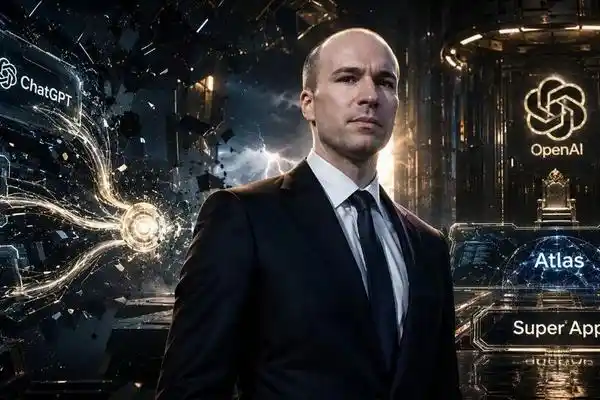
Breaking: OpenAI Undergoes Major Reorganization, President Brockman Assumes Command

OpenAI has announced a major internal reorganization just months before its anticipated IPO. The company is merging its three flagship product lines—ChatGPT, Codex, and the API platform—into a single, unified product organization. The most significant leadership change involves co-founder and President Greg Brockman moving from a background technical role to take full, permanent control over all product strategy. This follows the indefinite medical leave of AGI Deployment CEO Fidji Simo. Additionally, ChatGPT's longtime lead, Nick Turley, has been reassigned to enterprise products, with former Instagram executive Ashley Alexander taking over consumer offerings. The consolidation, internally framed as a strategic move towards an "Agentic Future," aims to break down internal silos and create a cohesive "Super App." This planned desktop application would integrate ChatGPT's conversational abilities, Codex's coding power, and a rumored internal web browser named "Atlas" to autonomously perform complex user tasks. The reorganization occurs amid significant internal and external pressures. OpenAI has recently seen a wave of high-profile departures, including Sora co-lead Bill Peebles and other senior technical leaders, leading to concerns about a thinning executive bench. Externally, rival Anthropic recently secured funding at a staggering $900 billion valuation, surpassing OpenAI's own. Google's upcoming I/O developer conference also poses a competitive threat. Analysts suggest the dramatic restructure is a pre-IPO move to present a clearer, more focused narrative to Wall Street—streamlining operations and demonstrating decisive leadership under Brockman to counter internal turbulence and intense market competition.

marsbitHá 3h

Breaking: OpenAI Undergoes Major Reorganization, President Brockman Assumes Command

marsbitHá 3h

Two Survival Structures of Market Makers and Arbitrageurs

Market makers and arbitrageurs represent two distinct survival structures in high-frequency trading. Market makers primarily use limit orders (makers) to profit from the bid-ask spread, enjoying high capital efficiency (nominally 100%) but bearing inventory risk. This "inventory risk" arises from passive, fragmented, and discontinuous order fills in the limit order book (LOB). This risk, while a potential cost, can also contribute to excess profit if managed within control boundaries, allowing for mean reversion. Market makers essentially sell "time" (uncertainty over execution timing) to the market for price control and low fees. In contrast, cross-exchange arbitrageurs typically use market orders (takers) to exploit price differences or funding rates, resulting in lower nominal capital efficiency (requiring capital on both exchanges) and higher transaction costs. Their risk exposure stems from asymmetries in exchange rules (e.g., minimum order sizes), execution latency, and infrastructure risks (e.g., ADL, oracle drift). These exposures are active, exogenous gaps that primarily erode profits rather than contribute to them. Arbitrageurs essentially sell "space" (capital sunk across venues) for localized, immediate certainty. Both strategies engage in a trade-off between execution friction and residual risk. Optimal systems allow for temporary, controlled risk exposure rather than enforcing zero exposure at all costs. Their evolution converges towards hybrid models: arbitrageurs may use maker orders to reduce costs, while market makers may use taker orders or hedges for risk management. Ultimately, both use different forms of risk exposure—market makers exposing inventory, arbitrageurs immobilizing capital—to extract marginal, hard-won certainty from the market.

链捕手Há 3h

Two Survival Structures of Market Makers and Arbitrageurs

链捕手Há 3h

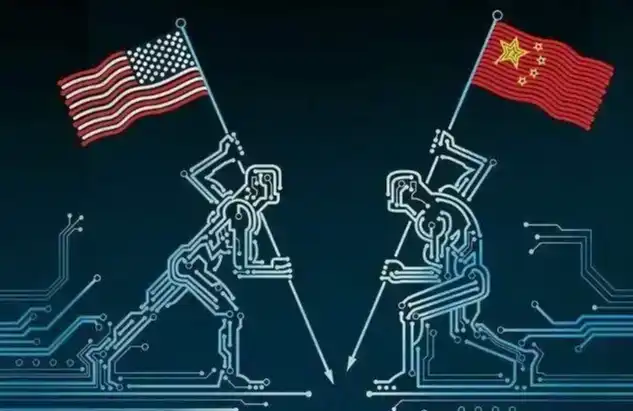
Who Will Define the Rules of the AI Era? Anthropic Discusses the 2028 US-China AI Landscape

This article, based on Anthropic's analysis, outlines the intensifying systemic competition between the U.S./allies and China for AI leadership by 2028. It argues that access to advanced computing power ("compute") is the critical bottleneck, where the U.S. currently holds a significant advantage through chip export controls and allied innovation. However, China's AI labs remain competitive by exploiting policy loopholes—via chip smuggling, overseas data center access, and "model distillation" attacks to copy U.S. model capabilities—keeping them close to the frontier. The piece presents two contrasting scenarios for 2028. In the first, decisive U.S. action to tighten compute controls and curb distillation locks in a 12-24 month AI capability lead, cementing democratic influence over global AI norms, security, and economic infrastructure. In the second, policy inaction allows China to achieve near-parity through continued access to U.S. technology, enabling Beijing to promote its AI stack globally and integrate advanced AI into its military and governance systems, altering the strategic balance. Anthropic contends that maintaining a decisive U.S. lead is essential for shaping safe AI development and governance. The core recommendation is for U.S. policymakers to urgently close compute and model access loopholes while promoting global adoption of the U.S. AI technology stack to secure a lasting strategic advantage.

marsbitHá 5h

Who Will Define the Rules of the AI Era? Anthropic Discusses the 2028 US-China AI Landscape

marsbitHá 5h

Trading

Spot
Futuros
活动图片