Смягчение политики ФРС и глобальные макроэкономические тенденции указывают на бычий настрой для биткоина

cryptonews.ruPublicado em 2024-07-03Última atualização em 2024-09-03

Медвежья среда, которая доминировала на криптовалютных рынках в начале августа, могла создать условия для «тактического дна для биткоина», подкрепленного ожиданиями более мягкой денежно-кредитной политики в Соединенных Штатах.

Согласно анализу управляющей компании ETC Group, настроения вокруг криптоактивов упали в августе до самой низкой точки с момента краха FTX в ноябре 2022 года, что было вызвано растущими опасениями по поводу рецессии в США и внезапным ростом курса японской иены.

Однако опасения по поводу рецессии быстро переросли в ожидания разворота в денежно-кредитной политике Федеральной резервной системы. Если ФРС начнет смягчать свою политику, то есть снижать процентные ставки или вливать больше денег в экономику, это может создать более благоприятную среду для биткоина, поскольку более мягкая денежно-кредитная политика, как правило, поощряет больше рискованных действий и инвестиций в такие активы, как криптовалюты.

По словам Андре Драгоша, руководителя исследований ETC Group:

«Мы считаем, что сочетание макроэкономической и криптовалютной капитуляции в начале августа, скорее всего, ознаменовало существенное тактическое дно биткоина и, следовательно, также ознаменовало начало возобновленного бычьего ралли».

Ожидания усилились, когда председатель ФРС Джером Пауэлл указал на встрече в Джексон-Хоуле, штат Вайоминг, что такой разворот, скорее всего, неизбежен.

«Направление движения ясно, а сроки и темпы снижения ставок будут зависеть от поступающих данных, меняющихся перспектив и баланса рисков», — сказал председатель ФРС.
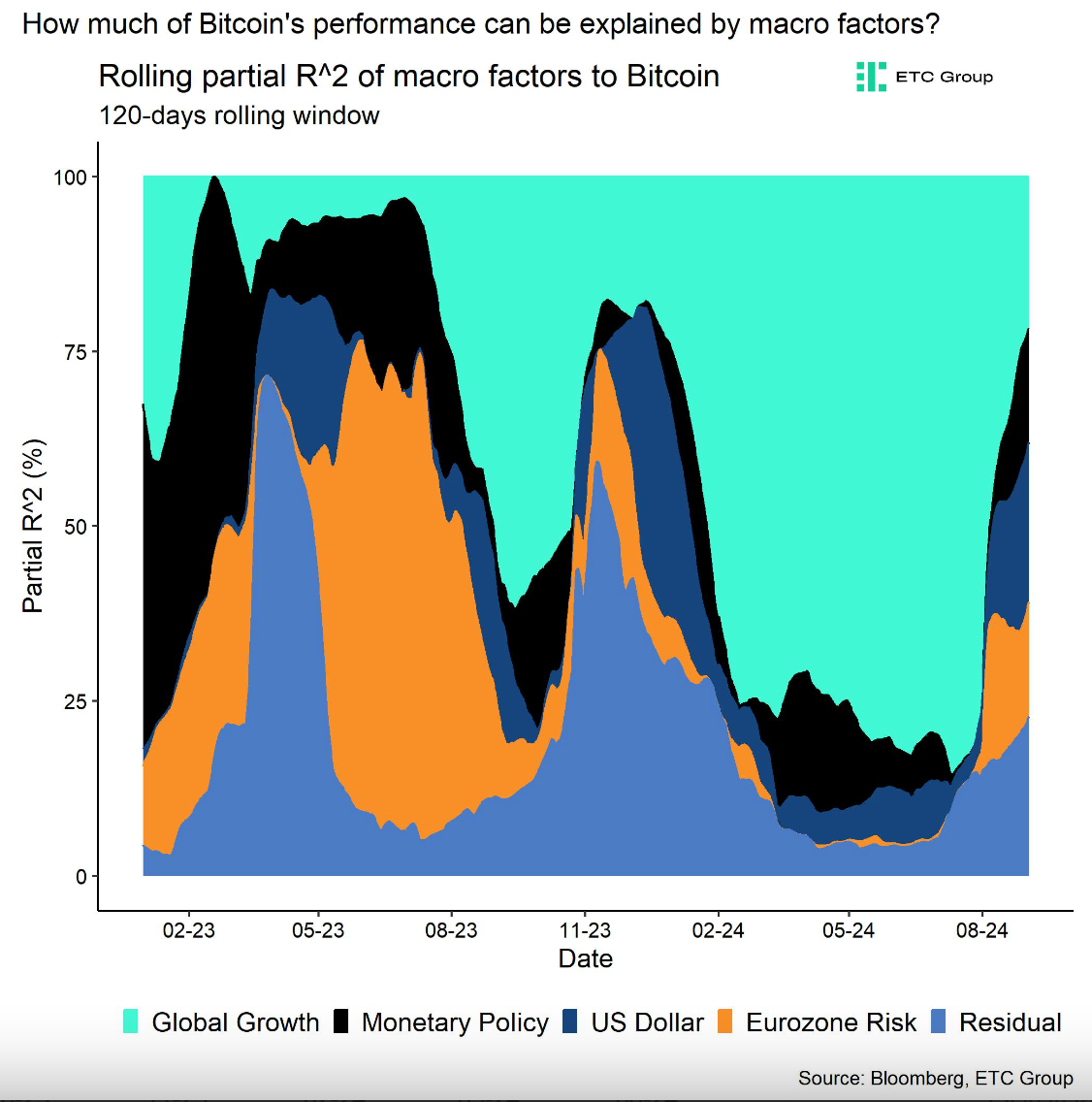

Частичный перенос макроэкономических факторов Rˆ2 на биткоин. Источник: Bloomberg/ETC Group

По словам Драгоша, комментарии Пауэлла были признаком того, что ФРС больше не может терпеть ухудшение условий на рынке труда и указали на снижение ставок, начиная с сентября.

«Наша собственная рыночная мера ожиданий денежно-кредитной политики теперь четко сигнализирует о позитивных ожиданиях относительно денежно-кредитной политики. Это обязательно обеспечит позитивный попутный ветер для биткоина и других криптоактивов в следующем месяце», — сказал он.

Цена биткоина на момент написания статьи составляет $59 160, упав почти на 5% за последние 30 дней. Однако в 2024 году актив все еще будет иметь доходность 31%.

Риск рецессии

Опасения по поводу замедления экономики в США вряд ли повлияют на цену биткоина, прогнозирует ETC Group. Согласно анализу Драгоша, чувствительность криптовалюты к ожиданиям глобального роста снижается и становится все более коррелирующей с денежно-кредитной политикой и динамикой доллара США.

«Наша модель макрофактора подразумевает, что динамика биткоина за последние 120 дней объяснялась в меньшей степени изменениями ожиданий глобального роста (которые были встречным ветром), а в большей степени другими макрофакторами, такими как ожидания денежно-кредитной политики или доллар США (которые обеспечивали попутный ветер)».

Leituras Relacionadas

Blood Loss of $55 Million Selling 3,588 BTC, Strategy Becomes a Literal Scumbag

On July 6th, Strategy (formerly MicroStrategy) disclosed in an SEC filing that it sold 3,588 Bitcoin (BTC) between June 29th and July 5th for approximately $216 million, at an average price of ~$60,200. This marked the company's largest net sale since initiating its Bitcoin strategy in 2020 and its first institutionalized reduction of its core holding. The sale resulted in a realized loss of about $54.8 million, as the selling price was below its average cost basis of ~$75,476 per BTC. The proceeds were used to pay preferred stock dividends and replenish USD reserves. This move follows a new "Digital Credit Capital Framework" approved on June 29th, authorizing the sale of up to $1.25 billion in Bitcoin. The sale consumes roughly 17% of this authorized amount in its first week. Strategy's foundational narrative, built by founder Michael Saylor, was a commitment to "never sell" Bitcoin. The recent institutionalized selling framework and these substantial sales represent a significant shift from that original promise. While the amount sold is only 0.4% of Strategy's total holdings of 843,775 BTC, the action challenges the premium at which its stock (MSTR) trades relative to its Bitcoin holdings. Investors had priced in the "never sell" narrative. The company now faces a contradiction: it sells Bitcoin at a loss to pay dividends on the preferred stock it issued to fund Bitcoin purchases. Saylor has framed selling as a tool for future strategic purchases, but each sale erodes the credibility of the original commitment, potentially threatening the premium valuation of MSTR shares.

Foresight NewsHá 52m

Blood Loss of $55 Million Selling 3,588 BTC, Strategy Becomes a Literal Scumbag

Foresight NewsHá 52m

Dialogue with Yihui Capital, SoundAI Technology, Ling Universe, and Zhongbo Jili: Opportunities and Challenges in the AI Smart Hardware Track

On June 28, 2026, an event titled "New Opportunities in AI Hardware: The Battle for Interactive Entry Points Begins" was held in Beijing. It featured a report from ITJuzi and discussions with experts from SoundAI, Ling Universe, One Reed Capital, and Zhongbo Juli on the opportunities and challenges in China's AI hardware sector. Key report findings highlight the sector's intense activity: 327 out of 431 startups founded post-2023 have secured funding, with 179 investments in H1 2026 alone. The landscape is dominated by embodied intelligent robots, while wearable tech like smart rings and AI glasses shows rapid growth. Geographically, Shenzhen leads, leveraging its superior hardware supply chain, followed by Beijing and Shanghai. The overarching trend is for companies to focus on micro-innovations within specific scenarios rather than reinventing foundational technology. Industry leaders shared several critical insights: 1. **Balancing Innovation & Market Readiness**: Entrepreneurs face the "hammer looking for a nail" dilemma. Success requires balancing technical capability with user acceptance, cost control, and incremental design improvements rather than chasing disruptive innovation. 2. **Competitive Landscape**: The future interactive entry point may not be a single super-device but a mix of universal terminals and specialized, scenario-specific hardware. While large companies have ecosystem advantages, startups can win by deeply targeting vertical markets and specific user groups. 3. **Core Challenges & Business Models**: Key hurdles include deep understanding of AI models and navigating non-transparent hardware supply chains. Viable business models may involve selling hardware at cost and generating revenue through software subscriptions, but this requires tight control over both hardware BOM and model inference costs. 4. **The Road to Commercialization**: The ultimate test is market validation—achieving sales growth and sustainable cash flow. Companies must find the right application scenario, use edge computing effectively, and close the loop from technology to commercial success. 5. **The Future of Interaction**: Proactive, context-aware interaction is the next frontier, though it's currently limited by issues like model hallucinations and environmental perception. The near-term focus should be on identifying target users and creating a coherent experience in specific domains, such as health wearables. In summary, to succeed in the competitive AI hardware arena, companies must strategically choose their niche, build a team with the right geographical advantages (e.g., leveraging Shenzhen's supply chain), and most importantly, execute a flawless commercialization strategy that translates technology into market-accepted products and sustainable business growth.

marsbitHá 1h

Dialogue with Yihui Capital, SoundAI Technology, Ling Universe, and Zhongbo Jili: Opportunities and Challenges in the AI Smart Hardware Track

marsbitHá 1h

Trading

Spot
活动图片