Pantera Capital потерпит убытки в случае падения курса Toncoin

cryptonews.ruPublicado em 2024-03-29Última atualização em 2024-08-29

Инвестиции в криптовалюту Toncoin (TON), выпущенную на блокчейне Telegram Open Network, могут обернуться большими убытками для хедж-фонда Pantera Capital.

Анонимный источник, знакомый с ситуацией, сообщил, что в мае 2024 года Pantera Capital инвестировала в Toncoin свыше $100 млн. Компания купила монеты у разработчиков по цене, на 40% ниже рыночной. Средняя стоимость TON в мае составила $6,32, то есть можно предположить, что организация приобрела монеты по курсу $3,79.

Сейчас Toncoin стоит $5,55, поэтому капиталовложения в криптовалюту остаются прибыльными для Pantera Capital, несмотря на 19% падение курса TON после ареста создателя Telegram Павла Дурова. Однако, согласно условиям сделки, Pantera Capital может начать избавляться от Toncoin не раньше мая 2025-го, и ей придётся продавать монеты постепенно в течение нескольких лет. Соответственно, если на рынке Toncoin продолжится медвежий тренд, то хедж-фонд понесёт большой финансовый ущерб.

Некоторые инвесторы в Toncoin, не скованные обязательствами, не преминули избавиться от цифровых активов. Поэтому с 24 по 28 августа стоимость монет, заблокированных в сети Telegram Open Network, упала на 34% до $568,7 млн. Когда Pantera Capital инвестировала в Toncoin, этот показатель составлял около $500 млн.
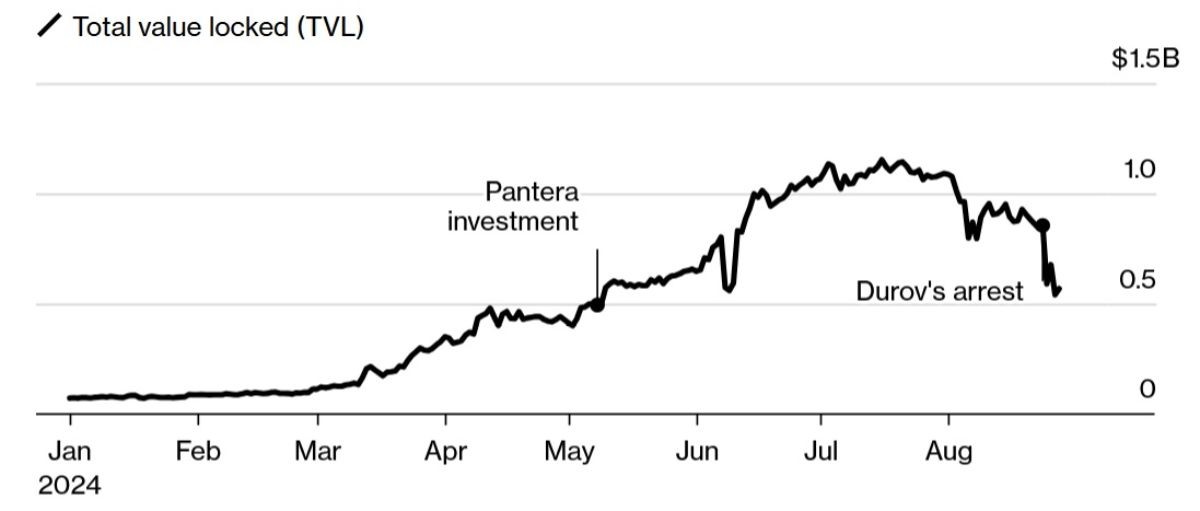
Изменение стоимости криптовалют, заблокированных в сети Telegram Open Network

Помимо Pantera Capital в Toncoin вложили деньги гонконгский разработчик блокчейн-игр Animoca Brands, инвестиционная фирма Mirana Ventures и ещё как минимум 10 компаний. По словам основателя криптовалютного венчурного фонда 1kx Лассе Клаусена, предприятия решили купить Toncoin, рассчитывая, что популярность Telegram Open Network будет стремительно повышаться благодаря Telegram. Но из-за обвинений, предъявленных Дурову, вера инвесторов в светлое будущее TON пошатнулась.


Leituras Relacionadas

Stablecoins Are the 'Royalists' of the Crypto World: Open USD Brings the Old Monetary System into the Fray

Title: Stablecoins Are the "Royalists" of the Crypto World: Open USD Brings the Old Monetary System into the Fray The article analyzes the launch of Open USD, a new dollar-pegged stablecoin backed by a coalition of over 140 traditional financial, payment, and tech giants like Visa, BlackRock, and Google. Author Hu Yilin argues that stablecoins like Open USD represent not a "moderate" wing of the crypto revolution, but a "royalist reform" within the old monetary system. He posits that while stablecoins adopt blockchain's efficiency, programmability, and borderless nature, they fundamentally reinforce the US dollar's centrality and the Federal Reserve's authority. They aim to replace inefficient "bureaucrats" (like traditional payment networks) rather than challenge the "monarch" (the dollar-based system). Thus, Open USD symbolizes the old system co-opting blockchain technology to upgrade dollar hegemony, potentially marginalizing native crypto projects like Circle's USDC. Hu contrasts this with more revolutionary paths, like a "Bitcoin standard," which seeks to change the monetary base itself. He warns that if the crypto ecosystem's unit of account, collateral, and value anchor remain dollar-denominated stablecoins,链上繁荣 may enrich the traditional financial system ("off-chain") rather than granting monetary premium to native crypto assets like ETH. Projects with civilizational ambitions, he argues, cannot reduce their narrative to mere "fuel" or transaction fees but must grapple with the core revolutionary idea: that a decentralized market does not require a central bank as the anchor of monetary order.

marsbitHá 43m

Stablecoins Are the 'Royalists' of the Crypto World: Open USD Brings the Old Monetary System into the Fray

marsbitHá 43m

Standard Chartered Takes Over USDC Onboarding; Circle Cedes Control for Scale

Standard Chartered and Circle have announced a partnership where institutional clients can now mint and redeem USDC directly through Standard Chartered's existing banking infrastructure, eliminating the need for separate accounts with Circle. Initially launching in the Dubai International Financial Centre (DIFC), this service represents the first time a Global Systemically Important Bank (G-SIB) is offering such direct, integrated access. This move effectively "translates" USDC into a standard banking option, opening the door for major institutional capital like pension funds and sovereign wealth funds that require the trust, compliance, and risk frameworks of a major bank. For Circle, this is a strategic trade: ceding some direct client relationships to leverage Standard Chartered's vast distribution network, thereby potentially massively scaling USDC's circulation and its core interest revenue model. For Standard Chartered, it's a chance to offer a new digital asset service without building the underlying stablecoin infrastructure. The partnership signals a significant shift in the stablecoin narrative. Rather than bypassing traditional finance, stablecoins are becoming integrated into it, with major banks like Standard Chartered positioning themselves at the crucial entry point. The focus is moving from legitimizing stablecoins to determining how value and pricing power will be distributed among issuers, banking channels, and regulatory frameworks in this new, converging landscape.

marsbitHá 3h

Standard Chartered Takes Over USDC Onboarding; Circle Cedes Control for Scale

marsbitHá 3h

Trading

Spot
活动图片