Tron Founder Justin Sun Addresses Controversy After Bitcoin Removal From USDD’s Collateral

bitcoinistPublicado em 2024-08-23Última atualização em 2024-08-23

Resumo

Amid the memecoin frenzy on the Tron network, Justin Sun is facing backlash for the controversial removal of over $700...

Amid the memecoin frenzy on the Tron network, Justin Sun is facing backlash for the controversial removal of over $700 million in Bitcoin (BTC) as USDD’s collateral without the Tron DAO Reserve’s vote. Sun has now addressed the situation after the move raised concerns about the stablecoin’s decentralization.

12,000 Bitcoin Removed From USDD Collateral

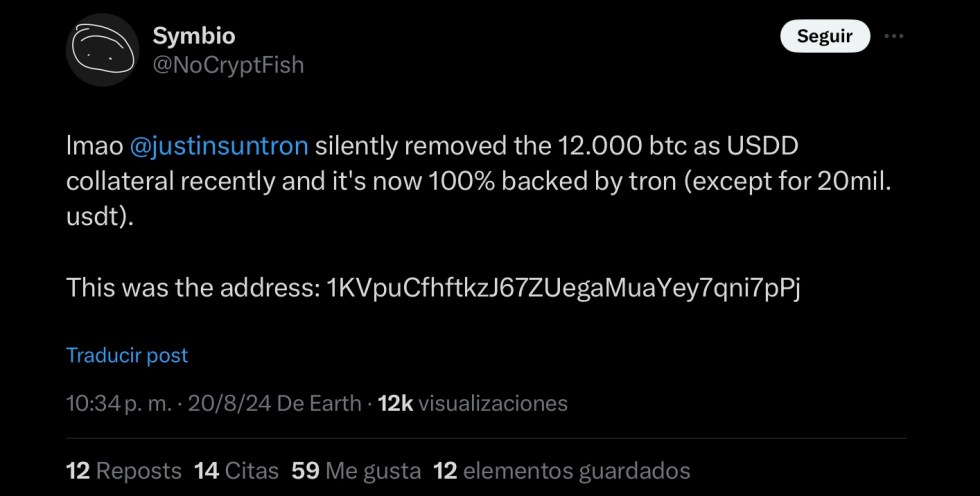
On Wednesday, online reports revealed that 12,000 Bitcoin, worth around $732 million, were removed from Tron’s Decentralized USD (USDD) stablecoin collateral reserves.

USDD is a decentralized over-collateralized stablecoin pegged to the US Dollar through TRX and governed by the Tron DAO Reserve. According to the report, the significant change means the stablecoin is now almost fully backed by TRX, except for 20 million USDT.
Tron

Online reports unveil BTC removal from USDD collateral. Source: Symbio on X

The modification was done “silently” without the DAO’s consultation or approval despite the continued emphasis on community governance. Reportedly, the USDD transparency page listed 12,000 Bitcoin under an address, which has now been removed.

The removal raised questions among investors who criticized the lack of transparency. Many X users questioned the “decentralized stablecoin” narrative claim by the Tron Foundation.

Other community members drew parallels between Sun’s “shady” actions and the behavior that led to the collapses of UST or FTX. Meanwhile, others noted that the news seemed like “100 red flags.”

Veritas Protocol alleged this is not the first issue with USDD’s collateral. Per the post, it “has also faced issues with its collateral, such as storing significant amounts of HTX without consulting the DAO.”

Justin Sun Addresses Concerns

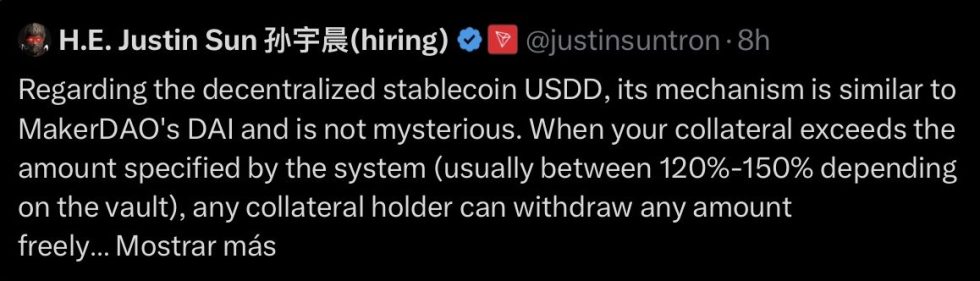
Following the criticism, Justin Sun addressed users’ concerns in an X post. Tron’s founder claimed that USDD’s mechanism is “not mysterious” since it works like MakerDAO’s DAI.

Sun explained that when the collateral exceeds the amount specified by the system, collateral holders can move the funds. Per the post, this amount is usually set between 125% and 150%, and if the collateral falls below a certain level, “it needs to be topped up; otherwise, the collateral may trigger liquidation.”
Tron

Tron's Founder addresses BTC removal without DAO's vote. Source: Justin Sun on X

Based on it, Sun alleges that “any collateral holder can withdraw any amount freely without anyone’s approval.” He also noted that USDD currently “has a long-term collateralization rate exceeding 300%,” which is inefficient for capital utilization and is planned to be upgraded.

Currently, USDD has a long-term collateralization rate exceeding 300%, which means that the capital utilization is not very efficient. The TRON DAO Reserve plans to spend time upgrading USDD in the future to make it a more competitive decentralized stablecoin in the market. Remember, Tron is also a kingdom of stablecoins.

USDD’s X account cited Sun’s response, echoing TRD’s plans to upgrade and enhance the stablecoin. Nonetheless, Bennet Tomlin, co-host of Crypto Critic Pod, questioned Tron founder’s statement. Tomlin claims Sun’s description does not match the issuance process described on USDD’s page.

Moreover, he stated that, according to the whitepaper, the removed Bitcoin is “explicitly supposed to be managed by the TRON DAO Reserve (…), not whatever collateral holders Sun is imagining. At the time of writing, Sun has not responded to the apparent discrepancies raised by Tomlin.
Tron, TRX, TRXUSDT

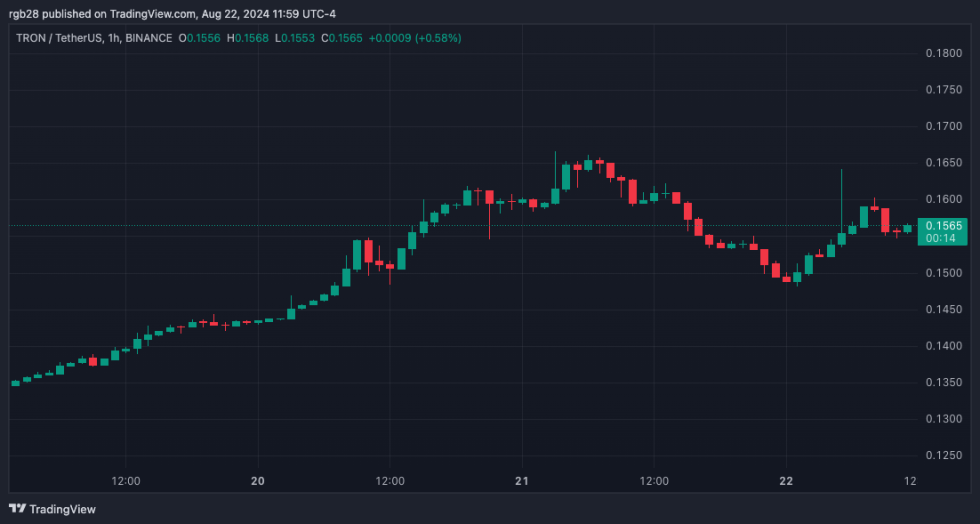
TRX is trading at $0.15 in the three-day chart. Source: TRXUSDT on TradingView
Featured Image from Unsplash.com, Chart from TradingView.com
Rubmar Garcia

Rubmar Garcia

Rubmar is a crypto enthusiast who likes learning and improving constantly. She enjoys reporting on the latest news and developments in the crypto industry. Rubmar also enjoys scrapbooking, crafting, simulation games, and watching football.

Leituras Relacionadas

PANews Column Registration and Article Submission Guide

"PANews Column Registration and Submission Guide" provides instructions for users to register as columnists and publish articles on the PANews platform. Key application requirements are emphasized: content should focus on in-depth analysis within Crypto, Web3, blockchain, data, and viewpoints. Content primarily for brand/product introductions will not be approved, and heavily AI-generated content will be rejected. Promotional (PR/soft) content is directed to the business channel. **Registration Process:** * **Web:** Go to the official website footer, click "Apply for Column," and register with a phone number or email (login via verification code, no password). Fill in the column name, description, upload an avatar, and submit links to previously published work. * **Mobile:** Navigate to "My" -> "Contribute & Create" and complete the form. **Article Submission Tutorial:** 1. Log in to the PANews website. 2. Access the "Creator Center" from your personal homepage. 3. Use the editor to create and publish articles. **Video Upload:** The platform supports embedding videos from third-party sites (e.g., Bilibili). Copy the embed code from the source video, use the editor's "Insert/Edit media" button, paste the code under the "Embed" tab, and adjust the display size (recommended: width 100%, height 560px). **PANews Skills (AI Agent Tool):** PANews offers an official AI Agent skill set called PANews Skills, enabling AI tools to query platform content, track trends, and publish column articles directly. It includes three main skills: 1. `panews`: For tracking daily must-read lists, popular articles, and funding news. 2. `panews-creator`: For managing columns, publishing articles, and uploading images. 3. `panews-web-viewer`: For parsing PANews webpages into Markdown. These skills are compatible with various AI Agent tools (OpenClaw, Cursor, Claude Code, ChatGPT, Gemini, etc.). To use the `panews-creator` skill, users must obtain a specific authentication value from the PANews website after logging into their columnist account.

marsbitHá 3m

PANews Column Registration and Article Submission Guide

marsbitHá 3m

I Built Myself an Investment Workbench Using AI

For the past two weeks, I've been immersed in Vibe Coding—using AI to write code from natural language descriptions. This process has enabled me to quickly build functional tools that address long-standing personal ideas. Previously, I had many concepts but found execution too cumbersome. Key ideas included a unified dashboard for assets across US stocks, Crypto, HK stocks, and A-shares; a real-time alert system for price movements; an investment map visualizing sector relationships; and a tool to correlate prediction market bets with news and market data. Traditional development hurdles meant these often remained unrealized. Using AI (Codex, Claude Code, and DeepSeek API), I built four initial tools: 1. A **Cross-Market Asset Dashboard** showing total assets, daily P&L, and holdings by market, with added features for alerts and sector mapping. It's deployed locally for privacy. 2. A **Prediction Market (PM) Monitor** tracking bets on events (e.g., company valuations) and correlating probability shifts with news and market movements. I categorize bets by conviction to filter noise. 3. A **Simple Operations Backend** for managing my writing workflow (topics, progress, publishing). It's cloud-deployed for mobile access. 4. A **One-Click Formatting Tool** that automates converting drafts into various platform-specific formats, saving manual effort. While these tools are basic, they represent a significant shift: AI lowers the barrier to creating personalized systems. I believe individual investors can now feasibly build core systems for: * **Asset Observation** (tracking holdings and changes) * **Signal Monitoring** (watching for key market shifts) * **Sector Mapping** (understanding network relationships within a sector) * **Performance Review** (documenting rationale and outcomes) The power of Vibe Coding is its fast feedback loop. Ideas can be implemented, tested, and iterated on rapidly, turning "want-to-do" into "done." This marks the start of my new phase, where I'll share investment thoughts, tool tests, on-chain operations, and educational Web3 content.

marsbitHá 19m

I Built Myself an Investment Workbench Using AI

marsbitHá 19m

After Tokenization of Assets, How to Exit?

Title: How to Exit After Asset Tokenization? Author: Symbiotic Compiled by: Hu Tao, ChainCatcher Summary: Tokenization addresses how assets go on-chain but largely leaves the redemption question unresolved. While tokenized assets can settle instantly, the underlying redemption for assets like treasuries, private credit, or real estate can take from T+1 to 180 days. This gap hinders DeFi adoption of Real World Assets (RWAs). Three emerging models aim to provide instant exit liquidity, differing primarily in their capital structure and efficiency: 1. **Balance Sheet Model (e.g., Grove Basin):** A single entity (like Sky) provides immediate liquidity from its balance sheet, acting as a bridge during the settlement period. It offers simplicity and deep initial liquidity but is constrained by a single entity's capacity and risk appetite. 2. **Asset-Specific Vault Model (e.g., Upshift Clear):** Independent liquidity providers fund dedicated vaults for each supported asset, earning fees. It decentralizes capital sources but isolates liquidity and capital per asset, leading to potential fragmentation. 3. **Shared Liquidity Layer Model (e.g., Symbiotic Liquid Lane):** A shared capital pool supports multiple RWA types simultaneously. Funds remain productive between redemptions (e.g., earning yield in lending markets). Exits are settled via a competitive RFQ market. This model aims for higher capital efficiency, scalability across assets, and serves longer-duration assets like private credit. Key differentiators are: 1) Source of capital and risk bearer, 2) Redemption pricing mechanism, 3) Capital efficiency, 4) Scalability to new asset types, and 5) Composability. The shared liquidity layer model represents a move from piecemeal solutions toward scalable infrastructure, enabling T+0 exits by pooling capital, maintaining yield, and using competitive pricing, thus enhancing RWA utility in DeFi.

marsbitHá 32m

After Tokenization of Assets, How to Exit?

marsbitHá 32m

After Tokenizing Assets, How to Exit?

After tokenization, a key unresolved issue is providing holders with a reliable exit mechanism, as underlying asset settlement (taking days to months) lags far behind on-chain token settlement. Three primary models for instant liquidity have emerged, differing in their capital structure and efficiency: 1. **Balance Sheet Model (e.g., Grove Basin):** A single, well-capitalized entity (like Sky) provides immediate liquidity from its own reserves. This offers simplicity and deep initial liquidity but is constrained by that single balance sheet's capacity and risk appetite, limiting scalability. 2. **Dedicated Vault Model (e.g., Upshift Clear):** Independent liquidity providers (LPs) fund separate vaults for each supported asset. This decentralizes capital sources but isolates liquidity and capital, which becomes inefficient as the number of tokenized assets grows. 3. **Shared Liquidity Layer Model (Symbiotic Liquid Lane):** Independent capital providers fund shared vaults that can support multiple tokenized assets simultaneously. Capital remains productive between redemptions (e.g., earning yield in DeFi markets). Exits are settled via a competitive RFQ market where market makers bid. The article argues that the shared layer model offers superior capital efficiency and scalability. It transforms exit liquidity from an asset-specific patch into shared market infrastructure, allowing liquidity capacity to grow with overall market participation rather than being fragmented per asset. This is particularly valuable for longer-duration assets like private credit, where reliable T+0 exits can significantly enhance their utility in DeFi.

链捕手Há 46m

After Tokenizing Assets, How to Exit?

链捕手Há 46m

Trading

Spot
Futuros

Artigos em Destaque

Como comprar SUN

Bem-vindo à HTX.com!Tornámos a compra de SUN (SUN) simples e conveniente.Segue o nosso guia passo a passo para iniciar a tua jornada no mundo das criptos.Passo 1: cria a tua conta HTXUtiliza o teu e-mail ou número de telefone para te inscreveres numa conta gratuita na HTX.Desfruta de um processo de inscrição sem complicações e desbloqueia todas as funcionalidades.Obter a minha contaPasso 2: vai para Comprar Cripto e escolhe o teu método de pagamentoCartão de crédito/débito: usa o teu visa ou mastercard para comprar SUN (SUN) instantaneamente.Saldo: usa os fundos da tua conta HTX para transacionar sem problemas.Terceiros: adicionamos métodos de pagamento populares, como Google Pay e Apple Pay, para aumentar a conveniência.P2P: transaciona diretamente com outros utilizadores na HTX.Mercado de balcão (OTC): oferecemos serviços personalizados e taxas de câmbio competitivas para os traders.Passo 3: armazena teu SUN (SUN)Depois de comprar o teu SUN (SUN), armazena-o na tua conta HTX.Alternativamente, podes enviá-lo para outro lugar através de transferência blockchain ou usá-lo para transacionar outras criptomoedas.Passo 4: transaciona SUN (SUN)Transaciona facilmente SUN (SUN) no mercado à vista da HTX.Acede simplesmente à tua conta, seleciona o teu par de trading, executa as tuas transações e monitoriza em tempo real.Oferecemos uma experiência de fácil utilização tanto para principiantes como para traders experientes.

543 Visualizações TotaisPublicado em {updateTime}Atualizado em 2025.03.21

Como comprar SUN

Discussões

Bem-vindo à Comunidade HTX. Aqui, pode manter-se informado sobre os mais recentes desenvolvimentos da plataforma e obter acesso a análises profissionais de mercado. As opiniões dos utilizadores sobre o preço de SUN (SUN) são apresentadas abaixo.

活动图片