Власти Германии закрыли сеть из 13 криптоматов

investing.ruPublicado em 2024-08-21Última atualização em 2024-08-21

Создателей сети заподозрили в незаконном обороте и отмывании денежных средств. Теперь им грозит суд и до пяти лет тюрьмы.

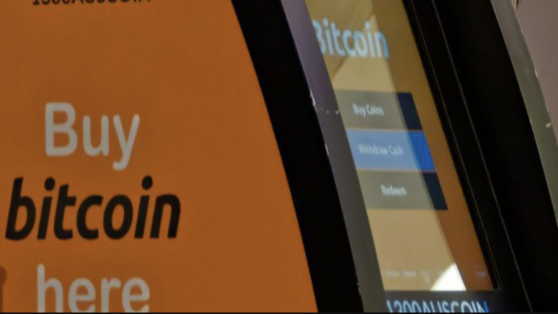
Из криптоматов, «в местах автоматизированой торговли цифровыми активами», было конфисковано около 250 000 евро ($280 000) наличными. Рейды проводились одновременно в 35 точках по всей Германии.

«Обмен евро на криптовалюты и наоборот является вопросом коммерческой торговли или банковской транзакции и, в соответствии с законом о банковской деятельности, требует прямого разрешения BaFin», — объяснил регулятор.

Ранее расследующие киберпреступления правоохранительные органы США заявили, что растущая сеть криптоматов становится частью схемы по отмыванию преступных доходов криминальных групп. Детективы сочли предпосылкой к этому пробелы в национальных правилах регулирования крипторынка, которые позволяют преступниками отмывать через нелегальную сеть криптоматов деньги, полученные от торговли наркотиками и прочих незаконных действий.

Читайте оригинальную статью на сайте Bits.media
Leituras Relacionadas

In the MiCA Era, Europe's New Cryptography Landscape: Why is Germany Taking Center Stage?

With MiCA's transitional arrangements concluding, Europe's crypto industry has undergone a regulatory consolidation. Post-MiCA, platforms must secure CASP authorization to operate compliantly within the EU. As of July 1st, only about 12% of crypto firms have received authorization, with Germany emerging as a key player, holding 57 authorizations (roughly 23% of the EU total). This positions Germany as a primary compliance gateway to the EU's unified market. Germany's advantage stems from its established, function-based regulatory framework, which integrated crypto activities into existing banking, securities, and payment systems pre-MiCA. This allowed a smoother transition and attracted both domestic platforms (like Bitcoin.de, BISON) and international ones (like Coinbase Germany). A distinctive trend is German banks becoming direct retail entry points for crypto services. Examples include DZ Bank integrating "meinKrypto" into its VR Banking App and the Sparkassen savings bank network planning to offer crypto trading via DekaBank. This mainstreams crypto access for ordinary users. Beyond trading, Germany is evolving into a digital asset infrastructure hub. Deutsche Börse Group's Clearstream is developing a next-generation platform for issuing, settling, and servicing both traditional and tokenized securities. Furthermore, German banks like DekaBank and DZ Bank are key participants in the Qivalis project, a European initiative for a regulated euro stablecoin, positioning Germany at the intersection of critical future capabilities like custody, settlement, and cross-border services.

marsbitHá 19m

In the MiCA Era, Europe's New Cryptography Landscape: Why is Germany Taking Center Stage?

marsbitHá 19m

Glassnode: Cryptocurrency Market Entering Late-Stage Consolidation Phase

Bitcoin has now been trading below the realized price and short-term holder cost basis for nearly five months, indicating a prolonged period of undervaluation. The market exhibits late-stage accumulation characteristics. Long-term holders (LTHs) are the primary source of sell-side pressure, with their realized losses reaching a daily peak of $280 million, the highest since December 2022, and accounting for 43% of total on-chain realized losses. A sustained decline in this LTH selling is a crucial prerequisite for a meaningful reversal. Spot ETF flows, while moderating from June peaks, remain in a state of monthly net outflows. Daily trading volumes have collapsed roughly 80% from the October 2025 highs, reflecting weak institutional demand and lack of confidence. Derivatives markets show a cautious tilt towards bullishness, with the put/call ratio hitting a 2026 low and funding rates neutral. However, the options volatility skew remains in "put premium," indicating persistent demand for downside protection, even as the absolute cost of that protection has declined. The spot price currently trades approximately 6% below the $66,000 max pain level. In summary, key conditions for a market bottom are in place, including sustained undervaluation and significant LTH capitulation. However, definitive signals for a transition to a bull market—namely, a sustained drop in LTH realized losses, stabilization of ETF fund flows, and price reclaiming key on-chain cost bases—are not yet confirmed. The market is in the late stages of basing, awaiting these catalysts for a sustained recovery.

marsbitHá 2h

Glassnode: Cryptocurrency Market Entering Late-Stage Consolidation Phase

marsbitHá 2h

Trading

Spot
活动图片