WBTC商业模式和安全模型解读 未来方向在哪里

币界网Publicado em 2024-08-12Última atualização em 2024-08-12

币界网报道:

作者:Kevin He,Bitlayer联合创始人

背景

近期,BitGo关于WBTC项目控制权转移的社区讨论和关注度十分广泛。

作者在构建区块链基础设施方面拥有丰富的经验,曾亲自开发过中心化包装代币系统和基于 MPC 的托管平台,目前正致力于构建比特币原生验证能力。

在本文中,作者将回顾事件,涵盖多方行动和反馈以呈现事实。作者根据系统开发的实践经验,抽象出了一种针对包装 BTC 产品的简单架构和安全模型。随后,作者根据去信任化程度对不同的技术方案进行了分类,指出基于比特币原生验证能力的技术方案代表了未来的方向。

事件回顾

参与方

WBTC :WBTC 已包装超过 15万枚BTC(价值超过 90 亿美元),并在其网站上展示了储备证明。

Bitgo(WBTC 控制者):宣布 WBTC 项目的控制权将在 60 天内从 BitGo 转移到与 Justin Sun 的 BiT Global 相关的机构。

相关方

MakerDAO (DAI) 风险管理团队Block Analitica:对控制权转移表示担忧,并指出 WBTC 构成风险,导致他们减少在相关协议中的风险敞口。

孙宇晨(WBTC 新任控制人):承诺不动BitGo储备。

第三方:

Weidai (VC):建议验证桥会是一个更好的解决方案。

刘峰 (媒体):质疑BiT Global的资质。

Wrapped BTC的商业模式

Wrapped BTC的商业模式比较简单,如下图所示:
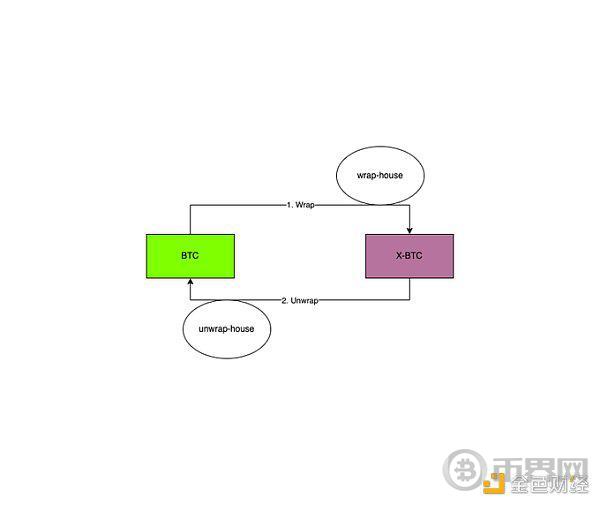
Wrap:

代表从 BTC 到 W-BTC 的转换。

Wrap-house:

代表包装的运行机制,确保用户存入的 BTC 在账本(通常是其他区块链,比如 ETH)上被铸造成对应的 W-BTC,不多也不少。

Unwrap:代表从 W-BTC 到 BTC 的转换。

Unwrap-house:

代表解包装的运行机制,确保用户销毁 W-BTC 后,有机制可以让其在比特币网络上获得 BTC,不多也不少。

去信任程度对比

上面提到的商业和技术模型的对比,可以从多个维度进行,下面笔者将从包装和解包装两个角度来对比无需信任程度。

没有无需信任

一个典型的例子就是目前 BitGO 的 WBTC,包装和解包装的运营都由 BitGo Custody 掌控。
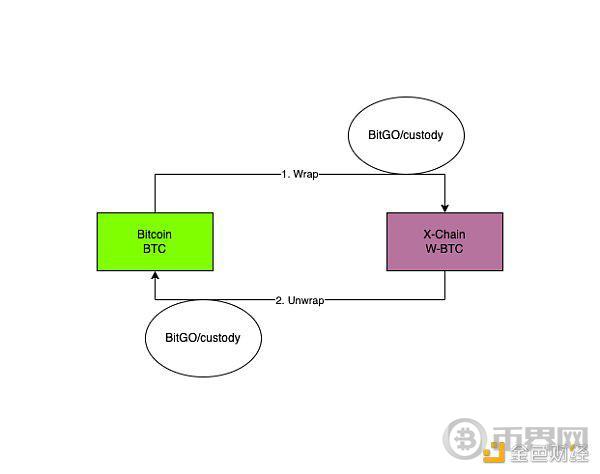
显而易见的是,用户需要信任BitGo托管服务商始终能够正确运行。

单向无需信任

接下来我们来看看2020年左右出现的两个代表性项目:tBTC/renBTC。
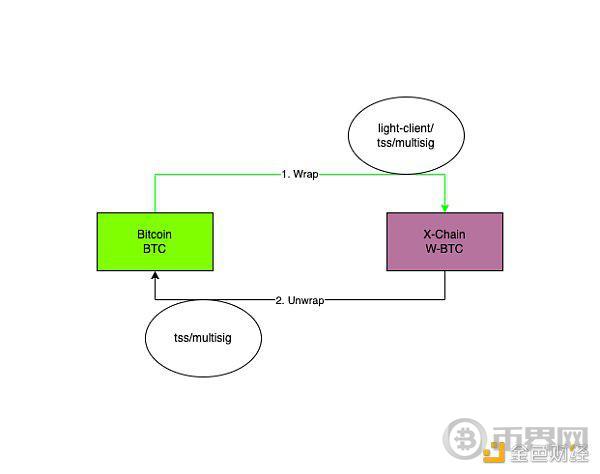
我们可以看到在X链上(例如具备完整验证能力,比如有EVM),wrap-house可以更容易实现高水平的无需信任化,但由于当时技术限制,unwrap-house只能通过门限签名来增强安全性,与预签名的程度无关。

双向无需信任

快进到2024年,得益于BitVM/Starkware等团队在比特币原生验证能力(包括欺诈性证明和有效性证明)方面的开创性尝试,以及BitlayerLabs等社区团队的切实落地,unwrap-house有望实现无需信任。
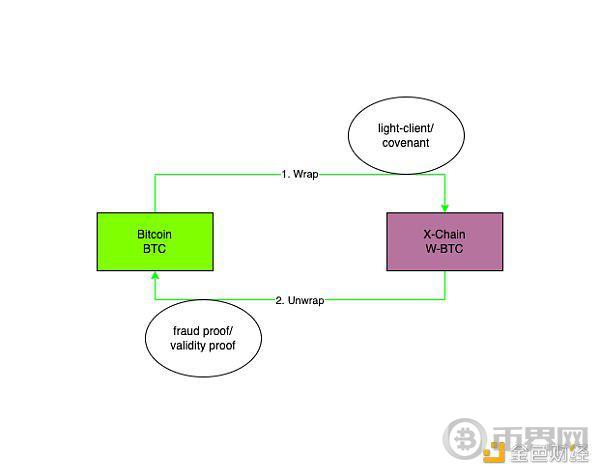
其中欺诈性证明以BitVM及其衍生项目为代表,实现了无需OP_CAT的乐观验证,主流实现是使用零知识验证的承诺和挑战过程。

有效性证明则假设OP_CAT操作码的存在,直接实现零知识验证,有了OP_CAT,锁定的BTC将受到所谓的契约(类似合约的结构)的控制。

方案对比总结

对上述各种技术方案进行横向对比可以发现,基于比特币验证能力(validation)的解决方案在双向的无需信任化方面表现更佳。

结论

2018 年 WBTC 的出现,标志着将 BTC 流动性带入 DeFi 世界的开始。后续 2020 年的 tBTC 项目做了一些优化和改进。

以比特币原生验证能力(欺诈证明和有效性证明)为代表的验证技术方案在双向无需信任方面会表现得更好。

WBTC,是时候升级技术方案了!
Leituras Relacionadas

Beyond the Model Lies the Harness: Deepseek Enters the Arena, Why Has the Main Battlefield of China's AI Competition Shifted?

In mid-to-late May 2026, Deepseek internally established a new Harness team focused on code agent products, internally benchmarked against Anthropic's Claude Code. This move, marked by the formula "Model + Harness = Agent" in their job postings, signals a major shift in China's AI competition: the main battlefield is transitioning from developing large models to building toolchains and achieving workplace integration. Deepseek's direct involvement in Harness development aims to secure control over interface design and training data feedback loops, moving beyond open-sourcing powerful models. Harness, the runtime infrastructure for AI agents, handles everything beyond model reasoning—task orchestration, tool calling, context management, safety checks, and error recovery. It is crucial because agent products are not just outputs of model capability but also training grounds for it. Real-world task failures recorded by Harness can feed back into model training, creating a flywheel effect. Engineering Harness is more critical than optimizing prompts, as poor context management or error handling can drastically reduce agent success rates in multi-step, real-world scenarios. This shift is not isolated. Other major Chinese tech companies are also pursuing differentiated toolchain strategies. Tencent leverages its enterprise ecosystem (WeChat Work, Tencent Cloud) to build connectors for organizational-level AI collaboration and complex task delivery. Alibaba focuses on lowering automation barriers on the web with a front-end, browser-based GUI Agent framework, PageAgent. This diversification shows the industry recognizes that success lies not in a perfect general agent, but in vertically focused solutions built with robust engineering. The trend is validated by overseas success, such as Poland's Viktor, an AI coworker on Slack achieving $20M ARR by autonomously executing complex, multi-step tasks. This proves a shift in enterprise willingness to pay—from "AI-assisted generation" to "AI-autonomous execution." As Harness matures to provide safety guards and reliability, AI transitions from a human-supervised intern to an independent outsourcer. The competition now faces key engineering challenges: preventing "token explosion" through intelligent context compression, and building "thick frameworks" with features like sandbox isolation and checkpoint recovery for enterprise-grade stability. Geopolitical restrictions on tools like Claude Code further create a significant market vacuum for domestic solutions like Deepseek's Harness. For enterprises and developers, the focus must shift from comparing model benchmarks to evaluating a vendor's engineering capabilities, error recovery mechanisms, context management, and ecosystem compatibility when choosing AI products and platforms.

marsbitHá 50m

Beyond the Model Lies the Harness: Deepseek Enters the Arena, Why Has the Main Battlefield of China's AI Competition Shifted?

marsbitHá 50m

Soaring Export Data for Memory Chips, Market Is Redefining the Valuation Anchor for Memory Stocks

Korean storage export data for the first 20 days of June shows substantial year-on-year increases in both value and price-per-kilogram for categories like DRAM, NAND, and SSDs. This signals a potential shift beyond simple demand recovery, indicating rising prices and a product mix shift towards higher-value items, possibly influenced by AI infrastructure needs. A key point is that the surge in price-per-kilogram is not simply a uniform chip price hike. It reflects a combination of actual price increases and, more importantly, an export structure increasingly dominated by high-value-density products like HBM (High-Bandwidth Memory) and advanced DRAM, which are critical for AI servers. This suggests AI-driven demand may be spilling over from just HBM into broader memory markets. SK Hynix stands to benefit directly due to its leading HBM position. For Samsung and Micron, the implication is potential for greater margin elasticity if the tightness in high-end memory spreads to enterprise SSD and NAND prices. However, the storage sector remains cyclical. Risks include supply expansion, inventory changes, and potential slowdowns in broader AI capital expenditure. Ultimately, while the strong export data supports upward revisions for storage company earnings and fuels discussion of an "AI infrastructure bottleneck premium," a definitive valuation shift from a cyclical to a structural story depends on upcoming quarterly reports. Investors need confirmation from SK Hynix, Samsung, and Micron that improvements in average selling prices, product mix, and, crucially,毛利率 are sustained over multiple quarters.

marsbitHá 2h

Soaring Export Data for Memory Chips, Market Is Redefining the Valuation Anchor for Memory Stocks

marsbitHá 2h

Trading

Spot
Futuros
活动图片