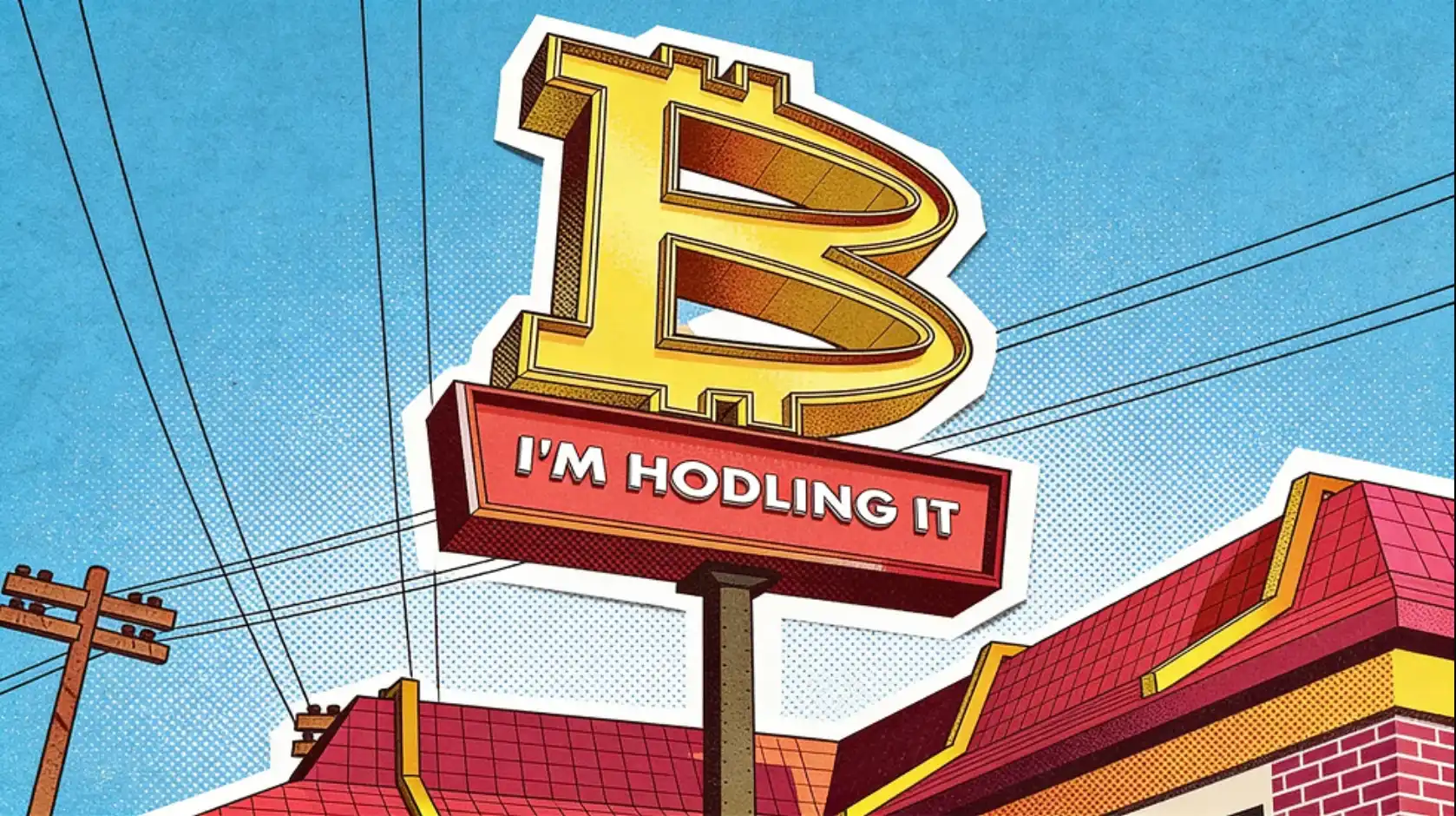
「1987 版黑色星期一」重演:抱团交易逆转、流动性冲击,之后发生了什么?

深潮Publicado em 2024-08-06Última atualização em 2024-08-06

危险在于:暴跌可能自我强化,演变成信贷紧缩。

撰文:赵颖,华尔街见闻

「1987 版黑色星期一」在昨日再度上演,全球金融市场崩盘式暴跌,到处充斥着熔断、熊市、历史记录等字眼。

日经 225、东证指数双双暴跌逾 12%,盘中多次触发熔断机制;台股创下 1967 年以来最大跌幅,韩国创 2008 年以来最大跌幅,道指跌超千点与标普齐创两年最大跌幅,富途、Fidelity 等纷纷警告交易故障。

上一次全球市场经历如此惨痛的洗礼,还是在 1987 年 10 月 19 日的股灾。

当时亚太股市纷纷跳水,日经指数下跌 14.9%,恒生指数暴跌超 40%,新西兰股指甚至一度暴跌 60%。美国市场也陷入一片混乱,道指日内暴跌 22.6%,标普 500 指数暴跌 30%,全球股市约 1.71 万亿美元灰飞烟灭。

除了触目惊心程度相近之外,两次暴跌的导火索也类似,套利交易和程序化交易发生「大逆转」。以史为鉴,接下来会发生什么?美联储会再度出手「救市」吗?
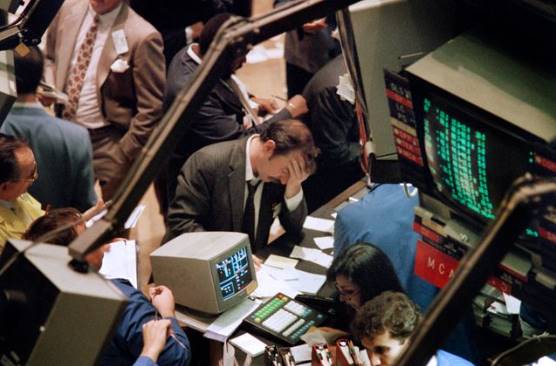
「1987 版黑色星期一」

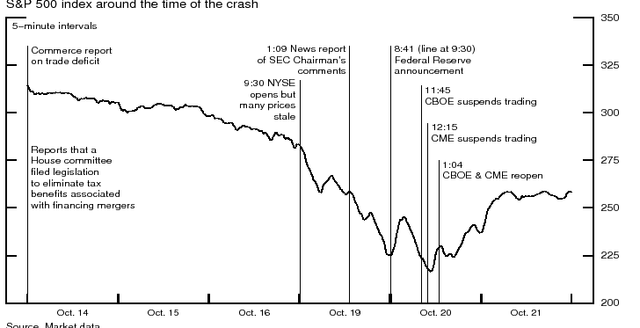
回顾 1987 年的美股走势,10 月 14 日美国政府公布的贸易赤字比预期的要大,美元也随之贬值,市场开始走低。

10 月 16 日周五,美国众议院提出立法,消除与融资并购相关的某些税收优惠的报告,美股下跌加剧,并为接下来一周的动荡埋下了伏笔;

10 月 19 日周一开盘,人们恐慌地看到,市场中卖盘远大于买盘。由于差异过大,在最初的一小时内,众多场内做市商甚至不提供做市报价。

美国 SEC 后来指出,到 10:00,标普 500 成份股仍有 95 支没有开盘;华尔街日报则指出,30 支道琼斯成份股票中,有 11 支无法开盘成交。

与此同时,随着股指期货和股票之间出现较大套利空间,一批交易机构开展了套利交易,而随着股市继续跳水,大量套保盘进一步在股指期货市场上做空指数合约,这反过来继续推动股指的跳水。

收盘时,道琼斯指数暴跌跌幅 22.76%,创造了 1929 年以来最大的跌幅数字。

10 月 20 日周二开盘前,美联储发表简短声明,并宣布「紧急降息 50 基点 + 量化宽松」救市:

美联储今天坚守其作为国家中央银行的职责,确认其愿意充当流动性来源,支持经济和金融体系。

市场也在美联储表态当天企稳,美股早盘继续下跌,芝加哥期权交易所和商品交易所中午暂停交易,午后恢复交易,随后有所反弹。

10 月 21 日,市场开始收复部分跌幅。
套利、程序化交易平仓引爆

与 1987 年类似,2024 年的「黑色星期一」也是由一场完美风暴触发。

彼时的美股自 1982 年以来一直处于大牛市,人们认为已经到了进行调整的时候了,而如今 AI 热潮助推的这波美股科技股走牛也让投资者「寒若禁蝉」。

其次是抱团交易逆转,1987 年这场股灾中「程序交易」被认为是罪魁祸首之一,投资组合的交易程序抛售股票,从而产生了多米诺骨牌效应。

而最近的股市暴跌部分源于,美日利差收窄引发「套利交易」逆转。日本央行上周意外加息,上周美联储会后释放降息信号,联储 9 月降息几乎被完全定价,此前汇市最受欢迎的「卖日元,买美元」套利交易「魅力」不再,投资者开始将手中的美元资产换回日元。

与此同时,1987 年崩盘前的那个星期五也出现了「三巫日」——股票期权、股指期货和股指期权合约同时到期,这导致了周五交易最后几个小时的严重不稳定,并将动荡延续到周一。

最后,分析将此次大幅下跌归咎于「群体性歇斯底里」,每次市场大跌时,投资者的从众心理会加剧下跌。

美联储会再度出手「救市」吗?

以史为鉴,美联储会采取什么行动?

应对 1987 年的市场崩盘,美国「紧急降息」、设立熔断机制,并提供流动性来救市。

为了减缓金融市场下跌并防止对实体经济产生溢出效应,美联储迅速采取行动向金融系统提供流动性,通过量化宽松政策向经济注入了数十亿美元资金。
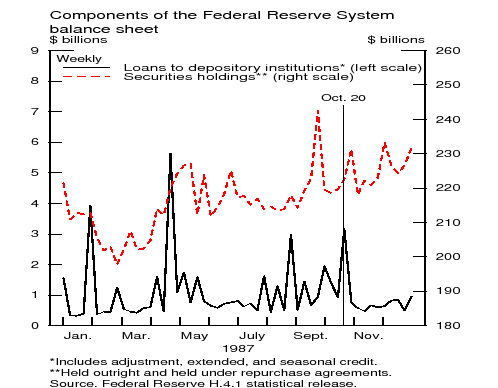
同时,时任美联储总统的格林斯潘宣布「紧急降息 50 个基点」,将联邦基金利率从周一的 7.5% 以上降至周二的 7% 左右。
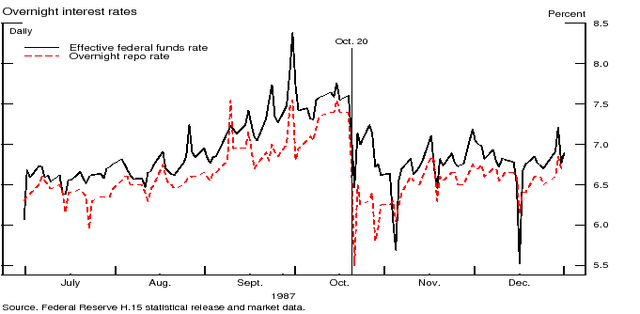
此外,监管机构还首次引入熔断机制,以防止因程序化交易而导致的市场崩溃。一旦出现股票市场异常下跌或上涨的情况,交易就会立即停止。

大跌将如何收场?

分析认为,最坏的结果可能是 2008 年的重演,但这种情况似乎不太可能发生。虽然去年一些美国大型银行因在政府债券上押注失误而倒闭,但银行的杠杆率比以前低得多,而且由于私人信贷承担了过去银行承担的大部分风险,银行体系受流动性危机的影响也较小。巨额亏损是有可能的,私人基金也可能会陷入困境,但这需要时间,而且不会引发同样的系统性危机。

理想的情况是,股市过度波动会像 1987 年那样逐渐平息,而不会造成更大范围的麻烦,预计这种平息过程比 1987 年更加缓慢。AI 狂热可能导致股价进一步下跌,即使从 6 月份的高点下跌了 30%,英伟达的股价今年仍上涨了一倍。但市场已经更接近正常水平,纳斯达克 100 指数今年迄今仅上涨了 6%,标普指数上涨不到 9%。

「债券卫士」之父 Yardeni 认为:

市场大跌的危险在于,暴跌可能自我强化、演变成信贷紧缩。可以想象,这种套利交易平仓可能会演变成某种金融危机,进而导致衰退。

不过,他强调,他个人预测不会最终产生这种结果。
Leituras Relacionadas

Report Interpretation: J.P. Morgan Details Micron's Pre-Earnings Sentiment, Current Hardware Sector Dynamics

Morgan Stanley analyst Joshua Meyers' report (June 21, 2026) highlights key trends in the hardware and semiconductor sector ahead of Micron's earnings. The core takeaways are: 1. **Micron & Memory:** Memory remains a high-conviction long theme, driven by strong AI demand and rising ASPs. However, investor focus is shifting to the sustainability of Micron's >80% gross margins and the specifics of potential new long-term supply agreements (SCAs). 2. **Hardware Supply Chain:** AI-related demand for servers, networking, and storage remains robust, but company performance is diverging. Celestica (CLS) shows improved margin confidence, Western Digital and Seagate benefit from pricing, Fabrinet (FN) sees predictable AI optics growth, and Teradyne (TER) anticipates a new Google customer. 3. **AI Capex & WFE Forecasts:** JPMorgan increased its Wafer Fab Equipment (WFE) market growth forecasts to 28% in 2026 and 29% in 2027. AI infrastructure financing is evolving, with higher project-level debt reducing constraints on capex expansion. The report signals that while the AI-driven hardware cycle is strong, the market is entering a phase focused on execution verification (e.g., Micron's SCA details, Fabrinet's ramp with Amazon) and valuation sustainability. Key near-term signals include Micron's guidance, Arista Networks' outlook, and the pace of demand normalization post potential tariff-related pull-ins.

marsbitHá 19m

Report Interpretation: J.P. Morgan Details Micron's Pre-Earnings Sentiment, Current Hardware Sector Dynamics

marsbitHá 19m

Research Report Analysis: The Fed's New Chair's Debut – New Leader, But Same Script?

Report Analysis: Federal Reserve's New Chair Debut – A New Captain, But the Same Script? Morgan Stanley's chief global economist Seth B. Carpenter analyzes the first FOMC meeting under new Fed Chair Kevin Warsh in a June 21 report. Warsh deliberately avoided providing forward guidance on interest rates, aligning with his philosophy. However, market expectations for a rate hike this year were reinforced. Key signals lie elsewhere: inflation may fall more than expected, and quantitative tightening (QT) could be more aggressive than anticipated. The FOMC's "dot plot" suggests only one rate hike in 2026. Carpenter argues that if inflation undershoots forecasts, the logic for even a single hike weakens, especially as projections indicate potential rate cuts in 2027. On QT, Warsh's stance is clear. Carpenter notes that measures like halving the Treasury's account balance could shrink the Fed's balance sheet by around $500 billion with minimal market impact. Combined with adjustments to reserve interest and liquidity rules, the ultimate QT scale may exceed expectations, though its market effect might be less disruptive unless the Fed actively sells Mortgage-Backed Securities (MBS). While Warsh initiated a review of the Fed's policy framework, the 2% inflation target remains intact for now. The report concludes that the market may be overestimating the significance of reduced forward guidance and the near-term rate hike risk, while potentially underestimating the scope and manageable nature of the coming balance sheet reduction. The key debates will hinge on upcoming core PCE data, the specifics of the QT path, and the framework review's findings.

marsbitHá 30m

Research Report Analysis: The Fed's New Chair's Debut – New Leader, But Same Script?

marsbitHá 30m

Critical Game Week: BTC Retracement Confirmation vs. HYPE Support Battle | Guest Analysis

This weekly analysis outlines a critical juncture for BTC and HYPE markets, focusing on key price level confirmations. **BTC Analysis:** BTC is at a pivotal point after a five-wave rally from the June 5th low of $59,100. The price has broken below a short-term rising channel's lower boundary, with the current move seen as a pullback to test this breakdown. Failure to reclaim this level could lead to a retest of the $59,000-$60,000 support zone. The core scenario hinges on this channel retest outcome. * **Key Levels:** Resistance at $64,500-$65,000 (channel boundary) and $69,500-$70,500. Support at $59,000-$60,000 and $55,000. * **Strategy:** A core bearish stance is maintained (20% short from last week), with short-term plans for tactical trades. Three detailed contingency plans (A/B/C) are provided for short positions on resistance tests or breakdowns, emphasizing strict stop-loss discipline. **HYPE Analysis:** HYPE shows strong momentum but is currently in a corrective phase after hitting a new high of $76.94. The price is retesting the crucial $64-$66 support area. * **Key Levels:** Resistance near $77 and $80-$82. Support at $64-$66 and $52-$54. * **Strategy:** The short-term approach is "buy on dips, avoid chasing rallies." A long position is considered only if clear stabilization signals appear at the $64-$66 or deeper $52-$54 support zones, with tight risk controls. **General Risk Management:** A standardized trailing stop-loss protocol is emphasized: set initial stop, breakeven at +1% profit, then trail stops upward to lock in gains. *Disclaimer: All analysis is presented as a personal trading framework, not investment advice. Market conditions are complex and require dynamic adjustment.*

marsbitHá 44m

Critical Game Week: BTC Retracement Confirmation vs. HYPE Support Battle | Guest Analysis

marsbitHá 44m

Research Report Interpretation: Citi Attends AWS Summit, Bullish on Cloud Business Acceleration but Data Governance Remains Key Variable

Citi analyst Tyler Radke's team attended the AWS New York Summit (June 17-18), engaging with over 10 clients and partners. In a June 19 report, they highlighted the summit's focus on scaling agent AI for enterprise deployment. Citi maintains a "Buy" rating on Amazon, forecasting AWS revenue growth to accelerate to 37% in FY27 from 30% in FY26, noting this estimate may be conservative. Key takeaways: 1. **AWS Strategy Shift:** AWS is moving from proof-of-concepts to scalable deployment. New offerings like AWS Context (building enterprise knowledge graphs), Amazon Quick (cross-application AI assistant), and security tool Continuum address core enterprise pain points for AI adoption. 2. **Data Infrastructure Beneficiaries:** Data infrastructure companies like Snowflake, Elastic, Oracle, and ClickHouse are seen as direct beneficiaries of scaling AI workloads, as evidenced by strong growth and use cases presented. 3. **Critical Role of Data Governance:** As AI agents scale from hundreds to thousands, effective data governance becomes the key variable for deploying AI in core business processes. AWS Context represents AWS's strategic extension from providing compute/models to offering a data governance infrastructure layer. The report emphasizes that without solving data governance, AI will remain confined to pilot projects. The investment thesis focuses on AWS revenue acceleration and data infrastructure vendors' growth, while monitoring signals like AWS's quarterly revenue growth, Bedrock AgentCore task volume, and pricing impacts on companies like Elastic.

marsbitHá 50m

Research Report Interpretation: Citi Attends AWS Summit, Bullish on Cloud Business Acceleration but Data Governance Remains Key Variable

marsbitHá 50m

Crucial Week of Contention: BTC Tests Support and HYPE's Key Level Battle | Special Analysis

**Market Enters Critical Week: Bitcoin Pullback Test and HYPE Support Battle** The market enters a crucial phase of contention this week. The marginal shifts in Federal Reserve policy expectations continue to dictate the pricing rhythm for risk assets. Meanwhile, in the crypto market, following a period of sideways consolidation, the divergence between bulls and bears is becoming concentrated at key price levels. **Bitcoin (BTC) Analysis & Strategy** * **Technical View:** The 4-hour chart suggests BTC is in a five-wave structure since the June 5th low near $59,100. Price action shows a short-term rising channel. The recent drop below this channel's lower boundary is now being followed by a pullback attempt (wave 40-41). The outcome of this retest is critical. * **This Week's Outlook:** The core focus is whether BTC can reclaim and hold above the channel's lower boundary. * **Bullish Scenario:** A successful hold could lead to a continued rebound, potentially challenging the $69,500 - $70,500 resistance zone. * **Bearish Scenario:** Failure to hold may trigger a renewed test of the $59,000 - $60,000 core support area, with $55,000 as a deeper support level. * **Operational Strategy:** The author maintains a 20% mid-term short position initiated last week near $64,500, based on a model signaling a shift to a bearish structure. Short-term tactics involve using 30% capital for potential "spread" trades, with three contingency plans (A, B, C) outlined for reacting to resistance tests, breakouts, or support breakdowns. **HYPE Analysis & Strategy** * **Technical View:** On the 4-hour chart, HYPE shows strong momentum, having recently broken to a new high since January. The current pullback presents a clear three-wave correction structure, bringing the price back to the critical $64 - $66 support zone. * **This Week's Outlook:** The focus is on the battle for the $64 - $66 support area. * **Bullish Scenario:** Holding this support could signal a continuation of the uptrend from the June 10th low, leading to new highs. * **Bearish Scenario:** A breakdown could extend the correction, potentially testing the deeper $52 - $54 support band. * **Operational Strategy:** The recommended short-term approach is "buy on dips, avoid chasing rallies." A light long position (under 30% capital) could be considered if HYPE shows stabilization signals at the $64-$66 or $52-$54 support zones, confirmed by model signals. Strict stop-loss discipline is emphasized. **General Risk Management:** A strict trailing stop-loss protocol is advised: set an initial stop; move to breakeven at +1% profit; lock in profits progressively thereafter. *Disclaimer: All analysis is presented as the author's personal technical perspective and trading log, not as investment advice. Markets are complex and dynamic; risk control is paramount.*

Odaily星球日报Há 50m

Crucial Week of Contention: BTC Tests Support and HYPE's Key Level Battle | Special Analysis

Odaily星球日报Há 50m

Trading

Spot
Futuros
活动图片