SignalPlus波动率专栏(20240603):低IV

Odaily星球日报Publicado em 2024-06-03Última atualização em 2024-06-03

Resumo

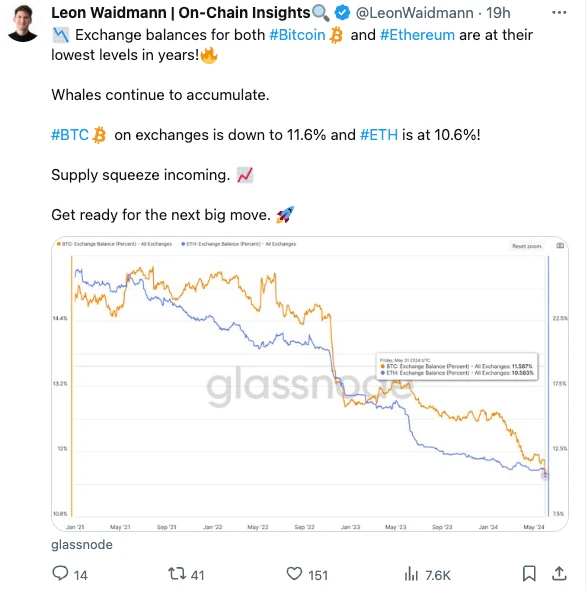
数字货币方面,根据Leon Waldmann在推特展示的Glassnode数据来看,自ETH ETF批准后,BTC & ETH在中心化交易所的存量占比已经降至历史新低。

SignalPlus波动率专栏(20240603):低IV

SignalPlus波动率专栏(20240603):低IV

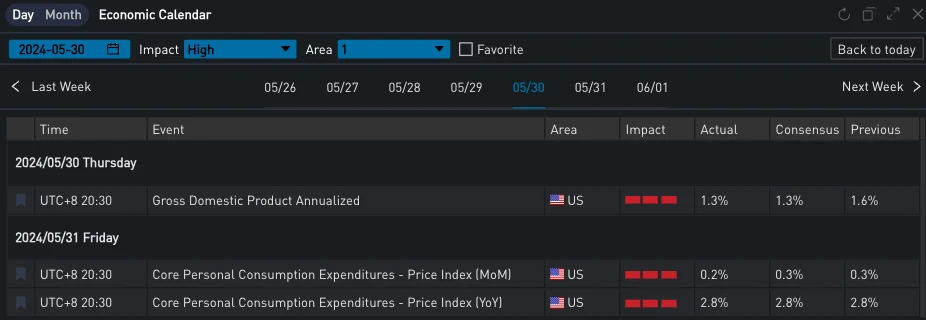
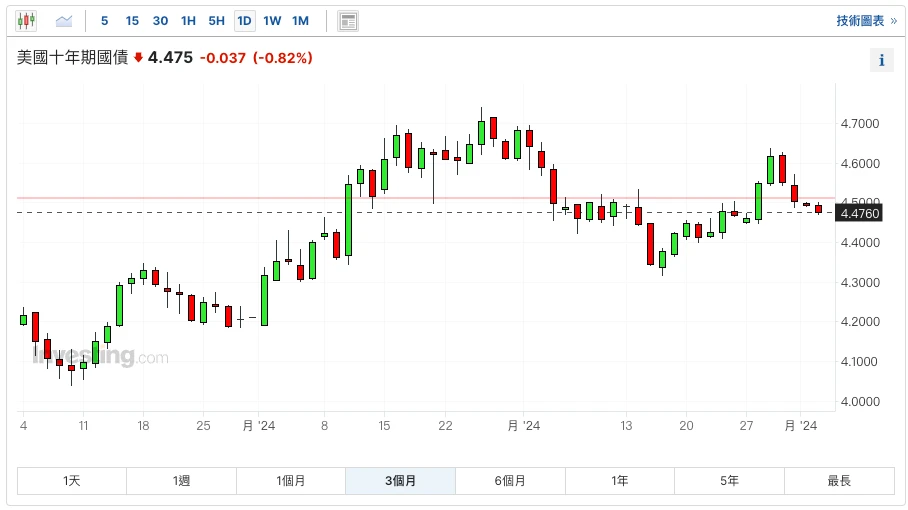
上周五美联储重点关注的核心 PCE 物价指数月率录得 0.2% ,略低于预期 0.3% ,创下 2023 年 12 月以来新低。数据公布后美债收益率连续四天下降,回吐了上周半数涨幅,十年期跌至 4.5% 以下,现报 4.475% ,两年期报 4.871% 。风险市场得到提振,道指和标普分别上涨 1.51% /0.8% ,纳指接近平收。
SignalPlus波动率专栏(20240603):低IV

Source: SignalPlus, Economic Calendar
SignalPlus波动率专栏(20240603):低IV

Source: Investing

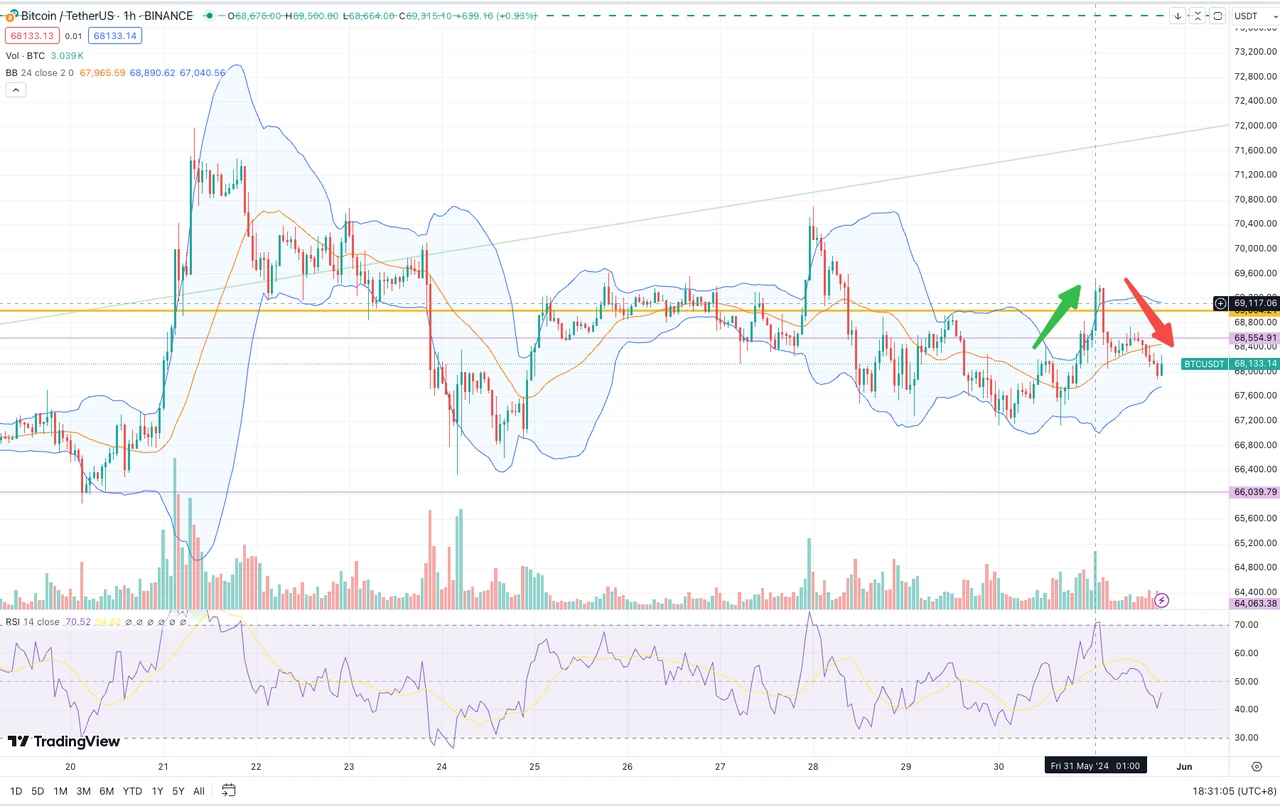
数字货币方面,根据 Leon Waldmann 在推特展示的 Glassnode 数据来看,自 ETH ETF 批准后,BTC & ETH 在中心化交易所的存量占比已经降至历史新低,价值大约$ 3 B 的以太坊离开了中心化交易所,增加了潜在空头挤兑的可能性。BTC 今日上行突破了 68500 美元阻力位,开始向下一道阻力位 71500 发起挑战,截止目前,BTC 已在 68500 附近盘旋了接近 12 天,如果突破无望,有可能再次回到 66000 寻求支撑。
SignalPlus波动率专栏(20240603):低IV

SignalPlus波动率专栏(20240603):低IV

Source: TradingView;Twitter

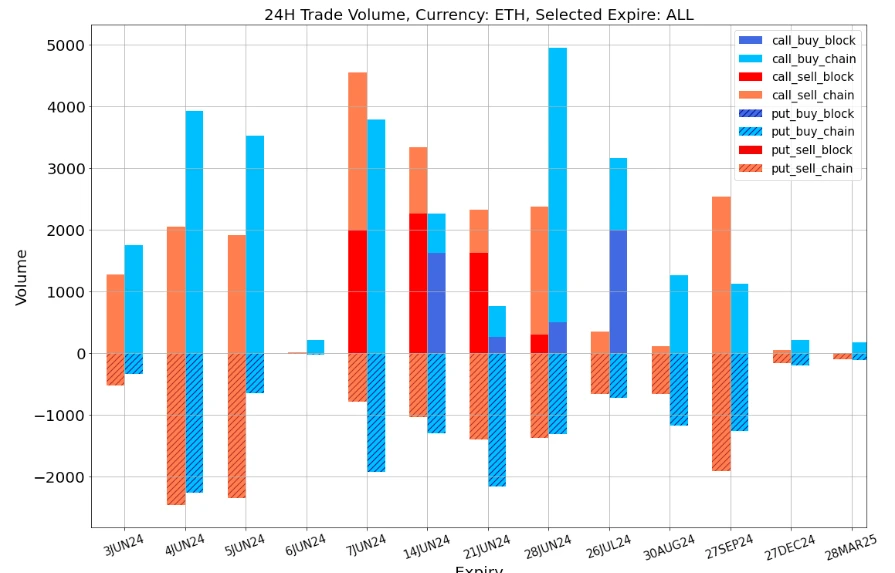
期权方面,BTC 前端 IV 在进入工作日之前小幅反弹,但整体仍处在历史三个月的 25% 分位数以下的相对低点;ETH 略低于历史中位数,期限相对曲线偏陡,观察过去 24 小时的成交也可以看到,六月中上旬看涨期权的卖压强劲,相反六七月底及其以后的 Call 大受欢迎,或许也和 ETF S-1 的批准预期有关,当前市场“共识”仍是“最快七月批准”,届时资金进场,币价有望再度上行突破,但从另一方面说,当前 Grayscale 的 Ehereum Trust(ETHE)管理资金规模高达$ 11 B,所以也有人担心 ETF 批准发售以后市场会重演当时 GBTC 的抛压。
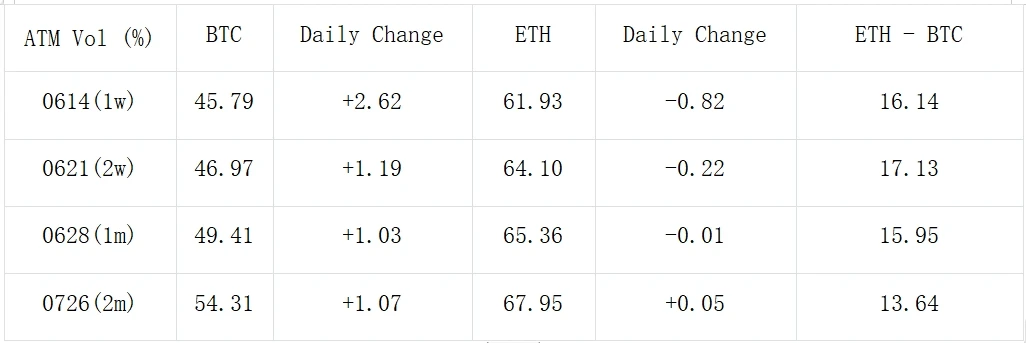
SignalPlus波动率专栏(20240603):低IV

Source: Deribit (截至 3 JUN 16: 00 UTC+ 8)
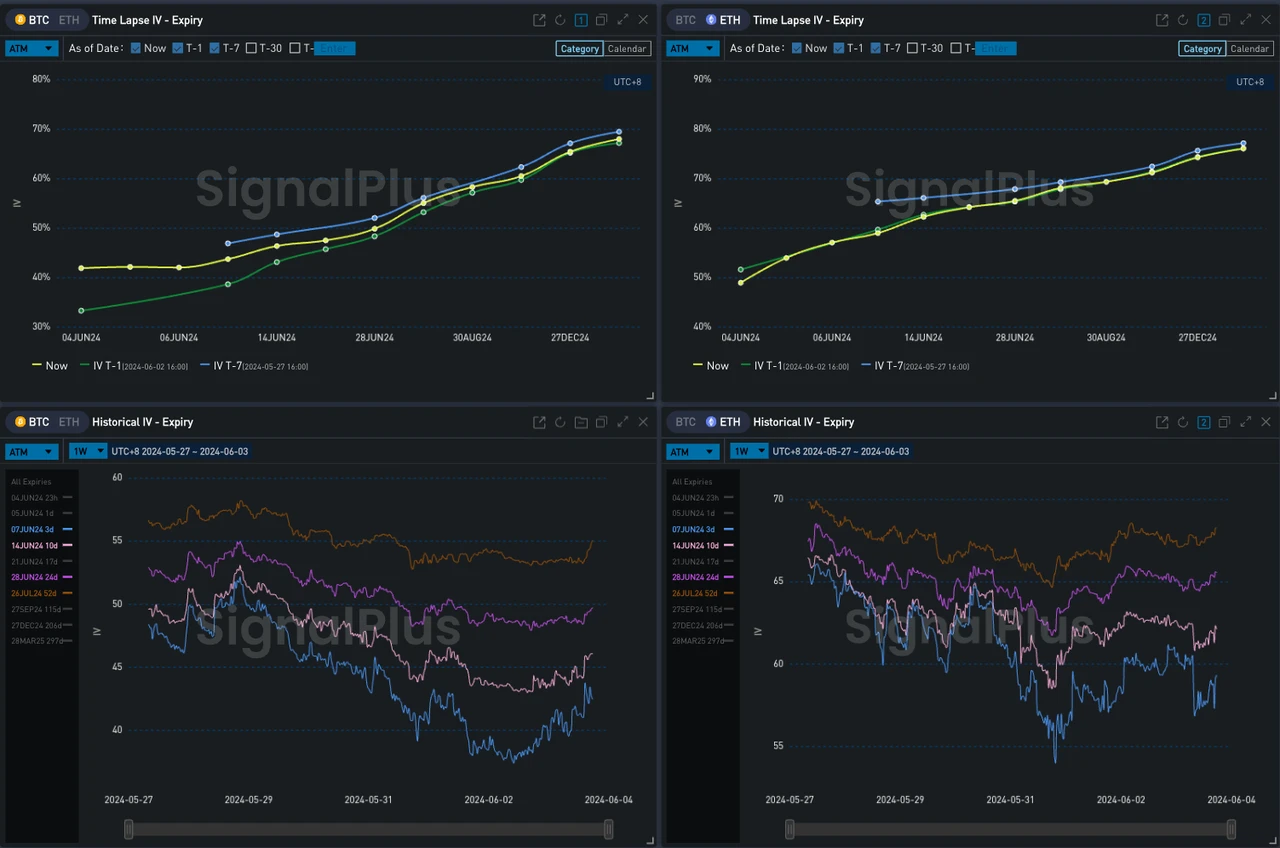
SignalPlus波动率专栏(20240603):低IV

Source: SignalPlus,BTC & ETH ATM Vols
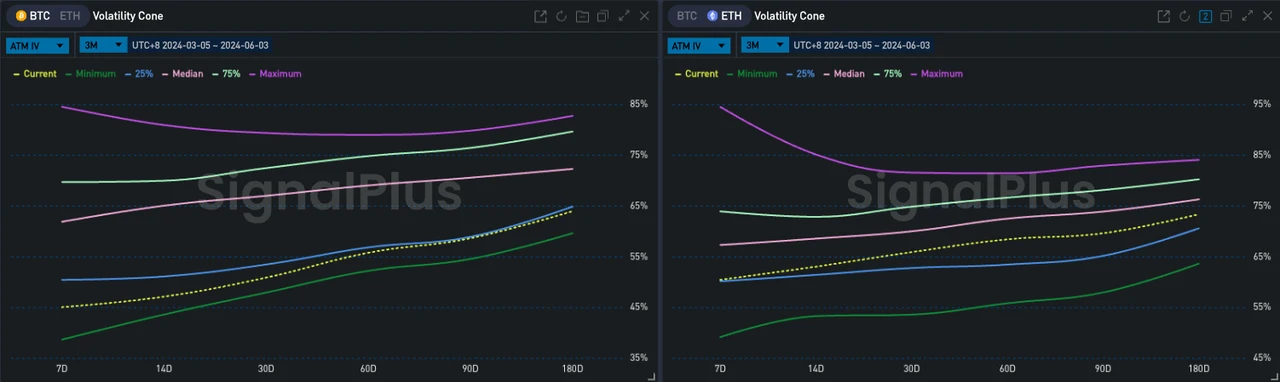
SignalPlus波动率专栏(20240603):低IV

Source: SignalPlus,BTC & ETH 25 dRR

SignalPlus波动率专栏(20240603):低IV

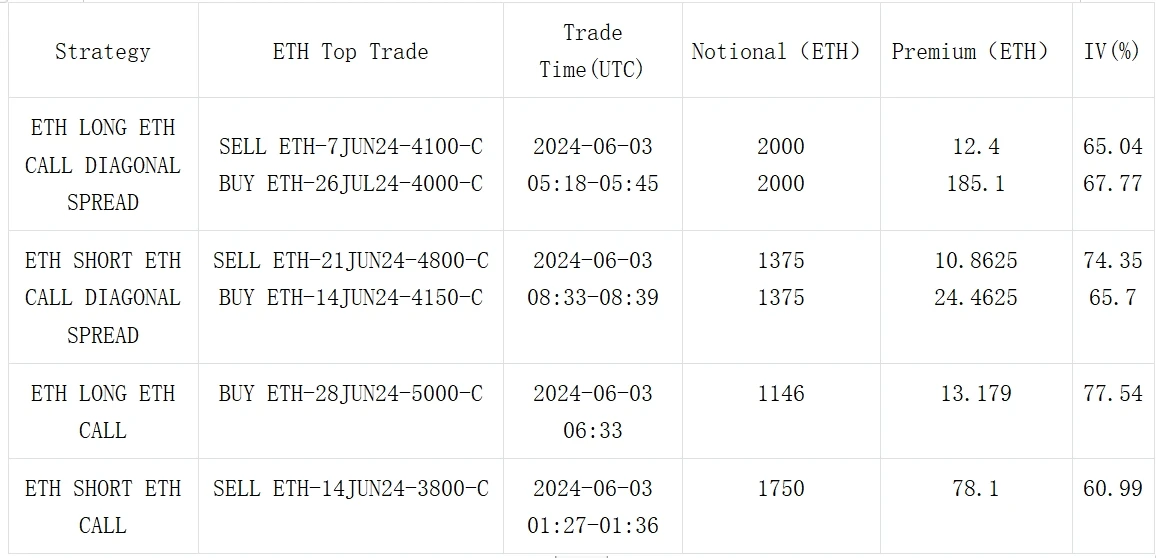
Data Source: Deribit, ETH 交易总体分布

SignalPlus波动率专栏(20240603):低IV

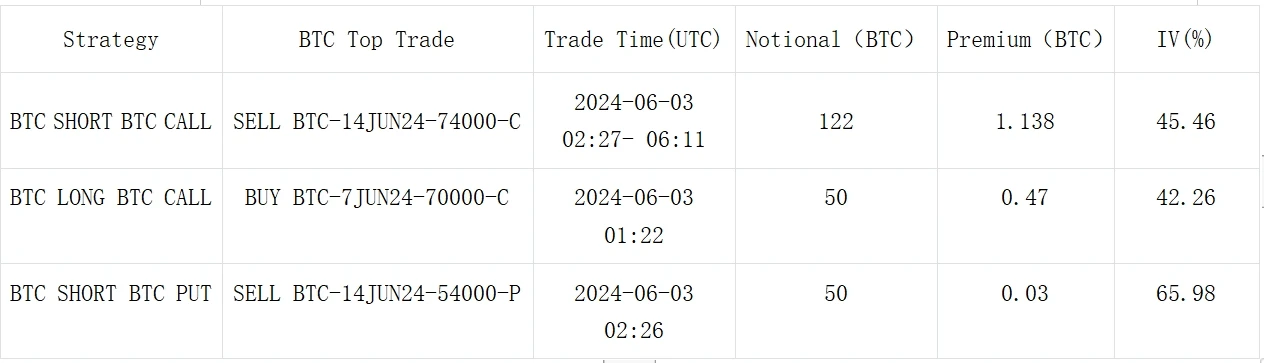
Data Source: Deribit, BTC 交易总体分布

SignalPlus波动率专栏(20240603):低IV

Source: Deribit Block Trade

SignalPlus波动率专栏(20240603):低IV

Source: Deribit Block Trade

SignalPlus波动率专栏(20240603):低IV

您可在 ChatGPT 4.0 的 Plugin Store 搜索 SignalPlus ,获取实时加密资讯。如果想即时收到我们的更新,欢迎关注我们的推特账号@SignalPlus_Web3 ,或者加入我们的微信群(添加小助手微信:SignalPlus 123)、Telegram 群以及 Discord 社群,和更多朋友一起交流互动。SignalPlus Official Website:https://www.signalplus.com

Leituras Relacionadas

In the Era of AI Transactions, How Do We Build a Trust System?

Title: In the AI Trading Era, How Do We Build a Trust System? Over a decade ago, the first online credit card purchase sparked a simple question: who do you trust? The answer was intermediary platforms that built trust between strangers. Each new era of commerce expands transactional boundaries between strangers and requires new intermediaries to foster trust, from ancient credit systems to modern e-commerce ratings. Now, the machine age is here. With AI agents autonomously executing transactions—from booking trips to managing payments—at speeds and scales beyond human oversight, a critical question arises: who is liable when a non-human entity acts outside the rules? These agents are anonymous, mutable code, making traditional trust models based on human or corporate accountability obsolete. The core challenge is establishing verifiable, non-transferable identity and reputation for AI agents. Current solutions like the ERC-8004 standard provide a public, permanent identity record but suffer from a flaw: the identity is a tradable NFT, allowing reputation to be bought, sold, and potentially weaponized by bad actors. A new "trust stack" is emerging to fill this gap, moving beyond simple scoring to bind reputation inseparably to the agent. Key approaches include: * **Skyfire:** Issues signed identity tokens cryptographically linking the agent, its development platform, and its human sponsor, ensuring traceable accountability and integrating payment. * **RNWY:** Uses non-transferable "Soulbound Tokens" (ERC-5192) to permanently bind reputation to an agent's wallet. Abandoning a tarnished reputation requires discarding the entire wallet and its history, creating a high cost for misconduct. * **ChainAware:** Foregoes issuing credentials, instead generating credit scores based on a wallet's on-chain behavior history to preemptively assess risk, similar to bank fraud detection. The lesson is that no single solution suffices. A robust trust infrastructure requires a layered stack: a base layer for sponsor accountability, a middle layer ensuring non-transferable identity/reputation, and a top layer for behavior-based scoring. As in past cycles, the intermediaries that solve the trust problem for this new era of AI-driven commerce will capture significant value. The ultimate trajectory of the agent economy depends on the trust systems we build now.

marsbitHá 3m

In the Era of AI Transactions, How Do We Build a Trust System?

marsbitHá 3m

Transaction Substitution Vulnerability Discovered in Ledger's Ethereum Application

A vulnerability involving transaction substitution has been identified and confirmed in the Ethereum application for Ledger hardware wallets. The issue was a race condition between the transaction data displayed on the device's screen and the buffer holding the actual transaction data. This flaw allowed a malicious actor to overwrite a pending transaction while the user was reviewing a legitimate one on the display, potentially leading to the signing of an unseen transaction. The vulnerability was independently discovered by multiple parties. On August 22, 2026, researcher TestMachine disclosed it after detection by the Azimuth scanning tool. Later, on August 27, OneKey's founder Yishi Wang announced his team had successfully replicated the attack in a lab environment on app version 1.22.1. Ledger's security team, Donjon, responded that no real-world exploits or user losses occurred. They stated the flaw was internally identified and patched in Ethereum app version 1.22.2, released on August 13, 2026—prior to the public disclosures. An update to the underlying Ledger Secure SDK (v26.6.1) followed on August 21. Official security bulletin LSB 023, published August 27, details the vulnerability as residing in the SDK's I/O handling. While there is minor public discrepancy over whether version 1.22.2 or 1.22.3 fully resolved the issue, all parties strongly urge users to update their Ethereum application to the latest version via Ledger Live. The incident highlights a critical security principle: the safety of a hardware wallet depends on the entire chain of components—firmware, SDK, and applications—with a flaw in any link compromising the overall system.

cryptonews.ruHá 14m

Transaction Substitution Vulnerability Discovered in Ledger's Ethereum Application

cryptonews.ruHá 14m

Trading

Spot
活动图片