CoinDeskPolicyPublicado em 2024-05-07Última atualização em 2024-05-08

Resumo

The House of Representatives is on its way to vote on whether to oppose the SEC's crypto accounting policy, Staff Accounting Bulletin No. 121, but President Biden is defending...

  • A House resolution would start a formal process to kill the Securities and Exchange Commission's controversial accounting policy on crypto custody, and a vote was expected Wednesday.
  • President Joe Biden said he'll veto the resolution if it reaches his desk for approval.

The U.S. House of Representatives is poised to vote on a resolution Wednesday to reject the Securities and Exchange Commission (SEC) cryptocurrency accounting guidance that the industry said has deterred banks from handling crypto customers, but President Joe Biden is already promising he'll veto the effort if it hits his desk.

The SEC's Staff Accounting Bulletin No. 121 – also known as SAB 121 – has been a focus of criticism from digital assets businesses and Republican lawmakers since its arrival. The bulletin was meant to clarify accounting treatment for crypto assets, directing a bank holding customer's digital tokens should do so on its own balance sheet, potentially incurring massive capital expenses. But the policy guidance has since been found in one government review to have been handled badly, though the agency and Chair Gary Gensler have defended it.

"Gary Gensler, in his jihad against digital assets, used what is supposed to be mundane staff accounting guidance to essentially freeze out large publicly traded banks from taking custody of digital assets," said Rep. Mike Flood (R-Neb.), the effort's sponsor, in a Wednesday interview with CoinDesk. And the SEC didn't consult with the banking regulators about it, Flood pointed out, arguing that Gensler "doesn't have any business in the banking world."

Advertisement
Advertisement

The White House considers the policy worth defending with a veto, according to a statement from Biden.

"SAB 121 was issued in response to demonstrated technological, legal, and regulatory risks that have caused substantial losses to consumers," Biden said in a Wednesday statement, saying he "strongly opposes" disrupting the SEC's work on this.

Flood said he expected the House to vote late in the day to kill the SEC's policy.

"It made a joke of the rulemaking process and ignored other regulatory agencies," said Rep. Patrick McHenry (R-N.C.), the chairman of the House Financial Services Committee, in a speech on the House floor on Wednesday, calling SAB 121 "a massive deviation for how highly regulated banks are traditionally required to treat assets on behalf of their customers."

But a key House Democrat thought the resolution goes too far.

"This bill takes a sledgehammer to fix an issue that may merely need a scalpel, and it does so because my colleagues on the other side of the aisle are not only interested in doing the bidding of special interest groups, they are also interested in attacking and undermining the SEC in every possible way," said Rep. Maxine Waters (D-Calif.), the ranking Democrat on McHenry's committee.

SAB 121 was originally introduced as staff guidance, but a subsequent Government Accountability Office (GAO) review determined that the agency should have handled it as a rule, with full public comments and submission to Congress.

Advertisement
Advertisement

Rep. Flood introduced the resolution to formally disapprove of the regulator's guidance alongside two Democrats, and Sen. Cynthia Lummis (R-Wyo.) has been pushing for a matching resolution in the Senate, which would be needed before the joint resolution could make it to Biden's desk.

When an agency rule is reversed under the Congressional Review Act, it's not only erased, but anything similar is forever blocked from future implementation. Waters argued that SAB 121 – apart from the controversial custody component – also provided guidance on crypto disclosures that are necessary and would be threatened if Congress overturns the policy, and Biden echoed the concern about policies that would be blocked.

"By virtue of invoking the Congressional Review Act, it could also inappropriately constrain the SEC’s ability to ensure appropriate guardrails and address future issues related to crypto-assets including financial stability," Biden said. "Limiting the SEC’s ability to maintain a comprehensive and effective financial regulatory framework for crypto-assets would introduce substantial financial instability and market uncertainty."

Advertisement
Advertisement

Flood called it "disappointing" that the president would approve the improper use of a bulletin to do the work of a full-fledged federal rulemaking. He said he and his allies will "look for every single vehicle between now and the end of the year that will go to the president's desk and add this language in there."


Edited by Nikhilesh De.

Leituras Relacionadas

Chip Stocks Lead U.S. Market Decline: Is AI Trading Being Hit by Both Interest Rates and Returns?

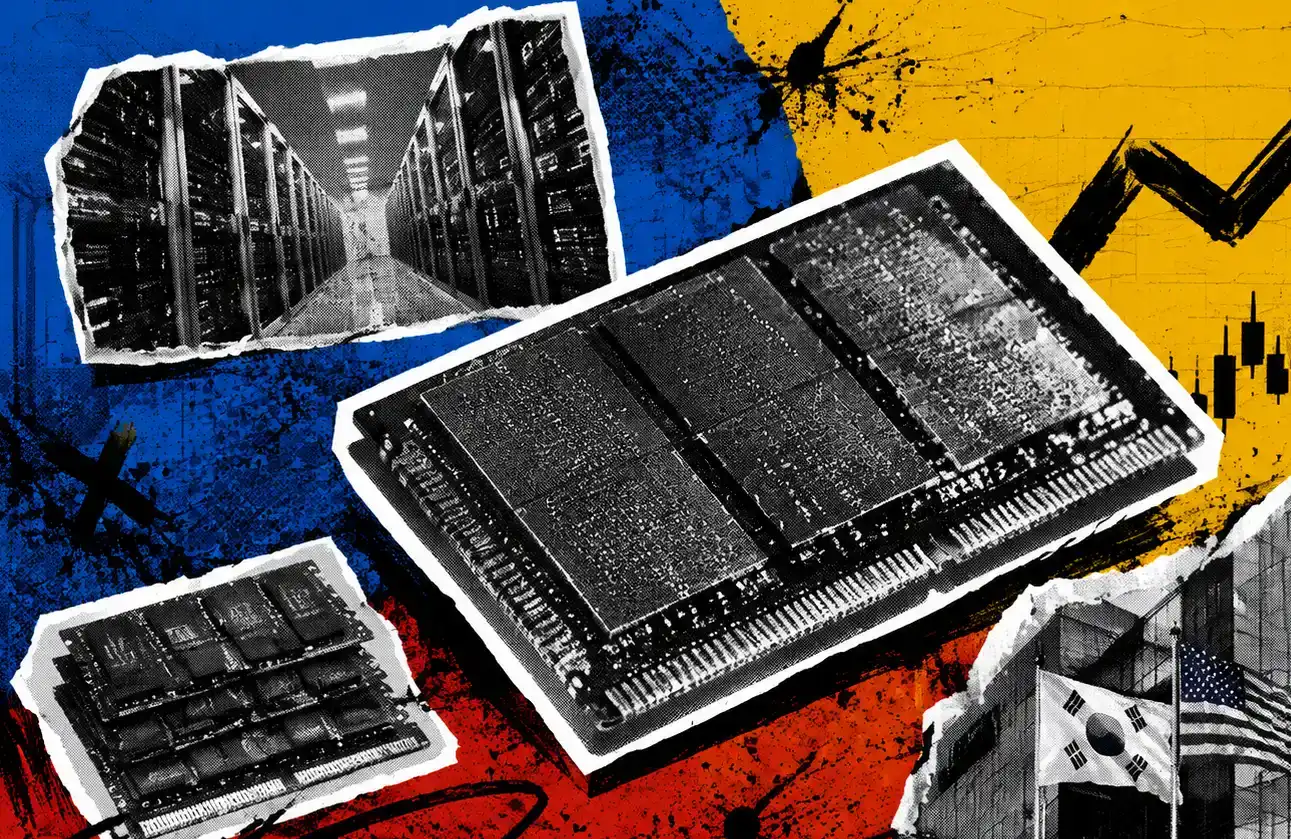
Chip stocks led a broad decline in US markets, with the Nasdaq dropping 2.2% and the S&P 500 falling 1.4%. This selloff reflects a dual challenge for the once-high-flying AI hardware trade: rising interest rate expectations and growing investor impatience for clear returns from massive AI capital expenditures. The pressure was most acute on hardware leaders. Nvidia fell about 4%, dipping below a $5 trillion market cap, while Micron plunged 13.2% ahead of its earnings report. Declines across memory, storage, AI, and mobile chips indicated a sector-wide retreat. The selloff spread globally, with South Korea's KOSPI index dropping nearly 10% as key suppliers SK Hynix and Samsung recorded double-digit losses. Investors appeared to be taking profits from the most crowded trades first. Macro headwinds intensified as market expectations shifted toward a more aggressive Federal Reserve. Forecasts for multiple rate hikes in 2026 pressured high-valuation tech stocks, which rely on long-term growth projections that become less attractive as discount rates rise. Concurrently, investors are scrutinizing the profit potential of the immense AI spending by cloud giants like Alphabet, Amazon, and Meta. While these expenditures drive demand for chips and hardware, the market is now questioning whether AI services will generate sufficient returns to justify the ongoing costs. This adjustment is not necessarily a bubble burst but a recalibration. AI demand fundamentals remain, but the narrative of endless growth can no longer fully offset concerns over higher interest rates and a longer path to profitability. Near-term direction may hinge on Micron's upcoming earnings guidance and incoming inflation data, which will influence both the AI demand outlook and the Fed's policy path. The market is transitioning from blindly buying growth to demanding clearer visibility on returns.

marsbitHá 27m

Chip Stocks Lead U.S. Market Decline: Is AI Trading Being Hit by Both Interest Rates and Returns?

marsbitHá 27m

OpenAI's New Paper: How to Train an AI that "Doesn't Deteriorate Under Pressure"?

OpenAI's new paper "Reinforcement Learning Towards Broadly and Persistently Beneficial Models" explores training AI to maintain safe, helpful, and honest behavior even under pressure, in unseen scenarios, or after being fine-tuned for harmful purposes. Moving beyond simple rule-based "don'ts," the research focuses on cultivating "beneficial traits" like honesty, risk-awareness, corrigibility, and transparency. It investigates if reinforcement learning (RL), often prone to "reward hacking" where models exploit loopholes, can instead be used to instill robust, generalized positive behaviors. Researchers created a multi-domain synthetic dialogue dataset covering areas like healthcare and law. They trained a model by replacing 5% of standard RL data with "beneficial trait" data. This model outperformed the baseline in 83% of 53 evaluations, showing average gains of 9.1% in alignment, safety, and helpfulness. Crucially, improvements generalized: a model trained only on healthcare "good behavior" data also performed better in 17 out of 19 non-healthcare alignment tests. The paper also tests "alignment persistence." When subjected to adversarial prompts or harmful fine-tuning, the beneficial trait model showed greater resilience, with smaller performance drops and less "spillover" of bad behavior to unrelated tasks. While not a complete solution, this work suggests a shift from post-hoc correction to proactively shaping robust, principled AI behavior, a critical step for deploying models in high-stakes, complex decision-making scenarios.

marsbitHá 30m

OpenAI's New Paper: How to Train an AI that "Doesn't Deteriorate Under Pressure"?

marsbitHá 30m

Semiconductor Stock Rebound: Is the Technical Correction Over or a Trend Reversal?

The core of recent semiconductor stock volatility is not about daily price swings, but rather the market questioning whether AI-driven semiconductor pricing has entered a new phase. Following a sharp sell-off in Korean stocks on June 23rd, led by Samsung and SK Hynix, a subsequent rebound is seen more as a technical positioning adjustment rather than a confirmed trend reversal. The key variable is HBM (High Bandwidth Memory), essential for AI chips. Its supply-demand imbalance granted memory makers significant pricing power. The current market focus is on whether this dynamic remains strong enough to justify elevated valuations. All eyes are on Micron's upcoming earnings report. The critical factor is not whether results meet already high expectations, but whether the company's guidance confirms that AI memory pricing power, order visibility, and future margins are still expanding. Micron's outlook will serve as a crucial test for the broader AI semiconductor chain, including Samsung, SK Hynix, and other infrastructure players. The recent bounce appears to be a pre-earnings positioning repair. For it to evolve into a sustained uptrend, concrete evidence is needed that the AI infrastructure expansion cycle's fundamentals—particularly for high-end memory—remain robust and can continue to surpass elevated market expectations. The risk is that strong demand alone may not be sufficient if future guidance hints at peaking momentum or increasing supply-side pressures.

marsbitHá 1h

Semiconductor Stock Rebound: Is the Technical Correction Over or a Trend Reversal?

marsbitHá 1h

Trading

Spot
Futuros
活动图片