加密衍生品平台Coincall推出平台币CALL,将向社区空投百万代币

Odaily星球日报Publicado em 2024-04-29Última atualização em 2024-04-29

Resumo

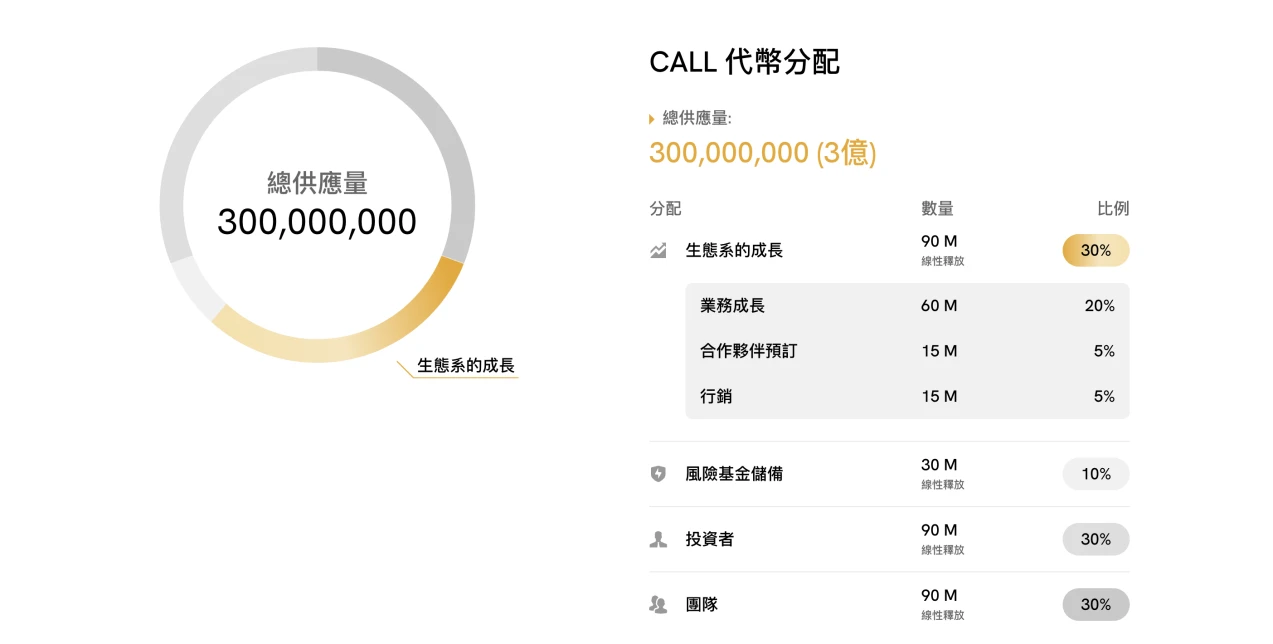
CALL是Coincall基于Solana标准协议发行的原生代币,是整个Coincall生态系统的支撑力量。

Coincall是一家加密货币衍生品交易平台,致力于让每个人都能够轻松参与期权和期货交易,能够使错综复杂的期权和期货变得更加便捷。

CALL 是 Coincall 基于 Solana 标准协议发行的原生代币,是整个 Coincall 生态系统的支撑力量。它可以像其他加密货币一样自由交易,并且为 Coincall 平台的衍生品清算和结算服务提供支持。作为未来 Coincall DEX 的基础货币,它将在 Coincall 生态中扮演着至关重要的角色。
加密衍生品平台Coincall推出平台币CALL,将向社区空投百万代币

CALL 的诞生象征着与 Coincall 社区成员们共同探索价值与发展决策。CALL 的出现将打破传统交易的束缚,为用户创建更为广阔的投资机会,共建加密货币科技化的未来。CALL 可用于 Coincall CEX 的手续费支付和 Coincall DEX 的交易 Gas 支付。

CALL 的回购

Coincall 团队将定期进行 CALL 的回购,具体的回购时间和数量将根据市场情况和平台收入进行调整。平台季度利润的最高 30% 将用于 CALL 的回购。回购的 CALL 将直接从市场上购买,数量将根据平台收入和市场需求进行调整。从市场回购的 CALL 将被销毁,即从 CALL 的流通供应中永久移除。Coincall 团队将定期公布回购计划的具体细节,包括回购时间、数量和实施情况。确保回购计划的透明度和公正性,让用户了解到平台的运营情况和回购进度。

CALL 将于 2024 年 4 月 29 日开始支持平台上的衍生性商品结算服务。作为整个 Coincall 生态系统的核心,CALL 代表 Coincall 生态的一个重要里程碑。

CALL 持有者六大福利

Coincall 将持续更新和扩展 CALL 的应用场景和使用案例,并不断激励包括用户和合作伙伴在内的生态贡献者。CALL 持有者将有机会享受但不限于以下福利:

  • 交易手续费折扣

  • 独家 VIP 权益

  • 经纪商激励

  • GAS 费用支付

  • 投票治理

  • LaunchPool 优先参与资格

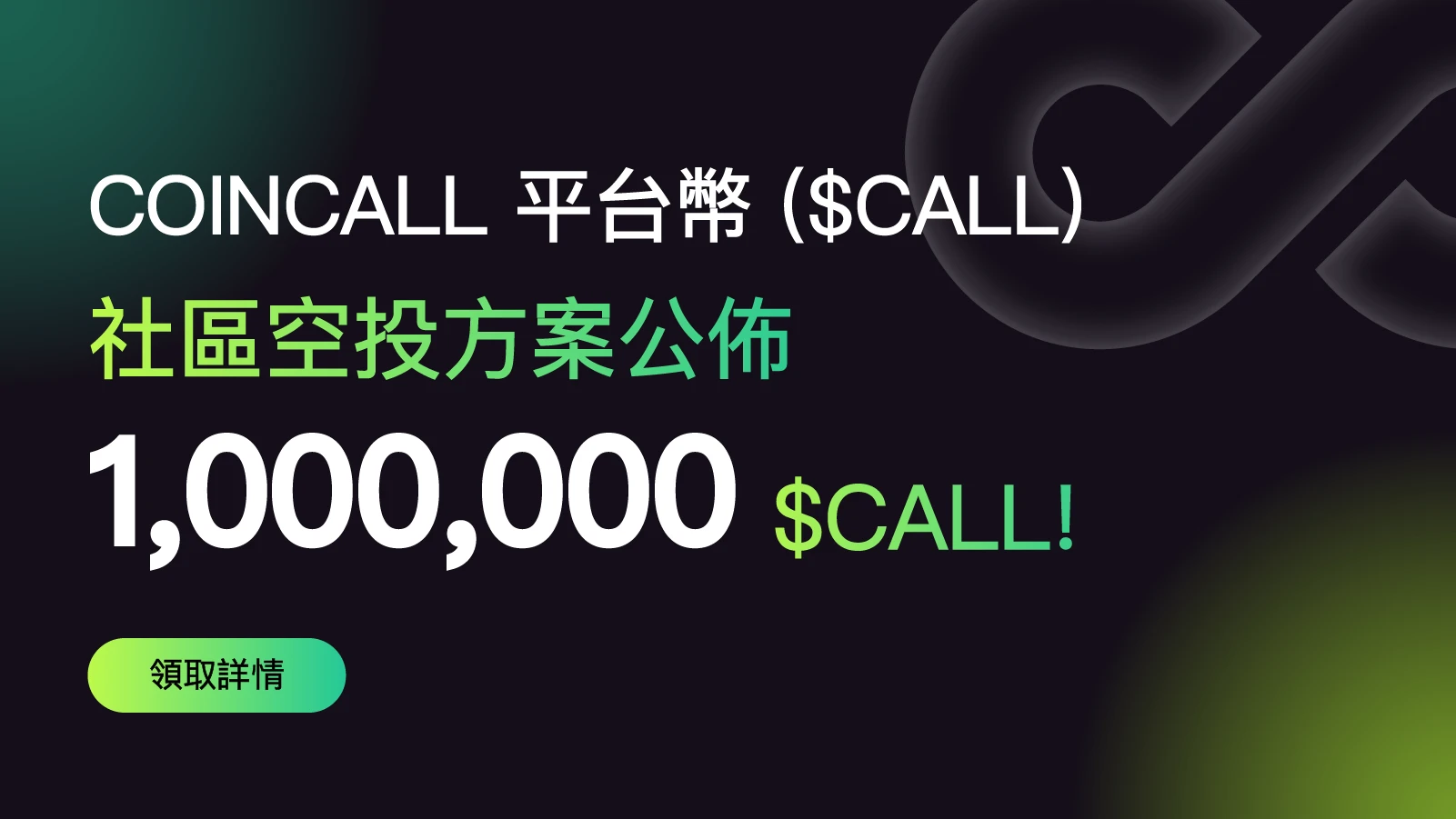
空投方案正式公布,总池子 1, 000, 000 万 CALL
加密衍生品平台Coincall推出平台币CALL,将向社区空投百万代币

为了感谢用户一直以来的支持和,Coincall 为社区早期贡献者推出了一项专门空投方案。空投总量为 100 万个 CALL,分为 4 个池子。早期贡献者是指在 2024 年 4 月 29 日 00: 00: 00 (UTC)之前在 Coincall 进行过活动,包括充值、交易或邀请朋友的用户

更多详情请见官网

CALL 奖励中心

加密衍生品平台Coincall推出平台币CALL,将向社区空投百万代币

在奖励中心参加充值、交易、邀请好友等任务瓜分 10, 000, 000 个 CALL 奖励。

更多详情请见官网

Leituras Relacionadas

Interview with NDV Founder Jason Huang: Piercing the AI Bubble and the MicroStrategy Myth, Seeking the Ultimate Edge in the Crypto Market

In a podcast with WuBlockchain, NDV founder Jason Huang discusses recent market dynamics, expressing a bearish outlook on crypto in the near term. He attributes Bitcoin's recent decline to a combination of cyclical selling pressure, the start of a US stock market correction, and liquidity tightening. A key catalyst is the emerging financial strain on MicroStrategy (MSTR). Huang explains that MSTR's model of borrowing to buy Bitcoin created a positive "flywheel" in a bull market. However, with falling BTC prices turning its stock premium into a discount, the model is now under severe stress. While MSTR only sold 32 BTC recently, the market is "front-running" the fear of its massive 80,000+ BTC holdings potentially being liquidated to meet debt obligations. He believes a true market bottom requires a major, capitulation-level event similar to the FTX collapse. Regarding investments, Huang states his fund is up over 20% this year, outperforming Bitcoin by 50-60%. The strategy involves crypto assets and commodities like oil, gold, and silver, but avoids AI stocks due to a perceived lack of trading edge. He is cautious of crowded trades in semiconductors and sees bubbles in the broader market, citing the hype around a potential SpaceX IPO. Despite short-term pessimism, Huang remains long-term bullish on one crypto innovation: stablecoins. He views them as the clearest example of a "faster, better" financial tool with significant room for global adoption. For the future, he is very bearish on Ethereum. For Bitcoin, he anticipates potential for a significant drop below $48,000 before a eventual rebound, but stresses the need to wait for a true panic-driven bottom marked by widespread despair and disinterest in the market.

marsbitHá 40m

Interview with NDV Founder Jason Huang: Piercing the AI Bubble and the MicroStrategy Myth, Seeking the Ultimate Edge in the Crypto Market

marsbitHá 40m

Conversation with Jason Huang, Founder of NDV: Puncturing the AI Bubble and the MicroStrategy Myth, Searching for the Ultimate Trump Card in the Crypto Market

In a podcast interview, NDV founder Jason Huang discusses the recent crypto market downturn, attributing the initial phase to typical Bitcoin cycle selling pressure, now compounded by a US stock market correction, tightening liquidity, and MicroStrategy's financial strain. He argues the market hasn't bottomed yet, noting true bear market lows often require a major, despair-inducing event like FTX's collapse. Huang details MicroStrategy's precarious position: its debt-and-equity fueled Bitcoin buying model has reversed into a negative cycle as prices fell. He interprets its sale of just 32 BTC as a signal prioritizing creditors over shareholders, sparking market "front-running" of its larger potential sell-off. A true bottom may arrive only after MicroStrategy resolves its looming debt payments, possibly via a large, private Bitcoin sale. His fund is up ~20% this year, outperforming Bitcoin by 50-60%, by shorting crypto and trading commodities like oil and gold. He avoided AI stocks despite being a heavy user, citing a lack of trading edge in the crowded semiconductor hardware trade, which he views as ripe for a significant correction. Long-term, Huang remains bullish on stablecoins as crypto's clearest, most practical innovation with high growth potential. He is very bearish on Ethereum and skeptical that Bitcoin has found its floor, suggesting $48,000 may not hold. He expects a sharp decline followed by a strong recovery within a year, but only after a major panic event leads to widespread capitulation and despair—the true hallmark of a market bottom.

链捕手Há 46m

Conversation with Jason Huang, Founder of NDV: Puncturing the AI Bubble and the MicroStrategy Myth, Searching for the Ultimate Trump Card in the Crypto Market

链捕手Há 46m

U.S. Stocks Trend (June 24): Korean Stock Plunge Ripples Global Chip Sector, Micron Tumbles Over 10%, Long-Term Supply Certainty Faces a 'Hard Test'

US Stock Market Trend (June 24): South Korean Market Plunge Disrupts Global Chips, Micron Drops Over 10%, Long-Term Supply Certainty Faces Hard Test On Monday, the South Korean KOSPI index plunged 10%, with SK Hynix and Samsung dropping over 12%, triggered by rumors that SK Hynix might slow its HBM4 production expansion. This shock quickly spread to the U.S. semiconductor sector. Micron plummeted 13.18% to $1,051.77, SanDisk fell 13.64%, and Marvell declined 8%. The Philadelphia Semiconductor Index closed down 7.87%, while the Nasdaq fell 2.21% to 25,587.04 points. The sell-off particularly hit memory chip stocks. Defensive sectors showed relative resilience, with gains in stocks like IBM and Johnson & Johnson. Market volatility spiked, with the VIX index jumping 12.79%. Commodities weakened, with WTI crude oil hitting a near three-month low and gold falling below $4,100. The core issue is not a challenge to AI demand itself, but a market reassessment of overly optimistic capacity expectations for memory chips, especially HBM. The rumor about SK Hynix undermined perceived certainty in the AI infrastructure cycle. Key upcoming events include Thursday's PCE inflation data, which will influence Fed rate expectations, and Micron's earnings report. The market will focus on Micron's HBM gross margins and its long-term capacity guidance. The shift indicates the AI investment cycle is moving from euphoria to rational pricing. Large institutions are questioning the sustainability of AI-related capital expenditure growth. Micron's repricing from an "AI infrastructure staple" to a more cyclical stock highlights this change. Thursday's data and earnings represent a critical juncture for assessing long-term supply certainty, which has now significantly decreased.

marsbitHá 54m

U.S. Stocks Trend (June 24): Korean Stock Plunge Ripples Global Chip Sector, Micron Tumbles Over 10%, Long-Term Supply Certainty Faces a 'Hard Test'

marsbitHá 54m

Trading

Spot
Futuros
活动图片