Bitcoin ETF Approval Comparable to 'Naked Emperor’s New Clothes,’ ECB Officials Say

CoinDeskPolicyPublicado em 2024-02-21Última atualização em 2024-02-22

Resumo

The U.S. SEC’s approval of multiple spot ETFs and the billions of dollars that have poured in since don't make Bitcoin a good investment or a better means of payment, the cent...

  • The approval of spot bitcoin ETFs and the resulting price rally are not proof that the cryptocurrency is a good investment, two officials at the European Central Bank said in a blog post.
  • Bitcoin’s price may rise in the short term, but there is no “fair value” from which serious forecasts can be made, they wrote.
10
13.3K

“Why is this dead cat bouncing so high?”

So asked two officials at the European Central Bank (ECB) about the crypto market’s most recent rally – powered by the approval of bitcoin (BTC) spot exchange-traded funds in the U.S.

The U.S. securities watchdog approval of multiple funds and the billions of dollars that have poured in since doesn’t change the fact that bitcoin is an all-around lousy investment and clunky means of payment, ECB Director General for Market Infrastructure and Payments Ulrich Bindseil and Advisor Jürgen Schaaf wrote in a Thursday blog post.

Advertisement
Advertisement

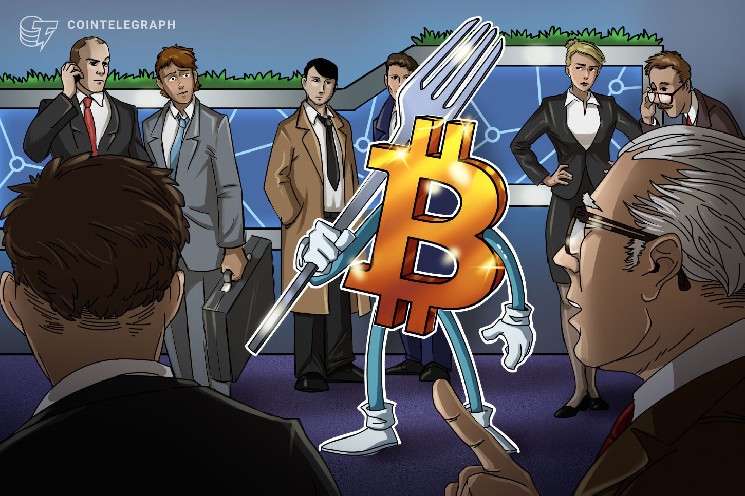
“We disagree with both claims and reiterate that the fair value of bitcoin is still zero,” the two officials doubled down on the central bank’s longstanding position that bitcoin is bad, calling the ETF approval for the cryptocurrency “the naked emperor’s new clothes.”

Last year, the European Union became the first major jurisdiction to implement a comprehensive regulatory framework for crypto assets and related service providers. Meanwhile, the ECB has been heads down on building and promoting a digital euro – a trusty central bank-issued currency that could offer a secure alternative to rogue private crypto.

Apart from stating bitcoin’s usual vices, such as high volatility, cost, slow transactions, and high energy use in mining, the central bankers detailed three factors fuelling the current rally.

“The ongoing manipulation of the ‘price’ in an unregulated market without oversight and without fair value, the growing demand for the ‘currency of crime,’ and shortcomings in the authorities’ judgments and measures” will drive the price in the short term, but “there is no fair value from which serious forecasts can be derived,” Bindseil and Schaaf wrote.

Authorities must stay vigilant to protect society when the house of cards eventually collapses, the two warned.

“This job has not been done yet,” they said.

Edited by Parikshit Mishra.

Leituras Relacionadas

Blackrock Lowers Bitcoin-to-IBIT Conversion Minimum in In-Kind Program from $25 Million to $1 Million

Blackrock has lowered the minimum threshold for converting bitcoin into shares of its iShares Bitcoin Trust (IBIT) from $25 million to $1 million. The move, announced by Robbie Mitchnick, Head of Digital Assets at Blackrock, expands access to the fund's "in-kind" creation mechanism. This process allows authorized participants, such as large banks, to exchange physical bitcoin for ETF shares directly, rather than using cash. Previously, the high $25 million minimum effectively restricted the option to major market makers and large institutional traders. Reducing the threshold enables a broader range of mid-sized institutional investors and authorized participants to engage in this arbitrage mechanism. This is expected to strengthen the price correlation between IBIT shares and the spot price of bitcoin, improve secondary market liquidity, tighten bid-ask spreads, and benefit shareholders. A key advantage is the tax efficiency for institutions already holding bitcoin, as they can convert holdings without triggering a taxable cash sale. The change occurs as IBIT continues to dominate spot bitcoin ETF inflows, attracting significant capital even amid market volatility. It contrasts with the outflows seen from competitors like Grayscale's GBTC. Blackrock intends to further lower the threshold, aiming eventually to make in-kind conversions available for transactions of any size. Analysts view the growth of in-kind creations as a sign of a maturing and more efficient ETF market structure.

cryptonews.ruHá 16m

Blackrock Lowers Bitcoin-to-IBIT Conversion Minimum in In-Kind Program from $25 Million to $1 Million

cryptonews.ruHá 16m

Luke Dashjr Removed from BIP Editor Duties

Luke Dashjr, a Bitcoin developer, has been removed from his role as editor of Bitcoin Improvement Proposals (BIPs) following a dispute over his involvement with BIP 110. The move was initiated by another Bitcoin developer, Mark Erhardt, who submitted a pull request after proposing Dashjr's removal on the Bitcoin developers mailing list. Erhardt accused Dashjr of having "actively participated" in the creation and implementation of BIP 110, alleging that as an editor, Dashjr unfairly promoted the proposal by attempting to assign it a BIP number before community discussion and pushing for its rapid acceptance. After discussion on the mailing list, Bitcoin developer John Atack confirmed that Dashjr no longer had editor or administrator privileges in the BIP repository. Atack then merged the pull request, formally removing Dashjr from the list of BIP editors. Dashjr denounced the action, calling it "a simple abuse of power by Core" and stating that "they have no authority to do this." BIP 110 proposed temporarily limiting the amount of arbitrary data that could be embedded in Bitcoin transactions. The proposal led to a minority-supported fork where nodes with the update rejected blocks from miners not signaling support. However, this fork quickly stalled due to a lack of hash rate support. A related article titled "Sailor Cranks Up the Heat: '110 Reasons' Why BIP-110 is a Bad Idea" is referenced as further commentary on the controversial proposal.

cryptonews.ruHá 20m

Luke Dashjr Removed from BIP Editor Duties

cryptonews.ruHá 20m

Tokenized US Treasuries Lose Momentum, Equity Tokenization Becomes New Frontier in RWA

Tokenized U.S. Treasuries, once a major driver in the RWA market, have plateaued around $15 billion. Meanwhile, the tokenized stock market is rapidly expanding, growing 6.5x to approximately $1.9 billion since early 2025, attracting diverse players. The SEC's recent classification framework identifies four key tokenized security structures, applicable to stocks: 1. **Issuer-Sponsored:** Companies tokenize their own shares directly, preserving full shareholder rights but with stricter compliance (e.g., Securitize). 2. **Custodial:** A third party tokenizes securities held by a custodian like DTCC, also inheriting rights but reliant on traditional infrastructure (e.g., DTCC's pilot, Ondo's recent IVV tokenization). 3. **Linked Security:** A third party issues tokenized debt securities backed by the underlying stock, offering high on-chain flexibility but no voting rights (e.g., Ondo, xStocks, Robinhood's new Stock Tokens). 4. **Security-Based Swap:** Tokenized derivatives contracts providing synthetic exposure (e.g., Robinhood's earlier Classic Stock Tokens). Major players are pursuing different strategies. **Securitize** uses the issuer-sponsored model for full compliance. **Ondo** and **xStocks** leverage the linked security structure for wider accessibility and DeFi integration, though it fragments liquidity and excludes U.S. investors. **Robinhood** has shifted to a linked security model, aiming to leverage its user base and new blockchain. Traditional infrastructure giants like **DTCC**, the **NYSE**, and **Nasdaq** are piloting tokenization to enhance efficiency. **Coinbase** has announced plans for tokenized stocks accessible on-chain but not to U.S. customers, suggesting a potential linked security approach. The convergence of crypto-native platforms, fintech firms, and traditional financial infrastructure on tokenized stocks highlights its potential as the next major catalyst for the RWA sector. Key developments to watch include evolving regulatory frameworks and their impact on the competitive landscape.

marsbitHá 22m

Tokenized US Treasuries Lose Momentum, Equity Tokenization Becomes New Frontier in RWA

marsbitHá 22m

Trading

Spot
活动图片