MOON Holder Makes 550% on Predictions Platform Polymarket as Bitcoin Moves Above $50K

CoinDeskPolicyPublicado em 2024-02-12Última atualização em 2024-02-13

Resumo

The trader had bought the Yes side shares of the now-expired Polymarket-based betting contract "Will BTC hit $50,000 in February?"

  • Bitcoin's move above $50,000 on Monday brought windfall gains to holders of the Yes side of Polymarket's now-expired "Will BTC hit $50,000 in February?" contract.
  • Pseudonymous trader u/MeLLoN98 made 550% and is now betting on the bitcoin price reaching a record high by the end of the first quarter.
10

Gone are the days when making big money in the crypto market required taking directional bets in the spot or futures markets or setting up complex decentralized finance strategies. Some traders are now generating market-beating returns through the decentralized prediction platform Polymarket.

A recent example: The pseudonymous u/MeLLoN98, a core contributor on Reddit's r/CryptoCurrency community, earned a staggering 550% return on investment after buying more than 90,000 shares in the Yes side of Polymarket's now-expired betting contract "Will BTC hit $50,000 in February?"

The contract resolved to Yes on Monday after bitcoin (BTC) rose past $50,000 on the Nasdaq-listed Coinbase (COIN) exchange, hitting the highest since December 2021. Speculators on Polymarket can buy or sell outcome shares, which can be redeemed for $1 if the outcome is correct.

Advertisement
Advertisement

"I converted 110,000 Moons to 14,000 USDC on Kraken and bought 91,409 shares on Polymarket at an average price of about 15 cents. So I paid $14K and got $91.4K," u/MeLLoN98 told CoinDesk in an interview conducted over X. MOON is the native token of the r/CryptoCurrency community, which has 7.4 million users.

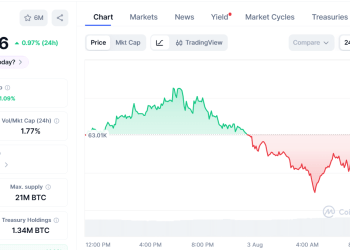
Polymarket's now-expired prediction contract "Will BTC hit $50,000 in February" (Polymarket)
Polymarket's now-expired prediction contract "Will BTC hit $50,000 in February" (Polymarket) (Polymarket)

MOON ERC-20 tokens are distributed as rewards to community members for their posts or comments in the subreddit and can be freely traded and spent in the community for various purposes. USDC is the world's second-largest dollar-pegged stablecoin, with over $27 billion in market capitalization.

In other words, u/MeLLoN98 used his free MOON tokens to bet on the bitcoin price and won over $91,000. u/MeLLoN98 said he is planning to accumulate more MOON with the amount won.

"Moons are getting on Arbitrum One next month with a partnership with Celer Network, so more liquidity is coming," the trader said, explaining his plans to buy more MOON.

Polymarket has several other betting contracts tied to bitcoin and ether. One, floated in December, allows traders to speculate on whether the BTC price will rise to a record high on Binance on or before March 31. As of writing, shares in the Yes side of the contract traded at 18 cents, representing just an 18% probability of bitcoin climbing above $68,789 by the end of the first quarter.

Advertisement
Advertisement

u/MeLLoN98, which goes by the name RedditMoons-10$ on Polymarket, has purchased more than 230,000 shares of the Yes side of the contract.

"This bet is a lot more crazier. I paid approximately $27k and if it happens I'll get $230k," u/MeLLoN98 said.

Edited by Sheldon Reback.

Leituras Relacionadas

OpenClaw Founder Peter Steinberg's Latest Speech: The Life and Death Revelation of an Open Source Project, How OpenClaw Emerged from the Eye of the Storm

Peter Steinberg, founder of the wildly popular open-source AI agent project OpenClaw, reflects on its turbulent journey from creation to near-collapse and resurgence. It began in late 2024 from his personal frustration with sending prompts from phone to computer. He built a WhatsApp relay that felt "magical," but initial excitement was limited to friends. After adding Discord support and launching a public server, the project exploded virally overnight, attracting massive attention, rebranding requests (from "Claudis" to OpenClaw), and even praise from NVIDIA's CEO. The intense scrutiny and pressure nearly broke Steinberg. The biggest technical crisis came from over-optimizing for a specific AI model provider, which suddenly canceled subscriptions, forcing a rushed shift to open-weight models. OpenClaw's weekly downloads plummeted before surging to a record high after being "declared dead." Steinberg realized he had stopped enjoying the build process and using his own product, making it a duty rather than a passion. His key lesson: "Fun is speed." Recovery came by refocusing on building for himself, forming a non-profit, and receiving crucial support (e.g., from NVIDIA for security). The team is now using OpenClaw to build OpenClaw itself, emphasizing its core value: a private, open alternative where "your agent, your machine, your life." He shares insights: the first user should be yourself; balance bug fixes with new features to maintain interest; the current bottleneck is reliable toolchains, especially for Mac testing. His story underscores that creation thrives on personal need, endures through storms when the joy of building returns, and persists by "living in the future and building what's missing."

marsbitHá 40m

OpenClaw Founder Peter Steinberg's Latest Speech: The Life and Death Revelation of an Open Source Project, How OpenClaw Emerged from the Eye of the Storm

marsbitHá 40m

US Stocks and Gold Rise Together, Bitcoin Rebound Absent, Have Bottom Signals Appeared?

While traditional assets like U.S. stocks and gold have rebounded strongly, Bitcoin continues to consolidate without following the uptrend. Since hitting an all-time high near $126,000 in October last year, Bitcoin has remained in a corrective phase, trading between $62,000 and $66,000 over the past month. Although U.S. spot Bitcoin ETFs have seen renewed net inflows recently—with the past week marking the best performance since mid-April—this buying pressure has been insufficient to counter persistent selling from miners and crypto companies. For instance, miner-linked wallets have seen their BTC balance drop by about 72% since late 2021. Some long-term indicators are showing early signs of a potential bottom. Metrics such as Reserve Risk, BTC price relative to its 2-year moving average, and the AHR999 index have entered historically oversold territory, suggesting improved long-term value. However, key indicators like MVRV Ratio, NUPL, and the Fear & Greed Index have not yet reached the extreme levels typically seen at major cycle lows. Furthermore, over 53% of Bitcoin supply remains in profit, and stablecoin liquidity is still contracting, indicating the market may need more time for a full capitulation phase. In summary, while select bottom signals are emerging, Bitcoin lacks the broad-based confirmation needed to declare a definitive cycle low. A sustained recovery will likely depend on continued ETF inflows, a reduction in structural selling pressure, and further deterioration in key on-chain metrics toward historical extremes.

marsbitHá 42m

US Stocks and Gold Rise Together, Bitcoin Rebound Absent, Have Bottom Signals Appeared?

marsbitHá 42m

After Yushu Got Hot, a 68-Year-Old Auto Parts Boss Bet 1.85 Billion

After staying relatively low-profile for years, Shanghai Bate Technology, a traditional auto parts supplier, has recently been thrust into the spotlight as a leading humanoid robotics concept stock. This shift is largely tied to the impending IPO of robotics company Unitree, with which Bate collaborates on prototype development. Bate's founder, 68-year-old Jin Kun, is making a bold bet on this new frontier. The company is investing 1.85 billion yuan to build a major R&D and production base in Kunshan for planetary roller screws—a key component in robot joints. With an annual capacity of 2.6 million sets planned, plus overseas expansion, this represents a massive, forward-looking commitment from a firm whose 2025 revenue of 2.3 billion yuan still relies almost entirely on its traditional automotive business (over 98%). The investment highlights a strategic pivot. Bate aims to leverage decades of expertise in metal processing, precision manufacturing, and heat treatment from the automotive sector and apply it to the burgeoning robotics industry. However, this move carries significant risk. The company has not yet secured formal supplier contracts or begun mass deliveries for its roller screws. It is essentially betting on future demand in a market that remains nascent. The broader industry context adds to the uncertainty. While multiple Chinese manufacturers are racing to invest in similar robotics component capacity (totaling over 6 billion yuan), the downstream humanoid robot market is still in its early stages. Estimates put 2025 global shipments at only around 18,000 units, primarily for entertainment, education, and data collection rather than large-scale industrial use. This creates a critical mismatch: the speed of upstream component factory construction and capital investment is far outpacing the commercialization and adoption of the robots themselves. Bate's story, driven by Jin Kun's decisive gamble, encapsulates the high-stakes transition facing traditional manufacturers seeking a "second growth curve" in robotics—a future full of potential but currently backed more by market anticipation than concrete financial results.

marsbitHá 45m

After Yushu Got Hot, a 68-Year-Old Auto Parts Boss Bet 1.85 Billion

marsbitHá 45m

Trading

Spot
活动图片