TUSD脱锚,背后原因几何?

Odaily星球日报Publicado em 2024-01-18Última atualização em 2024-01-18

Resumo

从异军突起到遭遇挑战,TUSD 市值三个月跌约四成。

原文作者:Karen,Foresight News

本周开始市值前五大稳定币 TUSD(TrueUSD)开始出现脱锚趋势,价格逐渐偏离 1 美元的锚定价值,并在今日一度跌破 0.97 美元,目前已回升至 0.9878 USDT。

对于稳定币来说这样的波动值得深入关注和谨慎应对,可能会引发一系列连锁反应,引发市场恐慌和加剧市场动荡。

TUSD 脱锚,背后原因几何?

TUSD 脱锚有迹可循。币安在最新两期的新币挖矿暂停支持 TUSD 后,TUSD 应声下跌。过去 24 小时,币安上 TUSD/USDT 交易对净流出 1.7 亿美元, 5 日主力净流出 2.8 亿美元。

其次是 FDUSD 的市场份额夺取。在 2023 年 7 月下旬,币安有了稳定币新宠 FDUSD(First Digital USD),FDUSD 由香港实体 FD 121 Limited 于 2023 年 6 月发行。自此,FDUSD 开始抢占 TUSD 等稳定币市场份额,在 FDUSD 推出半年后的今天,市值(21 亿美元)已超越 TUSD,成为第四大稳定币。

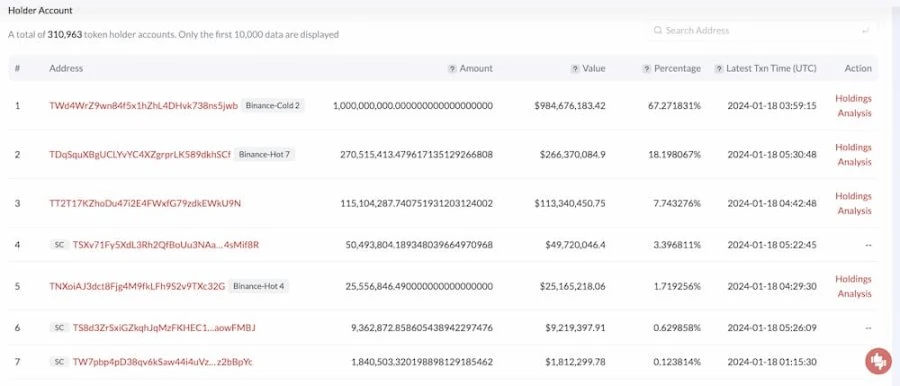
当前 TUSD 逾 19 亿原生流通量中,约 77% (14.86 亿)位于 Tron 上,约 20% (3.92 亿)位于以太坊上。而在 Tron 中前五大 TUSD 持有地址就有三个币安钱包地址,光这三个地址持有的 TUSD 总流通量就接近 13 亿,占据 TUSD 总原生流通量的约 68% ,第三大地址为疑似孙宇晨地址。而在币安于 1 月 1 日更新的储备金证明中,TUSD 储备率为 110.27% ,客户净余额为 18.76 亿,币安净余额为 20.68 亿。币安对 TUSD 态度的重要性不言而喻。
TUSD脱锚,背后原因几何?

也有推特用户将 Poloniex 在 12 月份遭到的逾 1 亿枚美元黑客攻击视为造成 TUSD 市场不稳定的一个驱动因素之一,不过从时间维度来看,这一观点的支撑力并不够强或者影响较小。

TrueUSD:波动为正常市场动态和流动性调整

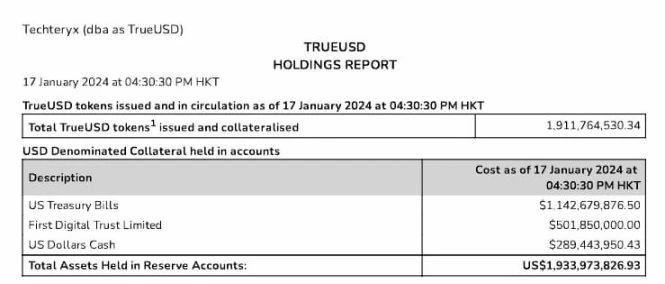
在此情况下, 1 月 16 日,TrueUSD 宣布会计师事务所 MooreHK 将为 TUSD 提供每日鉴证服务,提供 TUSD 储备状况及其储备明细的透明度。根据最新的储备金鉴证报告,截至 1 月 17 日 4: 30 ,TUSD 抵押率为 101% ,在以太坊、Tron、Avalanche、BNB Chain、 BNB Smart Chain 上的发行和流通量逾 19 亿枚(具体为 1, 911, 764, 530.34),储备金账户中的总资产价值为 1, 933, 973, 826.93 美元,包括:

  • 美国短期国债: 1, 142, 679, 876.50 美元;

  • Dirst Digital Trust Limited: 501, 850, 000.00 美元;

  • 美元现金: 289, 443, 950.43 美元。

TUSD脱锚,背后原因几何?

MooreHK 发布的 TUSD 储备金鉴证报告

其中,根据该报告,账户中持有的以美元计价的抵押品是 Techteryx 在一家香港存款机构、一家瑞士存款机构和多家巴哈马存款机构为 TrueUSD 代币持有者的利益而在协议中约定的账户中持有的总余额。具体公司名称并未披露。有趣的是,TUSD 储备金账户资产中有逾 5 亿美元托管与 Dirst Digital Trust Limited,而后者正好是 FDUSD 背后的主体。

TrueUSD 也在刚刚回应称,定期证明正在进行中。最近币安新币挖矿的调整带来了短期套利机会。这些被认为是市场动态和流动性调整的正常现象。此外,涉及全球多家银行的 TUSD 兑换渠道也在顺利运作。TrueUSD 致力于进一步扩大与币安的合作。此外,TUSD 铸币和赎回服务始终可通过 tusd.io 访问。

此外,TUSD 在 Tron 上的第三大地址(TT 2 T 17 开头,被 Aarkham 标记为疑似孙宇晨地址)过去两日从币安热钱包提取 1.12 亿枚 TUSD。据 Lookonchain 分析,该地址在 TUSD 脱钩后销毁 1.04 亿 TUSD,随后往币安存入 2 亿 USDT,并提现近 1.4 亿 TUSD,以使 TUSD 重新回到锚定状态。TGiwro 开头巨鲸从币安提取了 3160 万 TUSD,并在 TUSD 脱钩后将其存入 JustLend 中,随后向 JustLend 借了 1897 万 USDT 并存入币安。

TUSD:从异军突起到遭遇挑战

据官网介绍,TrueUSD 于 2018 年 3 月由总部位于加利福尼亚的 TrustToken(后重塑为 Archblock,也是 TrueFi 贡献方)在以太坊上推出,是一种与美元挂钩的稳定币。2021 年,TUSD 又相继上线 Avalanche、Tron,并于 2023 年 4 月份在 BNB Chain 上推出。

早在 2018 年 5 月,即 TUSD 推出不到后,币安就上线了 TUSD,并同步开放 TUSD/BNB、TUSD/BTC、TUSD/ETH,之后逐步为更多代币添加 TUSD 交易对。而在去年 BUSD 遭遇监管后,币安推出 TUSD 挂单零手续费活动,还在新币挖矿中支持 TUSD(注:最新两期已暂停支持),促使 TUSD 一度成为币安上比特币最大交易对,并迅速崛起。

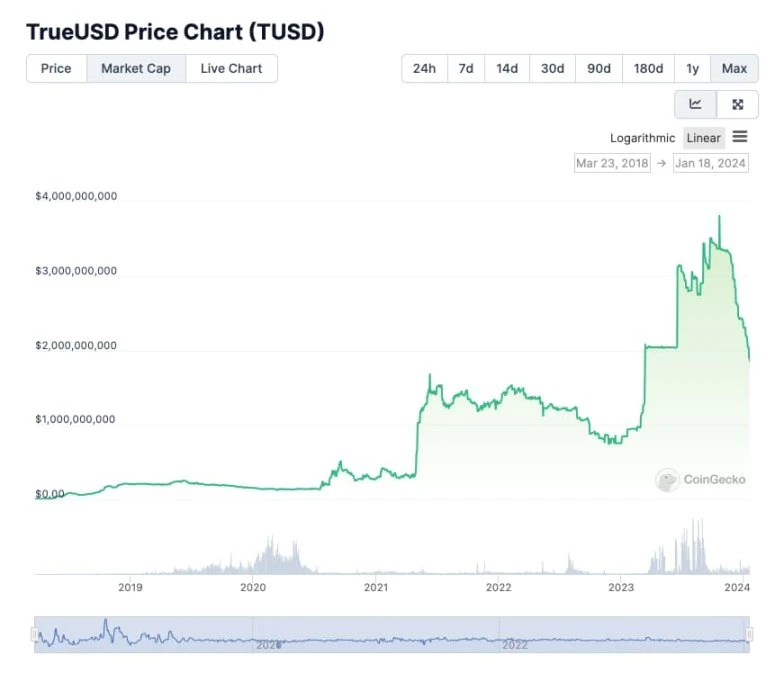
市值方面,CoinGecko 数据显示,TUSD 市值在 2023 前三个季度异军突起,从年初的 7.56 亿美元激增至 10 月份最高峰 38 亿美元,但随后却开启下跌走势,目前的市值为 21 亿美元,过去三个月跌约 40% 。
TUSD脱锚,背后原因几何?

来源:CoinGecko

TrueUSD 的所有权方面, 2020 年 12 月份,TrueUSD 业务所有权转让给了给亚洲财团 Techteryx,该财团将与 TRON 合作,在以太坊、TRON 和其他区块链网络上发展 TUSD。自 2023 年 7 月 13 日起,Techteryx 将全面管理与 TUSD 相关的所有离岸业务和服务,包括铸币和赎回、客户导入和合规性,以及法币储备和银行和信托关系的监管,不过,在过渡期间 Archblock 将继续为美国客户提供服务。

值得注意的是,本次所有权转让给 Techteryx 也引发了社区的担忧,再加上 Techteryx 无官网,并且缺乏详细介绍信息,使得社区对其信誉产生了质疑。

笔者在 MakerDAO 社区论坛发现,TrustToken 一团队成员曾在 2020 年年底表示,Techteryx 业务遍及香港、新加坡、广州、深圳、北京等地,涉及传统房地产、娱乐、环境和信息技术行业,最大所有者为 Jennifer Jiang 女士(也是 CEO)。同时,其回应孙宇晨并非拥有 Techteryx 的新所有权,Techteryx 也与投资 Poloniex 的公司也没有任何关系。然而声称的 Techteryx 所有者 Jennifer Jiang 究竟是谁,我们无从得知。

前车之鉴,稳定币脱锚易引发流动性危机和信任危机等一系列连锁反应,给市场带来不可忽视的风险和挑战。当前,TrueUSD 也在积极应对,至于后续如何,Foresight News 将持续追踪。

Leituras Relacionadas

Market Trend (June 19): US-Iran Deal Drives Out Geopolitical Premium; Chip Stocks Soar to New Highs; Energy Sector Leads Declines

U.S. Market Trends (June 19): U.S.-Iran Deal Eases Tensions, Chip Stocks Soar, Energy Sector Leads Declines. U.S. stocks rallied on Thursday as the signing of a temporary U.S.-Iran deal in Geneva de-escalated Middle East tensions, with Saudi oil tankers transiting the Strait of Hormuz. This geopolitical relief helped markets recover from recent Fed-driven volatility. The S&P 500 rose over 1%, the Nasdaq gained nearly 2%, and the Dow Jones Industrial Average closed at another record high. The Philadelphia Semiconductor Index surged over 6% to a historic peak. Chip stocks were the standout performers. Reports of an Apple-Intel design and foundry deal for certain products, alongside mentions of potential Nvidia and SpaceX collaborations with Intel, propelled the sector. Intel surged ~10.5%, while memory chip makers like Micron also saw significant gains, highlighting sustained confidence in long-term AI capital expenditure. In contrast, the energy sector was the day's sole loser, with the S&P 500 energy sub-index declining as WTI crude fell ~2% to around $74.29/barrel. The reopening of key shipping routes erased prior geopolitical risk premiums. SpaceX extended losses for a second day on news of a potential large bond offering. Market volatility (VIX) dropped sharply, indicating a swift reversal of post-Fed jitters. Treasury yields dipped slightly but remained elevated. The focus now shifts to upcoming economic data, including next week's PCE inflation report and Micron's earnings, which will serve as a key test for the AI trade's durability.

marsbitHá 8m

Market Trend (June 19): US-Iran Deal Drives Out Geopolitical Premium; Chip Stocks Soar to New Highs; Energy Sector Leads Declines

marsbitHá 8m

Will MicroStrategy Fall Into a Death Spiral? How Will the Macro Outlook Evolve in the Second Half of the Year?

**Summary:** The discussion centers on recent Bitcoin price declines and the evolving financial strategy of MicroStrategy (MSTR). The core argument is that the primary pressure is not from one-off Bitcoin sales by MSTR, but from the market's new expectation that MSTR may need to engage in *sustained, small-scale* Bitcoin sales to cover cash flow obligations for its growing portfolio of preferred shares and debt instruments (like STRC). This shift is driven by its stated goal of maintaining "bitcoins per share neutrality." The market is now testing whether it can absorb this potential ongoing selling pressure without entering a severe "death spiral" with Bitcoin's price. A resolution may involve MSTR softening its approach to avoid damaging both its stock and Bitcoin. The conversation then explores the parallel rise of AI-related stocks. The guest posits that AI is fundamentally restructuring labor, with "tokens" (representing access to AI models/compute) becoming a new form of capital and a substitute for human execution. This drives corporate efficiency and profits, benefiting upstream hardware providers (semiconductors, data centers), which explains the sustained rally. This represents the early stages of a "machine economy." Regarding crypto exchanges offering US stock trading, this is seen as a natural evolution. With few crypto-native assets generating lasting value, exchanges are pivoting to distribute valuable real-world assets (RWAs). This doesn't necessarily harm crypto's long-term prospects, as blockchain infrastructure may become crucial for future machine-to-machine economies. The analysis concludes that the era of rampant altcoin speculation is likely over, heavily damaged by the liquidity shock of the "1011" event (likely referring to a major market crash). Meme-driven capital has largely migrated to US equities. Looking ahead, macroeconomic uncertainty is rising due to potential large IPOs (e.g., SpaceX) and the US elections. While short-term market corrections are possible, the long-term trends of AI-driven productivity gains and the maturation of blockchain towards real-world utility and institutional adoption remain intact.

marsbitHá 12m

Will MicroStrategy Fall Into a Death Spiral? How Will the Macro Outlook Evolve in the Second Half of the Year?

marsbitHá 12m

Will MicroStrategy Fall into a Death Spiral? What Will the Macro Trend Be in the Second Half of the Year?

The podcast features investor Didier discussing the recent Bitcoin downturn and the evolving strategy of MicroStrategy (MSTR). He argues the core pressure is not macro factors or ETF outflows, but the market pricing in an expectation that MSTR will engage in continuous, small-scale Bitcoin sales to fund its increasing preferred stock and debt obligations under its "bitcoin-per-share neutrality" principle. This creates a structural headwind. However, he is cautiously optimistic a "death spiral" is avoidable without new major shocks, as market support is likely to emerge at a certain price point. Didier then posits that the AI-driven bull market in US stocks (semiconductors, data centers) is fundamentally driven by AI agents and tokens becoming the "new labor force," displacing human roles and boosting corporate margins. This shift toward a machine economy is still in its early stages. He comments on crypto exchanges adding US stock trading, viewing it as a natural move toward valuable real-world assets as truly valuable crypto-native assets remain scarce. For crypto-native traders, he suggests existing strategies (e.g., meme-chasing or value investing) can translate to similar assets in US markets. The discussion notes the severe liquidity damage from the "1011 event" (likely referring to a major market crash) has essentially ended the altcoin cycle, with speculative momentum shifting to the more liquid US stock market. Regarding the macroeconomic outlook for H2 2024, Didier expresses increased caution due to potential market pressure from upcoming mega-IPOs (e.g., SpaceX) and US midterm election risks. Long-term, he remains bullish on AI's productivity gains and its convergence with blockchain/Web3, which he sees maturing into a more institutional, real-asset-focused phase.

链捕手Há 14m

Will MicroStrategy Fall into a Death Spiral? What Will the Macro Trend Be in the Second Half of the Year?

链捕手Há 14m

Dylan Patel: Founder of SemiAnalysis, Praised by Jensen Huang, is a 'Beekeeper' and 'Forum Enthusiast'

Dylan Patel, founder of the independent research firm SemiAnalysis, has an unconventional background. A former beekeeper from rural Georgia, he entered the semiconductor world as a self-taught "forum warrior," discussing chip technology anonymously online from a young age. He launched the SemiAnalysis blog in May 2020, which later transitioned to a paid subscription model. The firm has grown from a one-person operation to a global team of around 60, with a dedicated teardown lab. Its detailed, technically-focused analysis on semiconductor supply chains, AI infrastructure, and products has earned significant industry recognition. Notably, NVIDIA founder Jensen Huang has publicly cited their reports. In a landmark case, a critical 2024 report on AMD's MI300X GPU software stack led to a 90-minute call with AMD CEO Lisa Su, who thanked him for the constructive feedback. SemiAnalysis later acknowledged AMD's improvements. The firm's influence on markets was seen when a report on NVIDIA's Rubin memory configuration was partially shared, affecting memory stock prices. Dylan Patel emphasized the importance of context, contrasting the shared excerpt with the report's actual title. SemiAnalysis, now a multi-faceted consultancy with revenue projected to reach $100 million, is known for its deep technical insights that influence major industry players and investment decisions.

marsbitHá 1h

Dylan Patel: Founder of SemiAnalysis, Praised by Jensen Huang, is a 'Beekeeper' and 'Forum Enthusiast'

marsbitHá 1h

Trading

Spot
Futuros
活动图片