BendDAO拥抱BTC生态,能否老树开花?

Odaily星球日报Publicado em 2023-12-29Última atualização em 2023-12-29

Resumo

与其说是主动求变,不如说是被市场大势裹挟。

原创 | Odaily星球日报

作者 | 0xAyA

BendDAO拥抱BTC生态,能否老树开花?

终于,BendDAO 也开始发铭文了——这个此前专注于 NFTFi 领域,致力于为蓝筹提供更多流动性的协议,最终也还是逃不过 BTC 生态和铭文滚滚而来的浪潮。早在两周前,BendDAO 就表示,团队计划提出解决方案来拥抱比特币 NFT 生态系统,新的解决方案将允许比特币 NFT 和 BendDAO 之间的无缝交互,并支持 WBTC 流动性池作为可借贷资产。

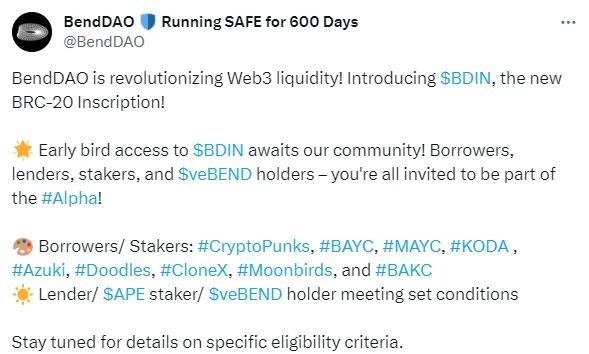
而后 BendDAO 宣布将连接 BRC 20 和 ERC 20 流动性,并即将推出 BendDAO BRC-20 ,为比特币生态提供借贷和跨链桥服务。就在昨天,官方正式宣布将推出 BRC-20 代币 BDIN,将向借款人、贷款人、质押者和 veBEND 持有者提供优先权益。
BendDAO拥抱BTC生态,能否老树开花?

BRC 20 是在比特币网络上发行同质化代币的格式标准,它是通过利用 Ordinal 协议将铭文设置为 JSON 数据格式来配置代币合约、铸造和转移代币,我们可以将其理解为是一种变异的序数 NFT,NFT 上铭文刻录的是图片,BRC 20 上标识的铭文都是统一的 JSON 格式的文本数据(文本)。在 BRC 20 中,铭文亦是 BRC 20 代币的记账账本,可用于追踪每一次代币的变动。ERC 20 则是基于 EVM 依赖智能合约的代币,而由于 BTC 缺乏智能合约支持,所以在 BRC 20 上面发行的代币功能较少。

虽然两者同为代币标准,但 ERC 20 与 BRC 20 本质上来说较少有相通之处。BendDAO 提供跨链桥服务,毫无疑问将大大减少两者之间的隔阂,而这种跨链支持也能够提升两个最重要的生态系统之间的流动性,无论是提高资产的利用率,还是对未来比特币生态的整体发展,都具有潜在的重要意义。

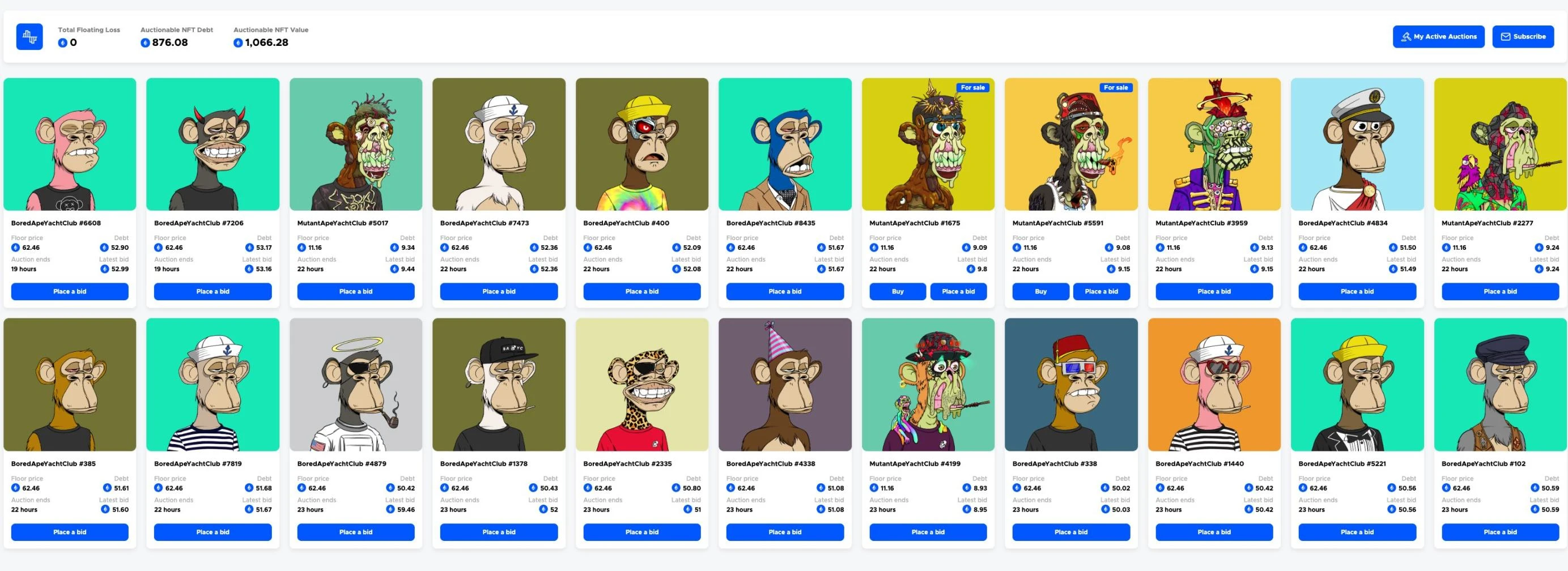
BendDAO 并不是第一次做这种增强流动性的布局——早在以太坊 NFT 叙事方兴未艾之时,BendDAO 就将目光瞄向了整个生态里最重要的一块蛋糕,即蓝筹 NFT 市场。通过“点对池”设计以及双向挖矿激励,BendDAO 很快就吸引了对资金效率极为敏感的蓝筹 NFT Holder 们,至此一个又一个 BAYC 被放入质押池中。

然而 BendDAO 本身的设计以及市场接连不断的暴雷事件,使得清算事件接二连三的发生,尽管项目方在 8 月份的清算事件过后很快调整了清算机制, 将清算阈值由 90% 逐步降低至 70% ,拍卖周期由 48 小时调整为 4 小时,取消“首次投标要高于地板价 95% ”的限制等。但依然还是无法避免流动性危机的产生。
BendDAO拥抱BTC生态,能否老树开花?

随着市场对 NFT 的狂热逐渐消退,蓝筹 NFT 在这一年也陷入了阴跌困局中,头部项目的地板价离最高点纷纷腰斩一半有余,原本人声鼎沸的 NFTFi 叙事也变得鲜少有人问津。

BendDAO 此次的尝试,与其说是主动求变,更不如说是被市场大势所趋带动下的一种无奈之举——铭文和 Launchpad 热潮之下,HOOK,LEVER 等项目纷纷转型,而 BendDAO 也选择了这条路,他们此次的尝试能否成功?时间会给出答案。

Leituras Relacionadas

Matrixdock Featured Again in SBMA’s 《Crucible》: Discussing How Tokenisation Enhances Efficiency in the Precious Metals Market

Matrixdock's research article, titled "Why Tokenisation Matters for the Bullion Industry and How Carrying Costs Fit In," has been featured again in the SBMA's industry publication *Crucible*. Authored by Matrixdock lead Eva Meng, the piece examines how tokenisation enhances the efficiency and utility of the precious metals market. The article argues that tokenisation builds upon the accessibility improvements brought by gold ETFs, not by redefining gold's value but by enabling it to function within digital finance. It extends gold's role beyond a portfolio holding, potentially facilitating instant settlement, digital collateral, and operation in 24/7 markets. A key focus is transparently handling the unavoidable carrying costs (storage, insurance) of physical assets like gold and silver. Matrixdock introduces the Fungible Reserve Standard (FRS) framework, based on an "Economic Purity Principle," which aims to reflect these real-world economic costs clearly within the token mechanism, rather than bundling them opaquely. The platform's practical applications are highlighted, including its gold token XAUm and its silver token XAGm, the first built on the FRS framework. As the tokenised gold market surpassed $6 billion in February 2026, the industry's focus is shifting from initial proofs of reserves to broader concerns of market efficiency and capital utilization. Tokenisation is positioning gold and other precious metals to become active components within the evolving digital financial system.

marsbitHá 4m

Matrixdock Featured Again in SBMA’s 《Crucible》: Discussing How Tokenisation Enhances Efficiency in the Precious Metals Market

marsbitHá 4m

New Huo Research: Dense Bottom Fishing in the $60K BTC Range, a 'High Value-for-Money Zone' Sees a Handover Surge

Bitcoin has shown a significant oversold rebound this week, with extreme panic in the crypto market easing. Multiple data points indicate a notable market bottom is forming. On the market front, the net outflow from Bitcoin spot ETFs has continued to shrink, and the negative premium between Coinbase and USDT is steadily correcting. Industry fundamentals suggest the shutdown cost for mainstream miners is concentrated between $30,000 and $50,000, potentially solidifying a阶段性 industry cost floor—a classic signal of market bottoms in previous cycles. Institutional capital is notably positioning against the trend. For instance, Sinohope Group's weekly OTC trading volume surged over 8 times环比, with active platform users doubling, both reaching record highs. This confirms a sharp increase in large capital transaction activity and a spike in off-exchange funding demand. Sinohope Research also observed on-chain data showing that funds from entities with public company attributes and long-term "whale" wallets are actively accumulating Bitcoin around the key $60,000 price level. The research institute has maintained since mid-May that a high-value investment window has reopened, and the market is now undergoing a shift from panic selling to long-term holding. Looking ahead, the core drivers for an upward market move will be liquidity release and macro policy developments. The successful and strong performance of SpaceX's IPO has reignited market optimism, and the massive liquidity frozen during its subscription period is now being unlocked. This substantial capital is expected to seek new value opportunities, potentially flowing into currently undervalued assets like Bitcoin. On the macro and policy front, the tone set in Kevin Warsh's upcoming speech at the FOMC meeting is crucial for near-term monetary policy expectations. Furthermore, the potential passage of the CLARITY Act by late July could significantly boost institutional confidence for capital entry. Considering these bottoming signals alongside favorable liquidity and policy factors, Sinohope Research remains optimistic about the market's subsequent trajectory.

marsbitHá 8m

New Huo Research: Dense Bottom Fishing in the $60K BTC Range, a 'High Value-for-Money Zone' Sees a Handover Surge

marsbitHá 8m

Uncovering the 'God of Investment Research' Behind Citrini: Perpetual Substack Chart-Topper, a Single Report Evaporated Trillions from US Stocks

Revealing the "Research God" Behind Citrini: A Non-Finance Founder Shaking Up Markets Citrini, an independent research firm consistently ranked #1 on Substack's finance charts with nearly 250,000 subscribers, has gained significant attention in the current bull market. Its founder, James van Geelen, holds dual degrees in biology and psychology from UCLA, with a background as an emergency medical technician and a healthcare entrepreneur before founding Citrini. The firm is known for its deep, narrative-driven analyses focusing on long-term "super trends" like AI, geopolitics, and macro policy. Citrini made headlines in February with its report "The 2028 Global Intelligence Crisis," a thought experiment on AI's potential societal impact. Despite being labeled a scenario analysis, it triggered a widespread sell-off in software and related stocks, briefly wiping hundreds of billions from the US market. Other notable reports include an on-the-ground analysis of the Strait of Hormuz and accurate calls on the copper foil industry's importance for AI/semiconductors. Geelen champions "second-order thinking," focusing on the indirect consequences of events. His investment style is thematic and often contrarian, seeking opportunities others miss. Citrini operates with a founder-driven, anonymous elite team model, recently adding specialists in macroeconomics and semiconductor analysis. The firm also manages a model portfolio, Citrindex, which has reportedly achieved over 200% cumulative returns.

marsbitHá 12m

Uncovering the 'God of Investment Research' Behind Citrini: Perpetual Substack Chart-Topper, a Single Report Evaporated Trillions from US Stocks

marsbitHá 12m

Ethereum Q1 2026 Review: On-chain Activity Hits New Highs, Tokenized Assets Lead the Industry

Ethereum Q1 2026 Review: Chain Activity Hits Record High, Tokenized Assets Lead the Industry In Q1 2026, the Ethereum ecosystem displayed a dual narrative: record-high on-chain activity coincided with declining USD-denominated metrics. User adoption surged, with monthly active addresses reaching 13.2 million (up 53.5% QoQ) and layer-1 transactions hitting 200.4 million (up 38% QoQ). However, the total value locked (TVL) decreased 11% to $316.2B, and protocol revenue fell 16.9% to $2.0B, largely due to a broader crypto market downturn. Tokenized assets emerged as a key strength. Their total market cap reached $203.4B, with significant growth in tokenized funds (+73.1% YoY) and commodities (+325.9% YoY). Ethereum dominated cross-chain comparisons, holding over 61% of stablecoin value and 84% of tokenized commodities value among top chains. A major development was the impact of network scaling. The "Blob" upgrade significantly increased data capacity, causing average transaction fees on layer-1 to plummet 47.9% QoQ despite higher usage. This demonstrates the "Jevons Paradox" in action: cheaper block space stimulates demand. The report highlights Ethereum's established position as the primary settlement layer for institutional tokenization, evidenced by new fund launches from giants like BlackRock and JPMorgan in May. Analysts draw parallels between Ethereum's current stage and the internet in the mid-1990s, suggesting its open, neutral network is poised to become the foundational infrastructure for global finance, outcompeting closed, private alternatives.

Foresight NewsHá 16m

Ethereum Q1 2026 Review: On-chain Activity Hits New Highs, Tokenized Assets Lead the Industry

Foresight NewsHá 16m

Trading

Spot
Futuros
活动图片