175-Year-Old Western Union: Not Just Playing with Stablecoins, but Also Acquired a Digital Wallet

marsbitPublicado em 2026-04-07Última atualização em 2026-04-07

Resumo

At 175 years old, Western Union, the global money transfer giant, is undergoing a significant digital shift. After a failed 2018 experiment with Ripple's XRP due to high costs, the company is now aggressively embracing blockchain and digital assets. In April 2026, Western Union acquired Singapore-based digital wallet Dash from Singtel, marking its first digital wallet asset in the Asia-Pacific region. Dash, with 1.4 million users, offers a full suite of services including payments, remittances, savings, insurance, and investments, deeply integrated into Singapore's local life. This move is part of a broader strategy to modernize its legacy business. While Western Union's vast network of over 500,000 physical agent locations remains its backbone, it is also its biggest cost burden. The company faces intense competition from digital-native rivals like Wise and Remitly, which offer significantly lower fees. To compete, Western Union is building a "Digital Asset Network." A key component is its own USD-pegged stablecoin, USDPT, issued on the Solana blockchain in partnership with Anchorage Digital. It is also piloting a stablecoin-linked Visa card with Rain for users in high-inflation countries like Argentina, allowing them to spend or cash out dollars at its agent locations. The acquisition of Dash represents a fundamental change: moving from being a transient "pipe" for money transfers to building a destination where users stay. Dash provides a trusted, established platform ...

Original author: angelilu, Foresight News

In 2018, Western Union conducted a small experiment. They integrated Ripple's cross-border payment product xRapid, using XRP tokens to settle exchanges between the US dollar and the Mexican peso. A total of 10 transactions were tested. After the test, the then CEO publicly stated: Too expensive, did not save any costs. The experiment was paused.

On April 3, 2026, Western Union announced the completion of the acquisition of the Singaporean digital wallet Dash. Dash was originally under Singapore Telecommunications, with 1.4 million users, supporting payments, remittances, savings, insurance, and investments, making it one of the most widely used all-in-one wallets in Singapore. This is the first digital wallet asset acquired by Western Union in the Asia-Pacific region.

Eight years, from "blockchain is too expensive" to issuing its own stablecoin on Solana and now starting to layout crypto wallets, Western Union is quietly undergoing a rebuild.

Western Union's 175 Years

Domestic users may rarely use Western Union and may not even be sure what the name represents. But in over 200 countries and regions worldwide, especially in immigrant communities in Southeast Asia, Latin America, and South Asia, Western Union is almost synonymous with "sending money."

It was founded in 1851, 20 years earlier than China's first telegraph line. It started as a telegraph business, building the first transcontinental telegraph line in the United States. In 1871, it began offering remittance services, using "telegraph transfers" to allow people, for the first time, to send money to another city without carrying cash or being physically present.

More than 170 years later, the core logic remains unchanged: Western Union maintains over 500,000 physical agent locations worldwide, mostly small supermarkets, convenience stores, and post offices. People walk in, fill out a form, hand cash to the counter, and the recipient can withdraw the money at another location. This network covers areas almost untouched by the banking system—immigrant workers without bank accounts, people without access to credit cards, and families in remote areas relying on remittances from relatives.
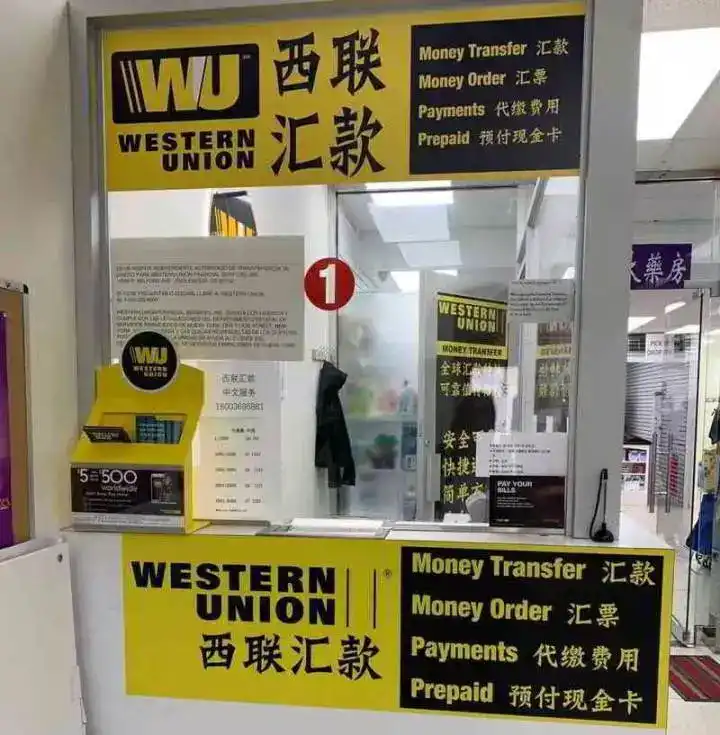
But this network is also Western Union's heaviest burden. The cost of maintaining 500,000 agent points accounts for about 60% of its service costs. Its core customer base—cash-dependent remittance senders—is being eroded by generations of digital-native products. Wise's cross-border transfer fees are 60% to 80% lower than Western Union's; Remitly's revenue reached $1.635 billion in 2025, a 29% year-on-year increase, with 9 million active users. Although Western Union's digital revenue is also growing, it still only accounts for 35% of total C2C revenue, with the vast majority of profits still from users who walk into physical locations and pull out cash.

Western Union is being caught up, and it knows it.

Moving Remittance Paths On-Chain with Stablecoins

In October 2025, Western Union announced it would issue the stablecoin USDPT on Solana, with the issuer being the US-licensed crypto bank Anchorage Digital. As of April 2026, USDPT has entered the actual deployment phase. At the same time, Western Union is building a "Digital Asset Network," connecting multiple on- and off-ramp platforms, aiming to allow users holding any mainstream crypto assets to exchange them for cash through Western Union's network.

A more specific landing scenario is its partnership with Rain to issue a Visa card linked to stablecoins. This card is designed for high-inflation countries, a Visa card tied to a US dollar stablecoin, specifically targeting countries like Argentina and Zimbabwe, where the local currency depreciates by tens or even hundreds of percentage points annually. Western Union CFO Matthew Cagwin mentioned at an industry conference, "Argentina's inflation exceeded 200% last year. After locals obtain US dollar stablecoins, they can directly spend at merchants or walk into Western Union locations to withdraw cash." The final step still relies on that network of 500,000 cash points.

Wallets Are the Real Battlefield

For the past 170-plus years, Western Union has played the role of a "pipeline" in remittances: money flows in from one end and out from the other, used and then gone. Users are not in Western Union's app, nor in Western Union's accounts; they are just passing through. What Wise and Remitly are taking is precisely that time users spend staying—people are getting used to keeping money in digital wallets, where transfers are just one action, not the entirety.

The acquisition of Dash is Western Union's first real attempt to keep users.

Dash was launched by Singapore Telecommunications in 2014 and is deeply embedded in Singapore's local life scenarios: paying utility bills, buying insurance, making small investments, and sending money to family overseas, all within one app. 1.4 million users represent a very high coverage rate for a city-state. More importantly, a large portion of these users are Southeast Asian immigrants working in Singapore, precisely Western Union's core customer group.

Western Union's previous way of reaching these people was to have them walk into convenience store counters. Now, it wants to move directly into their phones.

Dash brings not just users but also a front end for directly testing new products. After the USDPT stablecoin launches, one of the most natural distribution channels will be Dash's wallet interface; the stablecoin card for high-inflation markets also needs a trusted app to support it. Singapore, as a financial hub in Southeast Asia with a relatively mature regulatory environment, is the most suitable place for Western Union to first validate the logic before rolling out this suite of on-chain products across the Asia-Pacific region.


Perguntas relacionadas

QWhat was Western Union's initial experiment with Ripple's xRapid in 2018, and what was the outcome?

AIn 2018, Western Union conducted a small experiment by integrating Ripple's xRapid product to settle foreign exchange transactions between the US dollar and the Mexican peso using XRP tokens. After testing 10 transactions, the then-CEO stated that it was too expensive and did not save any costs, leading to the suspension of the experiment.

QWhat significant acquisition did Western Union announce on April 3, 2026, and why is it important?

AOn April 3, 2026, Western Union announced the acquisition of Dash, a Singapore-based digital wallet formerly owned by Singapore Telecommunications. With 1.4 million users, Dash supports payments, remittances, savings, insurance, and investments, and is one of the most widely used full-featured wallets in Singapore. This marks Western Union's first digital wallet asset in the Asia-Pacific region.

QHow does Western Union's traditional business model work, and what are its main challenges?

AWestern Union's traditional model relies on a network of over 500,000 physical agent locations, such as small supermarkets, convenience stores, and post offices. Customers fill out a form and hand over cash, and the recipient can collect the money from another agent location. This network serves people without bank accounts or in remote areas. However, maintaining these agent locations accounts for about 60% of service costs, and the core customer base is being eroded by digital-native competitors like Wise and Remitly, which offer lower fees and digital convenience.

QWhat is USDPT, and how does Western Union plan to use it?

AUSDPT is a stablecoin issued by Western Union on the Solana blockchain, with Anchorage Digital as the issuer. It is part of Western Union's 'Digital Asset Network,' which connects multiple on- and off-ramp platforms. The goal is to allow users with any mainstream cryptocurrency to convert it into cash through Western Union's network. Additionally, Western Union partnered with Rain to issue a Visa card linked to the stablecoin, targeting high-inflation countries like Argentina and Zimbabwe, where users can spend the stablecoin at merchants or withdraw cash at Western Union agent locations.

QWhy did Western Union acquire the Dash wallet, and what strategic advantages does it offer?

AWestern Union acquired Dash to move beyond being a mere 'pipeline' for remittances and to retain users within its ecosystem. Dash, with its 1.4 million users in Singapore, is deeply integrated into local life scenarios like bill payments, insurance, investments, and remittances. It particularly serves Southeast Asian immigrants in Singapore, who are part of Western Union's core customer base. The acquisition provides a front-end to test new products, such as distributing the USDPT stablecoin and launching stablecoin Visa cards, making Singapore a strategic hub for expanding these blockchain-based products across the Asia-Pacific region.

Leituras Relacionadas

The Essence of AI Layoffs: Why More AI Adoption Leads to More Corporate Anxiety?

The author, awaiting potential inclusion on an 8000-person layoff list, analyzes the true nature of recent "AI-driven" layoffs. They argue that while AI use, particularly tools like Claude for code generation, has skyrocketed and boosted developer output (e.g., 2-5x more code commits), this has not translated into proportional business growth or revenue. The core issue is a misalignment between increased "Input" (code) and tangible "Outcomes" (user value, revenue). AI acts as a costly B2B SaaS, inflating operational expenses without guaranteed returns. Two key problems emerge: 1) The friction that once filtered out bad ideas is gone, as AI allows cheap pursuit of even weak concepts. 2) Organizational "alignment tax"—the difficulty of coordinating across teams—becomes crippling when development velocity outpaces consensus-building. Thus, layoffs serve two immediate purposes: 1) To offset ballooning AI costs (Token consumption) and maintain cash flow, as rising input costs without outcome growth destroys unit economics. 2) To reduce organizational bloat and alignment friction by simply removing teams, thereby speeding up execution in the short term. Therefore, these layoffs are fundamentally caused by AI, even if AI doesn't directly replace roles. They represent a painful correction until companies learn to convert AI-driven productivity into real business outcomes and streamline organizational coordination to match the new pace of work. The cycle will continue until this learning curve is mastered.

marsbitHá 4m

The Essence of AI Layoffs: Why More AI Adoption Leads to More Corporate Anxiety?

marsbitHá 4m

Can the Solana Foundation and Google's Collaboration on Pay.sh Bridge the Payment Link Between Web2 and Web3 in the Agent Economy?

Solana Foundation, in collaboration with Google Cloud, has launched Pay.sh, a payment gateway designed to bridge the gap between AI agents and enterprise-grade service infrastructure. The initiative aims to solve a key bottleneck in the "agent economy": existing payment systems are ill-suited for autonomous AI agents. Traditional methods like credit cards require human verification, while newer on-chain protocols like x402 and MPP create a separate, Web3-native system that raises barriers for service providers. Pay.sh functions as a universal payment layer. It allows users to fund a Solana wallet via credit card or stablecoin, which then acts as an identity and payment proxy for AI agents. When an agent needs to access a paid API service (e.g., Google Cloud, Alibaba Cloud), Pay.sh handles the transaction seamlessly. It leverages the HTTP 402 status code ("Payment Required") to initiate payments, intelligently choosing between one-time transfers (x402-style) or session-based authorizations (MPC-style) based on the service's billing model. This spares agents from manual account registration and API key management. A key feature for service providers is low integration effort. They can adopt Pay.sh by providing a declarative configuration file, enabling features like tiered pricing, free tiers, and automatic revenue splitting to multiple addresses (e.g., for royalties, cloud costs). Providers can also list their APIs in a central Pay Skill Registry for agent discovery. The collaboration with Google Cloud provides crucial infrastructure for API proxying, traffic routing, and compliance logging, aiming to keep agent activities within regulated boundaries. By connecting Web2 services with Web3 payment rails, Pay.sh positions the Solana wallet as a foundational identity and payment tool for AI agents, potentially driving more transaction volume to the Solana ecosystem. However, the report notes challenges. The service registry currently lacks robust vetting, risking exposure to unauthorized or malicious third-party APIs. Pay.sh also inherits security and compatibility risks from its underlying payment protocols (x402, MPC). Furthermore, adoption may be hindered by varying regional data privacy and payment compliance regulations among API providers. Despite these hurdles, Pay.sh represents a significant step towards integrating Web2 and Web3 for autonomous agent commerce.

marsbitHá 10m

Can the Solana Foundation and Google's Collaboration on Pay.sh Bridge the Payment Link Between Web2 and Web3 in the Agent Economy?

marsbitHá 10m

Bitcoin's Bull-Bear Cycle Indicator Turns Positive for the First Time in 7 Months: End of Bear Market or False Breakout?

Bitcoin's "Bull-Bear Market Cycle Indicator" from CryptoQuant has turned positive for the first time since October 2025. This gauge, based on the P&L Index relative to its 365-day moving average, suggests a potential shift from a bear market phase. Concurrently, the Bull Score Index rose to a neutral reading of 50 in late April. The indicator's move into positive territory follows a roughly 35% price rebound from a low near $60,000 in February to above $81,000. The recovery over approximately three months was faster than the 12-month period observed during the 2022 bear market. However, analysts caution against premature optimism, citing a historical precedent from March 2022. Back then, the Bull Score Index briefly hit 50, but it proved to be a false signal as Bitcoin's price subsequently plunged further. Structural differences exist in the current cycle, including consistent inflows into spot Bitcoin ETFs and an increase in large holder addresses. Yet, some models, referencing the four-year halving cycle, suggest a potential deeper bottom near $50,000 might still be possible around late 2026. In summary, while on-chain data shows marked improvement and the worst panic may be over, market participants remain cautious. A convincing trend reversal confirmation likely requires Bitcoin to sustainably break above key resistance, such as the 200-day moving average near $82,000.

marsbitHá 18m

Bitcoin's Bull-Bear Cycle Indicator Turns Positive for the First Time in 7 Months: End of Bear Market or False Breakout?

marsbitHá 18m

How to Automate Any Workflow with Claude Skills (Complete Tutorial)

This is a comprehensive guide to mastering Claude Skills, a feature for creating permanent, reusable instruction sets that automate specific workflows. Unlike simple saved prompts, Skills function like trained employees, delivering consistent, high-quality outputs by defining the entire task process, standards, error handling, and output format. The guide is structured in four phases: **Phase 1: Installation (5 minutes).** Skills are folders containing a `SKILL.md` file. The user is instructed to find a relevant Skill online, install it, test it on a real task, and compare its performance to one-off prompts. **Phase 2: Building Your First Custom Skill.** Start by rigorously defining the Skill's purpose, trigger phrases, and providing a concrete example of perfect output. The `SKILL.md` file has two parts: a YAML frontmatter with a specific name/description/triggers, and a detailed, step-by-step workflow written in natural language with examples and quality standards. **Phase 3: Testing & Optimization for Production.** Test the Skill in three scenarios: 1) a standard, common task; 2) edge cases with missing or conflicting data; and 3) a pressure test with maximum complexity. Any failure indicates a needed instruction. Implement a weekly optimization cycle to continuously refine the Skill based on real usage. **Phase 4: Building a Complete Skill Library.** The goal is to create a team of Skills for all repetitive tasks. Examples are given for industries like real estate, marketing, finance, consulting, and e-commerce. The user should list their tasks, prioritize them, and build one new Skill per week, maintaining a master document to track their library. The conclusion emphasizes the compounding time savings: ten Skills saving 30 minutes each per week reclaims over 260 hours (6.5 work weeks) per year, fundamentally transforming one's work system.

marsbitHá 41m

How to Automate Any Workflow with Claude Skills (Complete Tutorial)

marsbitHá 41m

Trading

Spot
Futuros
活动图片



