Analyst: Expect Altcoin Season After Bitcoin Halves In 2024

newsbtcPublicado em 2023-07-11Última atualização em 2023-07-11

Resumo

A crypto analyst on Twitter expects altcoin prices to be muted in the second half of 2023. Data indicate that the fate of altcoins and the possibility of an "alt season"...

A crypto analyst on Twitter expects altcoin prices to be muted in the second half of 2023. Data indicate that the fate of altcoins and the possibility of an “alt season” is highly dependent on the performance of Bitcoin.
Being the foremost cryptocurrency and market leader, according to CoinMarketCap data, Bitcoin’s impact on altcoins cannot be underestimated.
Altcoins Are In Accumulation Phase, Waiting On Bitcoin?
In his assessment, altcoins are currently in the “accumulation phase,” which has kept the sector at a market cap between $290 billion and $460 billion for the past few trading months. This trend, he forecasts, will likely continue until next year, when Bitcoin is expected to halve its block reward to 3.125 BTC. 
Considering the performance of Bitcoin after past halving events, the cryptocurrency could see further profits as the event nears. This, in turn, factoring in the direct correlation between Bitcoin and altcoins, will likely trigger an “altcoin season.”
To cement his market preview, he shared a screenshot depicting the total market capitalization of altcoins excluding Bitcoin and Ethereum, revealing extended periods of sideways trading during previous bear markets. Extending from this outlook, the analyst expects altcoins’ price movements to be limited until after the halving event, as seen in the chart below. 

Crypto Bitcoin BTC BTCUSDT

Source: IamZeroIka via Twitter

Historically, Bitcoin surges tend to support altcoins, a trend observed in recent cycles. Altcoin’s relatively thin liquidity often leads to price gains outpacing the more liquid BTC. Conversely, whenever Bitcoin prices crash, altcoins tend to collapse faster.
Most Altcoins Are Weak?
In recent months, Bitcoin has been firm, rising 80% in H1 2023 after prices bottomed up in late 2022. On the other hand, despite the direct correlation, most altcoins remain suppressed, down from 2021 peaks.

Bitcoin price on July 10| Source: BTCUSDT on Binance, TradingView

Bitcoin price on July 10| Source: BTCUSDT on Binance, TradingView To illustrate, coins like ADA, SOL, DOGE, ALGO, and others are down roughly 85% from 2021 peaks and remain under pressure when writing on July 10. Regulatory headwinds and generally suppressed market conditions have worsened sentiment, diffusing upside momentum.
The U.S. Securities and Exchange Commission (SEC) recently alleged that several altcoins, including SOL and ADA, are securities, a comment that saw prices dump in June.
The only outlier among altcoins is XRP. Optimism in the ongoing legal battle between Ripple and the SEC has supported the coin, forcing prices to diverge from other altcoins. Even so, the final ruling will likely significantly impact prices and volatility. Currently, XRP is trading below $0.50 but is up roughly 45% from 2022 lows and is firm, trading in a bullish formation above $0.45. 
XRP will likely tear higher if a favorable ruling supports Ripple’s assertion that XRP, a coin they use in their On-Demand Liquidity (ODL) platform, is not a security but a utility like Bitcoin. A ruling in support of the SEC would trigger a sell-off, possibly unwinding recent gains.

Leituras Relacionadas

Former Nvidia AI Director Overturns Transformer, Creates 5 Trillion-Context Physical AI That Can Simulate the Entire Universe

Former NVIDIA AI Director Anima Anandkumar and her co-founder Benedikt Jenik have unveiled a groundbreaking "Physical AI" model through their startup, Accelerated Understanding. This model departs entirely from the dominant Transformer architecture, instead utilizing "Neural Operators" to directly understand and simulate physical phenomena in their full 4D spacetime (3D space + time). It achieves a staggering inference-time context window of over 5 trillion tokens—reportedly 5 million times larger than current top LLMs—enabling it to generate complete 4D trajectories of complex physical systems in a single, one-shot inference without subsampling or chunking. The model, pre-trained with 1 trillion parameters and scaled to 35 trillion in experiments, functions as a universal physics simulator capable of handling diverse domains from weather to materials science. It establishes a "simulate → improve → simulate" loop for reality validation. The founders notably turned down a lavish offer from Jeff Bezos's Project Prometheus, which included 35% equity, a $2M salary, and over $20B in committed funding. Industry speculation points to NVIDIA CEO Jensen Huang, who previously championed Anandkumar's work, as a potential key supporter behind the scenes. This development signals a paradigm shift from language/image-centric AI to physics-first intelligence.

marsbitHá 18m

Former Nvidia AI Director Overturns Transformer, Creates 5 Trillion-Context Physical AI That Can Simulate the Entire Universe

marsbitHá 18m

NVIDIA Earnings Report Quick Read: Quarterly Revenue on the Verge of Breaking the $100 Billion Mark, Can Still Grow 70% Next Year

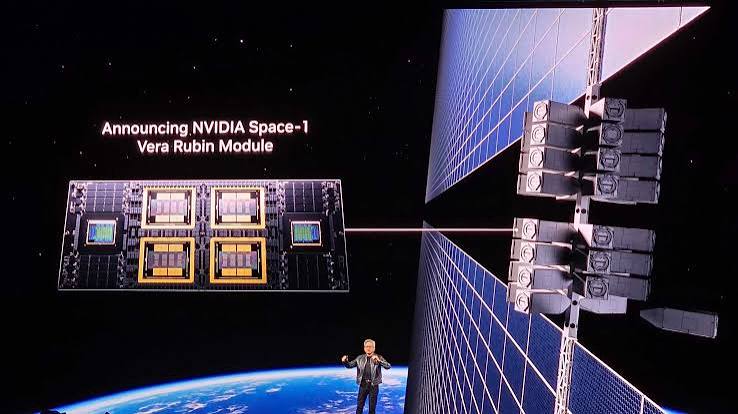
NVIDIA Q2 FY2027 Earnings Report: Record Revenue Nears $100 Billion, Projects 70% Growth for Next Year NVIDIA reported exceptional Q2 FY2027 results, with revenue reaching $96.22 billion (up 106% YoY) and non-GAAP net income of $53.95 billion (up 118% YoY). Q3 revenue guidance of $108 billion signals the company's imminent entry into a "quarterly $100 billion revenue" era. The most striking projection came from the CFO, who forecasted approximately 70% revenue growth for FY2028, significantly above Wall Street's 45% expectation, and notably stated this outlook excludes any data center revenue from China. The data center segment remained the core driver, generating $89 billion (up 117% YoY), representing over 90% of total revenue. Growth continues to be primarily fueled by capital expenditures from hyperscale cloud providers like Amazon, Microsoft, Google, and Meta. A key product milestone was the confirmation that the Vera Rubin platform has entered full-scale production and begun shipments. Management stated that every 1 GW of Vera Rubin compute deployed represents a roughly $40 billion revenue opportunity, with the platform expected to contribute about 20% of data center revenue in Q3. CEO Jensen Huang noted its ramp-up is the fastest in company history, providing confidence for the strong future outlook. Management emphasized that AI demand is not slowing but accelerating and broadening into new areas like inference, enterprise AI, and robotics. The primary constraint on growth is now supply, not demand. Huang indicated that without supply limitations, the FY2028 outlook would be "much higher." Bottlenecks include components like HBM, advanced packaging, and data center power. In response, NVIDIA is expanding its role, collaborating with financial firms to mobilize over $500 billion in third-party capital for AI infrastructure and securing key resources like land and power. Crossing the $100 billion quarterly revenue mark represents a new scale for NVIDIA, while the 70% growth projection for next year suggests it may just be the starting point for the next phase.

Odaily星球日报Há 21m

NVIDIA Earnings Report Quick Read: Quarterly Revenue on the Verge of Breaking the $100 Billion Mark, Can Still Grow 70% Next Year

Odaily星球日报Há 21m

Trading

Spot
活动图片