Shiba Inu (SHIB) and Dogecoin (DOGE) Still Top Dogs in Memecoin History, Says Analytics Firm – Here’s Why

dailyhodlPublicado em 2023-05-18Última atualização em 2023-05-18

Resumo

A leading analytics firm says the current frenzy surrounding the frog-themed memecoin Pepe (PEPE) remains...

A leading analytics firm says the current frenzy surrounding the frog-themed memecoin Pepe (PEPE) remains dwarfed by past Shiba Inu (SHIB) and Dogecoin (DOGE) manias.
In a new analysis, crypto analytics firm Santiment notes that PEPE’s peak daily trading volume in the past few weeks was $2 billion.

“In the world of meme-inspired cryptocurrencies, DOGE and SHIB have had their moments of glory, with trading volumes reaching astronomical heights in their heydays. PEPE, another cryptocurrency with meme origins, is not quite there yet. When comparing their trading volumes at their peak, PEPE reached $2 billion, while SHIB and DOGE hit $40 billion and $70 billion, respectively.”
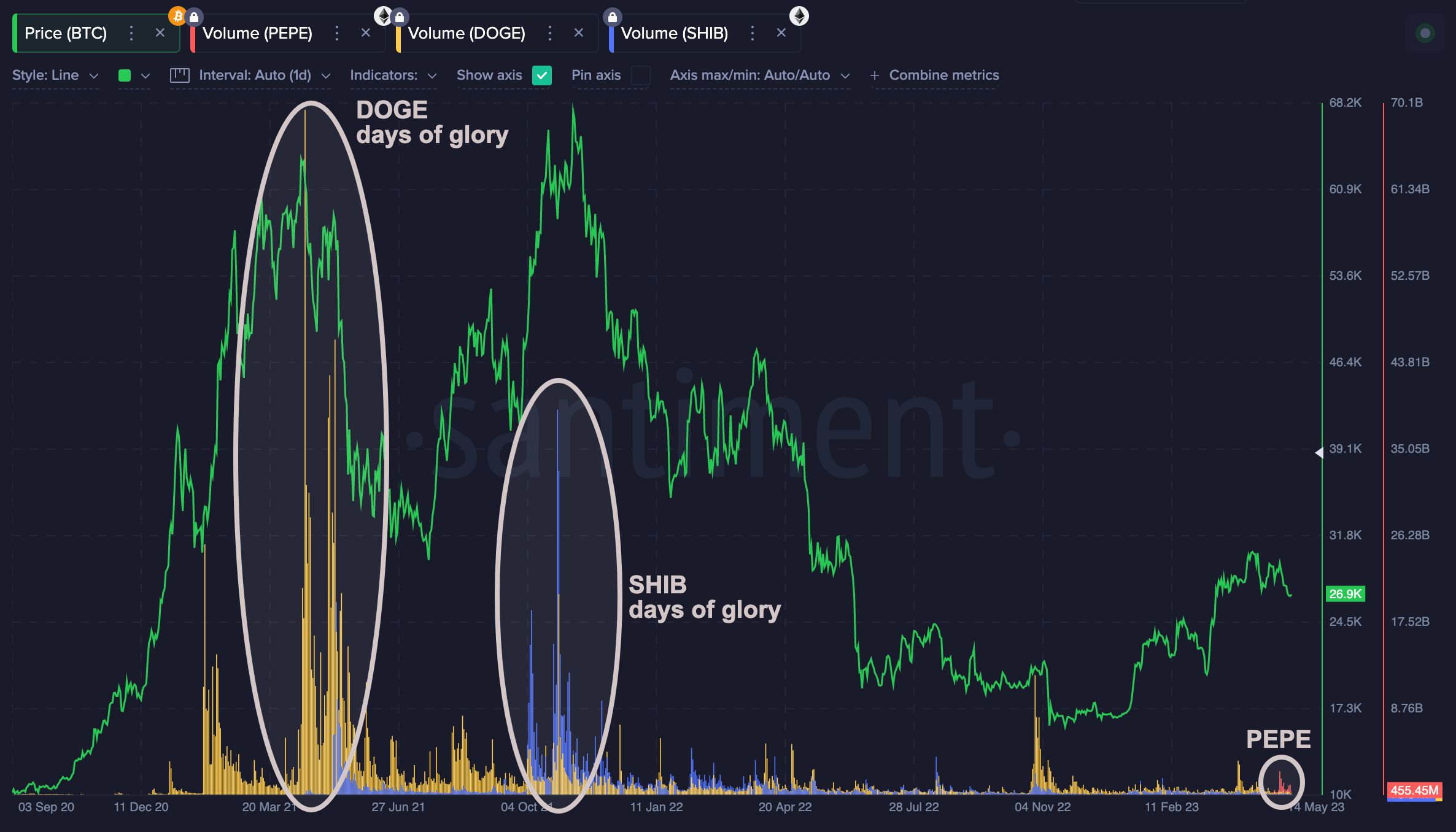
Source: Santiment Santiment also notes that retail participation in the Pepe rally has been “nearly nonexistent” compared to the Dogecoin and Shiba Inu frenzies.
PEPE is trading at $0.000002 at time of writing. The 63rd-ranked crypto asset by market cap is up 0.63% in the past day but down more than 53% from its all-time high of $0.00000431, which it hit on May 5th.
DOGE is trading at nearly $0.0726 at time of writing. The ninth-ranked crypto asset by market cap is up 0.08% in the past 24 hours but down more than 0.7% in the past seven days.
Shiba Inu is trading at $0.000009 at time of writing. The 16th-ranked crypto asset by market cap is down more than 1.3% in the past day and more than 0.22% in the past week.


Leituras Relacionadas

Solana Proposals Could Lead to Reduction in Staking Yields to 2.25% and Cut Emissions by $1.5 Billion

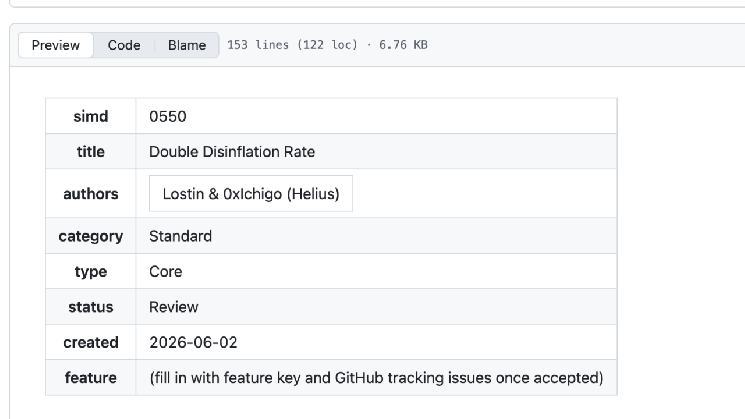
Solana is moving towards a stricter monetary model that could lead to a SOL deficit and significantly reduce staking rewards for holders. Two governance proposals drive these changes. SIMD-550, currently under vote, would double Solana's annual disinflation rate from 15% to 30%, accelerating the timeline to reach a final inflation rate of ~1.5% to the first half of 2029. The second, SIMD-553 (already approved), introduces additional token burning tied to computational units used on the network. Together, these measures could reduce SOL emission by an estimated $1.4-$1.5 billion over six years. The immediate impact would be lower staking yields, potentially falling from the current ~5.25% to approximately 4.34% in year one, 3% in year two, and 2.25% by year three. Analyst Matt Mena from 21Shares suggests inflation should be tied to economic metrics to help offset this decline. The changes also raise concerns for validator economics, with some potentially becoming unprofitable as inflation rewards decrease and voting costs may rise. However, the lower passive yield might push a significant portion of the 67.9% staked SOL into Solana's DeFi ecosystem for activities like lending and trading. This shift could boost network fee revenue to compensate for lower inflation rewards. The proposals aim to trade lower yield today for less dilution tomorrow, betting that network growth and usage will make this a worthwhile trade-off for SOL holders.

cryptonews.ruHá 30m

Solana Proposals Could Lead to Reduction in Staking Yields to 2.25% and Cut Emissions by $1.5 Billion

cryptonews.ruHá 30m

Bitcoin 'Basically Hopped' to $80K. What Will Happen to the Price in Autumn?

Bitcoin surged close to $80,000 in August, marking its fastest growth since 2024. Experts anticipate continued volatility for the autumn season, with price forecasts heavily dependent on macroeconomic conditions and regulatory developments in the US. Key drivers for the recent rise include a weakening US dollar, renewed capital inflows into spot Bitcoin ETFs, and liquidations of trading positions. The US Treasury's decision to increase long-term bond purchases has helped stabilize debt markets but pressured the dollar, leading investors to seek assets like Bitcoin as a hedge. Looking ahead, experts outline two primary scenarios for Bitcoin's price. A positive outcome, supported by favorable macroeconomics and the potential passage of the CLARITY Act regulating crypto in the US, could push Bitcoin toward $85,000-$100,000. Conversely, a negative scenario involving hawkish signals from the US Federal Reserve or regulatory setbacks could trigger a correction, potentially driving the price back down to the $62,000-$75,000 range. Institutional demand, reflected in consistent ETF inflows, is seen as a crucial stabilizing factor, gradually outweighing the influence of Bitcoin's traditional four-year cycles. Meanwhile, a broad rally in altcoins is not widely expected, as capital is likely to flow selectively into the most liquid projects. The central question for autumn is whether institutional buying can transform August's rapid surge into a sustainable upward trend.

cryptonews.ruHá 34m

Bitcoin 'Basically Hopped' to $80K. What Will Happen to the Price in Autumn?

cryptonews.ruHá 34m

Trading

Spot
活动图片