
Bitcoin Bullish May Come?

newsbtcPublicado em 2023-05-17Última atualização em 2023-05-17

Resumo

In the world of cryptocurrency, the market can be a confusing and volatile place. This is especially true for Bitcoin (BTC), which has seen its fair share of ups and...

In the world of cryptocurrency, the market can be a confusing and volatile place. This is especially true for Bitcoin (BTC), which has seen its fair share of ups and downs in recent days. Jackis, a well-known analyst in the crypto community, has recently commented on the current state of the market, and his words may be of interest to investors.
Bitcoin’s Potential For A $31,000 Breakthrough
According to Jackis, Bitcoin’s weekly structure remains bullish, which means that despite any potential dips, the overall trend is upward. He suggests that even if there is a deeper pullback, it can be seen as a potential higher low in a bullish trend, which should eventually lead to a break of the $31,000 level. However, Jackis also warns that this bullish trend must be proven, and until then, investors should be cautious.
H4:
Surely a decent buyback from the HTF range lows but as of now remains in a bearish structure
Until proven otherwise or until we see a LTF convincing structure to long, we expect a new LL pic.twitter.com/9VUY79bnPT
— JACKIS (@i_am_jackis) May 16, 2023

On the daily chart, Jackis notes that the market has just swept the range low of $26,500, which could be seen as a potential deviation. However, despite this, the overall structure on the daily chart remains bearish, and investors should treat it as such until further highs are reclaimed. He suggests that while there may be a decent buyback from the higher time frame (HTF) range lows, the market is still in a bearish structure. Until there is evidence to the contrary or a convincing low time frame (LTF) structure too long, Jackis expects a new lower low to be seen.
Furthermore, according to Jackis, the current structure of the Bitcoin market is bullish, but this could change quickly. He notes that the market is currently trading at a premium, which is known as the Golden Zone, compared to the H4 Swing. To continue pushing higher, the market needs to show real strength at this level. However, the current market conditions are challenging to read, and there are arguments for both bullish and bearish positions.

Bitcoin And Ethereum Part Ways, Correlation Hits Lowest Point In Two Years
A recent report by Kaiko, a leading provider of market data and insights, has shed light on an interesting trend in the Bitcoin and Ethereum (ETH) markets. According to the report, the correlation between Bitcoin and Ethereum has hit its lowest level since November 2021. The rolling correlation between the two cryptocurrencies has weakened from 96% to 77% since mid-March, indicating that they are increasingly being driven by divergent idiosyncratic factors.
The report highlights that Ethereum has lost momentum since the Shapella upgrade, dropping by nearly 14%, while Bitcoin is down by around 11% over the same period. This divergence suggests that the two cryptocurrencies are being influenced by different factors, rather than moving in tandem as they have in the past.
As of this writing, the largest cryptocurrency on the market, Bitcoin, is trading at $27,000, which is slightly below its 50-day Moving Average (MA). While BTC has managed to reclaim the $27,000 level, it has seen a minor decline of 1.4% over the last 24 hours.

Bitcoin

BTC’s sideways price action after facing the 50-day MA on the 1-day chart. Source: BTCUSDT on TradingView.com Featured image from iStock, chart from TradingView.com 
Leituras Relacionadas

Solana Proposals Could Lead to Reduction in Staking Yields to 2.25% and Cut Emissions by $1.5 Billion

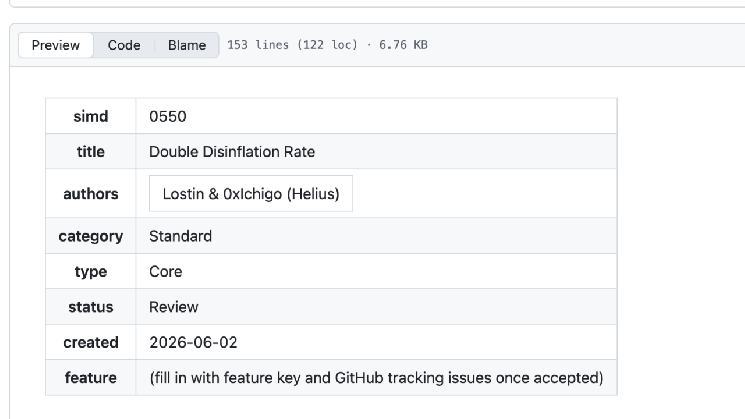
Solana is moving towards a stricter monetary model that could lead to a SOL deficit and significantly reduce staking rewards for holders. Two governance proposals drive these changes. SIMD-550, currently under vote, would double Solana's annual disinflation rate from 15% to 30%, accelerating the timeline to reach a final inflation rate of ~1.5% to the first half of 2029. The second, SIMD-553 (already approved), introduces additional token burning tied to computational units used on the network. Together, these measures could reduce SOL emission by an estimated $1.4-$1.5 billion over six years. The immediate impact would be lower staking yields, potentially falling from the current ~5.25% to approximately 4.34% in year one, 3% in year two, and 2.25% by year three. Analyst Matt Mena from 21Shares suggests inflation should be tied to economic metrics to help offset this decline. The changes also raise concerns for validator economics, with some potentially becoming unprofitable as inflation rewards decrease and voting costs may rise. However, the lower passive yield might push a significant portion of the 67.9% staked SOL into Solana's DeFi ecosystem for activities like lending and trading. This shift could boost network fee revenue to compensate for lower inflation rewards. The proposals aim to trade lower yield today for less dilution tomorrow, betting that network growth and usage will make this a worthwhile trade-off for SOL holders.

cryptonews.ruHá 27m

Solana Proposals Could Lead to Reduction in Staking Yields to 2.25% and Cut Emissions by $1.5 Billion

cryptonews.ruHá 27m

Bitcoin 'Basically Hopped' to $80K. What Will Happen to the Price in Autumn?

Bitcoin surged close to $80,000 in August, marking its fastest growth since 2024. Experts anticipate continued volatility for the autumn season, with price forecasts heavily dependent on macroeconomic conditions and regulatory developments in the US. Key drivers for the recent rise include a weakening US dollar, renewed capital inflows into spot Bitcoin ETFs, and liquidations of trading positions. The US Treasury's decision to increase long-term bond purchases has helped stabilize debt markets but pressured the dollar, leading investors to seek assets like Bitcoin as a hedge. Looking ahead, experts outline two primary scenarios for Bitcoin's price. A positive outcome, supported by favorable macroeconomics and the potential passage of the CLARITY Act regulating crypto in the US, could push Bitcoin toward $85,000-$100,000. Conversely, a negative scenario involving hawkish signals from the US Federal Reserve or regulatory setbacks could trigger a correction, potentially driving the price back down to the $62,000-$75,000 range. Institutional demand, reflected in consistent ETF inflows, is seen as a crucial stabilizing factor, gradually outweighing the influence of Bitcoin's traditional four-year cycles. Meanwhile, a broad rally in altcoins is not widely expected, as capital is likely to flow selectively into the most liquid projects. The central question for autumn is whether institutional buying can transform August's rapid surge into a sustainable upward trend.

cryptonews.ruHá 31m

Bitcoin 'Basically Hopped' to $80K. What Will Happen to the Price in Autumn?

cryptonews.ruHá 31m

Trading

Spot
活动图片