What is the Near Protocol, and how does it work?

CointelegraphPublicado em 2022-02-18Última atualização em 2022-02-19

Resumo

Near Protocol is a DApp platform and Ethereum competitor that places a premium on the developer and user convenience.

What is Near protocol blockchain?

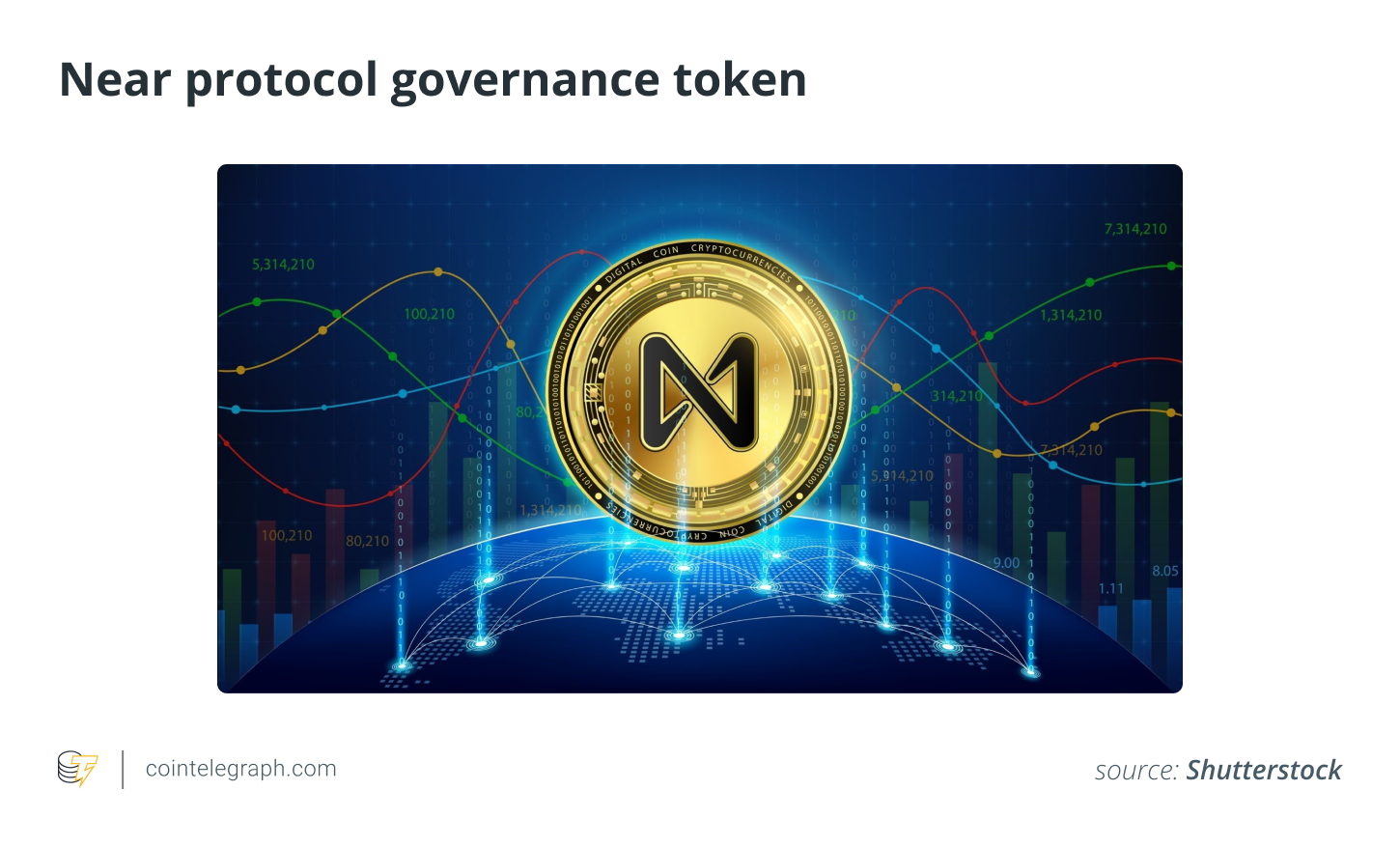
Near Protocol is a decentralized application (DApp) platform that focuses on usability among developers and users. As a competitor of Ethereum, NearProtocol is also smart-contract capable and a proof-of-stake (PoS) blockchain.

Near uses sharding technology to achieve scalability, a core aspect discussed later. The native token, NEAR, is used for transaction fees and storage on the Near crypto platform. Tokens can also be used for staking by NEAR tokenholders who wish to become transaction validators and help achieve network consensus.

Near was built by the NeaCollective and conceptualized as a community-run cloud computing platform designed to host decentralized applications. It was also built to be both developer and user-friendly, hence having features such as account names that are human-readable (instead of cryptographic wallet addresses).

How does Near Protocol work?

Decentralized applications have boomed in the crypto community, with DApps that run the gamut from games to financial services. However, it has also become apparent that scalability remains a problem in most blockchains.

The issue of scalability is common among blockchains, especially among older ones such as Bitcoin and Ethereum. The challenges are mainly brought about by blockchains' difficulty in handling large numbers of transactions at fast speeds and manageable costs.

Projects such as Near seek to address this issue by building an entirely new blockchain using a different architecture. Near’s solution to the problem was implementing sharding.

By using the sharding strategy, Near is able to break up the blockchain into smaller more manageable segments. This reduces the burden on the network by reducing computational load, resulting in an increased throughput of transactions.

As mentioned earlier, the Near protocol uses a PoS system. Nodes interested in becoming transaction validators stake their NEAR tokens to be considered for participation. Token holders may also delegate their stake to their chosen validator if they do not wish to operate a node.

Generally, validators with larger stakes hold more influence in the consensus process. Validators on Near are chosen via an auction system and are chosen at every epoch, typically a 12-hour interval.

Meanwhile, DApps can be built on Near, just like on Ethereum. This is made possible by Near’s cloud infrastructure, which combines serverless computing and decentralized data storage. Nea operates using hundreds of globally-located servers.

Unique features of Near Protocol

Sharding strategy

Nodes, in any blockchain, typically have three main functions: processing transactions, communicating valid transactions and completed blocks with each other and storing the history of the network’s transactions. As a network grows and becomes more congested, these functions become more difficult for the nodes to manage.

Nea uses a sharding approach that enables the network’s capacity to grow even as more nodes join. High network utilization results in network nodes dynamically splitting into multiple shards. Computing is then parallelized over these shards, reducing the computational load required of each node.

Through sharding, nodes are not required to run the entirety of the network’s code (which is the case with Bitcoin nodes), just the code relevant to its shards. Near Protocol assumes transactions will touch multiple shards, which is the default behavior for most smart contracts.

Focus on decentralization

To maintain true decentralization, a network should be permissionless, meaning that potential node operators should be able to join freely (as opposed to incentivizing pooling).

Near uses threshold proof-of-stake, a staking technique considered both fair and predictable. This prevents powerful validators from pooling and encourages wide-scale participation among network members.

Usability-first approach

The Near Protocol has a usability-first approach, following a “progressive security” model that allows developers to create a user experience resembling web experiences.

Near understands the need for usability first and foremost, as developers will likely only create apps that offer value and usability to their users. Near offers easy subscriptions, simple onboarding, predictable pricing and familiar usage styles to users as part of its efforts to pursue user-centricity.

Governance

Near Protocol’s governance also allows rapid protocol improvement while retaining the provision of helpful input and supervision towards the community to ensure the protocol’s independence.

A part of Near’s objectives is to retain community-led creativity through efficient execution, decision making and adequate representation within the network.
What are the projects based on Near?

Below are some of the popular projects on Near:

Mintbase

Mintbase allows users to create and sell Nearnonfungible tokens (NFTs). Assets range from crypto art to event tickets and more. Users can mint these assets as NFTs on the platform and put them up for sale via their NearNFT marketplace or other NFT marketplaces.

Minters can create a smart contract and limit minted token transferability, thereby safeguarding against fraud or illegal transfers. Mintbase focuses on supporting the creation of different digital assets, unlike other platforms that focus on just one category.

Mintbase switched from Ethereum to Near, earning NEAR yet another point on the Near vs. Ethereum debate. This switch was for no other reason than Ethereum’s ridiculously steep gas fees resulting from network congestion.

Mintbase called it quits with Ethereum when store creation fees rose to hundreds of dollars, resulting in the platform advising its users to wait for gas fees to drop before creating their stores.

Paras

Paras was designed to provide a unique solution: facilitating the validation and exchange of aging traditional collectible cards. Paras validates ownership via Near through fast inexpensive transactions.

Simply put, it’s a digital card marketplace built on Near that seeks to reduce the burden on collectors to maintain their collectibles by ensuring that these do not wear out over time. Artists and collectors are also given free access to the digital collectibles market.

NPunks

NPunks is Near Protocol’s own version of highly successful projects like CryptoPunks, Tpunks and SolPunks. Consistent with the original Punks project, 10,000 unique NPunks will have their own rarity traits. The collection will have 111 bots, 88 zombies, 24 apes and 9 aliens.

Fair participation is ensured by giving everyone the chance to buy an NPunk. Purchases are made randomly with the buyer’s identity kept secret until the transaction is completed. Users can then sell their NPunk in the secondary market after it has been minted.

Why use the Near Protocol?

Users are typically drawn to Near owing to its unique sharding technology that facilitates fast and secure transactions at lower costs. On top of this, developers choose Near to build apps that require high volumes of activity.

Likewise, Ethereum developers planning to build bridges to their application to Near can also use its layer-2 solutions. Near Protocol investors can also add it to their investment portfolio and bank on Near’s unique solution to scaling: sharding.

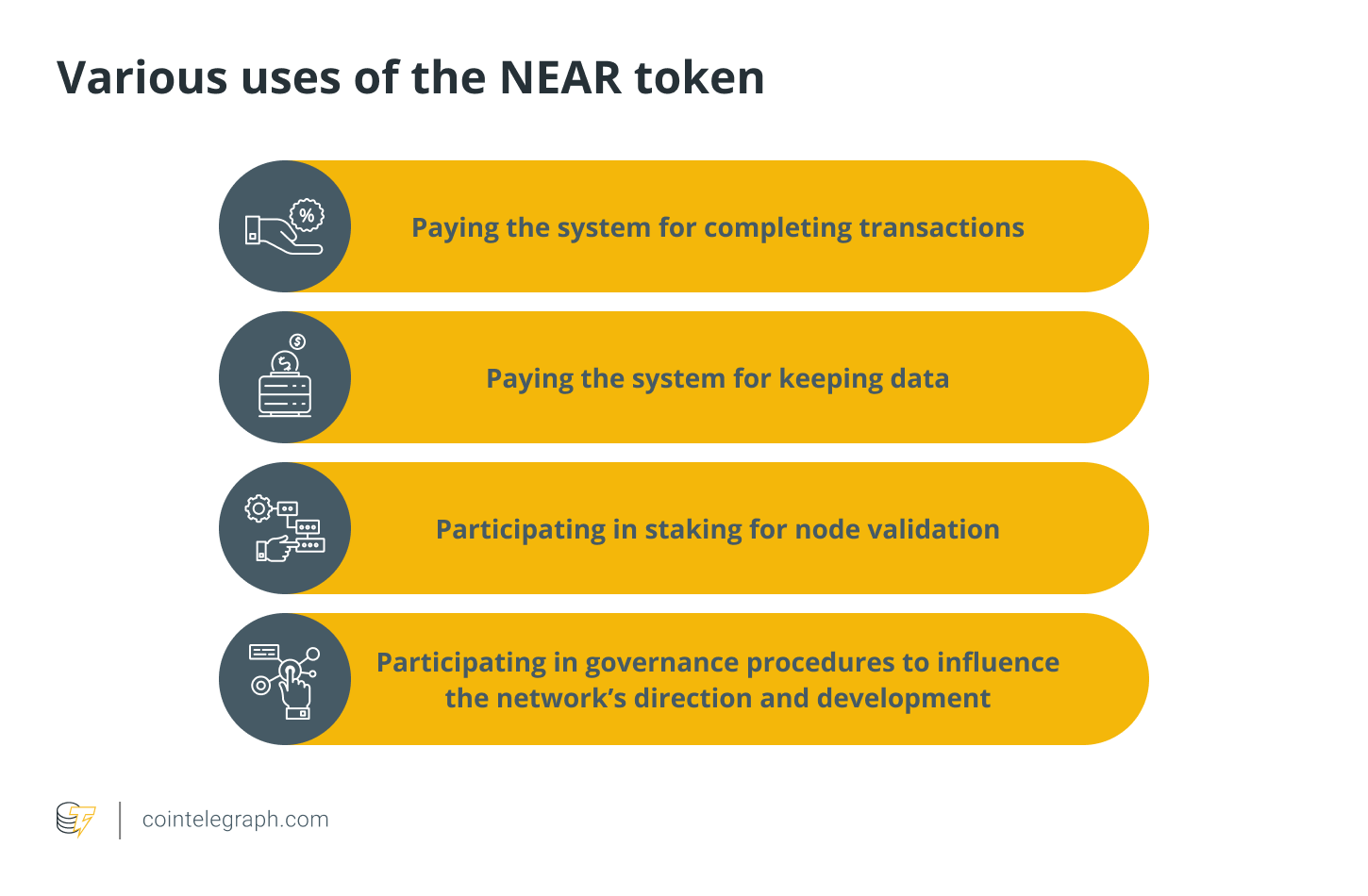
The NEAR token, Near Protocol’s native asset, has various use cases. Each token is identical to Ether (ETH) and can be used for the following:
Leituras Relacionadas

After Marvell's 32% Surge, the Chinese Chip Family Behind It Emerges

The stock price of Marvell Technology surged 32.5% on June 2nd, driven by NVIDIA CEO Jensen Huang highlighting its custom ASICs and optical interconnects as core to AI data center architecture. This event brought attention to the Chinese semiconductor family behind Marvell: the Dai siblings. The story centers on three siblings, all UC Berkeley graduates, whose three-decade entrepreneurial journey aligns with major semiconductor industry shifts. In 1995, youngest sister Dai Wei Li co-founded Marvell with her husband Sehat Sutardja and his brother, focusing on storage controllers. Eldest brother Dai Wei Min founded EDA company Ultima, later sold to Cadence, and later founded VeriSilicon (芯原) in China, becoming a leading semiconductor IP provider. Second brother Dai Wei Jin co-founded EDA firm Silicon Perspective (sold to Cadence) and GPU IP company Vivante, later acquired by VeriSilicon. The combined "Dai-Sutardja" family network extends beyond Marvell. Their ventures and investments form a comprehensive ecosystem for the post-Moore's Law, chiplet era. Key holdings include: Dream Big Semiconductor (AI SuperNICs, acquired by Arm), Alphawave (high-speed SerDes IP, acquired by Qualcomm), and Silicon Box (a chiplet advanced packaging foundry). VeriSilicon itself thrives on the AI ASIC and IP boom in China. Collectively, the family's AI infrastructure-related portfolio is estimated at over $22 billion. Their strategy represents a distinct path: building critical components for open standards and key manufacturing capacity in the chiplet era, rather than pursuing standalone AI chip dominance. While this path may not create the next NVIDIA, it has enabled repeated successful exits and sustained influence within the global semiconductor industry.

marsbitHá 50m

After Marvell's 32% Surge, the Chinese Chip Family Behind It Emerges

marsbitHá 50m

Microsoft is Afraid of Being Marginalized by AI Giants

Microsoft, once the defining force of the PC era, now faces a familiar challenge in the AI age: the risk of being relegated to a profitable but invisible infrastructure provider. This anxiety was laid bare at Build 2026, where CEO Satya Nadella unveiled a major strategic pivot. The catalyst was a quiet April agreement that dissolved Microsoft's exclusive licensing and cloud-hosting deal with OpenAI, its once-vital partner. This erased Microsoft's key AI moat. With OpenAI and Anthropic defining AI applications and gaining enterprise traction—even within Microsoft's own ranks—Nadella had to answer: without exclusivity, what is Microsoft's role? The answer was a suite of seven in-house AI models, a developer-focused AI workstation (Surface RTX Spark Dev Box), and, most crucially, the Agent 365 platform for enterprise AI governance. The models, notably targeting Anthropic's strengths in coding and enterprise, signal a defensive move. However, the broader strategy is to make the models themselves less decisive. Financially, Microsoft's AI revenue is strong, driven largely by Azure running others' models. Yet its user-facing products like Copilot show weak penetration and engagement. Microsoft earns infrastructure money but lacks direct user mindshare. Nadella's core fear is being "hollowed out." As OpenAI and Anthropic prepare for IPOs and gain financial independence, they may build their own infrastructure, threatening Azure's lucrative AI revenue stream. Microsoft's window is to entrench itself deeper: not as the model creator, but as the indispensable platform for securely deploying, managing, and governing all AI models within the enterprise through Agent 365. Build 2026 revealed Microsoft's bet: in the AI era, the ultimate power lies not in any single model, but in the enterprise "operating system" that controls them. Nadella is determined to ensure Microsoft is the driver of this new era, not just a passenger.

marsbitHá 1h

Microsoft is Afraid of Being Marginalized by AI Giants

marsbitHá 1h

CPU, Quietly Returning to the Center of the AI Computing Power Stage

Over the past three years, AI computing power narratives have been dominated by GPUs. However, starting in 2026, this story began to shift. While training large models remains GPU-intensive, the rapid growth of inference and AI agent workloads, which require high levels of task orchestration, concurrency, and data flow management, has highlighted a renewed critical role for CPUs. These are tasks GPUs are not designed to handle. Intel's recent launch of the Xeon 6+ processor, built on its Intel 18A process and featuring up to 288 efficiency cores (E-cores), exemplifies this strategic pivot. It is positioned not as a mere companion to GPUs but as the essential "control plane" for AI infrastructure, optimized for high-density, energy-efficient, and high-throughput workloads characteristic of AI agents and inference. This "CPU resurgence" is not about CPUs outperforming GPUs in raw computation. It reflects a systemic bottleneck: as AI scales from training single models to deploying countless intelligent agents, the demand for coordination and data handling surges. Major cloud providers are also developing their own high-density ARM-based server CPUs for similar workloads. However, Intel's success with this strategy faces significant challenges. Competition includes NVIDIA's integrated CPU-GPU solutions, the expanding adoption of cloud vendors' in-house ARM CPUs, and the crucial market test of Intel's 18A manufacturing process against rivals like TSMC's N2. In conclusion, CPUs are indeed reclaiming a central, though redefined, role in AI compute—managing the complex orchestration that enables massive-scale AI deployment. While the trend is clear, which company will ultimately lead this CPU resurgence remains an open question to be decided in the data centers of 2027 and beyond.

marsbitHá 1h

CPU, Quietly Returning to the Center of the AI Computing Power Stage

marsbitHá 1h

Trading

Spot
Futuros

Artigos em Destaque

Como comprar NEAR

Bem-vindo à HTX.com!Tornámos a compra de NEAR Protocol (NEAR) simples e conveniente.Segue o nosso guia passo a passo para iniciar a tua jornada no mundo das criptos.Passo 1: cria a tua conta HTXUtiliza o teu e-mail ou número de telefone para te inscreveres numa conta gratuita na HTX.Desfruta de um processo de inscrição sem complicações e desbloqueia todas as funcionalidades.Obter a minha contaPasso 2: vai para Comprar Cripto e escolhe o teu método de pagamentoCartão de crédito/débito: usa o teu visa ou mastercard para comprar NEAR Protocol (NEAR) instantaneamente.Saldo: usa os fundos da tua conta HTX para transacionar sem problemas.Terceiros: adicionamos métodos de pagamento populares, como Google Pay e Apple Pay, para aumentar a conveniência.P2P: transaciona diretamente com outros utilizadores na HTX.Mercado de balcão (OTC): oferecemos serviços personalizados e taxas de câmbio competitivas para os traders.Passo 3: armazena teu NEAR Protocol (NEAR)Depois de comprar o teu NEAR Protocol (NEAR), armazena-o na tua conta HTX.Alternativamente, podes enviá-lo para outro lugar através de transferência blockchain ou usá-lo para transacionar outras criptomoedas.Passo 4: transaciona NEAR Protocol (NEAR)Transaciona facilmente NEAR Protocol (NEAR) no mercado à vista da HTX.Acede simplesmente à tua conta, seleciona o teu par de trading, executa as tuas transações e monitoriza em tempo real.Oferecemos uma experiência de fácil utilização tanto para principiantes como para traders experientes.

343 Visualizações TotaisPublicado em {updateTime}Atualizado em 2026.06.02

Como comprar NEAR

Discussões

Bem-vindo à Comunidade HTX. Aqui, pode manter-se informado sobre os mais recentes desenvolvimentos da plataforma e obter acesso a análises profissionais de mercado. As opiniões dos utilizadores sobre o preço de NEAR (NEAR) são apresentadas abaixo.

活动图片