Why NFT adoption is so high in South Korea

CointelegraphPublicado em 2022-03-29Última atualização em 2022-03-29

Resumo

South Korea’s reputation as a trend-setter and leader in technological research is quickly spilling into the blockchain realm as nonfungible token (NFT) adoption has skyrocketed in the small East Asian country.

South Korea’s reputation as a trend-setter and leader in technological research is quickly spilling into the blockchain realm as nonfungible token (NFT) adoption has skyrocketed in the small East Asian country.
As of 2020, South Korea has been among the top-10 countries in the world in the Global Innovation Index by the World Intellectual Property Organization. That level of innovation is made apparent to global retail consumers by tech giants such as Samsung and LG and to gamers through game maker Krafton.
Those companies, and many like them, are now also delving into the NFT space by dropping new collections to customers and launching divisions of their company dedicated to developing NFTs.
There may be several reasons for the eagerness to expose retail consumers and the general public at large to NFTs that goes beyond just being a thank-you prize for a purchase. This is the idea presented by Strategy Lead at the Korea-based KlayChicken NFT project, Alex Lim. He told Cointelegraph today "NFTs are all the rage but a lot of people don't even know why."
"The NFT hype in South Korea stems from a mixture of sentiments... I believe that in the second half of the year, the time will come when the whole South Korean NFT industry takes a quantum leap."
One reason that may contribute to this quantum leap is the lack of a tax on digital assets in South Korea. The crypto tax has been delayed until 2023, but president-elect Yoon Seok-yeol may push to delay that tax for yet another year to 2024.
Additionally, NFTs are not regulated as stringently as cryptocurrency is now. Although local financial regulators at the Financial Services Commission (FSC) are working to introduce new NFT rules, none yet exist. This has kept the market open to be filled by a litany of new marketplaces at exchanges such as Upbit and Bithumb and from other corporations such as gaming giant Krafton to profit from NFTs.
Co-founder and CEO at Korea-based blockchain ecosystem accelerator DeSpread GM Chung believes practical use-cases for NFTs will become more common in his country. He told Cointelegraph today that “I expect NFTs to expand into a social on-chain profile layer along with transaction history in the future.” 
“Previously, the phenomenon of purchasing NFTs for community participation was done, but recently, the expansion of NFT utilities is considered to be a major reason (for its rise in utilization).”
While campaigning, president-elect Yoon issued an NFT collection which followers could mint in order to feel a sense of belonging to his cause.

Yoon Seok-yeol’s NFT collection on the Aergo blockchain. Source: CCCVGoing beyond participation is South Korea’s Hoseo University which issued diplomas in NFT form to its 2,830 graduating students on March 18. Local news outlet Money Today reported in February that the university decided to issue NFTs in order to improve accessibility and convenience for students and to prevent the forgery of diplomas.
Chung may even be understating the utility market participants see in NFTs. Last month, the Ministry of ICT, Science and Future Planning pledged to support the growth of a national Metaverse with a $187.7 million dollar grant. Content creators are expected to benefit the most from the new grant.
Content creators appear to be reaping the rewards of increased demand for their services in developing NFT designs for a wide array of companies. A simple search for NFT on the leading job search website JobKorea produces 753 unique positions for content creators and business professionals.
The digital assets those creators make have most commonly been in the form of in-game items or characters, and emojis for text messaging apps. This familiarity with digital assets is why the co-founder of crypto investment firm Stablenode Doo Wan Nam believes Koreans have adopted NFTs so readily. He told Cointelegraph today that "Koreans are more open and understanding when it comes to NFT which is another form of digital asset."
Lim said content creators and businesses are now including NFTs in their business plans because they now see the "potential and utility" of NFTs. He added that building a supportive community to enhance brand power "has always been the inevitable, yet difficult task for any content creator."
"NFTs have opened a new horizon for those who seek to materialize an ideal community where there is commitment, passion, and autonomy."

Leituras Relacionadas

How Far Are We from the End of the Crypto Bear Market?

How Much Longer Until the Crypto Bear Market Ends? A persistent negative Coinbase Bitcoin Premium Index, reaching a record 46 consecutive days of negative values, underscores the ongoing crypto bear market. The downturn accelerated in late May/early June when MicroStrategy (referred to as "Strategy" in the text), a major BTC holder, sold a small amount of Bitcoin (32 BTC), shattering market confidence and triggering sharp declines in BTC, ETH, and SOL. This was compounded by sustained net outflows from US spot Bitcoin ETFs. June saw Bitcoin briefly fall below $60,000, its worst weekly performance since 2022, breaking below the critical 200-week moving average—a signal some analysts consider confirmation of a bear market. While some institutional analyses in mid-June suggested the bottom might be near (e.g., around $53,600 based on realized price, or a potential end during the 2026 World Cup summer), further price drops quickly disproved these optimistic forecasts. Key bear market indicators include: the severe de-pegging of MicroStrategy's preferred shares (STRC) from their $100 NAV, which later recovered partly due to company stabilization plans; a record number of BTC (over 10.83 million) and a significant portion of long-term ETH holders now in unrealized loss; and Bitcoin's price trading below its 200-week moving average. Predictions for the bear market's end vary. Some, like investor Yilihua, suggest July-August 2026 could present a final buying opportunity. Others, like miner Jiang Zhu'o'er, predict a bottom between $42,000-$44,000 in October-December 2026, based on the historical lag between MicroStrategy's mNAV ratio bottom and Bitcoin's price bottom. Technical indicators like the BTC 4-year average price index dipped briefly below 1, and the Coinbase Premium Index remains negative, suggesting a need for a price rebound to around $77,000 for a return to positive territory. In the absence of major external catalysts, the consensus leans toward the bear market persisting for another 2-3 months, with late September to early October 2026 being a potential turning point window.

Odaily星球日报Há 39m

How Far Are We from the End of the Crypto Bear Market?

Odaily星球日报Há 39m

Solana Ecosystem Shows Signs of Recovery: On-Chain Governance Upgrade, Tokenized Stocks and Meme Coins Heat Up

Solana Ecosystem Shows Signs of Revival: Governance Upgrades, Tokenized Stocks, and Memecoins Heat Up While the broader crypto market faces a downturn, Solana has shown relative strength with its price rising nearly 15% recently. This resilience is attributed to warming ecosystem activity, particularly in tokenized stocks and memecoins, coupled with a major upgrade to its on-chain governance. In the Real World Assets (RWA) sector, Solana now leads all public chains in both the number of unique holder wallets and the quantity of RWA assets. Its tokenized stock weekly trading volume has surged to a record $1.42 billion, capturing about 96% of the market share, largely driven by the Backpack exchange. Simultaneously, the Solana memecoin sector has reignited, fueled by the rapid ascent of the ANSEM token following endorsements from a prominent crypto influencer. This has boosted activity across platforms like Pump.fun and increased fee revenue for several Solana-based exchanges. A key development is the launch of Solana Governance Proposals (SGP), a new on-chain mechanism. It allows validators with at least 100,000 SOL delegated to submit proposals for community vote, enhancing decentralized decision-making. SGP will operate alongside the existing technical proposal process (SIMD), focusing on broader ecosystem governance. Despite these positive signals in specific areas, overall on-chain activity and transaction volumes still lag behind previous bull market peaks, indicating the recovery remains partial rather than ecosystem-wide.

marsbitHá 1h

Solana Ecosystem Shows Signs of Recovery: On-Chain Governance Upgrade, Tokenized Stocks and Meme Coins Heat Up

marsbitHá 1h

While Semiconductor Stocks Plunge, Anthropic Plans to Develop a 2nm Chip

Anthropic, the AI company behind Claude, is exploring the development of its own custom AI chip, according to a report from The Information. The company is in early discussions with Samsung Electronics to manufacture the chip using Samsung's most advanced 2-nanometer process and packaging technology. While the project is still in preliminary stages, including defining chip specifications, and could be abandoned, it marks a strategic step for Anthropic. The move comes as the company seeks greater control over its computing costs and hardware optimization, particularly for inference tasks to run its models more efficiently and cheaply. Samsung's potential involvement follows its participation as a strategic investor in Anthropic's recent $65 billion funding round. For Samsung, partnering with a major AI lab represents a significant opportunity for its foundry business to compete with market leader TSMC in advanced semiconductor manufacturing. Anthropic's CEO, Dario Amodei, has previously highlighted the immense financial challenge of securing enough computing power for anticipated growth, making cost-effective inference a critical focus. The company would join other tech giants like Google, Amazon, Microsoft, Meta, and OpenAI in pursuing custom AI silicon. However, analysts note this trend creates deeper interdependencies rather than independence, as US AI labs become more tightly woven into Asian semiconductor supply chains. Despite this move, Anthropic remains heavily reliant on a multi-cloud, multi-vendor strategy for its immediate computing needs. It has secured massive, long-term commitments for capacity from Amazon Web Services (Trainium chips), Google (TPUs), and even leased a large GPU cluster from xAI. For now, Nvidia continues to dominate the AI chip market, with its share reportedly growing to 74%.

链捕手Há 1h

While Semiconductor Stocks Plunge, Anthropic Plans to Develop a 2nm Chip

链捕手Há 1h

Korean Companies Following Strategy in Accumulating Cryptocurrency: From Bull Market to Delisting?

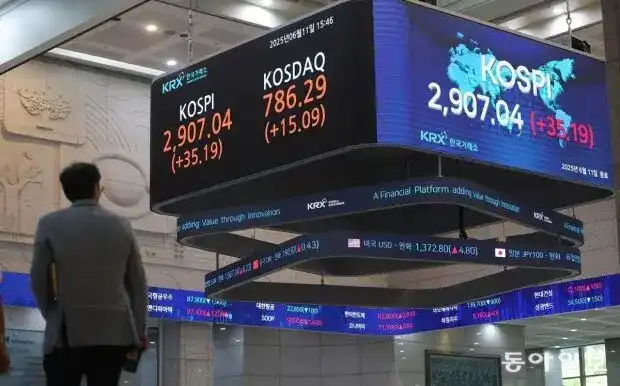
Title: Korean DAT Companies Following "Strategy" Bitcoin Hoarding Model Face Delisting Amid Bear Market Summary: Several Korean KOSDAQ-listed companies, known as Digital Asset Trusts (DATs), are at risk of being delisted due to a combination of stricter regulatory thresholds and a downturn in crypto markets. These firms, inspired by models like Strategy and Japan's Metaplanet, raised capital to buy Bitcoin, relying on a cycle of rising crypto prices to boost their stock value. However, recent reforms in Korea have raised the minimum market capitalization required to stay listed from 150 billion won to 200 billion won (approx. $1.3M), with a further increase to 300 billion won set for next January. The new rules also close loopholes like reverse stock splits used to artificially inflate share prices. The situation is exacerbated by a significant drop in Bitcoin's price from its 2025 peak and a weak KOSDAQ market. While the main KOSPI index has surged nearly 95% year-to-date, KOSDAQ has fallen about 10%, draining liquidity from smaller companies. Many DATs now hover near or below the new market cap thresholds and must also book substantial valuation losses on their Bitcoin holdings. Analysts suggest that without a sustained recovery in both crypto prices and broader market interest in KOSDAQ stocks, these companies have limited options to avoid delisting, marking a precarious moment for Korea's crypto-linked public companies.

marsbitHá 1h

Korean Companies Following Strategy in Accumulating Cryptocurrency: From Bull Market to Delisting?

marsbitHá 1h

Trading

Spot
活动图片