从稳定币牌照到链上资金端浅析

marsbitPublicado em 2026-05-04Última atualização em 2026-05-04

原文:招银国际财富管理

事件背景

2026年1月21日,香港财政司司长陈茂波先生在达沃斯论坛会议上发表讲话,强调香港作为国际金融中心,将采取积极稳健的策略发展数字资产,并以“相同活动、相同风险、相同监管”的原则,促进市场的负责任发展和可持续发展。2026年4月10日,香港金融管理局正式公布首批「稳定币发行人牌照」名单,由香港上海汇丰银行有限公司及碇点金融科技有限公司(由渣打银行、Animoca Brands、香港电讯牵头)获得,这标志着香港法币稳定币监管制度进入新阶段,旨在保障用户、规范发行活动。此外,特区政府亦积极推动代币化发展,已发行三批代币化绿色债券,总额约21亿美元;同时,推出监管沙盒,以鼓励应用创新。


01 概述

在资金端,现实世界中的货币可以以代币形式存在。不同金融生态位的机构或个人对货币的理解和应用存在差异。首先,与法定货币1:1锚定的代币,例如由私人机构发行并运行于公链的稳定币,是当前市场讨论最多的代币形式之一。另一方面,由央行发行的数字货币(CBDC)则可以被视为运行于中心化系统内的法币代币。其次,根据货币供应理论,除流通中的现金(M0)外,M1(狭义货币)包含企业和个人持有的活期存款,M2(广义货币)包含定期存款。将存款代币,即可将其作为链上支付工具之一。


02 链上资金端形态分类

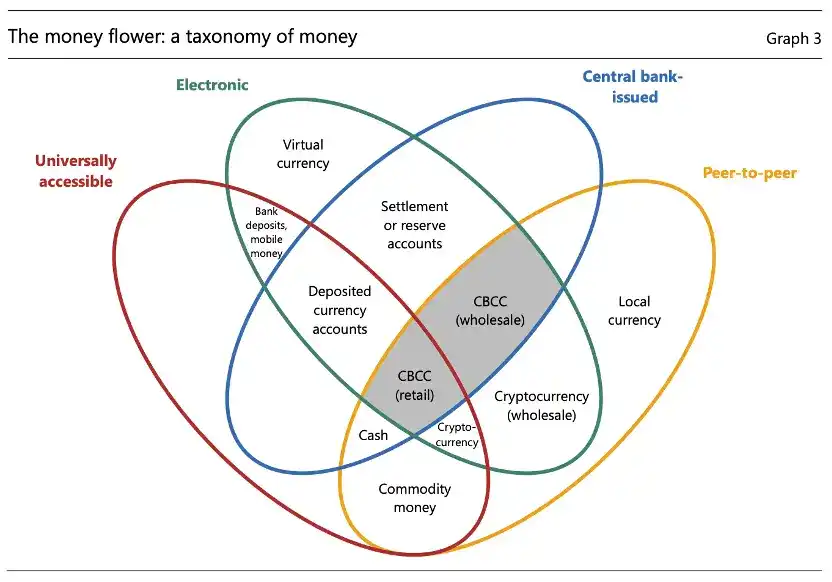
如何理解资金端的RWA发展?我们可以参考国际清算银行(BIS)此前在论文中提及的图形(如下图)进行理解,在各项分类中,重点关注Electronic和Universally accessible的交集,我们会发现链上资金端所涵盖的三个方向均有涵盖:1)CBCC,对应央行数字货币;2)bank deposit,对应存款代币;3)Cryptocurrency,包含稳定币。

图一:货币分类示意图

(数据来源:BIS)
1、央行数字货币(CBDC)是国家央行发行的数字法定货币,是对传统纸币硬币的数字化延伸。它以电子形式存在,通常与法定货币价值一比一挂钩,并由央行直接控制和监督。CBDC旨在提高支付效率、促进金融包容性和削减现金使用。其潜在优势包括增强货币政策效果、降低欺诈和洗钱风险以及便利跨境支付。然而,也存在隐私保护、网络安全和金融系统稳定性等挑战。全球多个国家,包括中国、瑞典和巴哈马,正在进行CBDC试点研究,并保持国际合作。央行数字货币的发展代表了货币形式的转变,将对未来的金融体系及经济行为产生深远影响。

2、存款代币本质上仍然是银行负债,是银行将客户的法定货币存款(如活期存款、定期存款)以1:1的比例在分布式账本上进行代币化。它并非加密货币,而是代表了银行对存款人的债务,因此其风险和法律地位与传统存款相同。

值得注意的是,存款代币相较于稳定币的一个关键优势在于其可以产生利息(数字人民币2.0的升级思路就是借鉴了这一点)。稳定币发行方通常从其持有的储备资产中赚取收益,但这部分收益一般不会传递给代币持有者。相比之下,存款代币可以向持有者支付其银行存款所产生的利息,这对于拥有大量余额的机构,例如使用稳定币进行资金划转和作为抵押品的加密货币交易公司,具有显著吸引力。

  • 1)活期存款代币化:客户的活期存款可以被代币化,从而支持7x24小时实时、跨境转账和结算,有效提升了资金流动性。

  • 2)定期存款代币化:定期存款也可以被代币化,通常通过智能合约等技术实现,在满足特定条件(例如到期、达到预设金额)时,才可全额或部分释放,或享受特定收益。但其本质上仍然代表了定期存款的代币。

3、稳定币是一种与法定货币或其他资产挂钩的加密货币,其主要目的是保持价值稳定。根据抵押形式,稳定币可分为几种类型,以下是四种主要的抵押类型:

  • 1)法币抵押稳定币。这种类型的稳定币以法定货币(如美元、欧元等)作为抵押。例如,每发行1个稳定币,发行机构都会在银行账户中保留1美元的储备。

  • 2)加密货币抵押稳定币。这类稳定币通过其他加密货币作为抵押。为了实现价值稳定,通常会使用超额抵押的方式,例如,用户需要提供更多价值的加密货币作为抵押。

  • 3)算法稳定币。算法稳定币不依赖任何外部抵押品,而是通过算法来控制流通数量,以维持其价值稳定。这类稳定币会在价格上涨时增加供应,价格下跌时减少供应。

  • 4)商品抵押稳定币。这类稳定币是以实物商品(如黄金、石油等)为基础的。例如,每个稳定币的价值可以与某种商品的市场价值挂钩。


03 结语

我们不仅可以从技术和监管两个维度分析链上世界的演进,还可以从资金和资产两端把握当前的市场阶段。

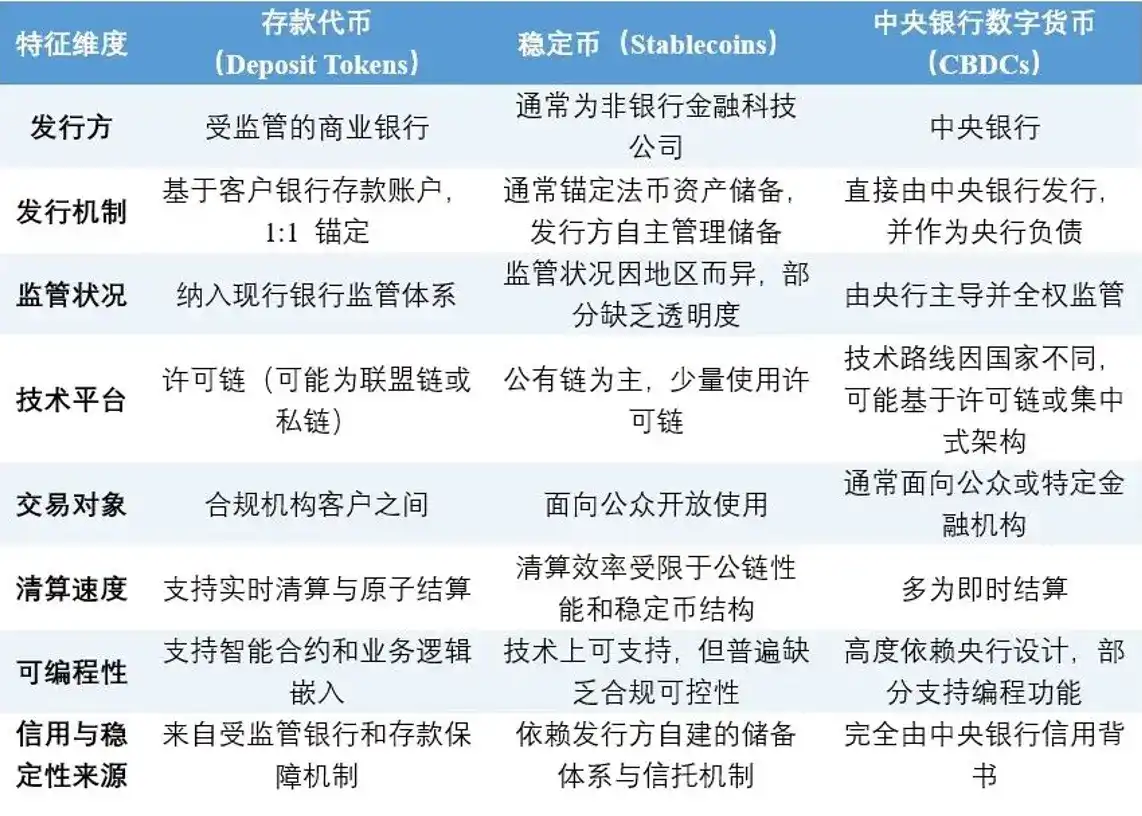
首先,在链上资金端(如下图),与稳定币相对应的是各央行发行的中央银行数字货币(CBDC),同时,以香港为例,EnsembleTX将于2026年持续运行,为下一阶段创新奠定坚实基础。代币化存款交易的跨行结算将首先透过港元即时支付结算系统(RTGS)进行,试行环境将逐步升级优化,以支持代币化央行货币进行24/7全天候结算,推动香港更广阔的代币化生态系统的持续发展。

图二:链上资金端分类示意图

(数据来源:JPMorgan & Oliver Wyman, Deposit Tokens: A Foundation for Stable Digital Money)
其次,在链上资产端,随着投资需求对空间和时间维度的日益重视,起购金额更低、交易时段扩展至24/7的资产品种将与链上资金端的特点高度契合。


Leituras Relacionadas

QCP Capital Analysts Explained Why Bitcoin Stalled at $63,000

QCP Capital's latest report explains that Bitcoin has stalled around $63,000, testing the lower boundary of its recent trading range ($62,500–$64,000). The retreat wasn't due to a single catalyst but stems from several cross-market pressures: heightened geopolitical risks, rising oil prices, uncertainty around global liquidity, and a muted reaction to positive U.S. macroeconomic data. While U.S. inflation and jobs data softened, reducing expectations of imminent Fed tightening, Bitcoin's price response has been subdued. This highlights the importance of other factors like trader positioning, liquidity conditions, and overall risk appetite. The regulatory landscape is progressing on two tracks: congressional legislation (like the CLARITY Act) is delayed, but SEC rulemaking continues. Corporate treasury activity, exemplified by Strategy's new Bitcoin monetization program, now creates a potential two-way flow, adding complexity to supply dynamics. Geopolitical tensions around the Strait of Hormuz keep oil prices elevated, impacting crypto indirectly through inflation expectations and financial conditions. Historical seasonality shows August and September are typically weak for Bitcoin, but this is descriptive, not predictive, in today's ETF-driven market. In conclusion, Bitcoin has shown resilience by absorbing multiple negative forces without a decisive breakdown. However, it has failed to convert improving macro fundamentals into sustained upward momentum. The market awaits key events like the U.S. PCE data, the Jackson Hole symposium, and the September FOMC meeting for a potential catalyst to break the current range.

cryptonews.ruHá 2m

QCP Capital Analysts Explained Why Bitcoin Stalled at $63,000

cryptonews.ruHá 2m

Did DeepSeek Intentionally Make an Unfriendly Agent?

DeepSeek is shifting its strategy from being a low-cost model provider to building a foundational ecosystem for AI agents. This pivot is marked by two recent moves: increasing the price of its flagship V4 Pro model and launching the DeepSeek Harness agent framework. Previously, DeepSeek's success was built on creating powerful, affordable models and open-sourcing them to drive adoption. Now, the focus is moving "beyond the model" to the runtime environment where agents operate. Harness is key to this new approach. Unlike integrated agent products from competitors, Harness deconstructs the agent stack—separating the model, tools, skills, workflows, and UI into modular, replaceable components. Its core innovation is the Cordis kernel, which enables dynamic loading, unloading, and management of plugins, allowing agents to modify their own capabilities during execution. Significantly, Harness does not lock users into DeepSeek's models; it allows integration with third-party models. This suggests DeepSeek's ambition is not to control the model layer but to establish the standard runtime environment for future agents—akin to an operating system for the agent era. The V4 Pro price increase aligns with this shift: the model transitions from a loss-leading acquisition tool to a core revenue engine within a broader ecosystem. Harness is currently complex and developer-focused, prioritizing ecosystem builders over end-users. Its success will be measured not by immediate user numbers, but by the plugins, agents, and platforms built upon it. DeepSeek's long-term bet is that controlling the agent runtime will be more valuable than merely providing the underlying models, potentially redefining how AI agents are created and evolved.

marsbitHá 38m

Did DeepSeek Intentionally Make an Unfriendly Agent?

marsbitHá 38m

Metrics Ventures Market Observation: Talk is Cheap

This monthly market analysis extends its timeline to incorporate critical July comments from the Fed Chair, noting that bond markets have already priced in perceived policy shortcomings. The report observes a growing divergence: equity markets, after some deleveraging, continue a "trust-based" rally, while bond and currency markets signal persistent distrust. Precious metals bottoming suggests a central bank consensus that the era of "competitive currency devaluation" is ending, with verbal interventions losing power. Looking forward to Q3-Q4, the analysis remains bullish on supply-constrained global resources like copper and power, as well as gold, which prices ongoing monetary失信. It argues that digital assets are unlikely to see major outperformance until excess liquidity is released and AI growth rates are fully priced. Key market views include: 1. Commodities like gold remain primary liquidity absorbers over Bitcoin, with recent consolidation seen as healthy. 2. The bull trend for RMB-denominated assets (e.g., STAR 50 Index) is firmly established. 3. Key resource country indices and currencies are near inflection points, with spot copper already at new highs. The report suggests resource equities, particularly in China's market, are at the end of their consolidation phase, offering attractive valuations with embedded optionality on rising metal prices. It highlights the predictive significance of recent US-Japan FX interventions and Treasury-Fed dynamics, suggesting a shift towards less communication and data management to maintain stability. A long position in resource assets is presented as a positive expected-value strategy over a multi-year horizon.

marsbitHá 2h

Metrics Ventures Market Observation: Talk is Cheap

marsbitHá 2h

The Value, Growth, and Risks of Prediction Markets

The article discusses the explosive growth and complex nature of prediction markets in the United States, focusing on their value, risks, and regulatory challenges. Key drivers include sports betting, which fueled a 1795% year-over-year trading volume increase in Q2 2026, with platforms like Kalshi and Polymarket dominating. These markets offer significant potential as superior hedging tools for businesses and more efficient price discovery mechanisms than traditional polls or derivatives for events like Fed rate decisions, elections, or GPU prices. They also serve as customer acquisition channels for platforms like Robinhood. However, major challenges persist. A central conflict exists between federal regulators (CFTC), which classify event contracts as derivatives under its jurisdiction, and state authorities, which view sports-related contracts as illegal gambling, leading to numerous lawsuits. There is significant consumer protection risk: data shows most retail users lose money to professional traders, platforms market high-risk products like parlays, and protections (e.g., age limits, addiction help) are weaker than in state-regulated sports betting. The "self-certification" process allows rapid contract launches but creates regulatory uncertainty. The author argues prediction markets are fundamentally "better markets" but currently fail to provide adequate consumer safeguards. Proposals include integrating protection mechanisms (cooling-off periods, position limits), aligning risk warnings with product risks, creating paths from speculation to long-term investing, and applying specific consumer protections and taxes to sports contracts. The piece concludes by urging stakeholders to address these issues before a potential regulatory backlash undermines the markets' legitimate utility.

marsbitHá 2h

The Value, Growth, and Risks of Prediction Markets

marsbitHá 2h

Trading

Spot
活动图片