Author: David, Shenchao TechFlow
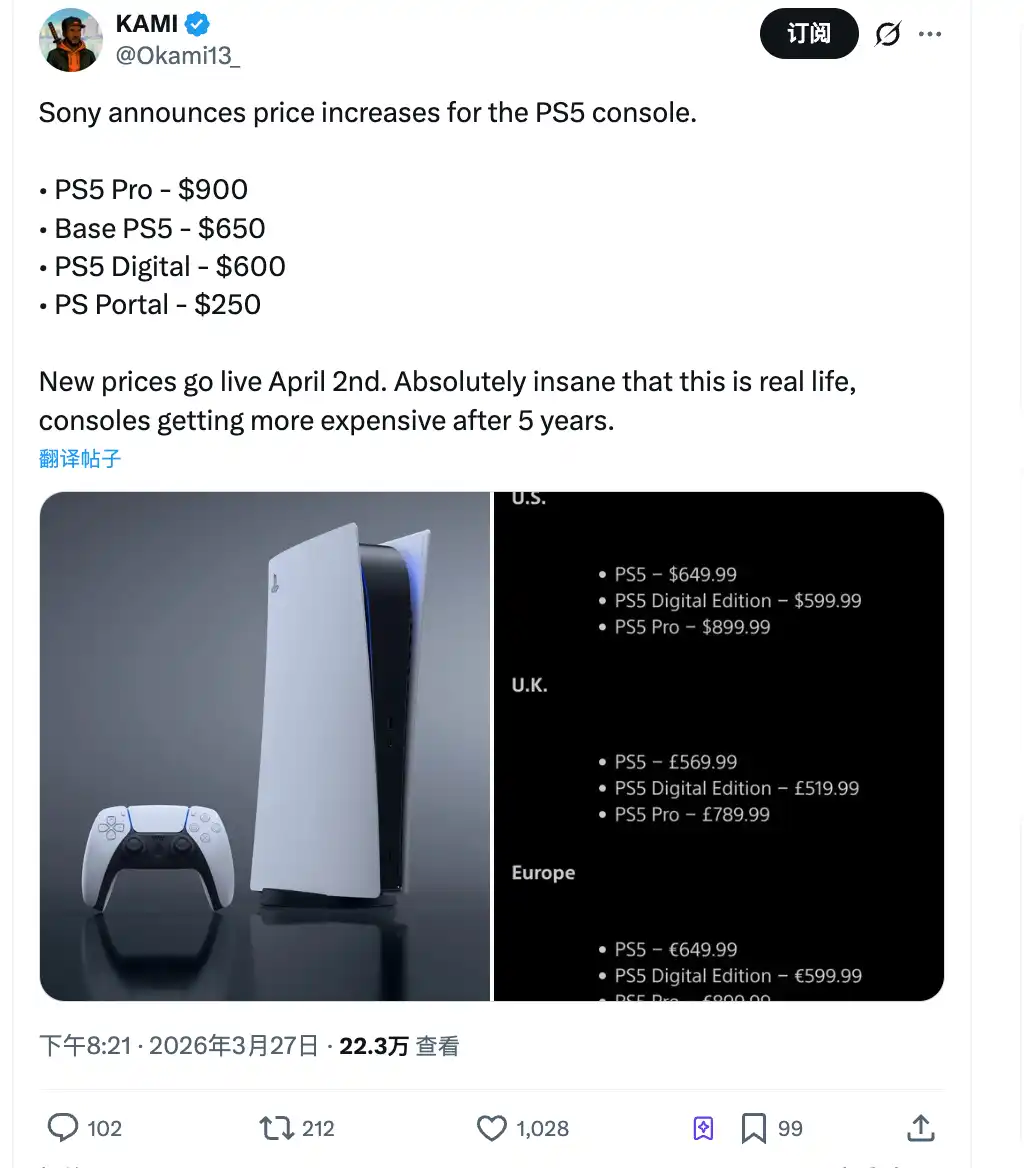
On March 27, Sony announced a price increase for all PS5 models, effective April 2.
In the US market, the PS5 Disc Edition rose from $549 to $649, the Digital Edition from $499 to $599, and the PS5 Pro jumped directly from $749 to $899.
This is the second increase within a year. The last one was in August last year, with only a $50 hike in the US, a market Sony deliberately shielded. This time, it's at least $100, with the PS5 Pro up by $150, and it's global—no market is exempt.
The pressure to raise prices has become too great for Sony to absorb alone.
Gamers know there's an ironclad rule in the console industry: consoles only get cheaper over time. Component costs decline, and manufacturers recoup early R&D through later profit improvements.
The PS5 is the first console in history to break this rule. Launched in 2020 at $399 for the Digital Edition. Six years later, the same machine costs $599.
Sony's official explanation is six words: "global economic pressures."
The AI Tax
Sony didn't elaborate much. But multiple analysts point to the same thing: memory chips.
The PS5 contains memory and a custom SSD, both requiring DRAM and NAND flash memory chips. These two components began rising significantly in mid-2025, for reasons entirely unrelated to the gaming industry: the construction of global AI data centers is snatching away memory production capacity, squeezing the share available for consumer electronics.
Your game console and AI use memory from the same production lines. AI can afford to pay more; you can't.
Piers Harding-Rolls, Research Director at Ampere Analysis, told CNBC that Sony had likely signed price protection agreements with suppliers, locking in procurement costs for a period. But after these agreements expired, memory prices showed no signs of easing, forcing Sony to pass the cost on to consumers.
According to Fox Business, Sony also admitted during its February earnings call that it was dealing with rising memory costs and planned to offset hardware losses with revenue from software and network services.
Translating for Sony: Hardware is no longer profitable, maybe even losing money. Sony intends to make up for it by selling games and subscriptions.
This is the first cut. The extra money you pay isn't for a better console; it's because AI took your memory.
Missile Strikes, Aluminum Prices Soar
The memory price hike was painful enough. Then came the missiles.
On March 28, the day after Sony's price announcement, Iran's Revolutionary Guard Corps launched several missiles at the UAE and Bahrain. Their target wasn't military bases; it was aluminum plants.
Emirates Global Aluminium (EGA) is the largest aluminum producer in the Middle East. According to its website, 1 out of every 25 tons of aluminum produced globally comes from this factory. Aluminium Bahrain (Alba) has an annual capacity of 1.62 million tons. Combined, they account for 6% of global aluminum production capacity.
According to EGA's website, the company's products are sold to over 400 customers in more than 60 countries, spanning various industries.
Hours after the missiles landed, aluminum prices jumped on the London Metal Exchange. According to the Securities Times, overseas aluminum spot premiums surged to a 19-year high. Alba subsequently declared force majeure, suspending deliveries to some customers.
Citibank analysts predict that if supply continues to deteriorate, aluminum prices could rise from the current ~$3,300 to $4,000 per ton.
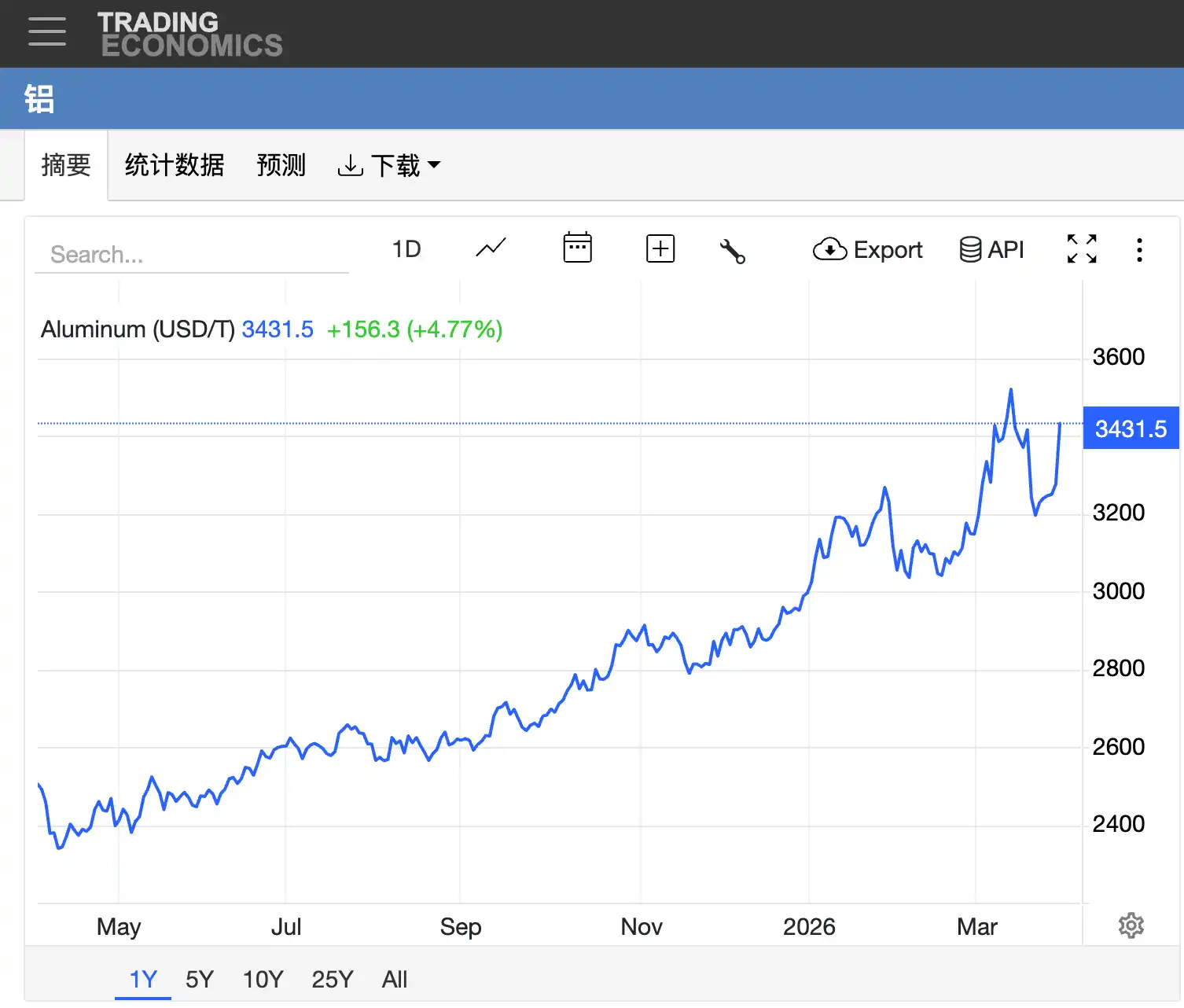
The PS5's heat sink module, structural components, and electromagnetic shielding layers all require aluminum alloy. Memory dealt the first blow; aluminum delivered the second.
And the bombing of these two plants was no accident.
The Revolutionary Guard stated in a declaration that these factories were "linked to the U.S. military and aerospace industry." In May last year, RTX, the American aerospace giant that makes Patriot missiles and F-35 radars, had just signed a memorandum of understanding with EGA to develop a production line for extracting gallium, a core material for military radars, at the Abu Dhabi plant.
According to an RTX press release, Paolo Dal Cin, Senior Vice President of Operations & Supply Chain, said at the signing ceremony that the agreement was to ensure the supply of critical minerals for the aerospace and defense industries.
Iran was targeting the supply chain of the U.S. military-industrial complex.
But bombing a military base means the loss is borne by a nation's defense department. Bombing an aluminum plant means the bill is split by the whole world, from airplanes to cars to phones to your PS5.
The Revolutionary Guard's statement also included a line: future retaliations will no longer be limited to tit-for-tat military responses but will aim for "more deadly blows" to the enemy's economic system.
According to Sina Finance, last month Saudi Arabia's largest chemical company, SABIC, already declared force majeure on its styrene and methanol production.
From aluminum to chemical raw materials, "force majeure" is spreading across the Middle East.
Paying for a Changing World
Hidden within the $200 price increase of the PS5 is actually a third cut, though that one landed last year.
In August 2025, Sony first raised US prices by $50. That move came against the backdrop of the U.S. imposing additional tariffs on global trading partners, increasing the import cost of electronics. The PS5 is designed in Japan, with components produced and assembled across multiple Asian countries—every step was skimmed by tariffs.
Tariffs, AI snatching capacity, missiles bombing aluminum plants.
Three bills, from three completely different sources. One from Washington, one from Silicon Valley, one from the Middle East. $399 to $599—each part of the increase has nothing to do with the console itself getting better.
You just want to buy a game console. But your price tag is分担 (sharing the cost) for U.S. trade policy,分担 for the AI arms race, and分担 for war in the Middle East.
And the PS5 might be the most honest one.
Sony issued an announcement, clearly stating the price hike. But aluminum isn't only used for game consoles, and memory isn't only in PS5s. Your phone, your laptop, the electric scooter you ride—all use the same aluminum and the same chips.
Traditionally, how was war paid for? Government taxes, or printing money. The U.S. issued war bonds during WWII; Truman raised taxes during the Korean War. You knew you were paying, and you knew where the money was going.
The next time these products quietly get more expensive, there might not be an announcement.
In 2020, you paid $399 for a PS5—you paid for a game console. In 2026, you pay $599 for the same PS5. The extra $200 isn't paying for better performance.
In the end, we all pay for what has happened in the world over the past six years.