YouTube Goes Crypto: PYUSD Stablecoin Payout Option Now Live For US Creators

bitcoinistPublished on 2025-12-12Last updated on 2025-12-12

Abstract

YouTube has introduced a new payout option allowing U.S.-based creators to receive earnings in PayPal’s PYUSD stablecoin. The feature, now active, uses PayPal’s existing payment infrastructure rather than direct crypto handling by YouTube. Earnings are calculated in dollars by YouTube and converted to PYUSD by PayPal, which then distributes the tokens. Currently available only to U.S. creators, the option applies to monetized revenue like ads and memberships. It offers flexibility to hold, spend via PayPal-supported platforms, or convert to fiat, though tax and custody implications differ from traditional bank transfers. PYUSD’s circulation has grown to nearly $4 billion since its 2023 launch.

YouTube has quietly added a new payout option that lets creators in the US receive earnings in PayPal’s dollar-pegged token, PYUSD. According to several reports, the change appears to be active now and is being offered through PayPal’s payout rails rather than through any direct crypto custody by YouTube.

How The Option Works

PayPal’s head of crypto, May Zabaneh, confirmed the setup to Fortune and said the company uses its existing payout network to deliver PYUSD to recipients who opt in.

That means YouTube will still calculate and send creator earnings in dollars to PayPal’s system, and PayPal is then responsible for the conversion to the stablecoin and distribution to creators. The move builds on PayPal’s broader push to offer stablecoin tools to businesses and individual users.

PYUSD was introduced by PayPal in 2023 and has since been plugged into services such as Venmo and PayPal’s merchant tools. Reports have made clear that YouTube itself is not holding or moving crypto on behalf of creators; PayPal handles the token side.

Scope And Availability

For the moment, the option is available only to creators based in the US. A Google spokesperson confirmed the rollout but declined to share a schedule for any expansion beyond American users.

Creators who qualify for YouTube’s monetization programs may be able to opt into the new payout method for monthly earnings like ad revenue and paid memberships.

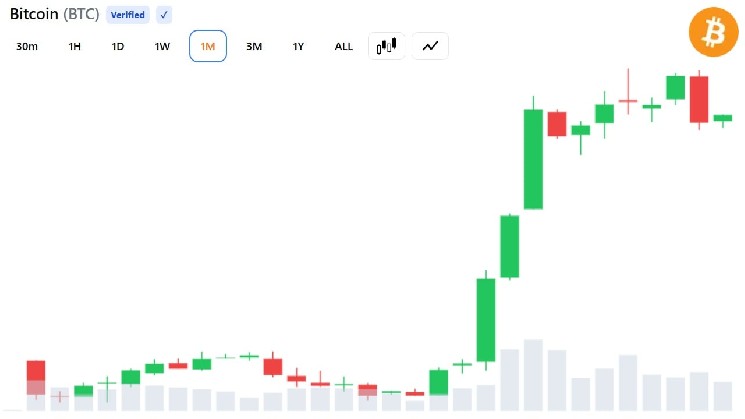
Total crypto market cap currently at $3.1 trillion. Chart: TradingView

Some creators will value the extra choice. Receiving PYUSD could let a creator hold a dollar-pegged token onchain, spend it where PayPal tools accept it, or convert back to fiat through PayPal.

There are tradeoffs: holding a stablecoin brings different custody and tax considerations than a straight bank transfer. Reporting systems and bank rules may differ depending on how the creator finally cashes out.

What Creators Should Expect

The signup step should be familiar to anyone who already uses PayPal payouts on YouTube; it will likely appear as an alternative payment method in creator settings.

Once chosen, payments will flow through PayPal’s established payout system and show up as PYUSD in the recipient’s compatible wallet or PayPal balance, per the descriptions circulating in the trade press.

PYUSD In Numbers

PYUSD’s onchain presence has grown rapidly. Market trackers list the stablecoin with close to $4 billion in circulating value and roughly 3.8 billion tokens in supply at the moment, figures that underline how much the token has expanded since launch.

Featured image from Unsplash, chart from TradingView

Trending Cryptos

Related Reads

ECB's Schnabel says central bank money 'should move to blockchain'

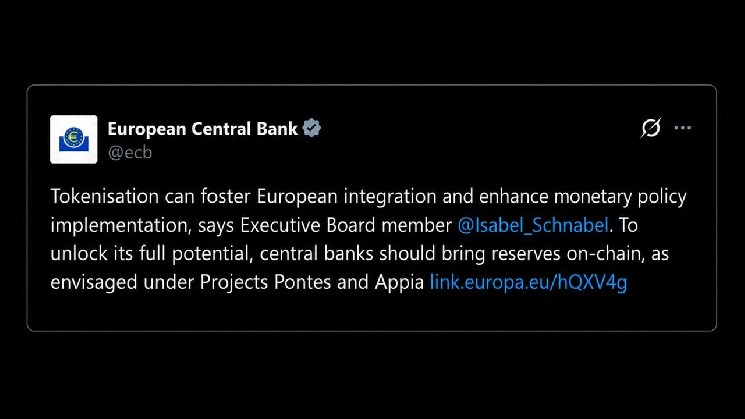
ECB Executive Board member Isabel Schnabel stated that central bank money "must move onto the blockchain." She argued that stablecoins lack the independent ability to scale liquidity during financial stress—a gap only a central bank can fill. Her proposed solution involves tokenization, which she says can make transactions faster, safer, and more programmable, but only if the safest asset (central bank money) is on the same "rails" as other tokenized assets. This marks a notable shift for the Eurosystem, which had previously viewed Distributed Ledger Technology (DLT) mainly as a tool for regulating stablecoins and crypto, not as infrastructure to adopt directly. The first step is Project Pontes, launching in September. It will initially synchronize the ECB’s existing TARGET services with private DLT platforms. Eventually, it aims to enable settlement finality on a Eurosystem-managed DLT platform with smart contract functionality and 24/7 operation. The long-term strategy is Project Appia, tasked with developing the architecture, standards, and legal framework for a genuine European tokenized asset market by 2028. Trials have already processed around €1.6 billion, and since March 2026, the ECB accepts DLT-based assets as collateral. While not directly impacting Bitcoin's price, these developments signal that a major G7 central bank is preparing to settle transactions on-chain, lending legitimacy to the underlying infrastructure of crypto markets. The ECB's move to avoid "disintermediation" by private tokenization shows that debates in central bank boardrooms are now aligning with discussions long followed in the crypto space.

cryptonews.ru1h ago

ECB's Schnabel says central bank money 'should move to blockchain'

cryptonews.ru1h ago

Ripple Labs Warns of a New Challenge for Blockchains

Ripple Labs is preparing the XRP Ledger for quantum threats but now emphasizes a broader challenge: ensuring financial infrastructure can adapt simultaneously to quantum computing and artificial intelligence. Senior Director of Engineering Ayo Akinyele states the goal is not merely anticipating a "Q-Day" but building infrastructure capable of preemptively adopting new security mechanisms without network disruption. The shift to post-quantum cryptography involves more than swapping algorithms; it requires flexible infrastructure, improved key management, and clear upgrade paths. Financial systems were not designed with quantum computers in mind, necessitating a rethink of transaction, identity, asset, and data protection. This is underscored by significant investments, such as the $2 billion U.S.-IBM quantum factory initiative and a 2030 U.S. government mandate for post-quantum cryptography adoption. AI introduces distinct risks by driving automation and autonomous economic activity, increasing demand for an always-on, internet-oriented payment infrastructure. AI agents could soon conduct transactions independently, creating new security requirements. Ripple Labs advocates for proactive, orderly preparation rather than a crisis-driven transition, having outlined a four-phase strategy aiming for a full XRP Ledger transition by 2028, now expanded to address both quantum and AI-driven challenges.

cryptonews.ru1h ago

Ripple Labs Warns of a New Challenge for Blockchains

cryptonews.ru1h ago

Trading

Spot

Hot Articles

Discussions

Welcome to the HTX Community. Here, you can stay informed about the latest platform developments and gain access to professional market insights. Users' opinions on the price of US (US) are presented below.

活动图片