XION Introduces On-Chain Email Verification With DKIM and ZK Modules

TheNewsCryptoPubblicato 2026-02-10Pubblicato ultima volta 2026-02-10

Introduzione

XION has introduced protocol-level DKIM and Zero-Knowledge (ZK) modules to enable truly trustless on-chain email verification. By storing email authentication keys directly on the blockchain, XION eliminates reliance on centralized DNS infrastructure, preventing issues like broken proofs due to key rotation. The system currently supports Gmail and Apple Mail, covering over 90% of global email users. The ZK Module allows zero-knowledge proofs to be verified directly on-chain, improving efficiency and enabling users to prove facts from emails—such as employment status or credentials—without revealing personal data. Use cases include anonymous whistleblowing, seedless wallet recovery, private credential verification, and automated ticket resale. This development aims to transform email into a universal, secure trust layer for the internet, supporting broader adoption of verifiable and private digital interactions. Over 150 brands are already building on XION’s expanded verification infrastructure.

Blockchain infrastructure provider XION has unveiled a major initiative that aims to make internet verification truly trustless with the launch of its protocol-level DKIM and Zero-Knowledge (ZK) modules. The launch, announced by the project founder Burnt Banksy, positions XION as the first blockchain to store email authentication keys directly on-chain, eliminating long-standing dependencies on centralized DNS infrastructure.

Email has quietly become the internet’s default identity layer, powering everything from account logins to employment verification. Yet, despite its ubiquity, email authentication has never been fully trustless. Until now.

Traditional email verification relies on DKIM (DomainKeys Identified Mail), a cryptographic standard used by providers like Gmail and Apple Mail to authenticate messages. However, DKIM keys are typically fetched from centralized DNS servers controlled by email providers.

This creates a critical flaw: when providers rotate their DKIM keys, older verification proofs can break. There is no immutable history of past keys, no decentralized fallback, and no way to independently verify emails over time without trusting DNS infrastructure.

Even newer privacy-focused solutions, including zkEmail-based systems, still depend on these centralized DNS lookups. In practice, “trustless” verification has remained partially trust-based.

XION’s On-Chain DKIM Breakthrough

XION’s newly launched DKIM Module addresses this problem at the protocol level. Instead of relying on DNS, XION stores email authentication keys directly in blockchain state, creating a permanent, verifiable historical record of DKIM keys.

This makes XION the first blockchain to support native, on-chain email authentication. Once keys are recorded, they remain verifiable indefinitely – removing the risk of broken proofs caused by key rotation or DNS failures.

At launch, the system supports Gmail and Apple Mail, covering more than 3.8 billion users, or over 90% of global email traffic.

Zero-Knowledge Verification at the Protocol Layer

The DKIM Module works in tandem with XION’s protocol-level ZK Module, which allows zero-knowledge proofs to be verified directly by the blockchain itself rather than through smart contracts. According to XION, this approach is up to ten times more efficient than contract-based verification.

Together, the modules enable users to prove facts derived from their emails—such as employment status, purchases, or credentials—without revealing the email content or personal identity.

In practice, this means a user can cryptographically prove a claim is true while keeping all other information private.

Real-World Use Cases Beyond Crypto

The implications extend well beyond Web3-native applications. With trustless email verification in place, a wide range of real-world use cases becomes viable.

For instance, anonymous whistleblowing becomes safer when individuals can prove they work at a company without revealing their identity, while verified‐but‐anonymous workplace reviews become possible through cryptographic confirmation of employment emails.

The same underlying mechanism enables seedless wallet recovery, using email as a secure cryptographic backup instead of fragile recovery phrases, and supports private credential verification, such as proving graduation without exposing full transcripts. It also unlocks trustless ticket resale, where settlement happens automatically once email‐based proof is validated, and streamlines insurance claims by allowing policy details to be proven directly from authenticated email correspondence.

These use cases rely on infrastructure that already exists, email, rather than forcing users to adopt new identity systems.

A Trust Layer for the Internet

XION frames this launch as part of a broader vision to make verification invisible and universal. As AI-generated content, bots, and impersonation become more prevalent, trust and verification are shifting from optional features to core internet infrastructure.

By making email cryptographically useful at the protocol level, XION aims to turn the internet’s most widely used communication tool into a secure verification layer.

More than 150 brands are already building on XION, and the new modules expand the platform’s existing verification stack, which includes tools like zkTLS for proving web-based data and app attestations for mobile environments.

Burnt Banksy’s unveiling of XION’s On‐Chain DKIM is more than a product moment; it’s a statement about where the internet is heading. As a founder, he’s always operated at the intersection of culture and cryptography, using art as a Trojan horse to pull people into deeper conversations about digital ownership and trust.

With On‐Chain DKIM, he’s reframing email – one of the most universal, overlooked technologies on the planet – as a programmable trust primitive that anyone can use without changing their behavior. His involvement signals exactly what this breakthrough represents: infrastructure with soul, engineering with purpose, and a commitment to making Web3 intuitive enough for the next billion users.

Disclaimer: TheNewsCrypto does not endorse any content on this page. The content depicted in this Press Release does not represent any investment advice. TheNewsCrypto recommends our readers to make decisions based on their own research. TheNewsCrypto is not accountable for any damage or loss related to content, products, or services stated in this Press Release.


TagsPress ReleaseXION

Crypto di tendenza

Domande pertinenti

QWhat is the main innovation introduced by XION in their latest announcement?

AXION has introduced protocol-level DKIM and Zero-Knowledge (ZK) modules, making it the first blockchain to store email authentication keys directly on-chain, eliminating reliance on centralized DNS infrastructure.

QHow does XION's on-chain DKIM module solve the problem of key rotation in traditional email verification?

AXION's DKIM module stores email authentication keys directly in blockchain state, creating a permanent and verifiable historical record of DKIM keys. This ensures that once keys are recorded, they remain verifiable indefinitely, preventing broken proofs caused by key rotation or DNS failures.

QWhich email providers are supported by XION's system at launch, and what percentage of global email traffic do they cover?

AAt launch, XION's system supports Gmail and Apple Mail, covering more than 3.8 billion users, which is over 90% of global email traffic.

QWhat is the efficiency advantage of XION's protocol-level ZK Module compared to contract-based verification?

AXION's protocol-level ZK Module allows zero-knowledge proofs to be verified directly by the blockchain itself, which is up to ten times more efficient than contract-based verification.

QName two real-world use cases enabled by XION's trustless email verification beyond Web3 applications.

ATwo real-world use cases include anonymous whistleblowing, where individuals can prove employment without revealing identity, and seedless wallet recovery, which uses email as a secure cryptographic backup instead of recovery phrases.

Letture associate

Bitcoin Mining Farms Are Becoming AI Factories

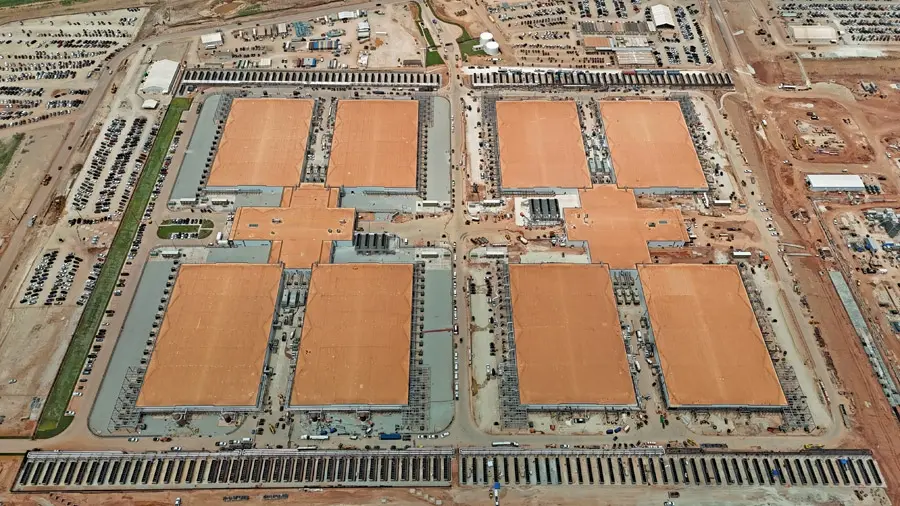
Bitcoin mines are transforming into AI factories. This shift is driven by the convergence of three key assets from the previous crypto cycle: infrastructure, talent, and capital. Crypto mining companies like Crusoe, CoreWeave, and Bitdeer are repurposing their core competency—securing power, land, and grid connections in remote locations—to build data centers for AI clients. These firms are signing multi-billion dollar, long-term contracts with companies like Anthropic, AWS, and Microsoft, as AI's demand for reliable, high-capacity compute surpasses the profitability of Bitcoin mining. Simultaneously, crypto entrepreneurs and engineers are applying their skills to new AI ventures. Examples include OpenSea's co-founder launching OpenRouter (an AI model aggregator), and former Coinbase engineers building Fal.ai (a generative media infrastructure platform). Their experience in building scalable, global software networks translates effectively to the AI space. Furthermore, capital accumulated during the crypto boom is now fueling AI. Figures like Jed McCaleb (co-founder of Ripple) funded Voltage Park, a large-scale GPU cloud provider. Notably, some crypto investments, like FTX's early bets on Anthropic and Cursor, have generated astronomical paper returns, demonstrating how high-risk crypto capital flowed into AI before it became mainstream. The transition is not just about repurposing hardware, but about redirecting critical resources—power infrastructure, distributed systems expertise, and venture funding—to the next technological frontier: artificial intelligence.

链捕手26 min fa

Bitcoin Mining Farms Are Becoming AI Factories

链捕手26 min fa

Morpho Launches Fixed-Rate Product Midnight: Lenders and Borrowers Set Their Own Rates, Ending the Era of Interest Rate Models

Morpho Launches Fixed-Rate Product Midnight: Lenders and Borrowers Set Their Own Rates, Ending the Era of Algorithmic Interest Models On-chain lending has grown to $60 billion but remains minuscule compared to traditional finance's $200 trillion annual credit volume. Morpho identifies the lack of fixed rates and maturity dates as key bottlenecks. Institutions need predictability, not the passive floating rates set by algorithmic models. Midnight allows lenders and borrowers to directly quote rates, set terms, and become price makers, not takers. Fixed-rate lending is now viable due to cheaper, faster blockchains and the entry of institutions demanding control and certainty over returns, costs, and duration. Morpho Blue previously gave users control over risk; Midnight adds control over interest rates. Past attempts at on-chain fixed-rate lending failed primarily because they were built on top of floating-rate pools (creating unpredictability) or lacked sufficient active participants. Midnight avoids these pitfalls as a standalone primitive with fixed rates at its core, built upon Morpho Blue's existing large and active user base. Midnight offers distinct value: institutions gain predictable term structures and full control; fintech companies can offer tailored fixed-rate products; lenders/borrowers achieve predictability and efficiency; and curators can now differentiate by configuring both risk and interest rates. Morpho Midnight is not a replacement for Morpho Blue. The Morpho network will now feature two complementary market structures: floating-rate/open-term (Blue) for flexibility and fixed-rate/fixed-term (Midnight) for predictability. Liquidity can flow between them. The launch will be gradual, prioritizing security. Initially, it will support direct lending on Base network with one trading pair (cbBTC/USDC) and limited maturity dates. Advanced features like auto-rollovers will be introduced later.

marsbit26 min fa

Morpho Launches Fixed-Rate Product Midnight: Lenders and Borrowers Set Their Own Rates, Ending the Era of Interest Rate Models

marsbit26 min fa

Trading

Spot

Articoli Popolari

Come comprare ZK

Benvenuto in HTX.com! Abbiamo reso l'acquisto di ZKsync (ZK) semplice e conveniente. Segui la nostra guida passo passo per intraprendere il tuo viaggio nel mondo delle criptovalute.Step 1: Crea il tuo Account HTXUsa la tua email o numero di telefono per registrarti il tuo account gratuito su HTX. Vivi un'esperienza facile e sblocca tutte le funzionalità,Crea il mio accountStep 2: Vai in Acquista crypto e seleziona il tuo metodo di pagamentoCarta di credito/debito: utilizza la tua Visa o Mastercard per acquistare immediatamente ZKsyncZK.Bilancio: Usa i fondi dal bilancio del tuo account HTX per fare trading senza problemi.Terze parti: abbiamo aggiunto metodi di pagamento molto utilizzati come Google Pay e Apple Pay per maggiore comodità.P2P: Fai trading direttamente con altri utenti HTX.Over-the-Counter (OTC): Offriamo servizi su misura e tassi di cambio competitivi per i trader.Step 3: Conserva ZKsync (ZK)Dopo aver acquistato ZKsync (ZK), conserva nel tuo account HTX. In alternativa, puoi inviare tramite trasferimento blockchain o scambiare per altre criptovalute.Step 4: Scambia ZKsync (ZK)Scambia facilmente ZKsync (ZK) nel mercato spot di HTX. Accedi al tuo account, seleziona la tua coppia di trading, esegui le tue operazioni e monitora in tempo reale. Offriamo un'esperienza user-friendly sia per chi ha appena iniziato che per i trader più esperti.

205 Totale visualizzazioniPubblicato il 2024.12.13Aggiornato il 2026.06.02

Come comprare ZK

Discussioni

Benvenuto nella Community HTX. Qui puoi rimanere informato sugli ultimi sviluppi della piattaforma e accedere ad approfondimenti esperti sul mercato. Le opinioni degli utenti sul prezzo di ZK ZK sono presentate come di seguito.

活动图片