Will ONDO's 'Tokenization Narrative' Change After Its CEO's Unexpected Passing?

marsbitPublished on 2026-05-27Last updated on 2026-05-27

Abstract

Ondo Finance founder and CEO Nathan Allman has passed away unexpectedly. Allman, a Brown University graduate with a background in private credit and Goldman Sachs' digital asset team, was a key architect of Ondo's pivot from DeFi structured yield products to becoming a leading Real-World Asset (RWA) protocol. He drove the strategy to tokenize traditional financial assets like US Treasuries (OUSG), yield-generating dollar assets (USDY), and US stocks/ETFs (Ondo Global Markets) for on-chain accessibility. The company announced that President Ian De Bode, a former McKinsey partner with a strong institutional strategy and operations background, will succeed Allman as CEO. While Allman's sudden departure presents a near-term challenge, testing market confidence and Ondo's continuity, the project is seen as more than a founder-driven narrative. It has an established product suite and a management team with deep traditional finance experience. The long-term impact hinges on the new leadership's ability to execute. De Bode's expertise in compliance, distribution, and institutional partnerships aligns with RWA's next phase of scaling infrastructure. The core question is whether Ondo can maintain its product momentum and institutional relationships. Ondo's native ONDO token represents governance and RWA narrative value, not direct revenue from the underlying assets. Its future as a "top tokenization play" will depend on the team's continued delivery of product growth, asset scale, an...

Nathan Allman, founder and CEO of Ondo Finance, has unexpectedly passed away.

For the RWA sector, Nathan Allman was not just a frontman telling stories. He was one of the core driving forces behind Ondo's evolution from a DeFi structured yield product towards the tokenization of US Treasury bonds, dollar-yield assets, stocks, and ETFs. In a sense, the market often refers to ONDO today as the "primary tokenization play"—a status built significantly on the product roadmap and institutional narrative that Nathan Allman had been constructing over the past few years.

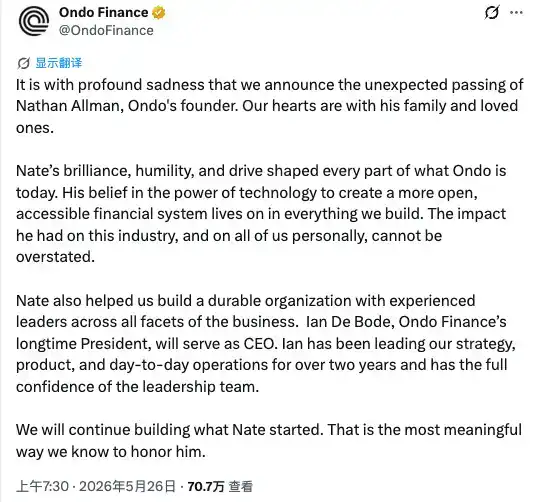
According to an official announcement from Ondo Finance, Nathan Allman has passed away unexpectedly, with the specific cause of death not yet disclosed. Ondo also stated that company president Ian De Bode will assume the role of CEO. The announcement specifically mentioned that Nathan's talent, humility, and execution shaped today's Ondo, and the company will continue to advance the work he pioneered.
Nathan Allman was not a typical pure-crypto entrepreneur. He graduated from Brown University, had early experience in private credit investing, and later worked on the digital assets team at Goldman Sachs. It was precisely this background that gave Ondo a strong traditional finance DNA from the start: its goal was not to create a DeFi protocol completely detached from the real-world financial system, but rather to repack the most mature and liquid assets from traditional finance into products that could be held, transferred, combined, and settled on-chain.

Ondo was not the RWA leader we know today in its early days. In 2021, Ondo resembled more of a DeFi structured yield protocol, designing different yield tiers for users with varying risk appetites.

Later, as the on-chain yield environment changed and demand grew for stablecoin and US Treasury yields, Ondo's path became clearer: instead of recreating high-risk yields on-chain, it was better to bring the most stable, largest, and most institutionally accepted assets from off-chain onto the chain.

This pivot was the real beginning of Ondo entering the mainstream spotlight.

OUSG, USDY, and Ondo Global Markets essentially constitute Ondo's three main pillars today. OUSG targets qualified investors, offering on-chain exposure to short-term US Treasury and money market-like assets; USDY is more akin to a dollar-yield product for non-US investors; Ondo Global Markets further tokenizes US stocks and ETFs into on-chain assets, allowing investors outside the US to gain exposure to traditional securities markets on-chain.

In other words, Ondo's narrative is not simply "putting US Treasuries on-chain." What it truly aims to do is turn Wall Street assets into foundational building blocks that the crypto world can utilize. Stablecoins solve the problem of dollar circulation on-chain, while Ondo seeks to address how dollar assets, Treasury yields, and securities exposure can enter the on-chain financial system.
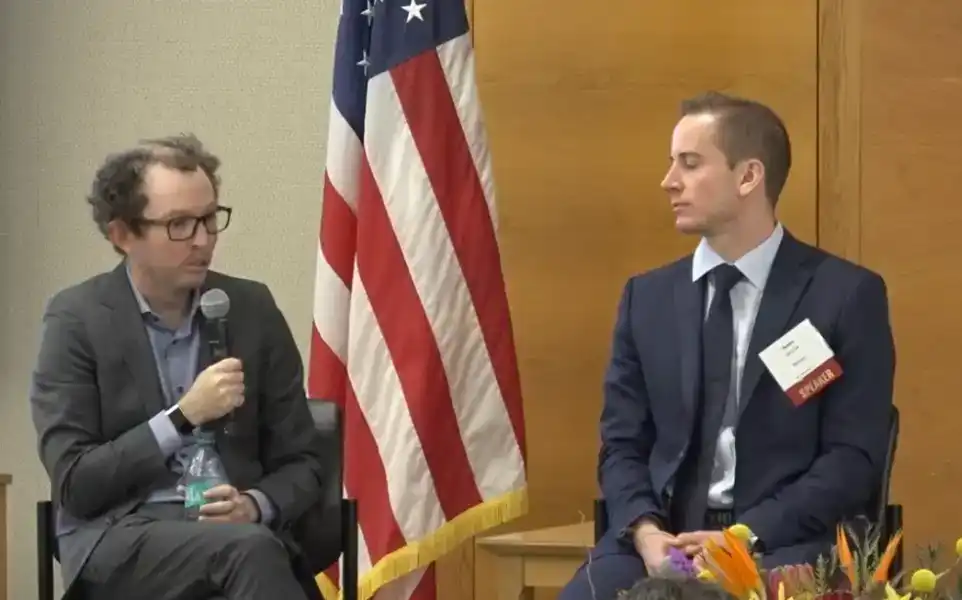
This was also Nathan Allman's position within the RWA sector. He represented not the most radical crypto-native approach, but another path: making traditional financial assets acceptable for on-chain settlement and connecting on-chain markets to traditional financial assets. Over the past two years, RWA has been able to transform from an old concept back into a main narrative, not by empty slogans of "everything on-chain," but because products like US Treasury yields, money market fund tokenization, and stock tokenization have begun to see real demand, scale, and a path to compliance. Ondo is one of the most typical projects in this regard.

So, will Nathan Allman's passing affect Ondo?

In the short term, an impact certainly exists. The sudden loss of a founder is a significant event for any project, especially for one like Ondo, which heavily relies on institutional partnerships, regulatory communication, and long-term product roadmaps. The market's immediate concerns will likely be threefold: First, whether the founder's vision can continue; second, whether institutional partners will reassess their collaboration timelines; and third, whether ONDO, as a tokenization narrative play, will be repriced due to the departure of a key figure.

However, in the medium to long term, Ondo is not a project sustained solely by the personal brand of a single founder. Over the past few years, it has built a relatively complete product matrix and assembled a management team with strong traditional finance backgrounds. Especially the new CEO, Ian De Bode, is not a stranger parachuted in temporarily; he is a key figure within Ondo who has long been responsible for strategy, products, and daily operations.
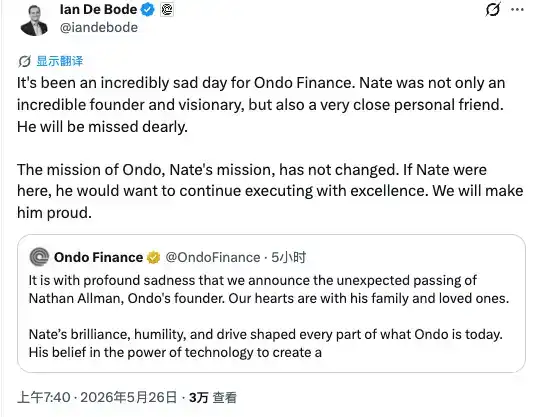
Ian De Bode was previously a partner at McKinsey & Company, where he led its digital assets-related business. After joining Ondo in 2024, he initially served as Chief Strategy Officer before becoming President. The Ondo announcement also noted that Ian has led the company's strategy, products, and daily operations for over two years and has the full support of the management team.
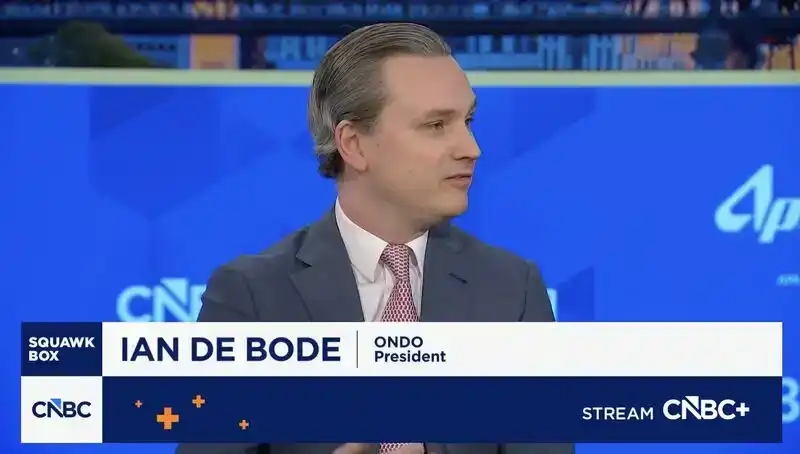
Judging by their resumes, Ian De Bode and Nathan Allman share similarities: neither are purely from the crypto world; both entered the digital assets industry from traditional finance, consulting, and institutional services. Nathan was more of a product and visionary founder, responsible for taking Ondo from zero to where it is today; Ian leans more towards institutional strategy and execution, familiar with the real demands of large corporations, financial institutions, and executives regarding tokenization.

This might be precisely what's crucial for Ondo's next phase. The first half of RWA was about narrative and product validation; the second half will inevitably be about compliance, distribution, liquidity, and institutional partnerships. Whoever can scale asset size, connect brokers, custodians, market makers, public blockchains, wallets, and trading scenarios, will have the chance to turn "tokenization" from a concept into market infrastructure. Ian De Bode's background aligns more closely with the requirements of this stage.

Of course, this doesn't mean Ondo is without risks. ONDO holders need to distinguish one thing clearly: the growth of Ondo's product scale does not inherently equate to the ONDO token receiving direct revenue sharing. ONDO primarily carries governance, ecosystem, and RWA narrative premium, not the yield from Ondo's underlying assets. When the market calls it the "primary tokenization play," it's buying into Ondo's representativeness and growth expectations within the RWA sector, not directly buying the cash flow from the assets under Ondo's umbrella.

Therefore, Nathan Allman's passing is also a stress test for Ondo. It tests whether this project is merely a founder-driven narrative or has matured into a sustainable financial infrastructure system.

If Ian De Bode can maintain the product roadmap, sustain institutional partnerships, and continue to drive the expansion of Ondo Global Markets, USDY, and OUSG, then the short-term emotional shock may gradually be absorbed by business continuity.

However, if subsequent product development slows, institutional partnership news diminishes, or the market begins to question ONDO's value capture ability, then this event could also become a point for re-evaluating its valuation and narrative.

For the RWA sector, Nathan Allman's passing is a regret. What he truly leaves behind is not just the Ondo project itself, but a clearer path: the crypto industry doesn't necessarily have to create new assets on-chain; it can also bring the world's largest, most mature financial asset markets into the on-chain world. Whether ONDO can continue to hold its position as the "primary tokenization play" in the future will depend not on words of mourning, but on whether the new team can continue to deliver products, asset scale, and real demand.


Trending Cryptos

Related Questions

QWho was Nathan Allman and what was his role in Ondo Finance?

ANathan Allman was the founder and CEO of Ondo Finance. He was a key driver in transforming Ondo from a DeFi structured yield protocol into a leading platform for tokenizing real-world assets like U.S. Treasury bonds, dollar-yield assets, stocks, and ETFs.

QWhat immediate concerns does the market have following Nathan Allman's passing?

AThe market's immediate concerns are whether the founder's vision can be sustained, if institutional partners will reassess their collaboration pace, and if the ONDO token will be repriced due to the departure of its core figure.

QWho is taking over as the new CEO of Ondo Finance and what is his background?

AIan De Bode, the President of Ondo Finance, is taking over as CEO. He is a former McKinsey & Company partner who led its digital assets practice and has been leading Ondo's strategy, product, and daily operations for over two years.

QWhat are the three main product lines that constitute Ondo's current business?

AOndo's three main product lines are OUSG (offering on-chain exposure to short-term U.S. Treasuries for qualified investors), USDY (a dollar-yield product for non-U.S. investors), and Ondo Global Markets (tokenizing U.S. stocks and ETFs for non-U.S. investors).

QAccording to the article, what does the ONDO token primarily represent for holders?

AThe ONDO token primarily represents governance rights, ecosystem participation, and the premium from the RWA narrative. It does not grant direct revenue sharing from the underlying asset yields; its value is tied to Ondo's代表性 and growth expectations in the tokenization sector.

Related Reads

Claude Accused of Becoming Dumber by the Entire Internet, Anthropic Steps In to Reveal: It’s Not the Model That’s Tricking You

When users complained that Claude was "getting dumber," the root cause wasn't the AI model itself. In an official blog post, Anthropic clarified the critical difference between two key settings in Claude Code: Model and Effort. Model refers to the core "brain"—the fixed, trained weights of a specific AI (like Sonnet, Opus, or Fable). Changing the Model addresses *capability* ("can it do this?"), but its knowledge is static post-training. Effort, however, controls the AI's *approach and thoroughness* for a specific task. A higher Effort level instructs Claude to read more files, run tests, perform verification, and complete multi-step reasoning before responding, significantly increasing its "work output" for that job. Conversely, low Effort leads to quicker, less thorough replies. This distinction explains the March 2024 uproar where users experienced a sudden drop in Claude's performance. The cause was not a model change but Anthropic quietly lowering the *default* Effort setting from "high" to "medium" to reduce latency, which was later reverted. The key insight is that a smaller, capable model (like Sonnet) on high Effort can often outperform a larger, more powerful model (like Opus) on low Effort for many tasks. The article provides a practical troubleshooting framework: if Claude makes an error, first check the context and instructions. If it seems to skip necessary steps or validations, increase Effort. If it diligently attempts the task but fails conceptually or makes consistent factual errors despite good context, then consider switching to a more capable Model. The takeaway is a shift in focus: effective AI programming is less about always choosing the "strongest" model and more about intelligently *orchestrating* models and effort levels—acting like a project manager to assign the right "brain" with the right level of diligence for each job, optimizing both results and cost.

marsbit11m ago

Claude Accused of Becoming Dumber by the Entire Internet, Anthropic Steps In to Reveal: It’s Not the Model That’s Tricking You

marsbit11m ago

Will the Ethereum Foundation Evolve into a 'Mascot'? Diversified Organizations Are Fragmenting Its Functions

The Ethereum Foundation (EF) is undergoing significant internal turmoil and functional erosion. Following its largest-ever layoff of 54 staff (20% of its workforce) and a major organizational restructuring announced in June, its Protocol Support Team has been officially dissolved. This comes alongside the high-profile resignation of key figures like co-executive director Xiaowei Wang, bringing senior departures this year to at least eight. Criticism of EF's rigid structure, opaque decision-making, and perceived lack of a clear value narrative for ETH has intensified within the community. The layoffs have catalyzed the emergence of independent, non-profit organizations like Ethlabs and Ethereum Institutional, founded by former EF researchers and members. These entities are now taking on core functions such as protocol research/development and institutional adoption, effectively fragmenting the EF's traditional leadership role. Concurrently, EF's security team is adapting to technological change, deploying specialized AI agents to audit Ethereum's codebase, which successfully discovered a critical vulnerability (CVE-2026-34219). While EF states AI complements rather than replaces researchers, it signals a potential future shift in its operational model. Faced with these challenges—internal restructuring, talent drain, the rise of competing organizations, and AI integration—the Ethereum Foundation appears to be stepping back from a central commanding role. Analysts and community observers speculate it may increasingly transition towards a symbolic "ecosystem mascot" function, while decentralized initiatives drive Ethereum's future growth and institutional adoption.

marsbit37m ago

Will the Ethereum Foundation Evolve into a 'Mascot'? Diversified Organizations Are Fragmenting Its Functions

marsbit37m ago

Nearly a Hundred Players Rush into Embodied Data: With 4.47 Billion Yuan in Financing in One Year, Who Can Really Make Money by 'Selling Data'?

The domestic embodied AI data industry has attracted nearly 100 players, with 70 focused on data collection and 27 on data infrastructure. In the past year, 15 independent embodied data service providers raised approximately 4.47 billion yuan. Despite this growth, the sector remains early-stage, fragmented, and faces significant challenges. Data collection methods are diverse, categorized into four main routes: teleoperation of real robots, human demonstration without a robot (using motion capture, exoskeletons, etc.), simulation synthesis, and distillation from internet videos. Most companies (43%) adopt hybrid approaches, combining multiple routes, as no single method can meet all training needs. Teleoperation alone is pursued by 31% of players, often by state-owned platforms and robot companies, while newer firms favor asset-light, no-hardware human demonstration. Independent data service providers now form the largest player group (40%), indicating the emergence of a distinct industry segment rather than just a subsidiary function for robot makers. Two-thirds of all players are "embodied-native" startups, while one-third are companies that pivoted from fields like AI data annotation, which are more prevalent in the data infrastructure layer. Current annual industry capacity is estimated at 1.6-1.8 million hours plus 70-80 million data points, with a short-term goal to increase this 15-20 fold within 1-3 years. Data collection factories are spread across 20 provinces in China, concentrated in the Yangtze River Delta, Beijing-Tianjin-Hebei, and Pearl River Delta regions. Financially, the 4.47 billion yuan raised in the past year pales compared to the 43.8 billion yuan raised by the broader embodied intelligence sector in just the first half of 2026, highlighting that data remains a less "sexy" bet for investors. The 15 funded independent providers show clear stratification: a top tier led by a unicorn (Lightwheel Intelligence, 3.1 billion yuan), a middle tier of 11 firms raising tens to hundreds of millions, and an early-stage tier of 3 companies. Sixty-nine investment institutions have participated, but none have made concentrated bets, reflecting uncertainty about viable business models. Over half of these funded companies are less than a year old, most are at pre-A or A rounds, and profitability remains largely unproven. In summary, the embodied data industry has become an independent track creating jobs and local economic activity. However, it is still nascent, with unformed consensus, unsolved problems, and unproven business models. The coming 1-2 years will be a critical validation window to see if companies can build sustainable, profitable businesses purely by "selling data."

marsbit3h ago

Nearly a Hundred Players Rush into Embodied Data: With 4.47 Billion Yuan in Financing in One Year, Who Can Really Make Money by 'Selling Data'?

marsbit3h ago

Trading

Spot

Hot Articles

Discussions

Welcome to the HTX Community. Here, you can stay informed about the latest platform developments and gain access to professional market insights. Users' opinions on the price of S (S) are presented below.

活动图片