Why ‘fear’ right now doesn’t mean ‘buy the dip’

ambcryptoОпубліковано о 2025-12-24Востаннє оновлено о 2025-12-24

Анотація

The crypto market sentiment has shifted back into fear, as indicated by the Fear and Greed Index dropping to the high-20s. However, unlike previous cycles where such fear levels signaled a buying opportunity, the current environment lacks key characteristics of a market bottom. There is no significant volatility spike, forced liquidations, or clear capitulation. Instead, the market is experiencing a slow, controlled de-risking phase with muted trading volumes and weak liquidity. Altcoin weakness and the dominance of Bitcoin further indicate risk aversion and a lack of speculative appetite. Without signs of capitulation, volume expansion, or fresh capital inflow, the current fear reflects caution and indecision rather than an imminent rebound. Patience remains crucial in these conditions.

Crypto market sentiment has slipped back into fear, with the Fear and Greed Index hovering in the high-20s. Historically, such readings have often aligned with market bottoms.

However, the broader data suggests that this phase of fear may be signalling caution rather than opportunity.

While sentiment has weakened, the conditions that typically turn fear into a reliable buying signal are largely missing.

Fear without capitulation looks different

The Fear and Greed Index from CoinMarketCap shows the market was at 27, indicating fear. As of 23 December, the Index stood at 29, indicating a further decline into the fear zone.

In previous cycles, strong “buy the dip” moments were usually preceded by sharp volatility spikes, forced liquidations, and clear capitulation events. The current environment looks different.

Instead of panic-driven selling, the market appears to be experiencing a slow, controlled de-risking phase. Price action has softened without the kind of volume expansion or disorder that usually marks exhaustion.

This distinction matters. Fear driven by uncertainty does not always produce the same outcomes as fear driven by capitulation.

Altcoin weakness signals risk aversion

One of the clearest signs of continued caution is visible in the altcoin market. The Altcoin Season Index remains firmly in “Bitcoin season,” indicating that capital is still concentrated in relatively defensive positions rather than rotating into higher-risk assets.

As of this writing, the Index was at 18.

At the same time, the total crypto market capitalisation excluding Bitcoin and Ethereum has trended lower, reinforcing the idea that speculative appetite remains subdued.

Historically, meaningful rebounds tend to be preceded by improving breadth — something that is currently absent.

Liquidity remains the missing ingredient

Liquidity conditions continue to act as a headwind. Trading volumes remain muted, institutional participation appears inconsistent, and there is little evidence of fresh capital entering the market at scale.

Without a sustained improvement in liquidity, sentiment alone has limited power to support a durable recovery. In past cycles, fear only turned bullish once participation began to return.

What fear is really signalling this time

Rather than pointing to an imminent reversal, current fear levels appear to reflect indecision and positioning uncertainty. Investors are cautious, but not forced out. That dynamic often leads to choppy price action rather than sharp rebounds.

Until clearer signs of capitulation, volume expansion, or capital rotation emerge, dips may remain vulnerable rather than opportunistic.


Final Thoughts

  • Fear can mark opportunity, but only when it coincides with capitulation and renewed liquidity.
  • In the current market, patience may be a stronger signal than sentiment.

Пов'язані питання

QWhat does the current 'fear' reading on the Crypto Fear and Greed Index suggest, according to the article?

AThe article suggests that the current fear reading, hovering in the high-20s, is signaling caution rather than a 'buy the dip' opportunity, as the conditions that typically turn fear into a reliable buying signal are largely missing.

QHow does the current fear-driven market environment differ from previous cycles that presented strong buying opportunities?

AUnlike previous cycles which were preceded by sharp volatility spikes, forced liquidations, and clear capitulation events, the current environment is characterized by a slow, controlled de-risking phase without the volume expansion or disorder that marks exhaustion.

QWhat does the state of the altcoin market indicate about current investor sentiment?

AThe Altcoin Season Index remaining in 'Bitcoin season' and the declining market cap of assets excluding Bitcoin and Ethereum indicate that capital is concentrated in defensive positions, signaling continued risk aversion and a subdued speculative appetite.

QWhy is liquidity a critical factor for a sustainable market recovery?

ALiquidity is critical because, without a sustained improvement in trading volumes, institutional participation, and fresh capital entering the market, sentiment alone has limited power to support a durable recovery. Fear only turned bullish in past cycles once participation began to return.

QWhat is the article's final advice for investors given the current market conditions?

AThe article advises that patience may be a stronger signal than sentiment. It concludes that until clearer signs of capitulation, volume expansion, or capital rotation emerge, dips may remain vulnerable rather than opportunistic.
Пов'язані матеріали

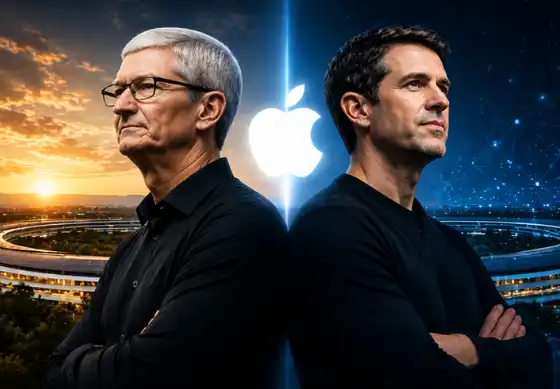
Cook's Curtain Call and Ternus Takes the Helm: The Disruption and Reboot of Apple's 4 Trillion Dollar Empire

Tim Cook has officially announced he will step down as CEO of Apple in September, transitioning to executive chairman after a 15-year tenure during which he grew the company’s market value from around $350 billion to nearly $4 trillion. He will be succeeded by John Ternus, a 50-year-old hardware engineering veteran who has been groomed for the role through increasing public visibility and internal responsibility. Ternus’s appointment signals a strategic shift toward hardware and engineering leadership, with Johny Srouji—head of Apple Silicon—taking on an expanded role as Chief Hardware Officer. This consolidation aims to strengthen Apple’s core technological capabilities. However, Cook’s departure highlights a significant unresolved issue: Apple’s delayed and fragmented approach to artificial intelligence. Despite early efforts, such as hiring John Giannandrea from Google in 2018, Apple’s AI initiatives—particularly around Siri—have struggled with internal restructuring and reliance on external partnerships, including with Google. The transition comes at a critical moment as Apple faces paradigm shifts with the rise of artificial general intelligence (ASI). The company’s closed ecosystem of hardware, software, and services—once a major advantage—now presents challenges in adapting to an AI-centric world where intelligence may matter more than the device itself. Ternus must quickly articulate a clear AI strategy, possibly starting at WWDC, to reassure markets and redefine Apple’s role in a new technological era. His task is not only to maintain Apple’s operational excellence but also to reinvigorate its capacity to innovate and lead in the age of AI.

marsbit16 хв тому

Cook's Curtain Call and Ternus Takes the Helm: The Disruption and Reboot of Apple's 4 Trillion Dollar Empire

marsbit16 хв тому

Торгівля

Спот
Ф'ючерси

Популярні статті

Як купити T

Ласкаво просимо до HTX.com! Ми зробили покупку Threshold Network Token (T) простою та зручною. Дотримуйтесь нашої покрокової інструкції, щоб розпочати свою криптовалютну подорож.Крок 1: Створіть обліковий запис на HTXВикористовуйте свою електронну пошту або номер телефону, щоб зареєструвати обліковий запис на HTX безплатно. Пройдіть безпроблемну реєстрацію й отримайте доступ до всіх функцій.ЗареєструватисьКрок 2: Перейдіть до розділу Купити крипту і виберіть спосіб оплатиКредитна/дебетова картка: використовуйте вашу картку Visa або Mastercard, щоб миттєво купити Threshold Network Token (T).Баланс: використовуйте кошти з балансу вашого рахунку HTX для безперешкодної торгівлі.Треті особи: ми додали популярні способи оплати, такі як Google Pay та Apple Pay, щоб підвищити зручність.P2P: Торгуйте безпосередньо з іншими користувачами на HTX.Позабіржова торгівля (OTC): ми пропонуємо індивідуальні послуги та конкурентні обмінні курси для трейдерів.Крок 3: Зберігайте свої Threshold Network Token (T)Після придбання Threshold Network Token (T) збережіть його у своєму обліковому записі на HTX. Крім того, ви можете відправити його в інше місце за допомогою блокчейн-переказу або використовувати його для торгівлі іншими криптовалютами.Крок 4: Торгівля Threshold Network Token (T)Легко торгуйте Threshold Network Token (T) на спотовому ринку HTX. Просто увійдіть до свого облікового запису, виберіть торгову пару, укладайте угоди та спостерігайте за ними в режимі реального часу. Ми пропонуємо зручний досвід як для початківців, так і для досвідчених трейдерів.

377 переглядів усьогоОпубліковано 2024.12.10Оновлено 2025.03.21

Як купити T

Обговорення

Ласкаво просимо до спільноти HTX. Тут ви можете бути в курсі останніх подій розвитку платформи та отримати доступ до професійної ринкової інформації. Нижче представлені думки користувачів щодо ціни T (T).

活动图片