What ‘extreme fear’ across Bitcoin and S&P means for markets

ambcryptoPublished on 2026-03-22Last updated on 2026-03-22

Abstract

Bitcoin and the S&P 500 are both experiencing extreme fear, signaling a synchronized macro-driven risk-off sentiment as liquidity tightens. After a prolonged period of negative correlation since 2020, both markets are now converging, indicating broader economic pressures are influencing investor behavior. This shift follows a major Bitcoin liquidation event in October, where approximately 70,000 BTC in open interest was wiped out, resetting market positioning to levels last seen in April 2025. Bitcoin’s price, which had shown resilience during geopolitical stress, has since trended downward, while the S&P 500 recently rolled over from its highs. The alignment in fear gauges—Bitcoin’s at 12 and the S&P 500’s at 16—is rare, as these markets typically price fear at different stages. The decline reflects a broad de-risking by investors, with both asset classes now more dependent on real capital flows rather than leverage-driven demand. Bitcoin’s open interest has dropped significantly, reducing cascade risk but also weakening trend strength, making prices more sensitive to actual inflows. This transition from speculative expansion to capital preservation highlights the dominance of macro conditions over both crypto and equities.

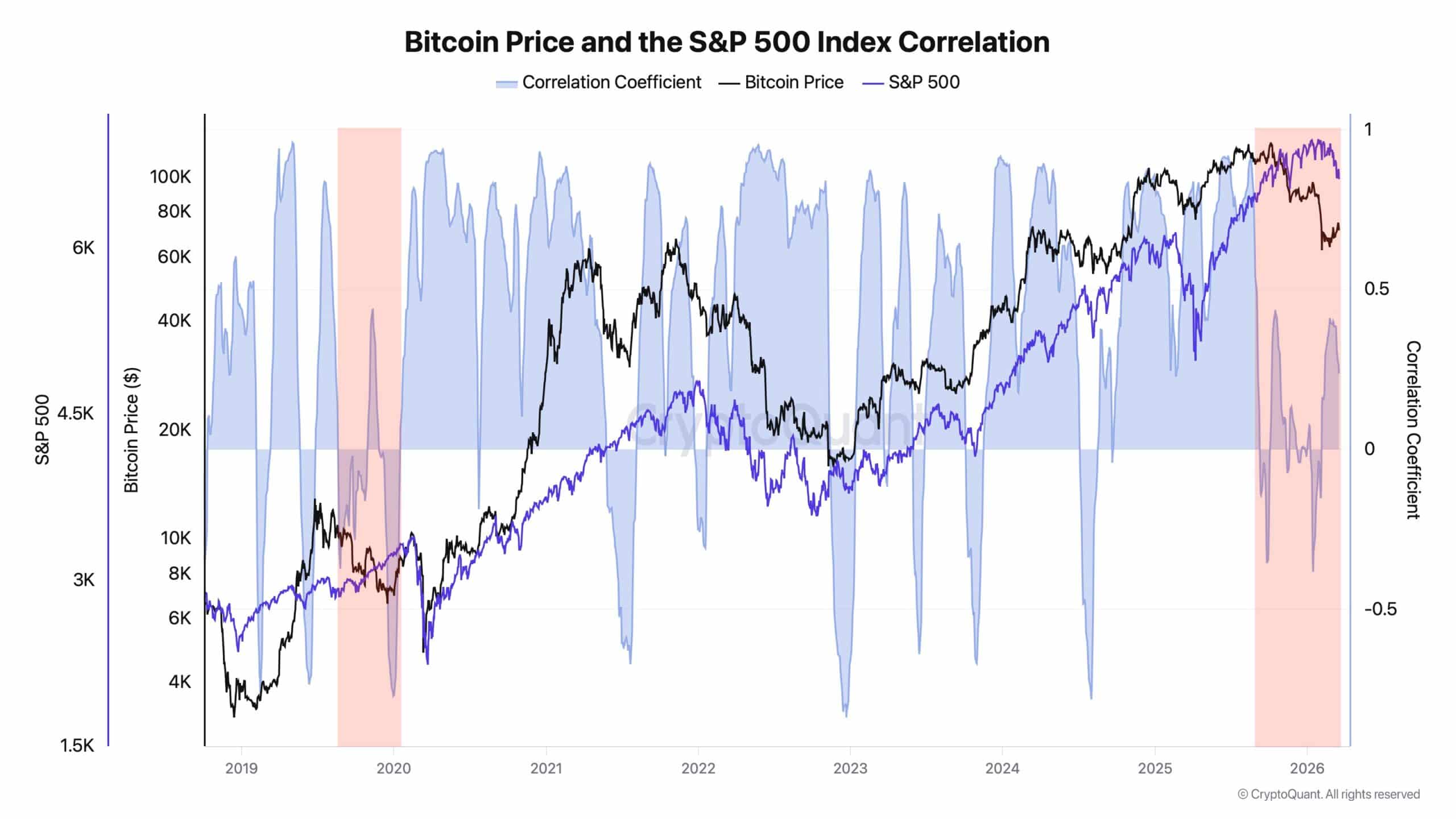
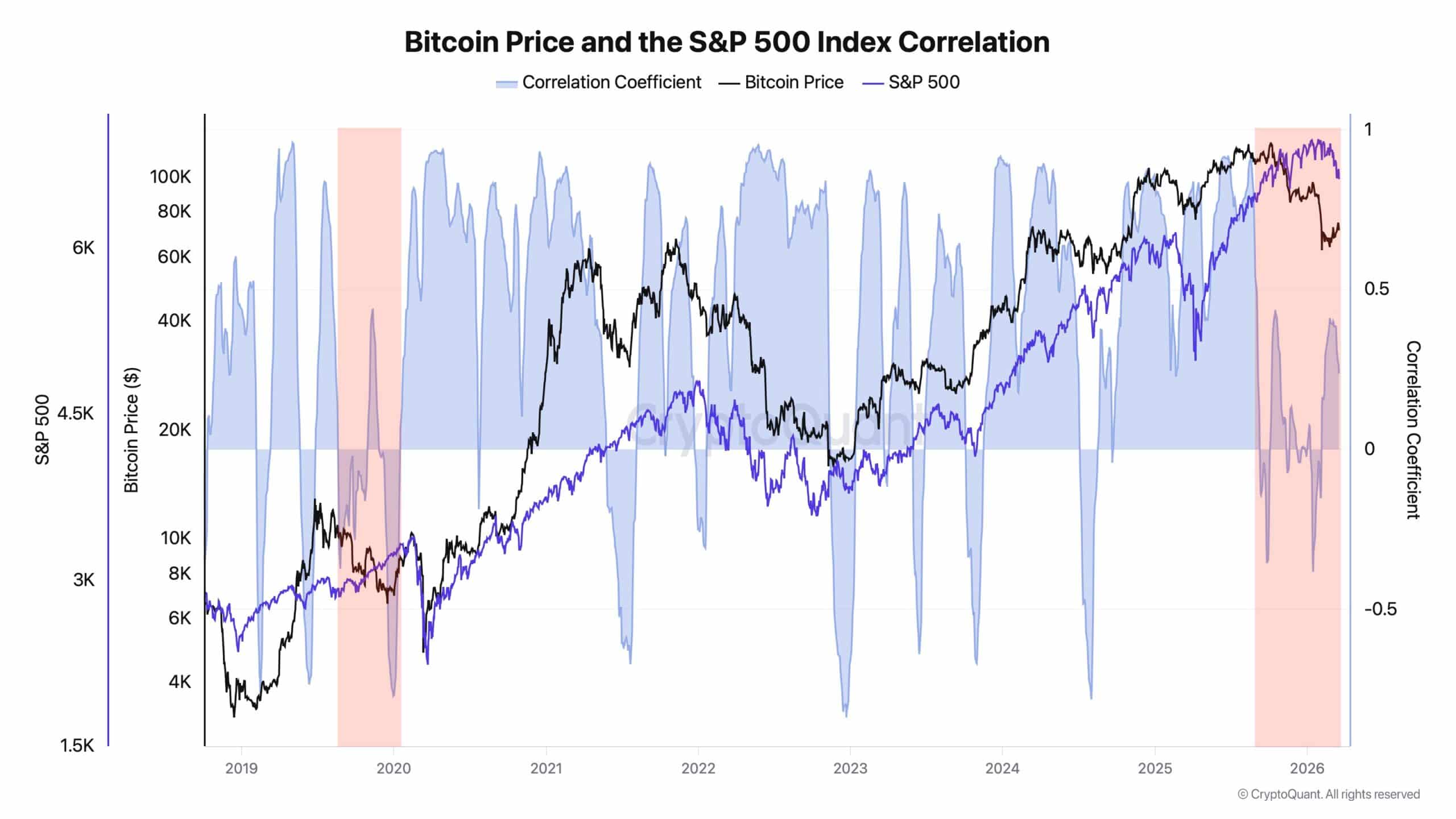
Bitcoin maintains a prolonged negative correlation with the S&P 500, marking its longest decoupling phase since 2020. Earlier, in October, BTC reversed sharply, dropping from around $30,000 while equities continued climbing toward 5,000.

In fact, this divergence followed a major liquidation event, where roughly 70,000 BTC in Open Interest was wiped out in a single session, resetting positioning back to April 2025 levels.
Source: Darkfost/ X

Since then, Bitcoin [BTC] has continued trending downward under geopolitical pressure and tightening liquidity conditions. Meanwhile, the S&P 500 held its structure for months before recently rolling over from its highs.

As this shift unfolds, sentiment across both markets now converges into extreme fear levels.

In turn, this alignment indicates that even after being separate for a long time, the overall economic conditions are starting to come together again, hinting at a possible shift towards a shared cautious approach in both crypto and traditional markets.

Macro pressure drives synchronized extreme fear across crypto and equities

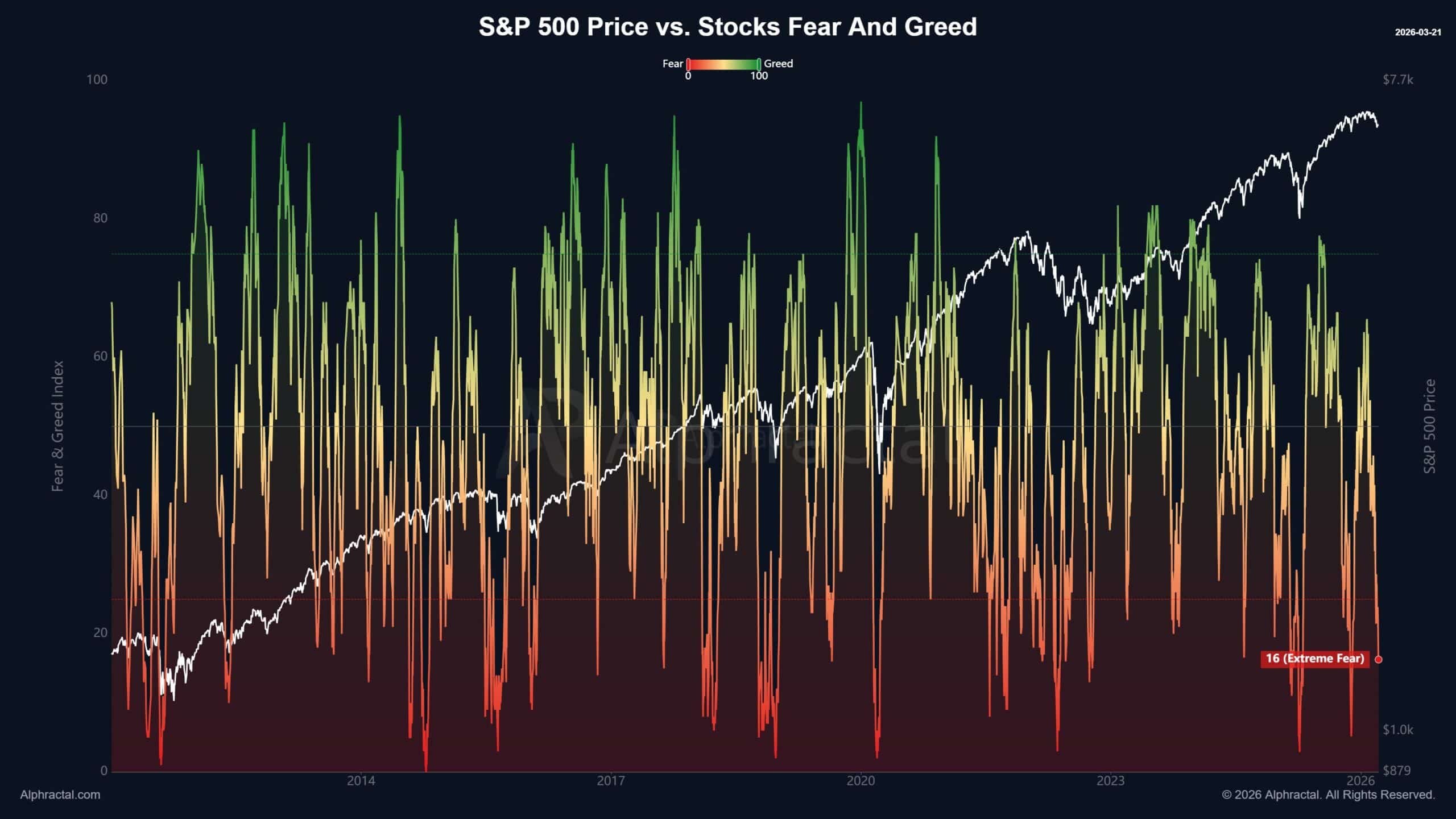
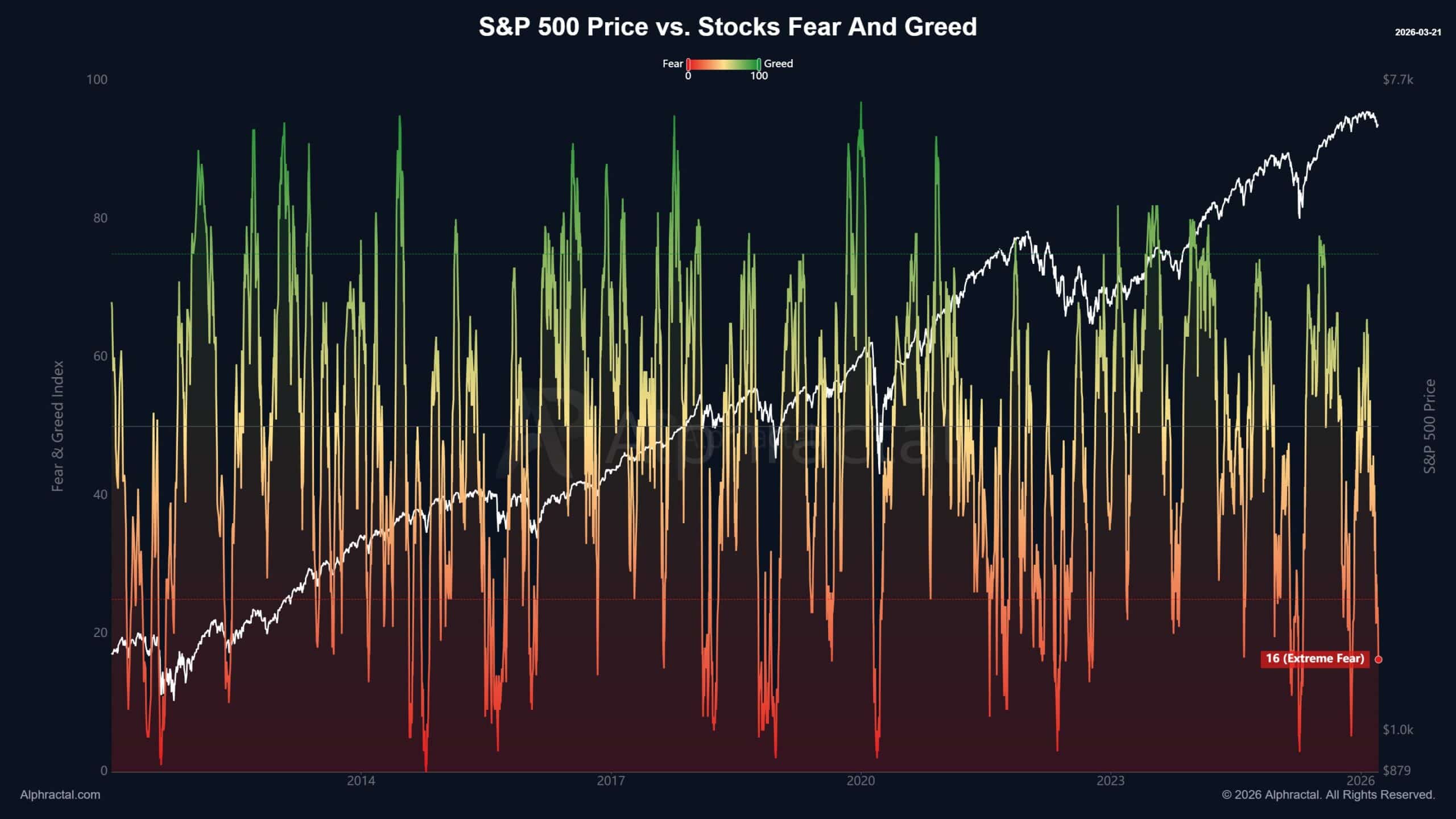
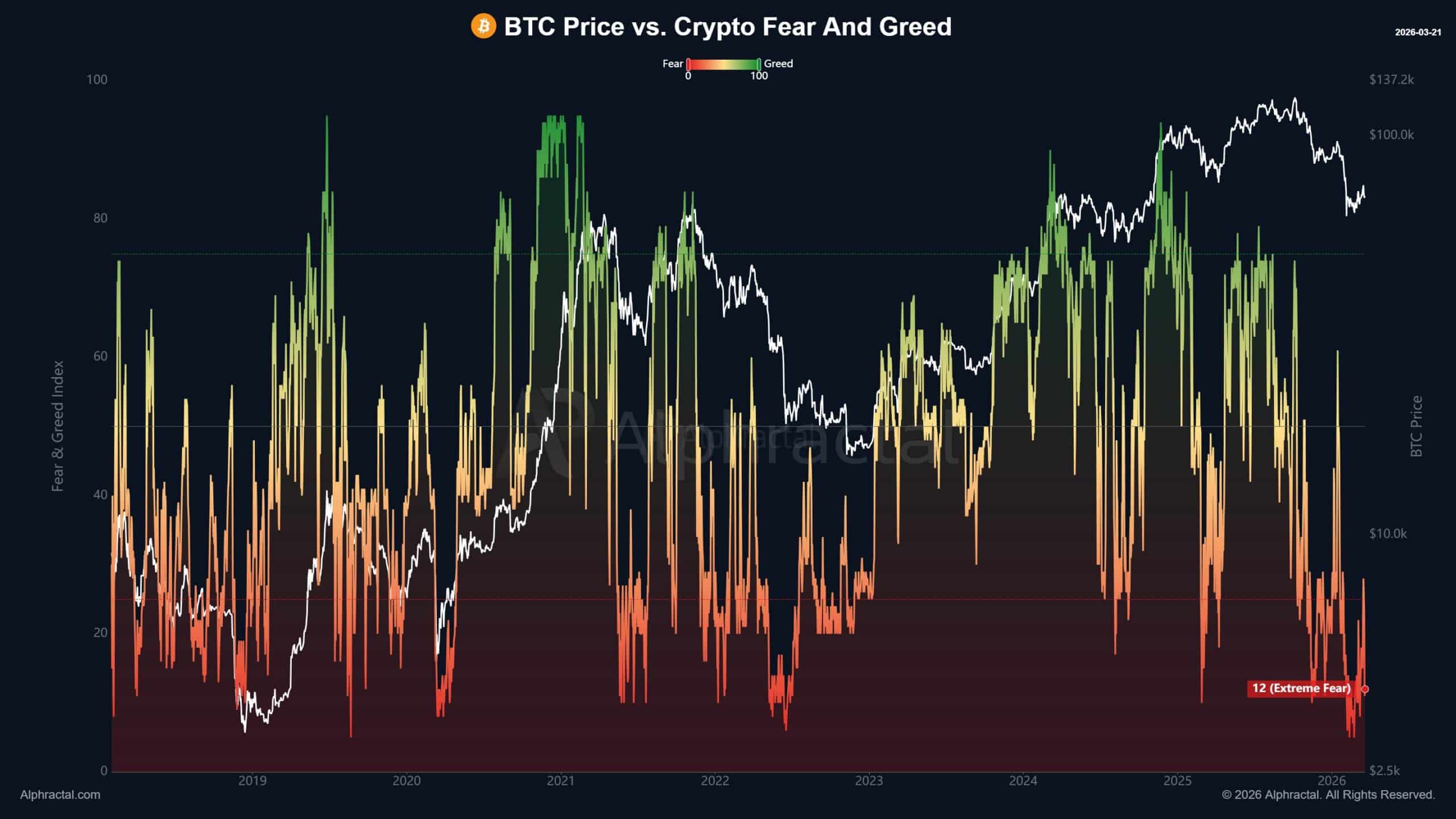
The simultaneous drop in both sentiment gauges points to a broader macro reset, not isolated weakness in either market. The S&P 500 Fear and Greed Index has fallen to 16 as equities retreat from roughly $7,500.
Source: Joao Wedson/ X

At the same time, Bitcoin’s reading has dropped further to around 12, while BTC pulls back from above $100,000. In fact, this alignment is rare, as crypto and equities usually price fear at different stages.
Source: Joao Wedson/ X

Earlier, Bitcoin showed relative resilience.

As Nic Puckrin, Co-Founder of Coin Bureau, told AMBCrypto via email,

Bitcoin had risen about 8% during geopolitical stress even as equities declined.

However, that divergence is now fading. As both markets converge into extreme fear, investors appear to be de-risking broadly, which signals tightening liquidity and macro conditions beginning to dominate price behavior across both asset classes simultaneously.

From leverage flush to flow-driven Bitcoin price action

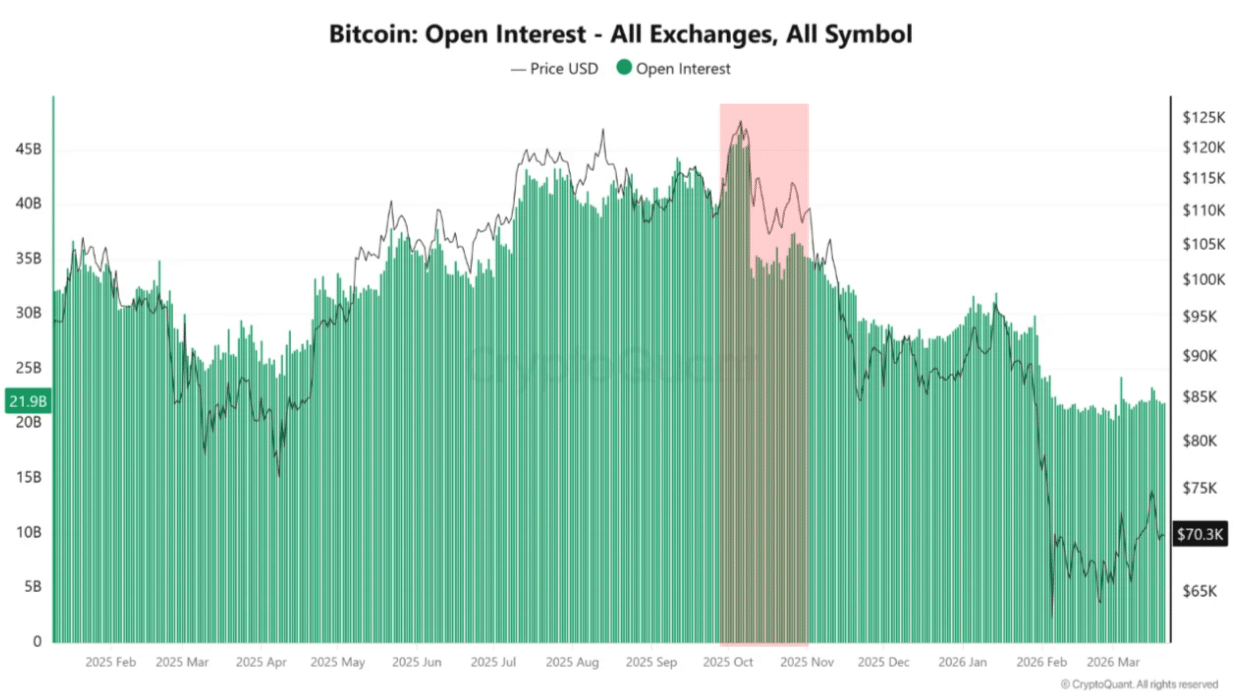
Bitcoin’s open interest expansion into October explains the earlier divergence from equities, as leverage rose toward $45 billion while price approached $120,000.

However, this structure relied on aggressive derivatives exposure.

In fact, the 10–11 October liquidation erased roughly 70,000 BTC, driving Open Interest down toward $30 billion and resetting market risk capacity.
Source: CryptoQuant

As this unwind unfolded, the price dropped toward $90,000, showing how much demand had been leverage-driven rather than spot-based.

Meanwhile, Open Interest sat at $21.8 billion at press time, which reflects more defensive positioning. This shift implies the market has transitioned from speculative expansion to capital preservation.

At the same time, lower leverage reduces cascade risk, yet it also weakens trend strength. As a result, price becomes more sensitive to real inflows, meaning any sustained move now requires genuine capital, not leverage-driven momentum.


Final Summary

  • Bitcoin [BTC] and the S&P 500 convergence into extreme fear signals macro-driven risk-off as liquidity tightens across both markets.
  • Bitcoin deleveraging weakens momentum while the S&P 500 rolls over, which shifts both markets toward dependence on real capital flows.


Related Questions

QWhat is the current correlation between Bitcoin and the S&P 500, and how long has this phase lasted?

ABitcoin is maintaining a prolonged negative correlation with the S&P 500, marking its longest decoupling phase since 2020.

QWhat major event triggered the divergence between Bitcoin and equities in October?

AThe divergence followed a major liquidation event where roughly 70,000 BTC in Open Interest was wiped out in a single session, resetting positioning back to April 2025 levels.

QWhat are the current readings of the Fear and Greed Index for the S&P 500 and Bitcoin, and what do they indicate?

AThe S&P 500 Fear and Greed Index has fallen to 16, and Bitcoin's reading has dropped to around 12. These levels indicate 'extreme fear' across both markets.

QHow did the liquidation event in October impact Bitcoin's Open Interest and price?

AThe liquidation event erased roughly 70,000 BTC in Open Interest, driving it down toward $30 billion and causing the price to drop toward $90,000, revealing that much of the demand had been leverage-driven.

QWhat does the convergence of extreme fear in both Bitcoin and the S&P 500 signal for the broader market?

AThe convergence signals a macro-driven risk-off sentiment as liquidity tightens, indicating that overall economic conditions are causing a broad de-risking by investors across both crypto and traditional markets.

Related Reads

$9.4 Billion: The Largest Robotics Funding This Year Has Emerged

Munich-based humanoid robotics company Neura has completed a $1.4 billion (approximately RMB 94.9 billion) Series C funding round, valuing the company at around $7 billion and positioning it among the global leaders in the sector. The investment round is notable not just for its size—reportedly the largest in robotics this year—but also for its strategic backers, which include tech giants like NVIDIA and Amazon, alongside established industrial players such as German engineering firms Bosch and Schaeffler. This mix of investors signals a significant shift in the industry's focus from technological demonstrations and general-purpose narratives toward practical, industrial deployment and commercialization. Neura's approach centers on developing humanoid robots for defined, high-value industrial tasks rather than pursuing a general-purpose model. Its early validation comes from a partnership with BMW, where its robots are being tested on actual production lines. The involvement of Bosch and Schaeffler, companies deeply embedded in global manufacturing, underscores a growing belief that humanoid robots are transitioning from labs to viable factory-floor solutions. The article highlights two converging trends driving investment: advancements in AI and large language models, which enhance robots' perception and decision-making in unstructured environments, and mounting pressure from labor shortages and rising costs in major manufacturing regions. The funding landscape is now bifurcating between companies like Figure AI, focusing on versatile general-purpose robots, and firms like Neura, targeting specific vertical industrial applications with clearer, shorter paths to ROI. While technical hurdles remain, the core challenges for widespread adoption are increasingly seen as engineering and commercial in nature: managing the high integration and customization costs for different factory environments and establishing robust, localized maintenance and service networks. The record investment in Neura, particularly from industrial capital, indicates the industry's growing confidence in moving from proving feasibility to solving the practical problems of scalability, reliability, and building sustainable business models around humanoid robots in real-world settings like automotive manufacturing and hazardous labor environments.

marsbit6h ago

$9.4 Billion: The Largest Robotics Funding This Year Has Emerged

marsbit6h ago

Trading

Spot
Futures

Hot Articles

Discussions

Welcome to the HTX Community. Here, you can stay informed about the latest platform developments and gain access to professional market insights. Users' opinions on the price of S (S) are presented below.

活动图片













