USDT Supply Shrinks by $5.5 Billion While Stablecoin Turnover Hits Record High

cryptonews.ruPublished on 2026-07-29Last updated on 2026-07-29

Abstract

The supply of stablecoins has contracted for the first time in years, with total market capitalization falling 4.3% from its May peak to $308.5 billion. Despite this decline, June saw a record $1.83 trillion in adjusted transaction volume for stablecoins, a 60% increase from May. This divergence suggests a shift in usage patterns: less capital is sitting idle, while the remaining supply circulates more rapidly through payment and trading systems. Specifically, the supply of Tether's USDT decreased from approximately $189.54 billion to $184 billion between May 1 and July 29, while Circle's USDC supply fell from $77.27 billion to $72.41 billion. Part of this capital appears to have moved into tokenized Treasury products, a sector whose value has grown to over $16 billion, partly driven by regulations like the 2025 GENIUS Act that prohibit interest payments on payment-focused stablecoins. Transaction velocity is emerging as a key metric, with stablecoins now turning over about six times per month—double the rate from two years ago. USDC, despite having a smaller supply than USDT, processed about $1.21 trillion in adjusted volume in June, leading in settlement activity. While a significant portion of on-chain volume may not represent genuine economic payments, identifiable real-world payments have grown sharply, reaching an estimated $390 billion in 2025. The data indicates stablecoins are evolving from static collateral into active financial infrastructure.

The total supply of stablecoins has declined for the first time in years, but this decrease may not indicate as much about demand as it seems.

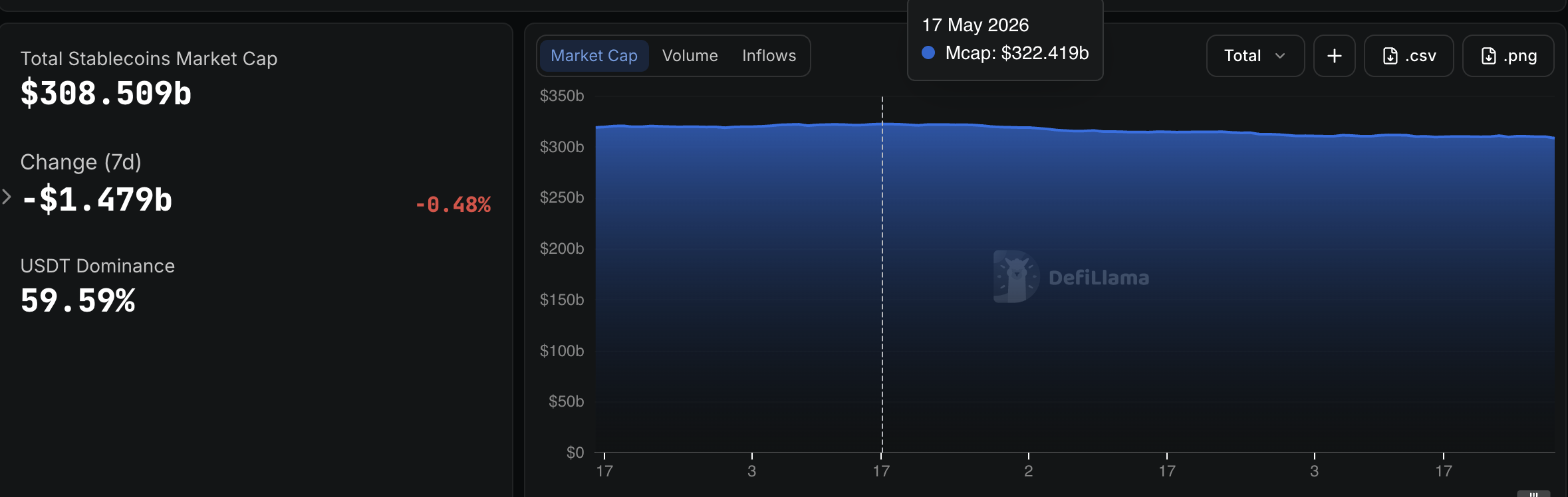
The overall market capitalization has fallen by approximately 4.3% from its May peak of $322.41 billion to $308.5 billion. In June alone, the drop amounted to $7.7 billion—the most significant monthly decline since the Terra crash in May 2022.
Source: Defillama

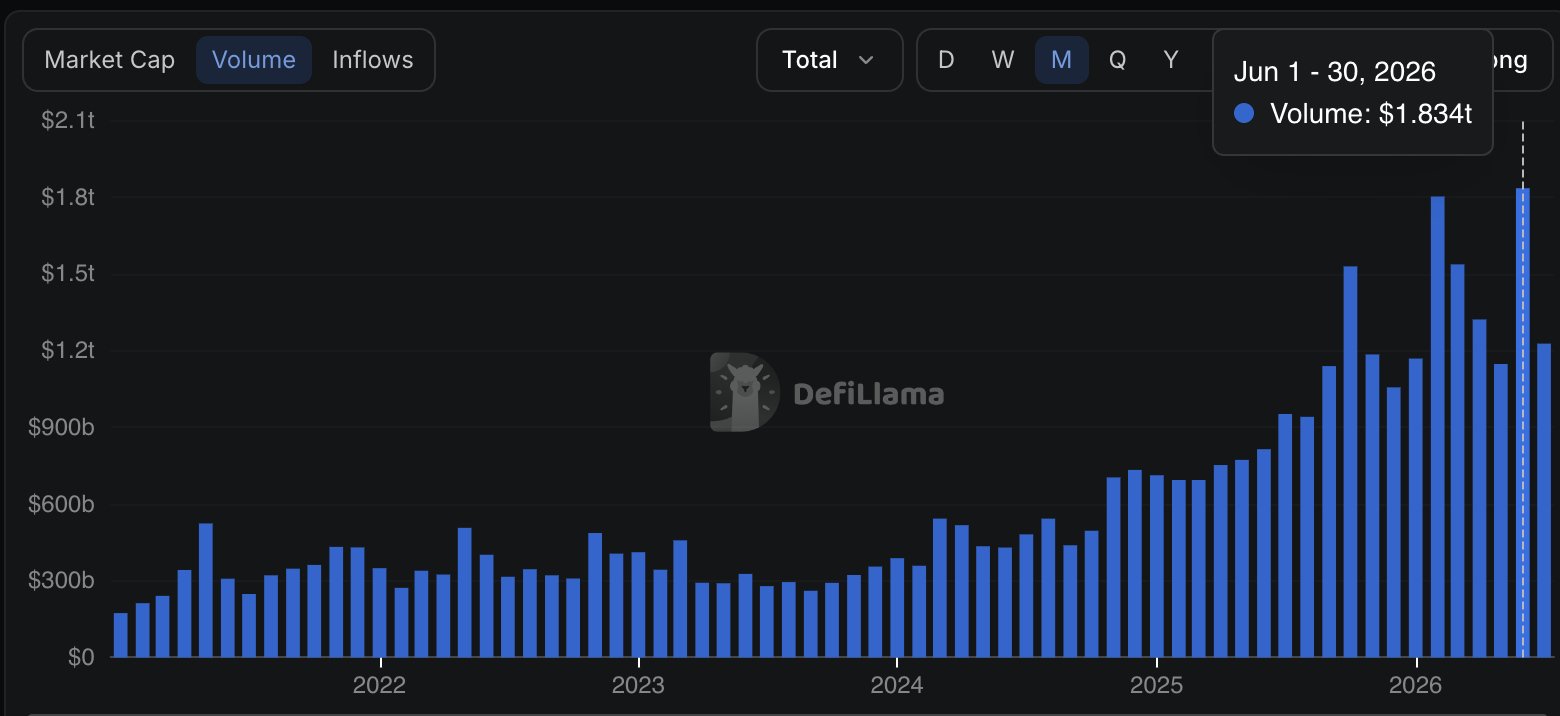
At the same time, the adjusted transaction volume for stablecoins reached a record $1.83 trillion in June. This is 60% higher than May's figure and more than double the level recorded a year ago.

This discrepancy points to a change in the nature of stablecoin usage. Fewer dollars are sitting idle, while the remaining supply is moving faster through payment, trading, and settlement systems.
Source: Defillama

Idle Balances Move to Yield-Bearing Assets

The supply of $USDT by Tether decreased from $189.54 billion as of May 1 to approximately $184 billion as of July 29. Over the same period, the supply of $USDC by Circle dropped from $77.27 billion to $72.41 billion. This reduction remains moderate compared to the market's 26% crash in 2022.

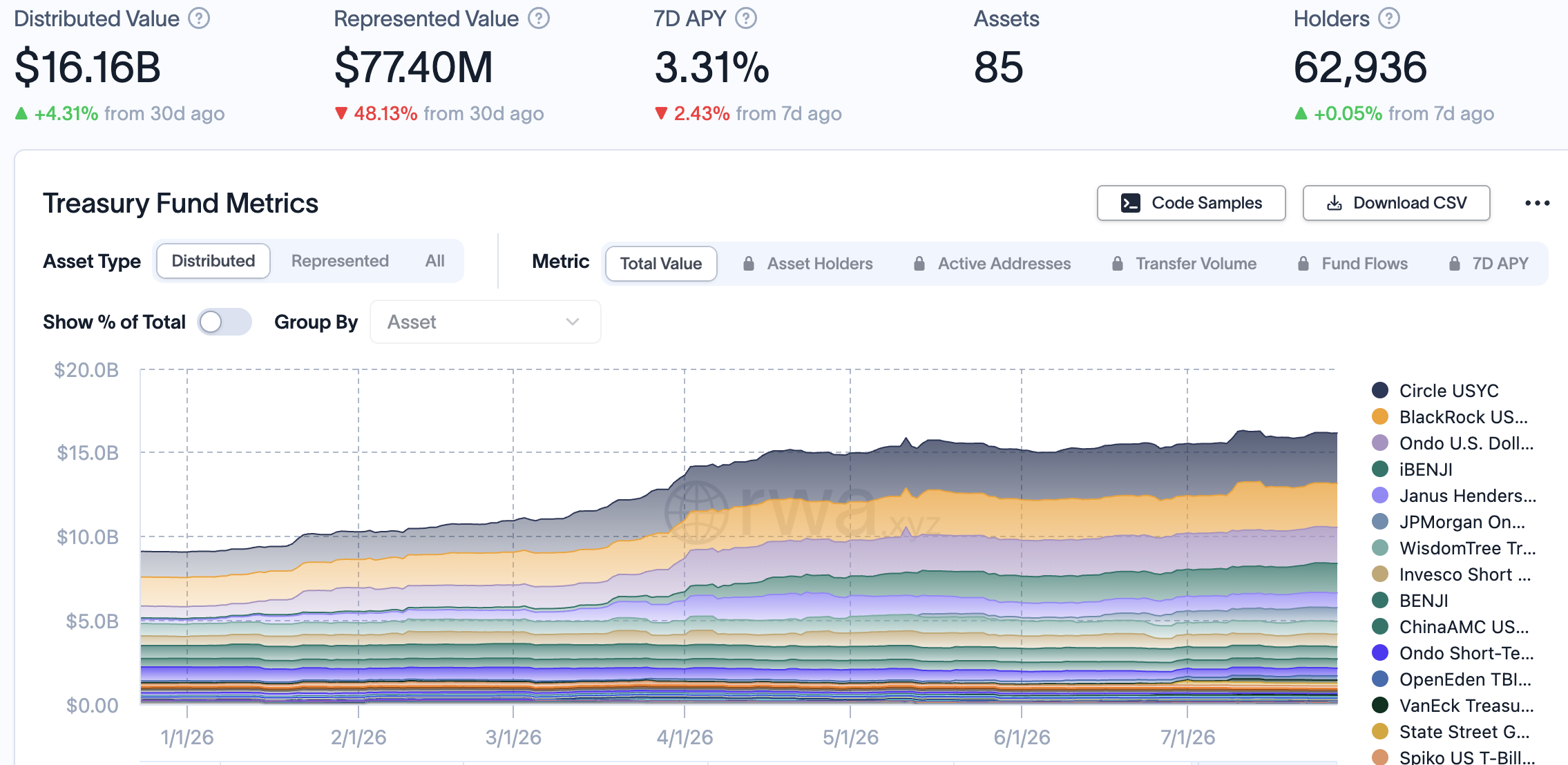
Apparently, some capital has flowed into tokenized Treasury products, which offer yields not available for payment stablecoins. According to rwa.xyz, the volume of this sector has grown to over $16 billion compared to roughly $11 billion in March.
Source: rwa.xyz

The GENIUS Act, signed in July 2025, prohibits issuers from paying interest directly on payment stablecoins. This structure encourages treasurers to keep savings in tokenized funds, holding stablecoins only when payments need to be made.

Turnover Velocity Replaces Market Cap as Key Metric

According to a Standard Chartered report from March 2026, stablecoin turnover is now about six times per month. This is roughly double the rate from two years ago. Visa data also shows that each dollar in a stablecoin moves much more frequently than a dollar stored in an ordinary U.S. bank account.

$USDC has become the leading settlement asset, despite its supply being smaller than that of $USDT. In June, it processed about $1.21 trillion in adjusted volume, compared to $576 billion for $USDT.

However, not all blockchain transfers represent real economic payments. Automated activity, exchange transfers, and wash trades can inflate the raw figures.

According to a Forbes report, estimates by McKinsey and Artemis suggest that identifiable real-world payments accounted for about $390 billion in 2025. Business-to-business transactions made up $226 billion, while payroll and remittance payments were approximately $90 billion.

The share of payments is still small but has grown sharply over two years.

Stablecoin market capitalization still matters, as issuers earn interest on reserves. However, for networks, processors, and financial platforms, transaction frequency may become a more valuable metric. June data indicates that stablecoins are transforming from 'frozen' collateral into active financial infrastructure.


Related Questions

QAccording to the article, what is the key change in the nature of stablecoin usage indicated by the data?

AThe data indicates a change in the nature of stablecoin usage: fewer dollars are sitting idle, while the remaining volume is moving faster through payment, trading, and settlement systems. This is shown by the supply shrinking while transaction turnover hits a record high.

QWhat is one major reason suggested in the article for the migration of capital away from payment stablecoins like USDT and USDC?

AOne major reason is the flow of capital into tokenized Treasury products, which offer yields not available to payment stablecoins. This was further encouraged by the GENIUS Act signed in July 2025, which prohibits issuers from paying interest directly on payment stablecoins.

QWhy does the article suggest that transaction turnover (velocity) is becoming a more valuable metric than market capitalization for certain entities?

AFor networks, processors, and financial platforms, the frequency of transactions (turnover velocity) may become a more valuable metric than market capitalization because it reflects active usage and utility within the financial infrastructure, rather than just stored value.

QWhich stablecoin processed a higher adjusted transaction volume in June, USDT or USDC, despite having a smaller supply?

AUSDC processed a higher adjusted transaction volume in June (approximately $1.21 trillion) compared to USDT ($576 billion), even though USDC's supply is smaller than that of USDT.

QWhat does the article cite as a potential factor that can inflate raw on-chain transaction figures?

AThe article states that automated activity, exchange transfers, and wash trading can inflate the raw on-chain transaction figures, meaning not all blockchain transfers represent real economic payments.

Related Reads

After the Fed's Interest Rate Decision and Comments from Kevin Walsh, Experts Gathered and Shared Their Latest Insights!

Following the Fed's decision to hold interest rates steady, experts highlight a potential shift towards more independent policymaking within the FOMC, as three members dissented. Market strategists note the slight decline in bond yields and a weaker dollar post-announcement, but caution that a rate hike in September remains possible. Experts like Mark Hackett point to the three dissenting votes as a sign of growing committee independence. While markets initially rallied in relief, the final direction hinges on Fed Chair Kevin Warsh's upcoming press conference. Analysts, including Audrey Childs-Freeman, interpret the dissent as the Fed maintaining a hawkish stance. They suggest the Fed will continue monitoring data, with a summer scenario of high bond yields supporting the dollar still in play. Chris Anstey emphasizes that markets will closely watch the 10-year Treasury yield during Warsh's conference. A continued rise could signal investor fears that the Fed is not acting aggressively enough on inflation, posing a challenge for the Chair. The long-term yield is also viewed as critical for mortgages and economic management. Diane Swonk of KPMG argues a September rate hike is likely, stating that an increase now would have been more appropriate given nearly five years of high inflation. She warns that prolonged high prices risk becoming embedded in the economic system. *This is not investment advice.

cryptonews.ru43m ago

After the Fed's Interest Rate Decision and Comments from Kevin Walsh, Experts Gathered and Shared Their Latest Insights!

cryptonews.ru43m ago

Trading

Spot
活动图片