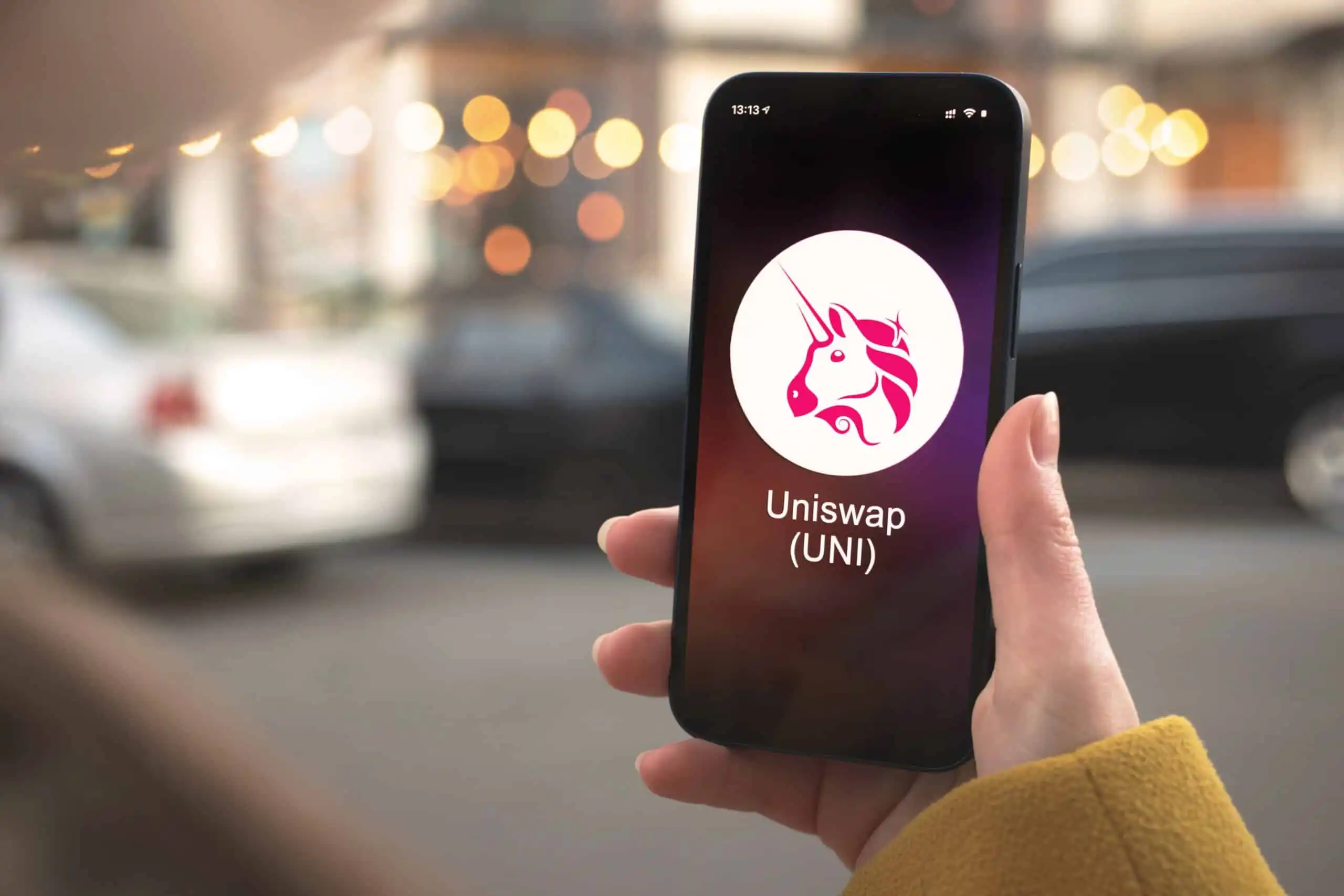
Trust Wallet Introduces Tokenized U.S. Stocks With bStocks Integration

TheNewsCryptoPublished on 2026-06-15Last updated on 2026-06-15

Abstract

Trust Wallet, a leading self-custody crypto wallet, now offers bStocks, providing users direct access to tokenized U.S. stocks on BNB Chain without needing a traditional brokerage. Initially launching with five securities—including tokenized versions of Tesla, NVIDIA, and Micron Technology—the service allows eligible users 24/7 trading and conversion via USDT. These bStocks represent economic exposure to underlying shares, automatically processing price changes and dividends. Furthermore, users can utilize these tokenized assets across BNB Chain's DeFi ecosystem for lending and trading while still earning dividends. The integration marks a significant step in making traditional financial assets more accessible via self-custody wallets and on-chain ecosystems. Important legal disclaimers apply regarding the product's availability and regulatory status in various jurisdictions.

Through a self-custodial experience, Trust Wallet, the premier self-custody cryptocurrency wallet in the world, has announced that it will now offer bStocks. This will provide users with direct access to tokenized U.S. stocks on BNB Chain. It is now possible for customers who meet the requirements to access tokenized securities around the clock, straight from their wallets, and without the need for a conventional brokerage account.

Five tokenized U.S. stocks are currently accessible at the time of launch. These securities are TSLAB (Tesla), CRCLB (Circle Internet Group), MUB (Micron Technology), SNDKB (SanDisk Corporation), and NVDAB (NVIDIA). Additional assets are expected to be released in the near future. Through the use of USDT, users are able to instantly convert into bStocks inside Trust Wallet.

The bStocks are tokenized securities that are hosted on the BNB Chain. They provide economic exposure to U.S.-listed shares by automatically processing price changes, dividends, and stock splits. The user is not needed to take any action in order to get this exposure.

From the very beginning, users will be able to put their bStocks to use throughout the whole DeFi ecosystem of BNB Chain. This includes lending on Venus and Lista DAO, trading on PancakeSwap and Aster, and more. All of this will be possible as they continue to receive dividends on the underlying security. We respect the self-custodial architecture of Trust Wallet, therefore there is no need for Know Your Customer.

On the addition of bStocks, Felix Fan, CEO of Trust Wallet, said:

“Stocks are one of the most popular financial assets in the world, and yet for too many people, the barriers to accessing them are still enormous. bStocks on Trust Wallet is a meaningful step toward removing those barriers – direct access to tokenized U.S. securities, 24/7, self-custodied, and composable across DeFi. And this is just the beginning, bStocks won’t be the last step in that direction.”

The arrival of bStocks is Trust Wallet’s most recent foray into the realm of real-world assets onchain. Trust Wallet is now in the process of developing the self-custody interface in order to facilitate the accessibility of tokenized stocks and other conventional financial instruments as they continue to migrate onto public blockchain blockchains. The Trust Wallet platform is now offering bStocks to users that meet the requirements.

Disclaimer
Please note that Stocks Tokenized Securities are categorized as Certificates that represent certain Financial Instruments (according to paragraph 92 of Schedule 1 to FSMR). By definition, bStocks are not stocks or shares, and holders of bStocks are not permitted to directly own a share or stock in the firm that is listed as the underlying corporation. It is only in the ADGM that stocks are made available for purchase via an Approved Prospectus; they are not made available in any other jurisdiction. Securities that have been tokenized are only offered on a secondary market basis to users who are qualified and who reside in areas that are authorized. Legal, regulatory, operational, sanctions, tax, market, or risk-control factors may cause changes in product availability at any moment. These changes may occur for a variety of reasons. Once you have passed an eligibility check, you do not automatically have the right to continue using the service. Those terms are not within Trust Wallet’s control, and the company does not make any promises or assurances about them. bStocks are not accessible for purchase or sale in specific locations, such as the United States of America, the United Kingdom, or the European Union.

Furthermore, they are not permitted to be offered for sale, sold, or delivered to any “U.S. Person.” Before moving on, it is solely your duty to check if the accessing and trading of tokenized securities is legal in the country in which you reside. The fact that you are accessing this product from a country in which it is restricted or forbidden does not in any way establish any duty or obligation on the part of Trust Wallet.

It is merely for general information that this material is provided. The information that is provided in conjunction with tokenized securities is not meant to be construed as an offer, solicitation, promotion, recommendation, or invitation to purchase or sell shares in any jurisdiction. bStocks are susceptible to a variety of risks, including liquidity risk, issuer risk, custody risk, broker risk, operational risk, technological risk, regulatory risk, tax risk, fees, withholding, transfer limitations, and the possibility of losing the whole investment. bStocks do not reflect ownership of the underlying asset’s issuer, nor do they even have any kind of link with the issuer. Invariably, DYOR. With assistance from external parties. Your use of Trust Wallet is subject to the Terms of Service, which can be found at https://trustwallet.com/terms-of-service.

Trust Wallet is a Web3 wallet and gateway that provides users with the ability to completely own, manage, and utilize the power of their digital assets. It is a secure wallet that allows users to do so on their own. In a single location and without any restrictions, Trust Wallet makes it simpler, more secure, and more convenient for millions of people all over the globe to experience Web3, use decentralized applications (dApps) in a secure manner, store and manage their cryptocurrency, purchase, trade, and stake cryptocurrency in order to receive rewards. This is true for both novice and expert users alike.

TagsAltcoinBlockchain

Related Questions

QWhat is the new feature introduced by Trust Wallet according to the article?

ATrust Wallet has introduced the integration of bStocks, offering users direct access to tokenized U.S. stocks through a self-custodial experience on BNB Chain.

QWhich specific U.S. company stocks are available as bStocks at launch?

AAt launch, the five available tokenized U.S. stocks are TSLAB (Tesla), CRCLB (Circle Internet Group), MUB (Micron Technology), SNDKB (SanDisk Corporation), and NVDAB (NVIDIA).

QAccording to the article, how can users access and use bStocks within the DeFi ecosystem?

AUsers can put their bStocks to use across the BNB Chain DeFi ecosystem, including activities like lending on Venus and Lista DAO, and trading on PancakeSwap and Aster, while continuing to receive dividends on the underlying security.

QWhat major limitation regarding the availability of bStocks is mentioned in the disclaimer?

AThe disclaimer states that bStocks are not available for purchase or sale in specific locations such as the United States of America, the United Kingdom, the European Union, or to any 'U.S. Person'.

QWhat did Felix Fan, CEO of Trust Wallet, state about the significance of offering bStocks?

AFelix Fan stated that bStocks on Trust Wallet is a meaningful step toward removing barriers to accessing popular financial assets like stocks, by providing direct, 24/7, self-custodied access to tokenized U.S. securities that are composable across DeFi, and that this is just the beginning.

Related Reads

An AI Version of the 'Subprime Crisis'? A Hidden Debt of $1.8 Trillion is Accumulating in the Shadows Amid the Frenzy

Amidst the AI infrastructure construction boom, a massive debt expansion is forming, with the most dangerous portion remaining off-balance sheets. Morgan Stanley research reveals approximately $1.8 trillion in off-balance-sheet exposures, including nearly $1 trillion in purchase commitments and over $800 billion in non-active lease contracts. These future cash outflows are not recorded as liabilities. The leverage of hyperscale cloud companies has surged from 0.9x to 1.8x in just two quarters. Private credit firms like Apollo and Blackstone are shifting leverage into the supply chain through complex, opaque SPV (Special Purpose Vehicle) financing structures. Global AI-related bond issuance has skyrocketed, with annual volume projected to exceed $570 billion. However, capital expenditure growth is outpacing revenue and free cash flow. Major cloud providers may see free cash flow approach zero or turn negative in 2026. A significant 'depreciation cliff' looms as vast amounts of current capital spending, recorded as 'construction in progress,' have yet to begin depreciating, artificially inflating current profit margins. Future depreciation could severely pressure earnings. The core risk is identified as a series of timing mismatches, not an immediate solvency crisis. Investment is racing ahead of monetization, leverage is being obscured, and accounting classifications hinder comparability. The entire financing structure faces a fundamental stress test if AI commercialization lags or enterprise clients shift to cheaper alternatives, potentially triggering chain reactions within the highly interconnected funding ecosystem.

marsbit8m ago

An AI Version of the 'Subprime Crisis'? A Hidden Debt of $1.8 Trillion is Accumulating in the Shadows Amid the Frenzy

marsbit8m ago

SemiAnalysis Dissects Huawei's Kirin 9030: Process Technology Halted, So They Folded the Chip

SemiAnalysis has published a detailed teardown report on the HiSilicon Kirin 9030 Pro chipset found in Huawei's Mate 80 Pro. Fabricated using SMIC's most advanced N+3 node without EUV lithography, the analysis reveals significant technical achievements and strategic shifts. The report indicates SMIC's N+3 has achieved transistor density comparable to TSMC's N6 (113.4 vs 107.7 MTr/mm²), primarily through aggressive use of Self-Aligned Quadruple Patterning (SAQP) for its metal layers. This results in a notably small 32.5nm M0 metal pitch. However, SemiAnalysis notes this achievement comes with significantly higher process complexity, cost, and potential yield challenges compared to competitors using more advanced tools. The Kirin 9030 design maximizes this constrained density. While its GPU performance has improved ~70% and matches Qualcomm's 2022 flagship level, the CPU core's IPC lags behind current top-tier designs from Apple and Qualcomm, a gap attributed to the underlying manufacturing technology rather than design capability. Facing long-term restrictions on advanced tools, Huawei is charting a new path. The report highlights the company's "LogicFolding" roadmap, a 3D stacking technique aimed at shortening signal paths to boost performance and efficiency. The goal is to reach 5GHz frequency and a projected density of 295 MTr/mm² by 2031. SemiAnalysis concludes that export controls have not halted China's chip progress but have fundamentally altered its trajectory, making it more expensive and complex. This has spurred innovation in alternative areas like 3D stacking and domestic EDA tool development, with Huawei's supply chain also beginning to integrate Chinese memory from CXMT.

marsbit55m ago

SemiAnalysis Dissects Huawei's Kirin 9030: Process Technology Halted, So They Folded the Chip

marsbit55m ago

How Will the Price Move Before SpaceX's Next Share Unlock?

TL;DR Investors buying SPCX after SpaceX's IPO are not simply investing in a typical tech stock. It’s a high-valuation asset driven by Musk's narrative, Starlink, and space transport potential, but with a key twist: a very small initial float of ~4% has led to significant post-listing price appreciation. The current price action reflects a timing gap. Before the first lock-up expiration (estimated around August, subject to official confirmation), scarcity and high demand could continue to push prices up. Short-term bulls focus on low float, FOMO, and potential index inclusion. However, bears point to the supply dynamics that will change post-lockup. Existing shareholders still hold over 95% of shares, which will be released in stages starting from the first unlock window. This introduces future selling pressure from low-cost holders. The upcoming Q2 earnings report is a critical catalyst before the unlock. It will test whether the company's fundamentals can justify the current ~$2.1T valuation. Strong results could support the pre-unlock momentum, while weak figures could amplify concerns about future supply. The trading thesis is shifting from immediate scarcity ("can't buy enough") to evaluating future absorption capacity ("who will buy when more supply hits"). The path ahead hinges on the specifics of the unlock schedule, Q2 earnings performance, and whether anticipated passive index buying materializes.

marsbit1h ago

How Will the Price Move Before SpaceX's Next Share Unlock?

marsbit1h ago

Trading

Spot
Futures
活动图片