# Uncertainty Related Articles

HTX News Center provides the latest articles and in-depth analysis on "Uncertainty", covering market trends, project updates, tech developments, and regulatory policies in the crypto industry.

Less Than a Year in Office and Leaving Again: Why Are Core Figures of the Ethereum Foundation Departing Once More?

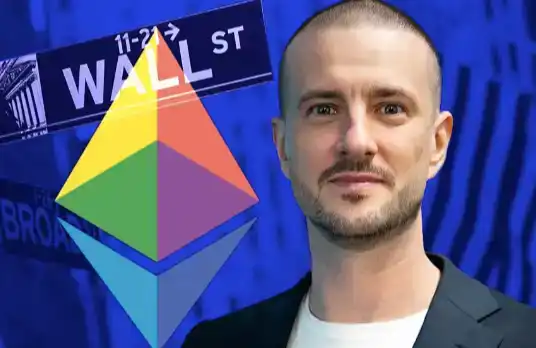
Tomasz Stańczak, the co-executive director of the Ethereum Foundation (EF), has announced his resignation, just 11 months after taking the role. He was appointed alongside Hsiao-Wei Wang in March 2025, replacing long-time leader Aya Miyaguchi amid community criticism that EF was too slow and disconnected. Stańczak, founder of core Ethereum client Nethermind, was brought in to make EF more decisive and execution-focused. During his tenure, he streamlined operations, refocused strategy on Layer-1 scaling, accelerated upgrade timelines, and pushed new initiatives in AI integration and privacy. His departure hints at internal tension. In his statement, Stańczak suggested his ability to operate independently within EF diminished as the leadership became more self-sufficient. He expressed a desire to return to hands-on product building, specifically in AI/blockchain convergence, echoing Ethereum’s early experimental spirit. He is replaced by Bastian Aue, a low-profile internal figure focused on "principled" decision-making aligned with "cypherpunk values," signaling a potential shift back towards a coordination-focused rather than execution-driven approach. This leadership change comes at a critical time. EF is preparing to release key proposals on "Lean Ethereum" and future roadmaps, while Ethereum faces intense competition, Layer-2 fragmentation, and market pressure—with its price risk falling below inflation-adjusted 2018 levels.

marsbit02/14 03:46

Less Than a Year in Office and Leaving Again: Why Are Core Figures of the Ethereum Foundation Departing Once More?

marsbit02/14 03:46

The Guy Who Free-Solo Climbed Taipei 101 Yesterday Is a Spokesperson for a Trading Software

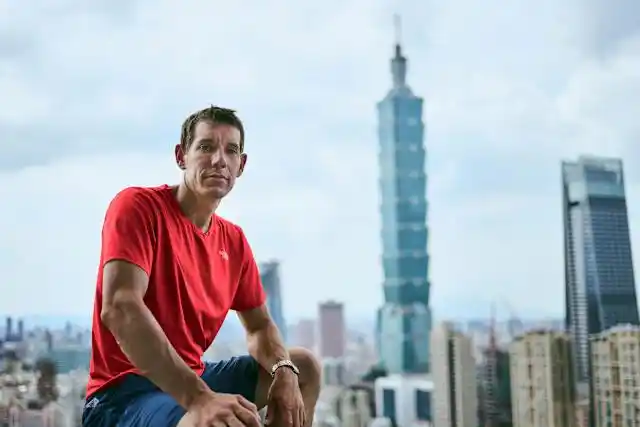
Alex Honnold, a 40-year-old professional rock climber, free-soloed Taipei 101—a 508-meter, 101-story skyscraper—in a live-streamed event watched by millions. Known for his historic free solo ascent of El Capitan documented in the Oscar-winning film *Free Solo*, Honnold is also a brand ambassador for TradingView, a popular financial charting and trading platform. The partnership, which began in 2021 under the slogan “Look first / Then leap,” may seem unusual at first. However, Honnold’s approach to risk aligns closely with prudent trading principles. He avoids uncertainty and emphasizes meticulous preparation, having spent nearly a decade planning his El Capitan climb and rehearsing each move repeatedly. He views fear not as a barrier to overcome, but as a signal that he isn’t yet prepared. His method is defined by extreme risk management: extensive practice, patience for ideal conditions, and eliminating unpredictability. This contrasts sharply with impulsive trading behaviors common in meme stocks and leverage trading, where decisions are often made without analysis or risk calculation. Ultimately, TradingView’s choice of Honnold symbolizes survival—the goal isn’t just to reach the top, but to do so safely and live to continue climbing. Similarly, in trading, long-term success depends on preparation, discipline, and managing risk, not blind courage.

marsbit01/26 06:06

The Guy Who Free-Solo Climbed Taipei 101 Yesterday Is a Spokesperson for a Trading Software

marsbit01/26 06:06

Life's K-Line Can't Save You from Anxiety, Prediction Markets Can't Calculate the Outcome

In early 2026, a sudden geopolitical event shocked the world: the U.S. captured Venezuelan President Nicolás Maduro, an outcome largely unpredicted by prediction markets like Polymarket, where his ouster was priced at only 5–7 cents shortly before the event. This incident underscores a recurring theme: major historical shifts often occur without warning. Against this backdrop, two tools gained attention in late 2025: “Life K-line,” which visualizes personal fate based on birth data, and prediction markets that quantify event probabilities through financial betting. Both promise a sense of control in an uncertain world—Life K-line offers emotional comfort through narrative structure, while prediction markets use price signals to suggest actionable foresight. However, these systems have significant limitations. Life K-line, though marketed as entertainment, may influence real-life decisions, while prediction markets are vulnerable to manipulation and insider influence. More fundamentally, predictive tools are inherently constrained by algorithmic bias, cultural assumptions, and the inevitability of black swan events. Relying too heavily on them can dull intuition and create a false sense of security. Ultimately, uncertainty is an irreducible part of life. Rather than seeking illusory control through prediction, the article argues for building antifragility—adapting to unpredictability and embracing the unscripted moments that define real life. True resilience lies beyond the charts and odds.

marsbit01/05 03:33

Life's K-Line Can't Save You from Anxiety, Prediction Markets Can't Calculate the Outcome

marsbit01/05 03:33

活动图片