# Smart Contracts İlgili Makaleler

HTX Haber Merkezi, kripto endüstrisindeki piyasa trendleri, proje güncellemeleri, teknoloji gelişmeleri ve düzenleyici politikaları kapsayan "Smart Contracts" hakkında en son makaleleri ve derinlemesine analizleri sunmaktadır.


When the Narrative Bubble Bursts, What Are the Truly Valuable Crypto Assets?

After the narrative-driven crypto bubble subsides, truly valuable digital assets are those with sustainable value mechanisms, as evidenced by the failure of over 13.4 million speculative tokens. This analysis identifies two core token models: - **Native tokens** (e.g., Ethereum), whose value derives from network utility, acting as "security budgets" for decentralized systems. - **Backed tokens** (e.g., stablecoins like USDC), which are pegged to real-world assets (e.g., U.S. Treasuries) and provide verifiable value anchors. Sustainable tokens must reduce real-world economic frictions, evidenced in three dimensions: 1. **Macro-hedging**: Offering censorship-resistant, cross-border value transfer channels in high-inflation or sanctioned economies (e.g., Iran’s $7.78B crypto ecosystem). 2. **Real-yield anchoring**: Tokenizing high-quality liquid assets (HQLA) to bring off-chain yields on-chain, creating a risk-free benchmark for capital efficiency. 3. **Cost reduction**: Programmable smart contracts enable atomic settlements, automate compliance (e.g., KYC/AML), and cut transactional friction. Regulation has evolved from curbing speculative financing to building resilient infrastructure and implementing classification rules (e.g., EU’s MiCA). Compliance is increasingly embedded via coded rules (e.g., ERC-3643 standard), enabling real-time monitoring and reducing legal overhead. In conclusion, value accrues to tokens that embed tangible rights, lower cross-border costs, and align with regulatory frameworks, shifting focus from speculation to infrastructure utility.

marsbit03/20 13:36

When the Narrative Bubble Bursts, What Are the Truly Valuable Crypto Assets?

marsbit03/20 13:36

WEEX Labs: The Lobster Craze, What Can Agentic Economy Bring to Web3?

WEEX Labs: The Rise of OpenClaw and What Agentic Economy Brings to Web3 NVIDIA CEO Jensen Huang recently praised OpenClaw as the "largest, most popular, and most successful open-source project in human history." This AI agent, developed by a former Apple engineer, gained 320,000 GitHub stars in just three months, surpassing Linux and React. Its logo resembles a lobster claw, hence the nickname "Lobster" in Chinese communities. Unlike traditional AI chatbots like ChatGPT or Claude, which primarily respond to queries, OpenClaw represents a shift towards autonomous execution. It can take over operating systems, autonomously use browsers, code executors, APIs, and iMessage, planning and performing tasks until completion. Its official skill marketplace, ClawHub, already offers over 27,000 skills, expanding its capabilities. This development signals the beginning of the Agentic Economy, where AI evolves from conversational tools to proactive doers. Web3 is identified as the ideal ecosystem for this growth due to its native compatibility with autonomous, code-driven interactions. Key integrations include: - The x402 protocol enabling autonomous payments and model switching. - ERC-8004 providing portable reputation and identity. - ClawPay, ClawCredit, and ClawRouter facilitating private payments, native credit, and routing. - Stablecoins like USDT and USDC serving as 24/7 banking for agents. Notable projects leveraging this synergy include KITE (a PoAI L1 blockchain for agents), Pieverse (enabling gasless on-chain transactions via messaging apps), and GoPlus Security’s SafuSkill (a security-focused skills marketplace). Meme tokens like "Lobster" have also emerged, capitalizing on the trend. The article concludes that OpenClaw’s rise marks a new phase—Agentic Era—where AI agents can perform 24/7 transactions, collaboration, and entrepreneurship, driving new DeFi narratives and on-chain activity.

marsbit03/18 10:34

WEEX Labs: The Lobster Craze, What Can Agentic Economy Bring to Web3?

marsbit03/18 10:34

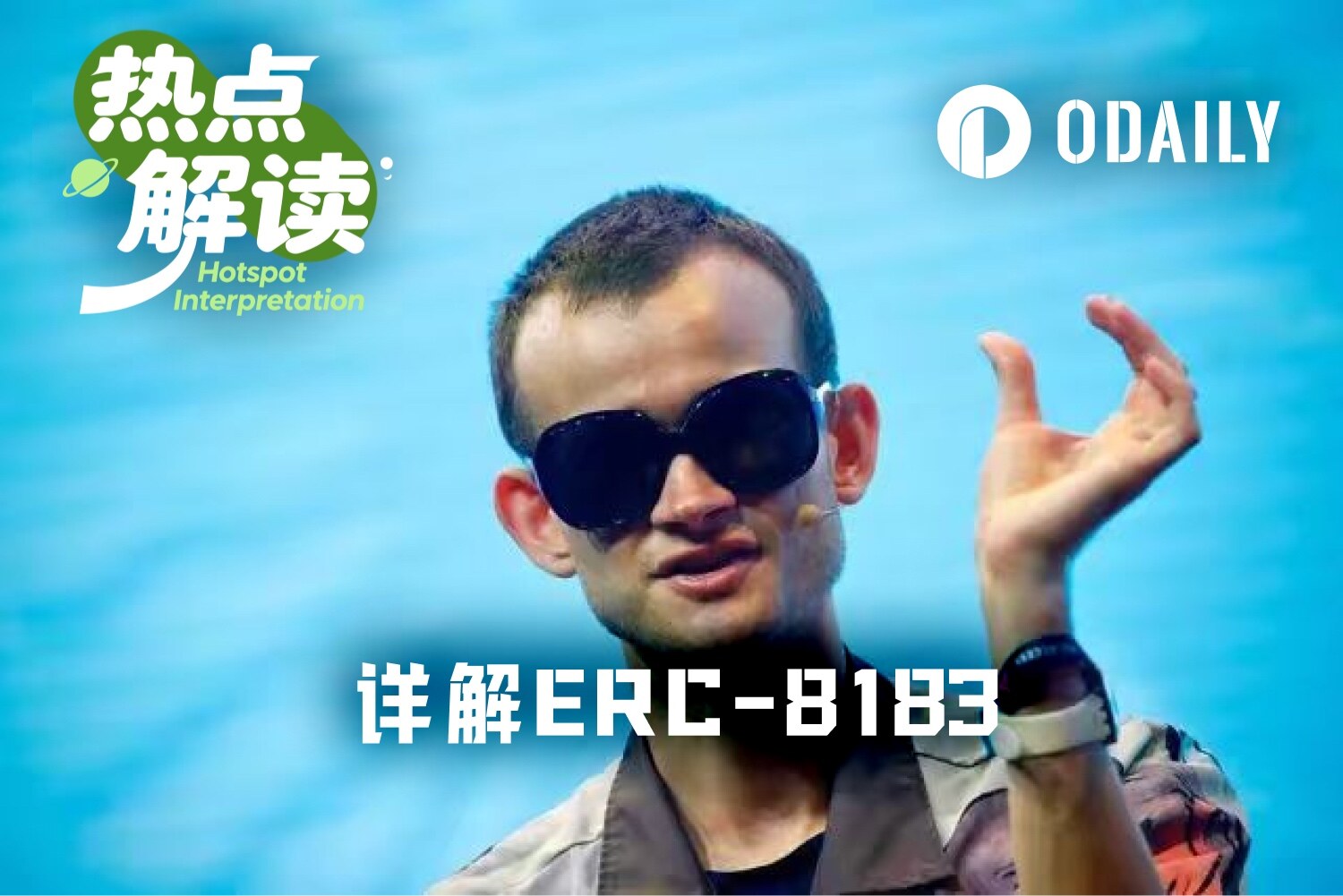
In-Depth Explanation of ERC-8183: Ethereum's Solution to the AI Agent Trust Challenge

Analysis of ERC-8183: Ethereum's Solution to AI Agent Trust Issues On March 10, the Ethereum Foundation's dAI team and Virtuals Protocol introduced ERC-8183, a new standard designed to enable trustless commercial transactions between AI Agents. This standard addresses the core problem of how two untrusted Agents can securely complete a "hire-deliver-settle" workflow without relying on a centralized platform. ERC-8183 introduces a "Job" concept with three roles: the Client (task publisher), the Provider (task executor), and the Evaluator (task validator). The Evaluator, which can be an AI Agent, a ZK-verifier smart contract, or a multi-sig/DAO, is the core innovation, determining whether a job is completed or rejected based on submitted proofs. A Job progresses through four states: Open (task creation), Funded (client deposits funds into escrow), Submitted (provider submits work), and Terminal (evaluator approves or rejects, funds are distributed accordingly). The standard also supports modular Hooks for added functionality like reputation checks or bidding systems. ERC-8183 complements other standards like x402 (a payment protocol for Agents) and ERC-8004 (an identity/reputation standard). Together, they form a foundational stack for a decentralized, autonomously operating AI Agent economy, with ERC-8183 specifically solving the trust problem in transactions.

Odaily星球日报03/10 07:43

In-Depth Explanation of ERC-8183: Ethereum's Solution to the AI Agent Trust Challenge

Odaily星球日报03/10 07:43

活动图片