# POWER Articoli collegati

Il Centro Notizie HTX fornisce gli articoli più recenti e le analisi più approfondite su "POWER", coprendo tendenze di mercato, aggiornamenti sui progetti, sviluppi tecnologici e politiche normative nel settore crypto.


Mine Owners' New Business: Sitting on Land and Collecting Rent, Earning Billions Annually

The article "Mine Owners' New Business: Collecting Rent, Earning Billions Annually" explores the strategic pivot of Bitcoin mining companies towards AI infrastructure and high-performance computing (HPC) as Bitcoin approaches its supply limit. By 2026, with only 1 million Bitcoin left to mine and rising operational costs squeezing profitability, major mining firms are capitalizing on their existing assets—large-scale power capacity, data centers, and cooling systems—to serve the exploding demand for AI compute. Companies like IREN, Core Scientific, Cipher Digital, and Hut 8 have secured long-term contracts worth tens of billions of dollars with tech giants (Microsoft, Amazon, Google) and AI firms (Anthropic, CoreWeave) to provide GPU cloud services and HPC hosting. Financial reports highlight a stark contrast: while Bitcoin毛利率 have plummeted post-halving, AI-related services boast margins as high as 86%. Firms are rebranding, exiting mining, and leveraging their power infrastructure advantages—deploying AI data centers in months versus years for traditional builders. However, this转型 comes with risks: high debt from infrastructure upgrades, strict contract deadlines, regulatory hurdles, and operational challenges. The shift positions these companies as key "digital power stations" in the AI era, where control over electricity and grid access becomes a critical competitive edge. The period from 2026 to 2028 will be crucial for determining which players succeed in this high-stakes transition.

比推10 h fa

Mine Owners' New Business: Sitting on Land and Collecting Rent, Earning Billions Annually

比推10 h fa

Daniil and David Liberman: AI is Not Just a Battle of Models, But a Battle of Computing Infrastructure

In the article "Daniil and David Liberman: AI Is Not Just a Battle of Models, but a Battle of Compute Infrastructure," the authors argue that the core of AI development is not just about algorithmic advances but control over computational resources. They emphasize that AI is not a neutral technology—who owns and governs the compute infrastructure ultimately determines who benefits from AI. Currently, advanced AI compute is highly concentrated among a few cloud providers and specific nations, creating a growing "compute divide." This centralization leads to high costs, limited access, and geographic imbalance. Decentralized alternatives, meanwhile, often waste resources on consensus mechanisms rather than meaningful computation. The authors propose a practical alternative: an infrastructure where most compute is used for actual AI work, governance is based on verified computational effort (not capital), and global GPU access is permissionless. They stress that infrastructure choices made today will have long-term economic and geopolitical consequences. For businesses, early reliance on centralized AI infrastructure creates lock-in effects that reduce strategic flexibility over time. The authors warn that waiting too long to explore decentralized options may make transition prohibitively difficult. They conclude that future generations must recognize that AI architecture is a deliberate design choice—not an inevitability—and that open, decentralized infrastructure is essential to preserving fairness, innovation, and freedom in the AI era.

marsbit18 h fa

Daniil and David Liberman: AI is Not Just a Battle of Models, But a Battle of Computing Infrastructure

marsbit18 h fa

The Escalation of the Computing Power War: When 'Crypto Mines' Become 'AI Factories', A New Arena for Energy Arbitrage

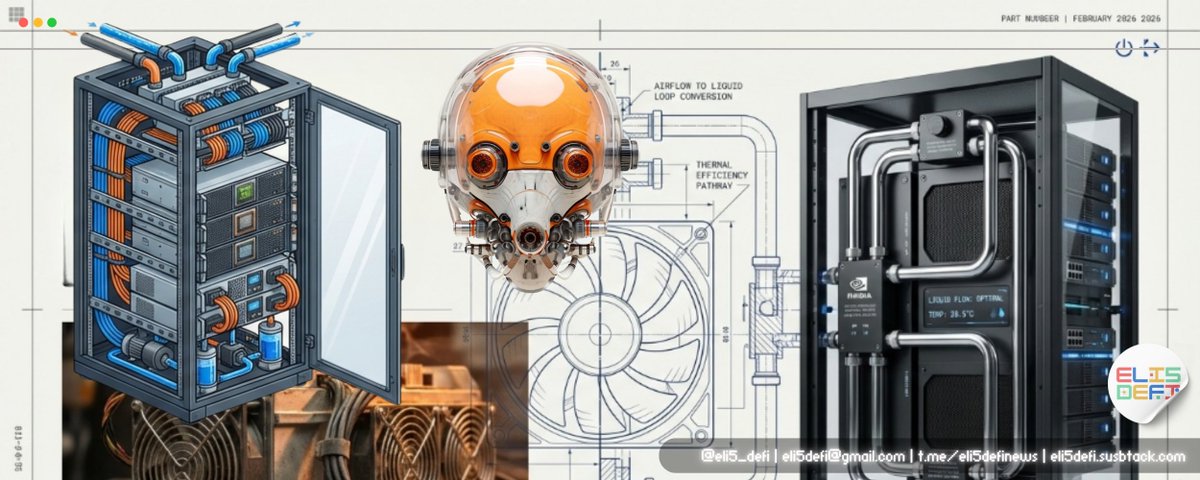
The computing landscape has dramatically shifted by early 2026, with Bitcoin mining operations transforming into essential "AI factories." This transition is driven by a global scarcity of power, not just chips, turning pre-existing energized land into a monopolistic infrastructure asset. Former miners, now infrastructure capitalists, leverage their secured power and land—a critical advantage given the 5–7 year wait for new substations. Building AI-ready facilities has become capital-intensive, costing $8–11 million per megawatt, creating a clear divide between scaled leaders like Iris Energy (2910 MW portfolio) and execution-focused firms like TeraWulf and Hut 8, which have secured multi-billion dollar contracts. A key shift is the "hyperscale guarantor" model, where tech giants like Google and Microsoft provide credit backing, transforming risky miner leases into investment-grade contracts. This enables favorable debt financing at ~7.125% interest from major banks. Technologically, high-density liquid cooling is mandatory for platforms like NVIDIA’s Blackwell, which consumes 120 kW per rack. Innovations like Shanghai’s submerged data centers (PUE 1.15) use seawater cooling, reducing power use by 40–60%. The Blackwell supply backlog acts as a moat, locking out late entrants. Companies like CoreWeave, with early chip orders, dominate. The industry has matured into an energy-transition play, treating computation—whether Bitcoin or AI—as an interchangeable output of power assets. The era of pure mining is ending. The new high-stakes game is energy arbitrage, where AI factories become permanent, grid-shaping load-bearing institutions.

marsbit03/04 10:21

The Escalation of the Computing Power War: When 'Crypto Mines' Become 'AI Factories', A New Arena for Energy Arbitrage

marsbit03/04 10:21

Who Controls Computing Power, Implicitly Controls the Future of AI: Anastasia, Co-founder of Gonka Protocol

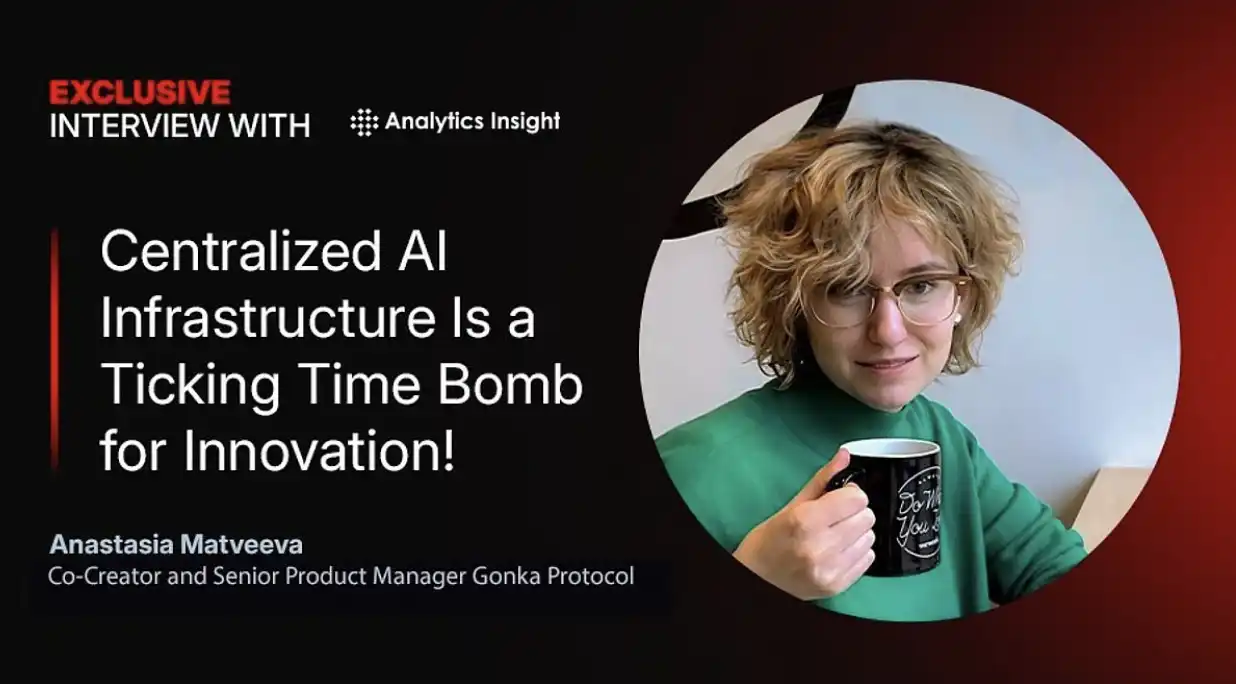
Who Controls Compute, Controls AI's Future: Gonka Protocol Co-Founder Anastasia The centralization of compute power, not just AI models, is the critical power node in AI's future, argues Anastasia Matveeva, co-founder of Gonka Protocol. While public debate focuses on models, true power lies in the underlying infrastructure—access to GPUs, power, and data center capacity. This centralization creates structural barriers to innovation, enforces a rent-extraction model, and introduces systemic fragility. Gonka is a permissionless global network designed to decentralize AI compute. It enables anyone to contribute or access GPU resources via a programmatic, open API. Key to its efficiency is an architecture that minimizes overhead, ensuring most compute is used for actual AI workloads (primarily inference) rather than network maintenance. Rewards and governance are tied to verified compute contribution, not capital stake. The protocol addresses scalability and accessibility by allowing participants of all sizes to join without permission, with influence proportional to their compute power. It supports the emerging AI agent economy with transparent, dynamic pricing and reliable, verifiable computation. While currently not optimized for strict data sovereignty, its decentralized design avoids data accumulation, and its governance allows for future evolution to meet regulatory demands. The urgency for such decentralized solutions is high to prevent a calcified AI future dominated by a few infrastructure gatekeepers.

marsbit03/03 07:58

Who Controls Computing Power, Implicitly Controls the Future of AI: Anastasia, Co-founder of Gonka Protocol

marsbit03/03 07:58

Ten Individuals Redefining the Power Boundaries of Cryptocurrency in 2025

Ten individuals are redefining the boundaries of power in the cryptocurrency world in 2025, a year marked by institutionalization rather than just a bull market or regulatory compliance. Wall Street capital, sovereign wealth funds, and pension funds have systematically embraced crypto. Bitcoin, propelled by corporate adoption led by Strategy (formerly MicroStrategy) and ETF inflows, reached a new high of $126,000. Stablecoins like USDT and USDC became integral to global payment systems. Key figures include: - Donald Trump, who leveraged political influence to launch a personal token and enact crypto-friendly policies, including the GENIUS Act. - Michael Saylor, pioneer of corporate Bitcoin treasury strategy. - Tom Lee, a bridge between Wall Street and crypto, advocating institutional adoption. - CZ (Changpeng Zhao), who regained influence post-pardon, reshaping exchange dynamics and meme coin trends. - Vitalik Buterin, balancing Ethereum’s decentralization ethos with its role as global infrastructure. - Kim Jong-un, whose regime exploited crypto hacking for funding, highlighting geopolitical risks. - Elon Musk, whose actions and holdings significantly sway markets. - Justin Sun, adept at navigating and leveraging regulatory and market systems. - Brian Armstrong, leading Coinbase’s compliance and infrastructure expansion. - Peter Thiel, building a crypto financial empire through strategic investments in infrastructure. 2025 signifies crypto’s transformation from a rebellious alternative to a core component of the global financial system, raising questions about centralization amidst institutional adoption.

深潮12/25 04:26

Ten Individuals Redefining the Power Boundaries of Cryptocurrency in 2025

深潮12/25 04:26

From Left-Hand to Right-Hand Related-Party Transactions to Infiltrating Wall Street and the White House: What Power Game Is Tether Playing?

Recent reports reveal Tether's complex internal transactions and growing political ties, raising questions about its corporate governance and influence. Tether’s subsidiary Northern Data sold its bitcoin mining unit, Peak Mining, for $200 million to entities controlled by Tether’s own executives—co-founder Giancarlo Devasini and CEO Paolo Ardoino. This “left-hand-to-right-hand” deal, structured through loosely regulated markets, avoided disclosure as a related-party transaction. The timing coincided with Rumble’s $760 million acquisition plan for Northern Data. Tether, which holds 48% of Rumble, appears to have stripped high-volatility mining assets to present Northern Data as a pure AI cloud provider, likely boosting its valuation. A €610 million loan from Tether to Northern Data was reconfigured in the deal—partly converted into Rumble shares and partly into a new loan backed by Northern Data’s assets. Tether also has deep ties with Wall Street and U.S. politics. Cantor Fitzgerald’s CEO Howard Lutnick, now U.S. Secretary of Commerce, previously backed Tether’s reserves and negotiated a $600 million convertible note deal—a move criticized as a conflict of interest. Despite Lutnick’s assurances of stricter oversight, concerns remain about Tether’s influence. With an estimated $15 billion profit at a 99% margin this year, Tether is expanding into AI, media, and even sports. Critics question whether its profits serve the crypto ecosystem or a closed wealth cycle for its executives. Through strategic deals and political connections, Tether is building an empire that merges financial power with regulatory influence.

marsbit12/24 12:46

From Left-Hand to Right-Hand Related-Party Transactions to Infiltrating Wall Street and the White House: What Power Game Is Tether Playing?

marsbit12/24 12:46

活动图片