# Innovation Related Articles

HTX News Center provides the latest articles and in-depth analysis on "Innovation", covering market trends, project updates, tech developments, and regulatory policies in the crypto industry.

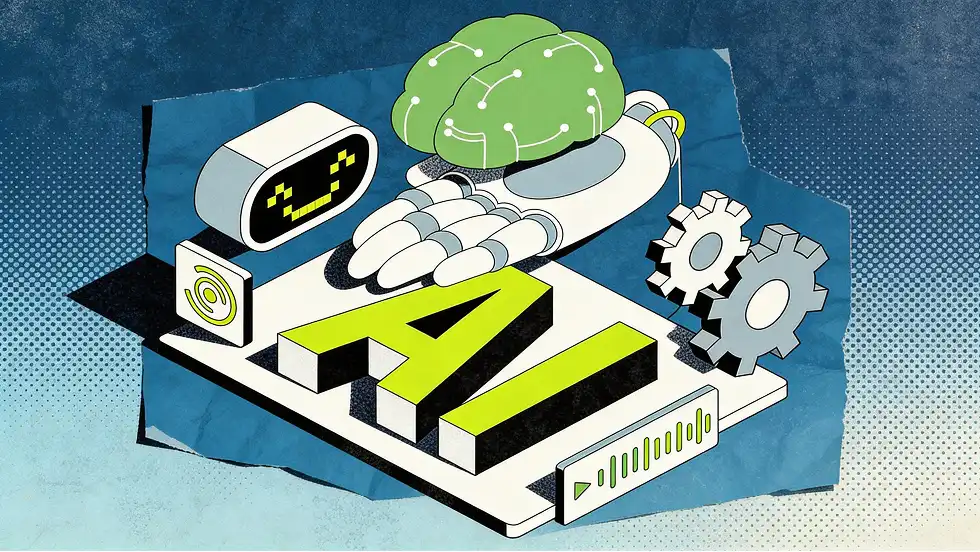
a16z's Latest In-depth Analysis on the AI Market: Is Your Company Still "Working with Blood"?

In a16z's latest analysis, AI companies are experiencing unprecedented growth, with top performers expanding at a 693% YoY rate—2.5x faster than non-AI firms—while spending less on sales and marketing. These companies achieve $500k-$1M ARR per employee, far exceeding the traditional SaaS benchmark of $400k, signaling a fundamental shift in business models. Key drivers include: - **Product-led growth**: High customer demand reduces reliance on traditional sales. - **Efficiency gains**: AI-native tools boost development speed 10-20x, reshaping team structures. - **Business model evolution**: Pricing is shifting from subscription/consumption to outcome-based models (e.g., charging per resolved task). Legacy companies face a critical choice: adapt fully to AI-driven workflows ("using electricity") or risk obsolescence ("using blood"). Despite CEO enthusiasm, enterprise adoption lags due to change management challenges. Early adopters like Chime and Rocket Mortgage report massive cost savings (60% in support, $40M annually). The AI infrastructure build-out, led by hyperscalers (e.g., AWS, Microsoft), requires trillions in capex but is demand-driven with no "dark GPU" surplus. AI revenue growth could soon eclipse the entire software industry, with model companies like OpenAI and Anthropic already capturing nearly half of 2025’s new software revenue. This marks the start of a 10-15 year transformation cycle, where companies embracing AI-native paradigms will define the next era.

marsbit16h ago

a16z's Latest In-depth Analysis on the AI Market: Is Your Company Still "Working with Blood"?

marsbit16h ago

Who's at the CFTC Table? A Redistribution of American Innovative Financial Discourse Power

On February 12, 2026, the U.S. Commodity Futures Trading Commission (CFTC) announced the formation of its Innovation Advisory Committee (IAC), a significant step signaling a shift from reactive oversight to collaborative governance in financial innovation. The committee comprises 35 members from diverse sectors, including major cryptocurrency exchanges (Coinbase, Kraken, Gemini), DeFi and blockchain infrastructure leaders (Uniswap, Solana, Chainlink), prediction markets (Polymarket, Kalshi), top investment firms (a16z, Paradigm), traditional financial institutions (Nasdaq, CME Group), and academic representatives. The IAC, replacing the former Technical Advisory Committee, is tasked with providing expert advice on emerging technologies like AI and blockchain, focusing on their impact on derivatives and commodity markets. It aims to help the CFTC develop adaptive regulatory frameworks that foster responsible innovation while maintaining market integrity. Key implications include the legitimization of prediction markets as financial instruments, official recognition of DeFi and public blockchain infrastructure, and the consolidation of compliance advantages for established crypto platforms. This initiative reflects the CFTC’s commitment to engaging with industry stakeholders early in the innovation process, balancing regulatory clarity with support for technological advancement in modern financial markets.

marsbitYesterday 11:08

Who's at the CFTC Table? A Redistribution of American Innovative Financial Discourse Power

marsbitYesterday 11:08

Lost in Hong Kong

"Lost Hong Kong" explores the city's profound economic and social fragmentation, caught between its storied past and an uncertain future. Despite strong macroeconomic indicators—such as 3.2% GDP growth and a booming stock market—the reality for many residents is starkly different. Rising unemployment, widespread retail closures, and an exodus of locals seeking affordable services in mainland China reveal a deep divide between financial elites and ordinary citizens. This duality stems from Hong Kong’s "muscle memory" of past crises—the 1997 Asian Financial Crisis and 2008 Global Financial Crisis—which entrenched a regulatory obsession with stability. This cautious approach has stifled innovation, particularly in fintech and Web3. Initiatives like virtual banks and crypto ETFs have struggled under heavy compliance burdens, while legacy systems like HSBC’s PayMe and the government-backed FPS dominate digital payments. The city’s economy is fractured along three lines: finance vs.实体经济, elites vs. the public, and asset accumulation vs. innovation. While wealth management flourishes, R&D investment lags behind peers like Singapore and Shenzhen. Hong Kong’s attempt to embrace disruptive technologies like Web3 has been half-hearted, favoring controlled, institutional adoption over genuine decentralization. Ultimately, Hong Kong’s reliance on outdated models hinders its ability to adapt. The article concludes that without bold structural changes, the city risks being left behind as a new era of global innovation accelerates.

marsbitYesterday 08:42

Lost in Hong Kong

marsbitYesterday 08:42

活动图片