# Failure Articoli collegati

Il Centro Notizie HTX fornisce gli articoli più recenti e le analisi più approfondite su "Failure", coprendo tendenze di mercato, aggiornamenti sui progetti, sviluppi tecnologici e politiche normative nel settore crypto.

Base Abandons Social Direction, Founder Admits Strategic Failure

Base, the Ethereum Layer-2 network often called the "L2 King," has formally ended its three-year "exploration era," with co-founder Jesse Pollak admitting its strategic focus on social applications was a mistake. In a recent statement, Pollak acknowledged that bets on social platforms like Farcaster and Zora, creator coins, and mini-apps failed to drive mainstream crypto adoption, leaving Base behind competitors in areas like perpetual contracts and payment solutions. He confirmed that Base's flagship app will now be managed by Cobie, a community leader, under Coinbase's oversight. Pollak's review highlighted Base's past struggles: leadership overemphasized a "creator economy" with limited real earnings for creators, development often followed trends set by Solana or BNB Chain, and a significant portion of on-chain activity was reportedly inflated. The vision of using social media to onboard billions to crypto clashed with the dominance of established Web2 platforms. Moving forward, Base will pivot to three core areas, as outlined by both Pollak and Coinbase CEO Brian Armstrong: **trading** (including tokenized stocks and memecoins), **payments** (leveraging global stablecoins), and **AI Agent services** (preparing for a machine-driven economy using crypto as native currency). This shift is seen as a return to crypto's fundamental strengths—finance and transactions. The strategic change coincides with personnel shifts at Coinbase, including the departure of executives like the Chief Legal Officer. Notably, Pollak himself has returned to hands-on coding. Furthermore, Coinbase reports that over 95% of its code is now AI-generated or assisted, with AI agents already performing work equivalent to about 1,200 employees—a trend expected to grow significantly, signaling how AI is reshaping the company's own operations as Base prepares to serve a future AI Agent economy.

Odaily星球日报07/16 07:59

Base Abandons Social Direction, Founder Admits Strategic Failure

Odaily星球日报07/16 07:59

ZORA Plunges 95%, Coinbase Finally Admits Creator Coins Failed

On July 13th, Coinbase CEO Brian Armstrong publicly declared the failure of Base network's year-long "content coins" strategy. Initially launched in 2025 via the Zora platform and integrated into Coinbase's wallet as a core feature, the model aimed to turn every social media post into a tradeable token. Each post or creator account would generate 1 billion ERC-20 tokens, with creators receiving an initial allocation. The concept briefly propelled Base to become the largest L2 by new token issuance. However, the model proved unsustainable. These tokens, explicitly not granting ownership or revenue shares, primarily functioned as speculative assets dependent on new buyers. While activity surged in mid-2025—with millions of tokens minted and billions in trading volume—it failed to build lasting user engagement or value. High-profile token launches, including one by Base's official account, experienced extreme volatility, often crashing shortly after spikes. The supporting infrastructure token, ZORA, plummeted approximately 95% from its August 2025 peak, losing nearly $520 million in market capitalization. Armstrong acknowledged the misstep, stating "it didn't work" and that Base had shifted focus earlier in the year toward its core competencies of trading and stablecoin payments. This pivot follows internal criticism that the content coin experiment consumed excessive resources, harmed other Base projects, and ultimately resulted in significant financial losses for participating users.

Foresight News07/14 03:46

ZORA Plunges 95%, Coinbase Finally Admits Creator Coins Failed

Foresight News07/14 03:46

IP Token Plunges 98%, Is DATA Rebranding the Last-Ditch Effort? Analyzing Story Protocol's Transformation

IP Token Plummets 98%, Is DATA Rebranding a Last Gamble? Analyzing Story Protocol's Pivot **Summary** Story Protocol, having seen its IP token fall approximately 98% from its all-time high, announced a major pivot on June 25, rebranding as the DATA Foundation. The project will shift its focus from IP to AI training data infrastructure, with a corresponding token change from IP to DATA. While the announcement triggered a brief price bounce, the token soon fell back near its lows. This analysis argues that such a fundamental rebrand is not typically a bullish signal, but rather an admission that the original strategy failed. Historically, rebrands fail when not backed by genuine improvements in product, user adoption, or liquidity, as seen in cases like MultiversX (Elrond) and Golem. Merely chasing a new narrative without execution is insufficient. Conversely, successful pivots are defined by on-chain evidence of growth. The transformation of ETHLend into Aave is the prime example, where a surge in Total Value Locked (TVL) and users preceded and drove long-term value. Projects like Polygon and Kaia, despite price declines, show underlying operational strength. Story’s pivot, announced just two weeks after its token hit a record low, risks being perceived as a last-ditch marketing effort. Leadership changes—with founder Seung Yoon Lee moving to an advisory role—further close the chapter on the original vision. For the DATA rebrand to succeed, it must demonstrably improve the token's relative strength against the market, boost on-chain liquidity/volume, and generate real user growth and settlement revenue from its new AI data narrative. Without such tangible results, Story will likely join the list of failed rebrands.

Foresight News07/10 07:47

IP Token Plunges 98%, Is DATA Rebranding the Last-Ditch Effort? Analyzing Story Protocol's Transformation

Foresight News07/10 07:47

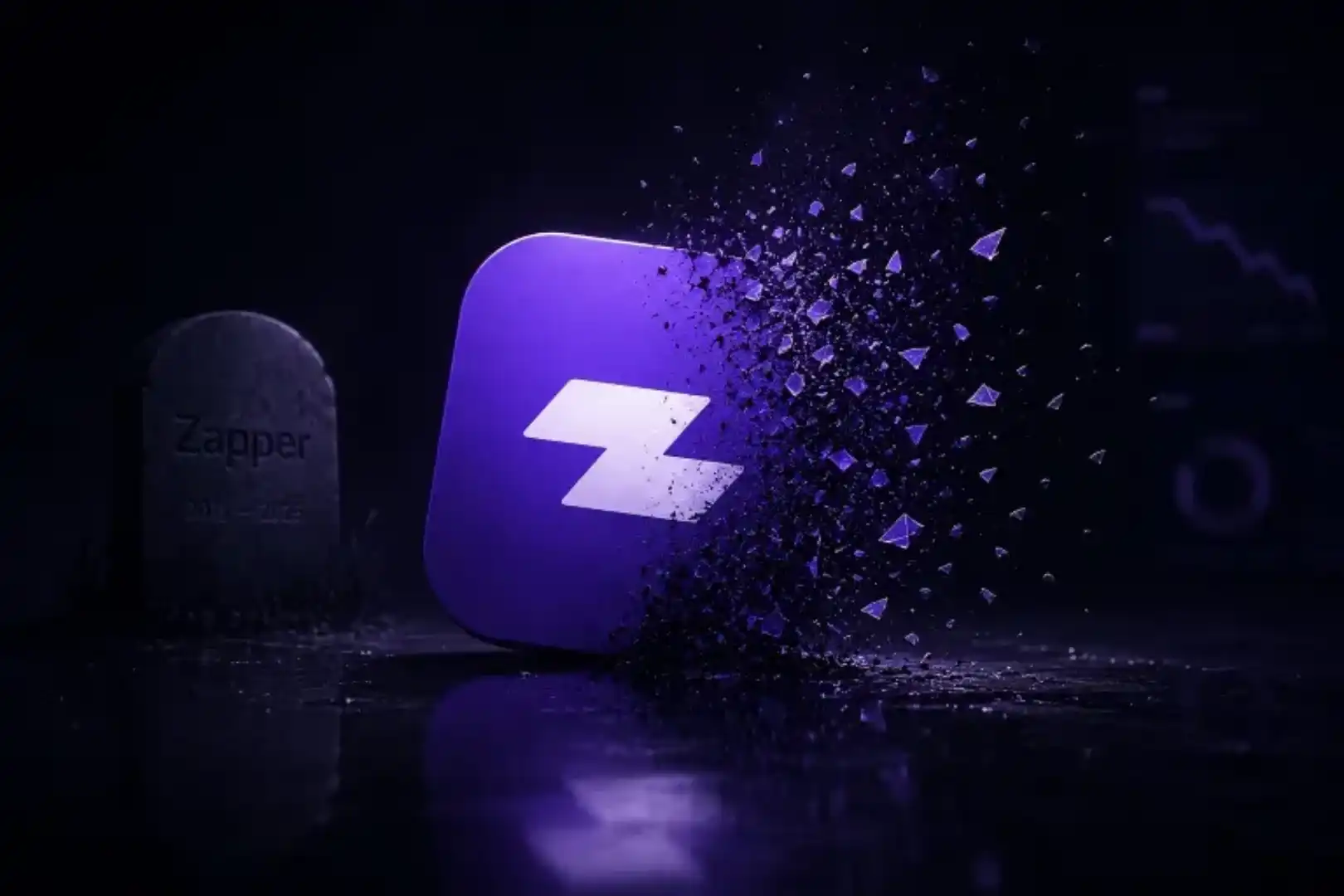
From 2 Million Monthly Active Users to Zero: Zapper's Demise in the "Maturation" of DeFi

From 2M MAU to Zero: The Demise of Zapper in a Maturing DeFi Landscape On July 8, 2026, Zapper co-founder Seb Audet announced the platform's full shutdown. Once a DeFi star with 2 million monthly active users, $13B in processed transactions, and $16.5M in funding, Zapper's journey ends. Born in 2020 from the merger of DeFiZap and DeFiSnap, Zapper rode the "DeFi Summer" wave. It became essential for users to track complex, multi-protocol yield farming positions across chains. At its peak, it supported 14 chains, 450+ protocols, and 7000+ tokens, with its signature "Zap" feature simplifying multi-step DeFi actions. However, sustainable revenue never materialized. Its primary model—taking small fees from DEX aggregation—faced fierce competition and squeezed margins. Meanwhile, maintaining its extensive, real-time data indexing system was costly. Crucially, the DeFi ecosystem matured, with activity and liquidity concentrating in fewer top protocols. The core demand for a complex, multi-protocol dashboard waned as user behavior simplified. Zapper attempted multiple pivots that failed to gain traction: an NFT-based points system (2021), a social app called Chainchat (2023), and plans for a ZAP token and open protocol (2024). These efforts reflected a persistent "blockchain-native" mindset focused on creating new C端 (consumer) needs rather than addressing existing pain points or bolstering its revenue-generating products. The article contrasts Zapper with DeBank, which successfully narrowed its asset-tracking focus while developing Rabby Wallet—a revenue-stabilizing, competitive product. Zapper's story serves as a cautionary tale for tooling projects: over-immersion in a purist vision, coupled with an inability to adapt business models to market shifts—like the consolidation of DeFi activity—can be fatal, even for once-dominant platforms.

marsbit07/10 03:50

From 2 Million Monthly Active Users to Zero: Zapper's Demise in the "Maturation" of DeFi

marsbit07/10 03:50

活动图片