# Deflation Articoli collegati

Il Centro Notizie HTX fornisce gli articoli più recenti e le analisi più approfondite su "Deflation", coprendo tendenze di mercato, aggiornamenti sui progetti, sviluppi tecnologici e politiche normative nel settore crypto.

JustLend DAO's Second JST Buyback and Burn: Cumulative 10.96% of Total Supply Destroyed, Accelerating Entry into a New Era of Value Growth

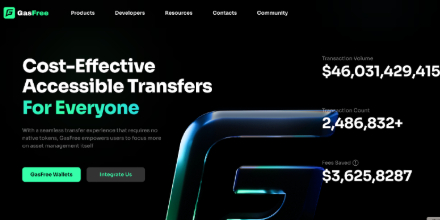
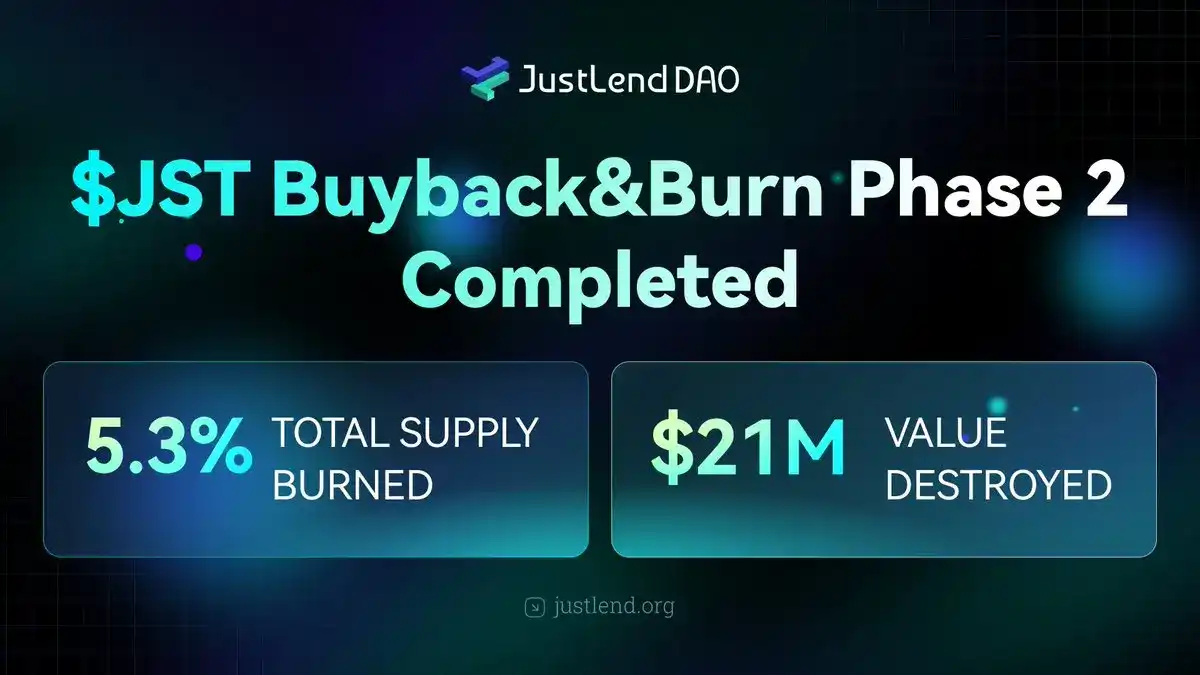
JustLend DAO has executed its second major JST token buyback and burn, permanently removing 525 million JST (5.3% of total supply) from circulation. This brings the cumulative burned amount to over 1.08 billion JST, representing 10.96% of the total supply, significantly accelerating JST’s deflationary trajectory. The burn was funded by $10.19 million from Q4 2025 net profits and $10.34 million from accumulated reserve earnings, demonstrating the protocol’s strong financial health and sustainable revenue model. Key drivers include JustLend’s TVL surpassing $7.08 billion, robust growth in sTRX staking (over 9.3 billion TRX staked), and widespread adoption of GasFree smart wallets, which have facilitated over $46 billion in transactions and saved users $36.25 million in fees. Additionally, USDD’s multi-chain ecosystem reached a milestone with TVL exceeding $1 billion, further supporting JST’s value accrual mechanism. This burn reinforces JST’s transition from a governance token to a yield-backed asset tied to ecosystem cash flow. Market response has been positive, with JST’s market cap breaking $400 million and trading volume rising 21.92% amid a 10.82% monthly price increase. The recurring burn mechanism establishes a deflationary model that enhances scarcity, governance weight per token, and long-term value alignment with holders, setting a new standard for sustainable tokenomics in DeFi.

marsbit21 h fa

JustLend DAO's Second JST Buyback and Burn: Cumulative 10.96% of Total Supply Destroyed, Accelerating Entry into a New Era of Value Growth

marsbit21 h fa

JST Embarks on Its Second Buyback and Burn: Cumulative 10.96% of Total Supply Destroyed, Accelerating Entry into a New Era of Value Growth

JST, the token of the JUST ecosystem, has completed its second major buyback and burn event on January 15, 2026, permanently removing 525 million JST (5.3% of total supply) worth over $21 million. Combined with the first burn, a total of 10.96% of JST's supply has been destroyed, accelerating its deflationary trajectory and reinforcing its value proposition. The buyback was funded by $10.19 million from JustLend DAO's Q4 2025 net profits and $10.34 million from accumulated reserve earnings, demonstrating the ecosystem's strong profitability and financial health. Key drivers include JustLend DAO's robust performance, with Total Value Locked (TVL) exceeding $7.08 billion, innovative products like sTRX (with over 9.3 billion TRX staked), and the widely adopted GasFree smart wallet, which has facilitated over $46 billion in transactions and saved users $36.25 million in fees. Additionally, growth from the USDD decentralized stablecoin ecosystem, which recently surpassed $1 billion in TVL, contributed significant incremental revenue. This burn signifies a fundamental shift for JST from a utility governance token to a yield-backed asset, directly tethering its value to the ecosystem's cash flow. The reduced supply increases scarcity, enhances per-token governance power for holders, and establishes a sustainable, transparent deflation model for DeFi. With a market cap surpassing $400 million and growing trading volume, JST is positioned for continued value appreciation driven by real yield and strategic tokenomics.

marsbitIeri 01:09

JST Embarks on Its Second Buyback and Burn: Cumulative 10.96% of Total Supply Destroyed, Accelerating Entry into a New Era of Value Growth

marsbitIeri 01:09

After the $250 Million Acquisition, Polygon's Long-Term Strategy Emerges

Polygon Labs has announced the acquisition of crypto startups Coinme and Sequence for a total of over $250 million. The deals are part of Polygon's strategic push into the stablecoin sector and broader financial infrastructure. Coinme, a US-based financial services company holding multiple state money transmitter licenses, will provide crucial regulatory compliance for Polygon to enter the US market. It will continue operating its existing crypto exchange, wallet, and service offerings. Sequence, a wallet and developer infrastructure provider, is intended to bolster the user-facing entry point for Polygon's ecosystem. These acquisitions represent a clear "upstream and downstream" strategy: securing regulatory pathways on one end and user infrastructure on the other. This aggressive, counter-cyclical move aims to transition Polygon from a crypto infrastructure project into a regulated financial infrastructure provider amid a tightening regulatory environment. Despite a broader market downturn, Polygon has shown resilience in on-chain revenue, recently ranking seventh among blockchains. A significant short-term driver of this growth is Polymarket, a prediction market platform whose high transaction volume has substantially increased network fees. This activity has accelerated the burn of POL tokens, creating a deflationary effect that currently outpaces staking rewards. In summary, while short-term fee growth is largely fueled by Polymarket, Polygon's long-term strategy is focused on building a compliant framework for stablecoins and real-world financial applications, positioning itself for the next phase of competition.

Odaily星球日报2 giorni fa 12:47

After the $250 Million Acquisition, Polygon's Long-Term Strategy Emerges

Odaily星球日报2 giorni fa 12:47

Has the Era of Project Buyback Bonuses Really Come to an End?

"Project Buybacks: The End of an Era?" In traditional finance, stock buybacks are often seen as a confidence booster. However, this strategy has largely failed to produce positive results in the Web3 space. Recently, Jupiter co-founder SIONG proposed halting $JUP's buyback program after the project spent over $70 million on repurchases with little positive impact on the token price. Similarly, Helium's founder Amir Haleem announced an end to their buyback, calling it "throwing money into a black hole." Data from 2025 shows a collective downturn for major projects that executed buybacks. Despite Hyperliquid spending $716 million and others like Pump.fun, LayerZero, Raydium, and Sky also making significant investments, most tokens continued to decline in value, raising questions about the efficacy of buybacks. The debate highlights a split in perspectives: some founders advocate reallocating funds towards user acquisition and product development to strengthen fundamentals. Others, like DeFi OG CM, argue that buybacks are inherently beneficial by reducing circulating supply, though they don't guarantee short-term price increases. Critics, including Helius CEO Mert Mumtaz, view buybacks as a pessimistic mechanism, signaling a lack of better growth opportunities. Former Aave executive Ajit Tripathi called the buyback narrative "the most value-destructive play after memecoins." Alternative strategies are emerging. Selini Capital's Jordi Alexander emphasizes the importance of execution timing, suggesting dynamic buybacks based on price-to-earnings ratios rather than repurchasing at inflated valuations. Solana's Anatoly favors long-term capital accumulation through staking mechanisms to reward long-term holders and dilute short-term speculators. The consensus is evolving: buybacks alone are not a solution. Effective token value management requires strategic financial planning—buying low, reserving capital during high valuations—and, crucially, building fundamental product value and user demand to sustain long-term growth. Without solid fundamentals, buybacks merely become an exit liquidity for short-term traders.

marsbit01/09 12:07

Has the Era of Project Buyback Bonuses Really Come to an End?

marsbit01/09 12:07

Ethereum Overlooked by Wall Street

Ethereum experienced a significant "fundamental vs. price divergence" in 2025. Despite achieving major technical upgrades like Pectra and Fusaka, which enhanced scalability, and seeing explosive Layer 2 growth with Base chain's success, ETH's price dropped nearly 40% from its all-time high of $4900 to around $2900. A key reason was the Dencun upgrade (EIP-4844), which drastically reduced L2 transaction costs but collapsed fee revenue and ETH burning. This ended Ethereum's deflationary "ultrasound money" narrative, turning it into a mildly inflationary asset. While L2s like Base generated substantial revenue, they were seen as both a threat to L1 value capture and a source of long-term monetary premium for ETH. Ethereum faced intense competition, losing ground in areas like PayFi and DePIN to Solana, but maintained dominance in RWA (e.g., BlackRock's $2B BUIDL fund) and stablecoins. Wall Street remained cautious, with ETH ETF inflows ($9.8B) lagging behind Bitcoin's ($21.8B) due to the exclusion of staking rewards, making it less attractive as a yield-bearing asset. Potential catalysts for a turnaround include: the approval of staking-enabled ETFs, RWA expansion, a future surge in Blob demand, improved L2 interoperability, and upcoming upgrades like Glamsterdam and Verkle Trees aimed at enhancing scalability and decentralization. Ethereum is undergoing a painful transition from a retail-friendly platform to global financial infrastructure, sacrificing short-term gains for long-term, institutional-grade scalability and security.

marsbit01/02 08:28

Ethereum Overlooked by Wall Street

marsbit01/02 08:28

Luke Gromen: Why I Sold Most of My Bitcoin by the End of 2025

Luke Gromen, a long-term Bitcoin and gold bull, sold the majority of his Bitcoin holdings in late November 2025. He clarifies that this was not a full exit but a strategic reduction based on a shift in his macro outlook. Gromen remains a long-term Bitcoin supporter but now sees it behaving like a high-beta tech stock during deflationary periods—not as a neutral reserve asset as he once expected. He argues that in a highly leveraged global system, Bitcoin acts as the "equity layer" of the capital structure, making it highly vulnerable during liquidity tightening. A key reason for his caution is the rise of AI and robotics, which he believes are driving an exponential, technology-driven deflation. This deflation is structurally different—it’s efficiency-led, fast-spreading, and damaging to employment. In such an environment, he argues, anything short of "nuclear-level money printing" effectively acts as monetary tightening, and risk assets like Bitcoin suffer first. He also emphasizes a broader macro shift: the world is moving from a "finance-first" era to one where "realpolitik" returns—geopolitics, industrial capacity, and supply chain security are becoming hard constraints. This new world is less stable, less friendly to financial assets, and more volatile. Despite reducing Bitcoin exposure, Gromen remains bullish on silver due to strong industrial demand and inelastic supply. He expects that a future crisis will eventually force massive monetary intervention, but until then, he prefers to step back, preserve capital, and re-enter when the macro landscape becomes clearer.

marsbit12/27 16:23

Luke Gromen: Why I Sold Most of My Bitcoin by the End of 2025

marsbit12/27 16:23

Rolling the Snowball in a Cold Market: How a Meme Coin Achieved 20x in 2 Days with an Automated Market-Making Mechanism?

**Summary: Snowball Meme Coin’s 20x Surge in 2 Days via Automated Market-Making Mechanism Amid a sluggish crypto market, the Meme token Snowball, launched on pump.fun on December 18, surged 20 times in value within two days, reaching a $10 million market cap—a rare success in the current bearish environment. Its core innovation lies in an automated market-making mechanism designed to create a "snowball effect." Typically, pump.fun tokens allow creators to collect a fee (0.5%–1%) from each transaction, often leading to devs cashing out and abandoning projects. Snowball redirects 100% of this creator fee to an on-chain market-making bot instead. This bot periodically: 1. Uses accumulated funds to buy back tokens, creating buy pressure. 2. Adds purchased tokens and corresponding SOL to the liquidity pool, improving depth. 3. Burns 0.1% of tokens per operation, inducing deflation. The fee rate fluctuates (0.05%–0.95%) based on market cap: higher fees at lower caps to accelerate fund accumulation, lower fees at higher caps to reduce transaction friction. The idea is that each trade fuels buy pressure and liquidity, not dev profits, theoretically creating a self-sustaining cycle: trading generates fees → fees fund buybacks → buybacks boost price → higher price attracts more trading. On-chain data shows 7,270 holders, with top 10 addresses holding ~20% of supply—relatively distributed. Trading volume reached $11 million in 24 hours, with buys slightly outpacing sells. Bybit Alpha listed the token within 96 hours of launch, signaling short-term hype. However, the mechanism relies on sustained trading volume to work. In a cold market with low activity, if new buys decline, the snowball effect could reverse. While it mitigates dev rug-pull risk, it doesn’t eliminate other Meme coin dangers like dumping, illiquidity, or narrative decay. Similar projects like FIREBALL are emerging, indicating growing interest in "mechanism-driven Memes," but past examples (e.g., OlympusDAO, Safemoon) show such models can collapse without continuous external inflows. In short: Snowball is a Meme first, an experiment second. The mechanism adds structural safety but doesn’t guarantee profits.

比推12/22 14:10
Rolling the Snowball in a Cold Market: How a Meme Coin Achieved 20x in 2 Days with an Automated Market-Making Mechanism?

比推12/22 14:10

活动图片