# Composability Articoli collegati

Il Centro Notizie HTX fornisce gli articoli più recenti e le analisi più approfondite su "Composability", coprendo tendenze di mercato, aggiornamenti sui progetti, sviluppi tecnologici e politiche normative nel settore crypto.

SEC Pushes for All-Day Trading in US Stocks, Will RWA's Biggest Advantage Disappear?

**Summary: SEC Advances Towards 24-Hour U.S. Stock Trading, Impact on Crypto RWA Tokens** The U.S. Securities and Exchange Commission (SEC) has announced a public roundtable for September 17th to discuss preparations for moving the U.S. equity markets towards 24-hour trading. This signals a potential substantive shift from the traditional 9:30 AM to 4:00 PM ET trading day to a near 24/5 model (23 hours a day, 5 days a week) by late 2026 or early 2027, pending regulatory approval and infrastructure alignment. Key exchanges like NYSE Arca and Nasdaq are planning extended hours, and critical clearing infrastructure from DTCC already supports 24/5 operations. For the crypto industry, particularly the Real World Asset (RWA) tokenization sector, this development directly challenges a core narrative: that tokenized assets offer superior, round-the-clock trading access compared to traditional markets. As U.S. stocks become tradable for most of the global day, the simple advantage of "24/7 availability" for tokenized equities diminishes. This may pressure RWA platforms that relied heavily on this differentiation. However, the shift also presents opportunities for deeper integration. True 7x24 trading including weekends, near-instant atomic settlement on-chain, and programmable features like automated dividends remain inherent blockchain advantages. The regulatory environment is evolving in parallel, with the SEC including tokenized securities in its agenda, potentially creating clearer pathways for compliant RWA markets. Platforms are already innovating, such as Backpack offering 24/7 access to real stocks for international users and Ondo's tokenized products linked to traditional liquidity. Ultimately, the competitive edge for RWA is shifting from trading hours to other value propositions: settlement finality, global accessibility, DeFi composability, and interoperability with traditional finance. Tokenization of private credit, real estate, and other alternative assets may benefit from increased acceptance of the model. The key challenge will be managing risks like low overnight liquidity and navigating an evolving regulatory landscape that may favor compliant, asset-backed tokens over synthetic derivatives.

Foresight NewsIeri 12:58

SEC Pushes for All-Day Trading in US Stocks, Will RWA's Biggest Advantage Disappear?

Foresight NewsIeri 12:58

Let Funds Flow at Internet Speed

Tokenization bridges the distinct worlds of always-on, permissionless DeFi and traditional funds with scheduled, permissioned settlements, unlocking significant value for those who can manage this integration. The tokenized Real World Asset (RWA) market exceeds $33 billion, with U.S. Treasuries comprising nearly half. It offers corporate treasurers options from low-risk, liquid Treasury funds to higher-yield, programmable investments, all benefiting from the same audit standards as traditional bonds. The core advantage is *composability*: tokenized funds can combine yield, liquidity, and transferability simultaneously, unlike traditional finance which forces a trade-off. However, achieving this requires sophisticated coordination. Tokenized funds remain legally bound to daily net asset value (NAV) updates, KYC-verified holder lists, and redemption cut-offs based on traditional settlement infrastructure (e.g., 5 PM ET). Key challenges in this hybrid model are: 1) **Price**: Determining token value between NAV updates to prevent manipulation; 2) **Compliance**: Embedding KYC/whitelisting (e.g., within a vault) to allow free circulation of receipt tokens in DeFi; and 3) **Cross-chain Consistency**: Maintaining a single source of truth for ownership and value across multiple blockchains. Projects like Centrifuge (with its deRWA framework and V3 architecture) and LayerZero address these by using a hub-and-spoke model. A central "hub" chain manages NAV, accounting, and compliance, while a messaging layer (LayerZero) synchronizes this data with "spoke" chains where tokens are used, enabling DeFi composability. This coordination layer, which handles in-transit asset accounting and prevents redemption gateway conflicts, becomes a critical and valuable piece of infrastructure—akin to SWIFT or Visa in traditional finance. For institutions, effective tokenization enables strategies like rehypothecation, where tokenized Treasury funds are used as collateral to borrow stablecoins for reinvestment, amplifying yield. However, failures in price synchronization, redemption limits, or cross-chain messaging pose risks that must be meticulously managed to build institutional trust. Ultimately, the goal is to break the old rules that force a choice between yield, liquidity, and transferability. If tokenization can make capital work simultaneously in multiple ways without compromising security, it will attract the attention of institutions managing billions in idle cash. The entities that successfully orchestrate this coordination between traditional finance timelines and blockchain speed are positioning themselves for a central role in the future capital markets.

链捕手07/13 14:29

Let Funds Flow at Internet Speed

链捕手07/13 14:29

Bridging Traditional Funds and DeFi: Who Will Capture the Next Decade's RWA Dividends?

Bridging Traditional Funds and DeFi: Who Will Capture the RWA Decade's Value? Tokenization of real-world assets (RWA) is merging the 24/7, permissionless world of DeFi with the time-bound, regulated world of traditional finance. While the complexity is immense, the infrastructure layer enabling this fusion holds significant value. The total value of on-chain tokenized real-world assets now exceeds $33 billion. While tokenized U.S. Treasuries dominate, their share has fallen from 55% to under 45% in a year as other assets like institutional and private credit grow. The key differentiator for on-chain assets is *composability*, allowing capital to be recycled across multiple yield-generating strategies simultaneously. However, tokenized funds remain regulated products with daily NAV updates, KYC requirements, and redemption windows. Bridging these to DeFi requires solving core conflicts: pricing assets between NAV updates, enforcing compliance without stifling DeFi activity, and maintaining accurate accounting during cross-chain transfers. Solutions like the Centrifuge V3 architecture, in collaboration with LayerZero, propose a hub-and-spoke model. A single authoritative hub chain manages NAV, compliance, and accounting, while LayerZero's messaging layer syncs this data to spokechains where tokens can be freely composed in DeFi. This creates a high-barrier, essential middleware layer. The major incentive for institutions is the potential for recursive yield strategies—for example, depositing into a tokenized Treasury fund, borrowing stablecoins against it, and redeploying those funds into another yield-bearing asset, amplifying returns. Yet, risks remain: mismatches between on-chain instant redemptions and off-chain fund limits (as seen in recent private credit fund runs), pricing arbitrage due to NAV lags, and cross-chain settlement failures. Infrastructure must solve these while maintaining regulatory compliance. Just as SWIFT and Visa captured immense value as financial plumbing, the entities that build the robust middleware connecting traditional finance and DeFi are positioned to capture the next decade's value in the RWA space.

Foresight News07/08 08:06

Bridging Traditional Funds and DeFi: Who Will Capture the Next Decade's RWA Dividends?

Foresight News07/08 08:06

Aave V4 to Move Wall Street Securities Financing On-Chain: Composability Layer Transforms from Risk Point to Backbone

Aave V4 aims to bring Wall Street securities financing on-chain, targeting the massive traditional markets for repo, securities lending, and margin financing. It proposes three core products: securities-backed loans, atomic repo settlements, and securities lending. This shifts the narrative from "RWA as collateral" to building foundational "on-chain securities finance infrastructure." The key innovation lies in its third-layer approach: composability. V4 doesn't alter underlying asset credit but systematically connects all on-chain assets to leverage and liquidation mechanisms, making composability the system's backbone instead of just a risk point. Aave's dominant market share and its relatively prudent engineering for its Horizon institutional RWA lending market support this ambition. However, a critical design choice introduces a new risk dimension. The "centralized liquidity Hub + multiple Spoke" architecture and Horizon's shared liquidity pools prioritize capital efficiency by allowing new assets instant access to deep liquidity. The trade-off is the loss of risk isolation: a problem with one collateral type in a stress period can draw from the same stablecoin pool backing all others, spreading risk across the entire market. This risk is not theoretical, as demonstrated by a 2026 incident where compromised collateral from a bridge attack created bad debt on Aave. As the system scales—with Horizon targeting over $1B—it remains untested in a genuine credit or liquidity crisis. The first significant bad debt or forced liquidation in RWA markets will likely be triggered by a price/net asset value dislocation of a tokenized asset during stress, not by an underlying default. The implications are clear: institutions providing collateral must account for potential NAV-price gaps; liquidity providers must understand they are exposed to all collateral in a shared pool; and protocols must explicitly choose between risk isolation and capital efficiency. The market still focuses primarily on credit risk, while tokenization continues to concentrate new risks in the liquidity and composability layers.

marsbit07/03 06:03

Aave V4 to Move Wall Street Securities Financing On-Chain: Composability Layer Transforms from Risk Point to Backbone

marsbit07/03 06:03

Tokens as Assets: Which Type of Tokenized Stock Is Right for You?

**Tokenized Stocks: Three Models, Which Suits You?** For investors outside the US, accessing stocks like SpaceX or NVIDIA is often difficult, requiring compliant brokers and cross-border transfers. Blockchain offers an alternative through tokenized stocks, but this term encompasses three distinct models with vastly different ownership, voting rights, and economic benefits. The first model offers full, direct ownership. Platforms like Superstate register shares directly on-chain (e.g., Solana), with holders listed on the official shareholder registry, granting full voting rights, dividends, and legal status. The second model sacrifices direct ownership for DeFi composability. Issuers like Backed and Ondo use offshore Special Purpose Vehicles (SPVs) to issue tokens 1:1 backed by real shares. Holders gain price exposure and automated dividend accruals (via token balance increases), and tokens can be used as collateral in DeFi protocols. However, this introduces SPV counterparty risk, as seen in the PreStocks collapse. The third model abandons ownership entirely for pure price speculation. Perpetual futures platforms like TradeXYZ (on Hyperliquid) and Ostium create synthetic markets using price oracles and funding rates to track stock prices. They require no underlying shares, enabling rapid listing (e.g., SpaceX pre-IPO) and high leverage, which explains their trading volumes being 4-5x higher than tokenized spot markets. The core insight is that tokens derive value without needing to replicate full stock ownership. Most retail investors rarely exercise voting rights. These three models cater to different needs: direct ownership for institutions, DeFi-composable tokens for on-chain users, and perpetuals for leveraged, speculative traders. Tokenization is not a mere stock substitute but a new class of layered financial instruments.

Foresight News06/29 09:07

Tokens as Assets: Which Type of Tokenized Stock Is Right for You?

Foresight News06/29 09:07

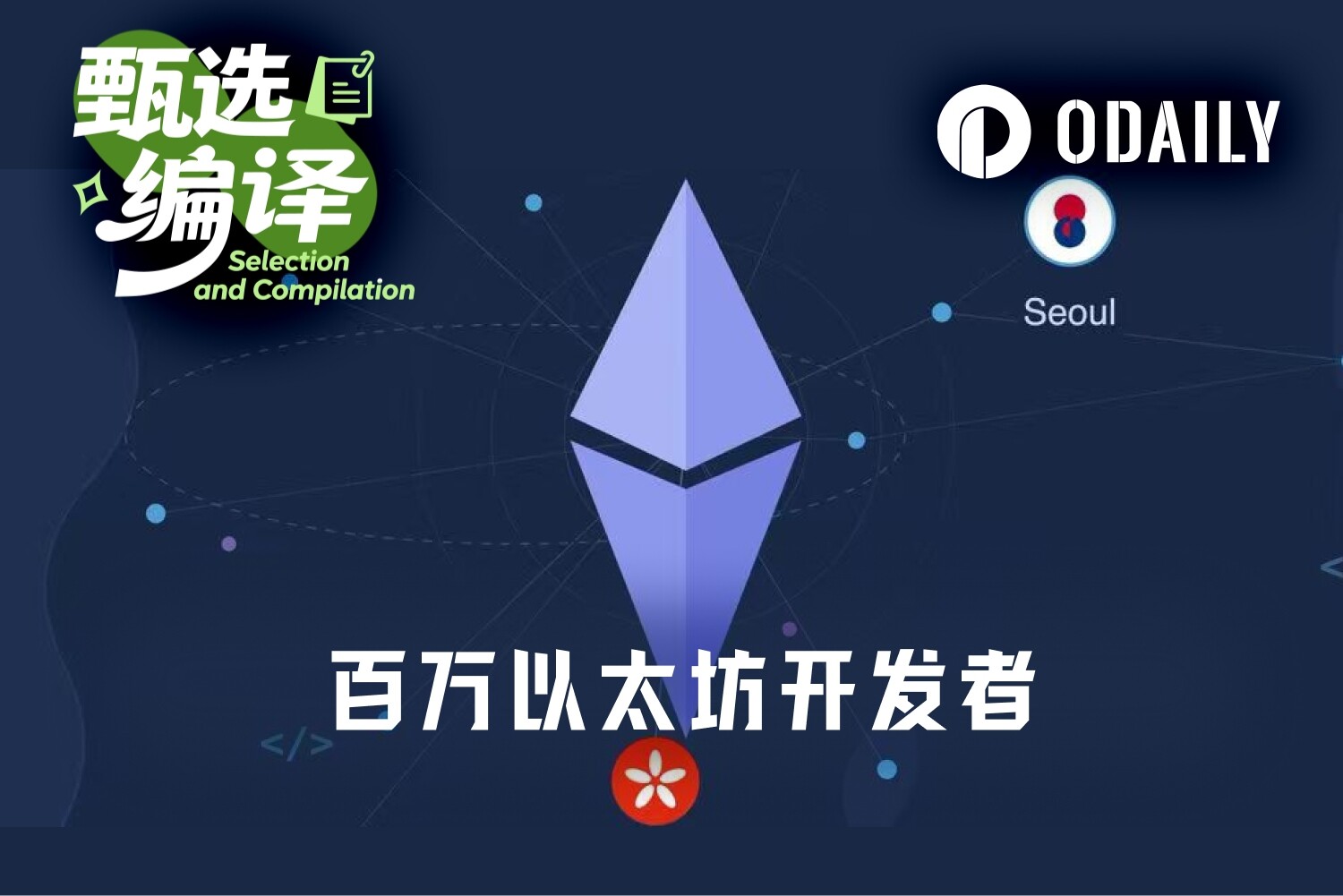
Sharplink CEO: One Million Ethereum Developers, Who Can Compete?

Etherean Ecosystem: One Million Developers and a Formidable Moat The Ethereum network has surpassed a significant milestone: over one million unique lifetime developers, with approximately 232,000 active in the past year. This vast and growing talent pool is Ethereum's core advantage, far more critical than transient metrics like speed or transaction fees. The central question is not which blockchain is fastest, but where the best builders choose to build long-term. Ethereum's answer lies in a decade-long accumulation of infrastructure, standards, tools, liquidity, and collaborative culture that is exceptionally difficult to replicate. It has become the default operating system for programmable finance. This massive developer base is actively working on complex, high-risk challenges that deepen Ethereum's strategic moat: * **Glamsterdam Upgrade (2026):** Focused on core protocol scalability (ePBS, parallel execution) while preserving core values like credible neutrality. * **Synchronous Composability:** Aims to make numerous Rollups interoperate like a single chain, directly addressing fragmentation concerns. * **Quantum Resistance:** Ethereum leads mainstream ecosystems in coordinated preparation for post-quantum cryptography, with a targeted migration plan around 2029. This developer advantage is self-reinforcing, fueled by: * **Deep Composability:** Applications interact like interoperable financial Lego bricks via shared standards (e.g., EVM, Solidity). * **Credible Neutrality:** Secured by over 900,000 validators, making it trusted by major institutions. * **Modularity:** Rollups (Base, Arbitrium, etc.) expand, rather than fracture, the ecosystem into a tightly connected modular internet economy. * **Culture:** Attracts top-tier researchers and standard-setters who guide the entire industry. In essence, while other chains generate activity, Ethereum is consolidating as the trusted, long-term coordination layer for internet-native finance. Its future is being built now by the architects of the next-generation financial infrastructure.

Odaily星球日报06/16 08:21

Sharplink CEO: One Million Ethereum Developers, Who Can Compete?

Odaily星球日报06/16 08:21

Ethereum Reaches the Milestone of One Million Developers, Sharplink CEO Delves Deep into Ethereum's Future Possibilities

Ethereum Surpasses One Million Developers Milestone: A Look at Its Unshakeable Dominance and Future Joseph Chalom, CEO of Sharplink, reflects on his recent Asia trip where he engaged deeply with Ethereum developers and ecosystem leaders. The most striking takeaway was not just the industry's vibrancy, but the rigorous, long-term vision of local builders. This context brings to life a pivotal statistic: Ethereum has now surpassed one million cumulative developers (1,012,824), with approximately 232,000 remaining active in the past year—a talent pool unmatched by any other crypto ecosystem. The critical question isn't which blockchain is fastest, but where top developers choose to build long-term. Ethereum's answer is unequivocal. Its decade-long lead stems from a unique convergence of technology, institutional culture, economic systems, and composability, cementing its role as the foundational operating system for programmable finance. This massive developer base is tackling the industry's hardest problems, continuously strengthening Ethereum's moat. Key initiatives include: * **The Glamsterdam Upgrade (planned 2026):** Introducing ePBS and Block-level Access Lists for parallel execution and higher throughput while preserving core values like credible neutrality and fair MEV distribution. * **Synchronous Composability:** Projects are working to enable atomic transactions across dozens of Rollups, making them function as one unified chain and eliminating ecosystem fragmentation. * **Post-Quantum Security:** Ethereum is far ahead in preparing for quantum computing threats, with a dedicated foundation working group and testnets targeting a full migration by ~2029—a crucial factor for institutional adoption. Beyond developers, Ethereum's core network effects are its unparalleled composability and unified standards (like EVM and Solidity), which create a powerful flywheel: more developers → better tools → greater liquidity → more institutional participation. Its other decisive advantages include credible neutrality (over 900k validators), a secure modular architecture with interconnected Rollups, and a deeply entrenched culture shaped by top-tier researchers. Ultimately, there's a vast difference between generating short-term activity and becoming the trusted, long-term coordination layer for global native finance. Major institutions prioritize security, trust, and liquidity—areas where Ethereum holds dominant mindshare. The industry's trajectory shows resources consolidating around unified standards, deep liquidity, and developer consensus. After meeting the builders in Seoul and Hong Kong, Chalom is more convinced than ever: Ethereum's unshakeable future is being built right now.

Foresight News06/16 08:10

Ethereum Reaches the Milestone of One Million Developers, Sharplink CEO Delves Deep into Ethereum's Future Possibilities

Foresight News06/16 08:10

活动图片