SUBBD Token’s Massive Projected Impact on the Content Creation Market in 2026

bitcoinistXuất bản vào 2026-02-10Cập nhật gần nhất vào 2026-02-10

Tóm tắt

The SUBBD Token ($SUBBD) is projected to significantly impact the $191 billion content creation market by 2026 by addressing inefficiencies in the current creator economy. It aims to replace high-fee centralized platforms with a decentralized, AI-integrated Web3 alternative. The platform consolidates tools like AI Personal Assistants, Voice Cloning, and automated interactions into a single interface, solving tool fragmentation issues. It enables multiple monetization methods, including PPV, NFT sales, and AI-exclusive content, while allowing community-led governance through token-based voting. The presale has raised $1.47 million, with tokens priced at $0.057495. A fixed 20% APY staking reward in the first year incentivizes long-term holding and reduces sell pressure. By combining AI-driven automation with decentralized infrastructure, SUBBD Token positions itself as a comprehensive ecosystem for creators seeking sovereignty and reduced operational overhead.

Trusted Editorial content, reviewed by leading industry experts and seasoned editors. Ad Disclosure

Quick Facts:

  • ➡️ SUBBD Token targets the inefficiencies of the $191B creator economy, aiming to replace high-fee legacy platforms with a decentralized, AI-integrated alternative by 2026.
  • ➡️ The project consolidates essential tools, such as AI Personal Assistants, Voice Cloning, and automated interactions, into a single Web3 interface, solving the problem of tool fragmentation.
  • ➡️ With $1.47M raised and a current price of $0.057495, the project demonstrates significant early interest and financial backing.
  • ➡️ A fixed 20% APY staking reward for the first year creates a robust mechanism for reducing sell pressure while rewarding long-term ecosystem participants.

The digital economy is heading toward a singular, undeniable friction point: the unsustainable rent-seeking of centralized platforms.

As analysts forecast the state of the industry three years out, the consensus surrounding SUBBD Token’s massive projected impact on the content creation market in 2026 is rooted in a fundamental shift from aggregation to autonomy.

Right now, the creator economy is valued at roughly $191B, yet the infrastructure supporting it remains archaic, characterized by opaque algorithms and fee structures that strip creators of up to 70% of their earnings.

This structural inefficiency creates a vacuum for decentralized alternatives. In 2026, market intelligence suggests that Artificial Intelligence won’t merely be a tool for content generation but the primary interface for monetization and community management.

The divergence is clear. On one side, legacy platforms are increasing take rates to satisfy shareholders; on the other, Web3 protocols are using Generative AI to automate workflows and slash overhead.

This collision of AI ubiquity and decentralized finance (DeFi) sets the stage for specialized utility tokens to capture significant market share. Investors and creators aren’t looking for simple payment rails anymore; they want comprehensive ecosystems that solve the ‘fragmentation headache’ of managing subscriptions, AI tools, and payouts across disparate apps.

It’s within this high-stakes environment that SUBBD Token ($SUBBD) has emerged, positioning itself not just as a currency, but as the operational backbone for the next generation of digital interaction.

Read more about $SUBBD here.

Disrupting The $191B Economy Through AI-Driven Autonomy

The projected impact of SUBBD Token ($SUBBD) hinges on its ability to dismantle the current fee logic of the $85 billion content creation industry. Standard platforms operate as walled gardens. SUBBD flips the script, introducing a model where value accrues directly to the user through Ethereum-based EVM-compatible smart contracts.

This isn’t just about lower transaction costs; it’s about using proprietary AI to remove the administrative burden that currently stifles creator growth.

The platform’s technical architecture integrates an AI Personal Assistant and advanced Voice Cloning technology directly into the user experience. For a creator, this means the ability to deploy AI-driven influencers or automate fan interactions without relying on third-party software that demands additional subscriptions.
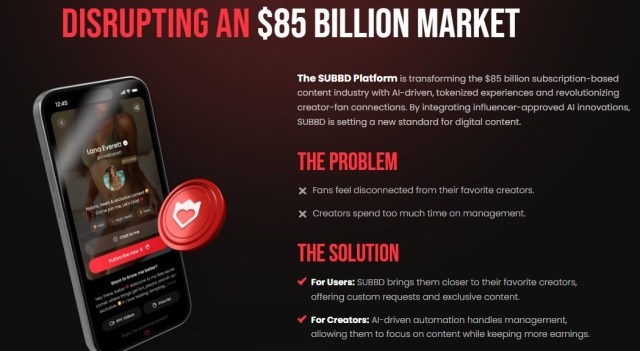
By consolidating these tools, chatbots, object recognition, and content generation, into a single Web3 environment, SUBBD addresses the fragmentation plaguing the sector.

Plus, the introduction of token-gated access fundamentally changes the relationship between creator and consumer. Instead of arbitrary bans or demonetization based on shifting corporate policies, governance is handled through token-based voting. This ensures that the community dictates feature rollouts and content themes.

The data points to a clear trend: creators are migrating toward platforms that offer sovereignty. SUBBD’s provision of multiple monetization routes, including PPV, NFT sales, and AI-exclusive content, suggests a strategic alignment with where the market is heading in 2026.

Explore the SUBBD Token presale here.

Presale Momentum And The Case For 20% APY Staking Rewards

While the technological utility provides the long-term thesis, the immediate market reaction is visible in the project’s capital accumulation.

According to official data, the SUBBD Token presale has already raised $1.47M, a figure that indicates strong early conviction from retail and sophisticated investors alike. With tokens currently priced at $0.057495, the market is pricing in the potential for this asset to bridge the gap between speculative crypto assets and tangible software-as-a-service (SaaS) utility.
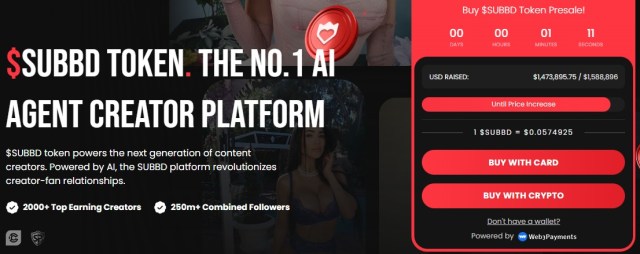
The tokenomics structure (often a weak point in new projects) looks designed to mitigate the volatility typically associated with early-stage utility tokens.

The protocol offers a fixed 20% APY for staking during the first year. This mechanism serves a dual purpose: it incentivizes long-term holding to reduce circulating supply pressure and aligns user interests with platform growth.

Beyond simple yield, staking unlocks specific platform benefits, such as XP multipliers and access to exclusive ‘HoneyHive’ content and behind-the-scenes drops.

For investors analyzing the 2026 horizon, the critical metric is user retention. The integration of financial incentives (staking) with product utility (AI tools) creates a ‘sticky’ ecosystem.

Unlike meme coins driven by ephemeral hype, SUBBD Token is leveraging its capital raise to build an infrastructure capable of handling high-throughput interactions between fans and AI-augmented creators. As the presale continues, the focus remains on how effectively this capital gets deployed to capture market share from legacy giants before the 2026 maturation point.

Buy $SUBBD here.

This article is for informational purposes only and does not constitute financial advice. Cryptocurrency investments, including presales and staking, carry inherent risks due to market volatility. Always conduct your own due diligence before participating in any token sale.

Editorial Process for bitcoinist is centered on delivering thoroughly researched, accurate, and unbiased content. We uphold strict sourcing standards, and each page undergoes diligent review by our team of top technology experts and seasoned editors. This process ensures the integrity, relevance, and value of our content for our readers.

patrubogdan

Follow

Full Profile

Related Posts

Government Shutdown Fears Trigger 2% Crypto Dip, But Bitcoin Hyper Remains Unshaken

Dogecoin Tries to Hold $0.09370 – Is 2026 the Doge Year or Will $MAXI Take Over?

US Debt Spiral Eyes $39T: Why Bitcoin Hyper ($HYPER) Is The Hedge to Watch

Crypto Exchange Backpack Targets Token Launch Soon, as BMIC Fires Up Quantum Defense

Ethereum Foundation Backs SEAL Initiative as LiquidChain L3 Protocol Gains Traction

Vitalik Buterin Outlines Ethereum’s AI Future, While SUBBD Token Targets the Creator Economy

Câu hỏi Liên quan

QWhat is the core problem SUBBD Token aims to solve in the $191B creator economy?

ASUBDD Token aims to solve the structural inefficiencies and high fees of centralized platforms, which can strip creators of up to 70% of their earnings, by providing a decentralized, AI-integrated alternative.

QWhat key AI technologies are integrated into the SUBBD platform to help creators?

AThe platform integrates an AI Personal Assistant, advanced Voice Cloning technology, chatbots, object recognition, and content generation tools into a single Web3 interface.

QHow much capital has the SUBBD Token presale raised and what is the current token price?

AThe SUBBD Token presale has raised $1.47 million, with tokens currently priced at $0.057495.

QWhat is the purpose of the fixed 20% APY staking reward in the SUBBD ecosystem?

AThe fixed 20% APY staking reward for the first year serves a dual purpose: it incentivizes long-term holding to reduce sell pressure and aligns user interests with platform growth by rewarding ecosystem participants.

QHow does SUBBD's token-gated access change the creator-consumer relationship?

AToken-gated access shifts governance to the community through token-based voting, preventing arbitrary bans or demonetization from centralized corporate policies and allowing the community to dictate feature rollouts and content themes.

Nội dung Liên quan

Matt Van: Tất cả các kỹ thuật Agent Engineering mà tôi biết

Bài viết của Matt Van Horn chia sẻ phương pháp làm việc với AI Agent (Agentic Engineering). Thay vì tự viết code, ông dùng AI như một đội thực thi: bắt đầu bằng lệnh `/ce-plan` để tạo kế hoạch `plan.md`, sau đó dùng `/ce-work` để thực hiện. Ông nhập liệu bằng giọng nói, mở nhiều phiên Claude và Codex song song, giao nhiệm vụ lập kế hoạch cho Claude và viết code cho Codex. Các công cụ chính bao gồm: **Compound Engineering** (tạo và chạy kế hoạch), **last30days** (nghiên cứu chủ đề), **Printing Press** (tạo CLI cho các tác vụ thực tế), và **Agent Cookie** (quản lý xác thực). Ông cũng kết nối AI với kho ghi chú cá nhân (như Bear) để tăng cường ngữ cảnh, sử dụng **cmux** để chạy nhiều tác vụ đồng thời, và cấu hình để bỏ qua các hộp thoại xác nhận nhằm tăng tốc độ. Phương pháp này chuyển trọng tâm của con người từ việc "tự tay thực hiện" sang "đưa ra định hướng, ràng buộc và phán đoán". Matt cảnh báo về nguy cơ "nghiện" xây dựng với AI và khuyên nên cân bằng, tập trung vào những thứ người khác thực sự cần. Bài viết được chính ông soạn thảo bằng cách ra lệnh bằng giọng nói cho Claude Code trong cmux.

marsbit1 giờ trước

Matt Van: Tất cả các kỹ thuật Agent Engineering mà tôi biết

marsbit1 giờ trước

Đừng chỉ chăm chú vào GPU, Intel tung ra đòn chí mạng, liệu có thể chấm dứt độc quyền điện toán của NVIDIA?

Trong hai năm qua, GPU gần như là trung tâm duy nhất của phần cứng AI, đẩy giá cổ phiếu NVIDIA lên cao. Tuy nhiên, tại COMPUTEX 2026, Intel đưa ra nhận định khác: giai đoạn tiếp theo của AI không thể chỉ nhìn vào GPU, mà trọng tâm là **Agentic AI (Trí tuệ thể tác nhân)**. Agentic AI thay đổi hoàn toàn cách vận hành: thay vì hỏi-đáp từng lượt, nó hoạt động trong luồng công việc thực tế, liên tục "suy nghĩ, lập kế hoạch, hành động, phản ánh". Điều này biến suy luận AI thành một hệ thống ra quyết định tự chủ, làm thay đổi căn bản cách bố trí sức mạnh tính toán trong trung tâm dữ liệu. Tỷ lệ CPU/GPU có thể chuyển từ 1:8 (trong đào tạo mô hình) xuống 1:1 hoặc thậm chí cần nhiều CPU hơn để điều phối công việc phức tạp, vì mức tiêu thụ Token của một tác nhân có thể tăng gấp 1000 lần so với suy luận thông thường. Để đáp ứng nhu cầu này, Intel ra mắt bộ xử lý Xeon 6+ (sản xuất trên tiến trình 18A), với tối đa 288 lõi hiệu suất cao và bộ nhớ đệm 576MB, nhắm đến điện toán đám mây gốc và tải Agentic AI, cung cấp hiệu suất ổn định và tiết kiệm năng lượng hơn. Bên cạnh đó, Intel cùng các đối tác công bố kiến trúc suy luận tách rời hoàn toàn mới, nơi CPU Xeon 6 phụ trách điều phối, SambaNova SN40L RDU xử lý giải mã và GPU NVIDIA Blackwell đảm nhiệm làm đầy trước, nhằm tối đa hóa hiệu quả bằng cách chạy từng giai đoạn trên phần cứng phù hợp nhất. Ở phía thiết bị đầu cuối, Intel trình diễn máy chủ lai kết hợp bộ xử lý Core Ultra thế hệ thứ 3 (cho AI cục bộ) với máy chủ đám mây Xeon 6+, cho phép phân bổ động tải công việc giữa thiết bị và đám mây, giảm chi phí và bảo vệ quyền riêng tư dữ liệu. Ngoài chip đa dụng, Intel cũng nhấn mạnh vào thị trường chip tùy chỉnh, hợp tác với các khách hành như Google (IPU) và Ericsson, đóng gói giải pháp toàn diện gồm chip, hệ thống, phần mềm và hợp tác ngành. Tóm lại, Intel định vị lại mình trong kỷ nguyên Agentic AI: CPU trở nên quan trọng cho điều phối, hệ thống suy luận cần kiến trúc dị thể, thiết bị biên và AI cục bộ cần chip tiết kiệm năng lượng, và khách hàng doanh nghiệp cần chip tùy chỉnh. Mặc dù NVIDIA và AMD vẫn là đối thủ cạnh tranh mạnh, Intel hướng tới việc trở nên "có mặt ở khắp mọi nơi" hơn bằng cách nắm bắt cơ hội tái phân công trong cơ sở hạ tầng AI.

marsbit1 giờ trước

Đừng chỉ chăm chú vào GPU, Intel tung ra đòn chí mạng, liệu có thể chấm dứt độc quyền điện toán của NVIDIA?

marsbit1 giờ trước

Cardano Hay Solana? Lựa Chọn Hàng Đầu Của Chuyên Gia Sau Khi ADA, SOL Giảm 10%

Thị trường tiền điện tử sụt giảm khi Bitcoin (BTC) tạm thời xuống dưới 67.000 USD, kéo theo Solana (SOL) và Cardano (ADA) mất giá khoảng 10%. Chuyên gia Anders Bylund so sánh hai nền tảng. Solana được thiết kế cho tốc độ cao và phí giao dịch rẻ, nhưng có lịch sử gặp sự cố ngừng hoạt động. Mặc dù mạng lưới đã ổn định hơn kể từ đầu năm 2024, bài viết cho rằng độ tin cậy lâu dài vẫn là một câu hỏi. Ngược lại, Cardano theo đuổi triết lý chú trọng nghiên cứu học thuật và xác minh chính thức, nhằm tạo ra một blockchain ổn định hơn, dù có thể phát triển tính năng mới chậm hơn. Về hoạt động thực tế, Solana thể hiện rõ hơn với khối lượng giao dịch trên các sàn phi tập trung (DEX) cao gấp hơn 400 lần so với Cardano. Kết luận, chuyên gia cho rằng Solana là lựa chọn mạnh hơn hiện tại, do lợi thế về mức độ sử dụng trong thực tế. Tuy nhiên, cả hai đều là khoản đầu tư rủi ro. Nếu Bitcoin giảm 30%, các altcoin như SOL và ADA có thể giảm từ 50-70%. Thời điểm bài viết, ADA giao dịch quanh 0,21 USD và SOL ở 76 USD, cả hai đều giảm hơn 5% trong 24h. ADA hiện thấp hơn 92% so với mức đỉnh mọi thời đại, trong khi SOL thấp hơn 73%.

bitcoinist2 giờ trước

Cardano Hay Solana? Lựa Chọn Hàng Đầu Của Chuyên Gia Sau Khi ADA, SOL Giảm 10%

bitcoinist2 giờ trước

Morningstar định giá SpaceX chỉ 7800 tỷ USD, chưa bằng một nửa mục tiêu IPO, "IPO lớn nhất lịch sử" định giá quá cao?

SpaceX đang chuẩn bị cho đợt IPO có thể là lớn nhất lịch sử với mục tiêu định giá 1.750 tỷ USD. Tuy nhiên, Morningstar đưa ra định giá hợp lý chỉ 780 tỷ USD, tương đương 45% mục tiêu, và nhận định công ty bị định giá quá cao. Theo phân tích, Morningstar định giá riêng lõi kinh doanh phóng tên lửa và Starlink khoảng 611 tỷ USD. Phần định giá 170 tỷ USD còn lại dành cho hoạt động AI (bao gồm xAI và nền tảng X), được tính trọng số xác suất với kịch bản bi quan chiếm ưu thế. Starlink là mảng duy nhất có lãi với doanh thu 2025 đạt 11,3 tỷ USD. Dù đánh giá cao, Morningstar thừa nhận giá cổ phiếu SpaceX có thể tăng ngắn hạn sau IPO nhờ lượng cổ phiếu lưu hành thấp (chỉ ~3%), nhu cầu cao với cổ phiếu hạ tầng AI và cơ chế đưa nhanh vào chỉ số Nasdaq 100 sau 15 phiên giao dịch. Tuy nhiên, áp lực bán từ cơ cấu giải ngân cổ phiếu nội bộ theo tầng và rủi ro tái cấp vốn cho khoản vay cầu nối 200 tỷ USD đáo hạn sau 15 tháng là những điểm cần lưu ý. Rủi ro quản trị cũng được nêu do cấu trúc cổ phần cho phép Elon Musk nắm ~85% quyền biểu quyết. Lộ trình dự kiến: SpaceX bắt đầu roadshow vào tuần ngày 8/6, định giá ngày 11/6 và niêm yết trên Nasdaq (mã SPCX) vào ngày 12/6.

marsbit2 giờ trước

Morningstar định giá SpaceX chỉ 7800 tỷ USD, chưa bằng một nửa mục tiêu IPO, "IPO lớn nhất lịch sử" định giá quá cao?

marsbit2 giờ trước

a16z: Tại sao thị trường dự đoán sẽ trở thành cơ sở hạ tầng của 'xác suất tương lai'

Thị trường dự đoán đang phát triển từ công cụ giao dịch nhỏ thành cơ sở hạ tầng cung cấp tín hiệu xác suất cho các sự kiện tương lai. Về bản chất, chúng là thị trường thuần túy, tận dụng khả năng tổng hợp thông tin phân tán thông qua cơ chế giá, biến các sự kiện như bầu cử hay biến động địa chính trị thành tài sản có thể giao dịch với mức giá phản ánh xác suất xảy ra. Ưu điểm chính của thị trường dự đoán so với thăm dò truyền thống là cơ chế khuyến khích bằng tiền thật, buộc người tham gia phải cân nhắc kỹ lưỡng dựa trên thông tin họ có, từ đó tạo ra tín hiệu xác suất động, cập nhật theo thời gian thực. Chúng cũng linh hoạt, có thể áp dụng cho các vấn đề chuyên biệt như đánh giá hiệu suất AI mà thị trường truyền thống không phản ánh được. Tuy nhiên, hiệu quả của thị trường dự đoán không tự động đạt được. Nó phụ thuộc vào việc người có thông tin có tham gia hay không, thiết kế hợp đồng, cơ chế xác định kết quả và nguy cơ bị thao túng bởi nội gián hoặc các nhóm muốn định hướng nhận thức công chúng. Do đó, bước phát triển tiếp theo là xây dựng cơ sở hạ tầng thị trường đáng tin cậy: quy tắc minh bạch, thiết kế hợp đồng rõ ràng, cơ chế thanh toán có thể kiểm toán và các biện pháp ngăn chặn thao túng. Giá trị cốt lõi của chúng không nằm ở việc "đặt cược vào tương lai", mà ở việc cung cấp một tín hiệu xác suất công cộng mới trong môi trường đầy bất định.

marsbit2 giờ trước

a16z: Tại sao thị trường dự đoán sẽ trở thành cơ sở hạ tầng của 'xác suất tương lai'

marsbit2 giờ trước

Giao dịch

Giao ngay
Hợp đồng Tương lai
活动图片

