Story Protocol Delays Token Unlock to August as Team Focuses on Long-Term Growth

TheNewsCryptoPublished on 2026-02-09Last updated on 2026-02-09

Abstract

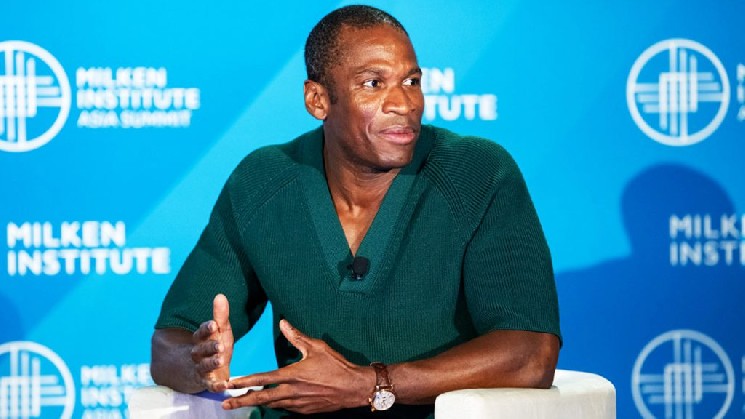
Story Protocol, a project focused on tokenizing media and creative content, has delayed its first major token unlock by six months to August. According to co-founder S.Y. Lee, the move prevents insiders from selling tokens and gives the project more time to build real usage before new supply enters the market. Lee addressed investor concerns over the network’s current lack of fee revenue, explaining that Story is not a typical trading platform. Instead, it aims to generate revenue through business licensing agreements, particularly with AI companies, by providing legally compliant data such as voice, video, and human-made content. The decision to postpone the token unlock is intended to avoid selling pressure and allow more time to develop data markets and attract AI firms. Lee cited Worldcoin’s similar strategy as a positive precedent.

S.Y. Lee, co-founder of Story Protocol, says that the project needs time to build real usage and has decided to delay its first major token unlock by six months in August. By delaying this release, the insiders will not be able to sell their tokens. According to Lee, this delay helps to project more time to grow real usage before the new supply reaches the markets.

Investors’ Concern and Lee’s Reply

Data from DeFiLlama shows that in September 2025, Story generated over $43,000 per day in fees, and right now the number is zero. This makes investors worry and raises concerns that the network is actually making money.

Lee argues that people are focusing on the wrong measurement. He says that Story is not like the other trading platforms, which generate profits from the transaction fees. Instead, the project is designed to record who owns the data and define how it can be used, while setting rules for future payments. Lee says that most of the money is expected to come from the business licensing agreements, especially with the AI companies.

Story is now concentrating on tokenized media and creative content. This includes collecting real human-made data that AI firms need, voice and video recordings, and other materials that are difficult to copy legally from the internet. Lee believes that demand for this type of data will grow in the upcoming years.

Large token releases often create selling pressures, and by postponing the unlock, Story reduces the risk of sudden selling and keeps supply lower. Lee said that if the founders think of the quick gains, they would prefer a shorter lock period. Lee mentioned how Worldcoin previously extended lockups for the insiders. This move gave the project more time to build, and the market responded positively. This lockup extension gives Story extra time to prove it can attract AI firms and build useful data markets.

Highlighted Crypto News:

Crypto Fear and Greed Index Drops to Extreme Fear at 9

TagsCryptocurrencyStory

Related Questions

QWhy did Story Protocol decide to delay its token unlock?

AStory Protocol delayed its first major token unlock by six months to August to allow more time to build real usage and grow before new supply reaches the markets, preventing insiders from selling their tokens prematurely.

QWhat concern did investors raise about Story Protocol's revenue?

AInvestors were concerned because data from DeFiLlama showed that Story generated over $43,000 per day in fees in September 2025, but currently generates zero fees, raising questions about the network's ability to make money.

QHow does Story Protocol plan to generate revenue according to co-founder S.Y. Lee?

AAccording to S.Y. Lee, Story Protocol is designed to record data ownership and define usage rules for future payments, with most revenue expected to come from business licensing agreements, especially with AI companies, rather than transaction fees.

QWhat type of data is Story Protocol focusing on collecting?

AStory Protocol is concentrating on tokenized media and creative content, including real human-made data needed by AI firms, voice and video recordings, and other materials that are difficult to copy legally from the internet.

QWhat positive example did Lee mention regarding token lockup extensions?

ALee mentioned that Worldcoin previously extended lockups for insiders, which gave the project more time to build and resulted in a positive market response, similar to Story's current strategy.

Related Reads

Promised Year of Crypto IPOs? Only One Went Public in Six Months, Down 70%

The much-anticipated wave of crypto IPOs in 2026 has failed to materialize, with market conditions worsening dramatically. While SpaceX prepares for the largest IPO in history, raising $75 billion at a $1.75 trillion valuation, the crypto sector faces a frozen pipeline. The sole crypto IPO success this year, BitGo, serves as a cautionary tale. After launching on the NYSE in January at $18, its stock has plummeted approximately 70%. Other major contenders have stalled or delayed. Kraken, which secretly filed in late 2025, has put its plans on ice, seeing its valuation drop 33% to $13.3 billion. Consensys has postponed its filing until autumn at the earliest, and Bitpanda is poised to miss its self-imposed H1 deadline for a Frankfurt listing. This widespread retreat is driven by a severe liquidity crunch. Bitcoin has fallen below $60,000, with capital being diverted to AI stocks and the massive SpaceX offering. The poor performance of earlier crypto listings like Gemini and the stagnant price of Coinbase further dampen investor appetite. A key underlying pressure is the impending US midterm elections in November, which could alter the currently favorable regulatory landscape. Companies had hoped to go public during this window of policy certainty, but challenging market dynamics have overridden those plans. The transparency that comes with being a public company is now seen as a potential liability rather than a benefit in a down market. The industry's fate now hinges on a few critical watchpoints: whether Kraken restarts its process in H2, if Consensys files in the fall, and if SpaceX's debut can revitalize market liquidity. Otherwise, the promised "crypto IPO year" will likely be pushed beyond the election.

marsbit10m ago

Promised Year of Crypto IPOs? Only One Went Public in Six Months, Down 70%

marsbit10m ago

Behind Musk and Huang Jen-hsun's 'AI Factories', an Unseen Battle for Freshwater Has Begun

Behind the "AI factories" of Elon Musk and Jensen Huang lies a hidden battle for a critical resource: fresh water. As AI models like ChatGPT and Claude process billions of prompts daily, they consume vast amounts of water for cooling. By 2030, global AI infrastructure is projected to use 9.3 trillion liters annually—enough to meet the basic needs of 1.3 billion people. This "water grab" stems from the massive heat generated by high-powered GPUs. Over 70% of data centers use evaporative cooling systems, where water absorbs heat and evaporates into the atmosphere, depleting local groundwater. Training models like GPT-4 can consume over 600 million liters of water. Tech giants like Google and Microsoft report skyrocketing water usage, sparking conflicts with local communities over resources. A flashpoint occurred in Memphis, Tennessee, where Musk's xAI built the Colossus supercomputer. It draws nearly 3.8 million liters of drinking water daily from local aquifers, leading to public outrage and legal action. In response, xAI is building an $80 million water recycling plant to use treated wastewater instead. Facing pressure, companies like Microsoft promote "waterless" closed-loop cooling systems. However, these systems increase electricity consumption by 20-30%, shifting the water burden to power plants, which require immense cooling water themselves—a case of indirect water footprint transfer. For China's AI industry, this crisis offers a strategic warning and opportunity. Instead of replicating the West's resource-intensive model, China can leverage its "East Data, West Computing" policy to locate data centers in cooler, water-rich regions like Guizhou. Furthermore, developing lightweight edge computing for smart homes and embodied AI robots can drastically reduce the need for constant cloud queries, cutting both water and energy consumption at the source. The freshwater war underscores a fundamental question: Will AI be a tool for human advancement or a silicon-based monster competing for our planet's last drops of clean water? The answer is becoming clearer as the water vapor rises.

marsbit57m ago

Behind Musk and Huang Jen-hsun's 'AI Factories', an Unseen Battle for Freshwater Has Begun

marsbit57m ago

AGI is Just One Step Away

The article discusses Anthropic's release of the Fable 5 model, a heavily restricted version of its powerful Mythos model. Initially unveiled in April, Mythos reportedly identified over 10,000 high-risk vulnerabilities for 50 enterprise clients, causing significant concern. Due to its dangerous capabilities in areas like autonomous cyber-attacks and biochemical weapons design guidance (classified as CB-1 level), the unaltered Mythos 5 remains limited to about 200 vetted entities like government agencies. Fable 5, released with a safety classifier, demonstrates extraordinary performance, leading benchmarks in coding (SWE-Bench Pro), software engineering, and research. It exhibits true "long-horizon agency," autonomously planning and executing complex, multi-step tasks like migrating 50 million lines of code in a day, moving beyond simple question-answering. The article positions Fable 5 at OpenAI's Level 3 ("Agent") and progressing toward Level 4 ("Innovator"), suggesting AGI (Artificial General Intelligence) is within reach, potentially 18-24 months away. To mitigate risks, Anthropic implemented a two-layer safety "cage": a silent routing system that redirects dangerous queries to a weaker model, and a mandatory 30-day data retention policy for all Mythos traffic to detect patterns of malicious use. Despite its high cost ($10/$50 per million input/output tokens), the model targets the enterprise market, where its unparalleled productivity and defensive capabilities against AI-powered cyber threats justify the premium. This signals a market maturation where top-tier AI becomes a strategic, high-value tool for businesses, potentially widening the gap with consumer-focused models and accelerating the rise of "one-person companies" while disrupting labor markets.

marsbit1h ago

AGI is Just One Step Away

marsbit1h ago

Trading

Spot
Futures
活动图片