South Korea’s FSS To Probe Whale Manipulation: How SUBBD Is Built For Fair And Transparent Trading

bitcoinistPublished on 2026-02-09Last updated on 2026-02-09

Abstract

South Korea's Financial Supervisory Service (FSS) is intensifying its probe into unfair trading practices, specifically targeting whale manipulation on major exchanges like Upbit and Bithumb. Using new powers from the Virtual Asset User Protection Act, the FSS is deploying digital tools to detect abnormal patterns like wash trading and spoofing. Amid this regulatory crackdown, SUBBD Token ($SUBBD) is emerging as a project designed for internal economic fairness. It aims to disrupt the $85 billion creator economy by using Ethereum-based smart contracts to ensure transparent, direct value transfer between creators and fans, bypassing high Web2 platform fees. The platform integrates AI tools for content generation and voice cloning. SUBBD has raised over $1.47 million in its presale, with tokens priced at $0.057495. It offers a 20% staking APY to encourage long-term holding and stabilize the token economy. The project represents a shift toward transparent, utility-driven models in the crypto space, aligning with broader market movements toward fairness and accountability.

Trusted Editorial content, reviewed by leading industry experts and seasoned editors. Ad Disclosure

Quick Facts:

  • ➡️ South Korea’s FSS is actively using new digital monitoring tools to identify and penalize whale manipulation and unfair trading practices on major exchanges.
  • ➡️ While regulators fight external manipulation, SUBBD Token uses immutable smart contracts to ensure internal economic fairness for content creators and fans.
  • ➡️ $SUBBD disrupts the $85B creator economy by offering AI voice cloning and automated tools, reducing reliance on high-fee Web2 platforms.
  • ➡️ With over $1.47M raised and a 20% staking APY, the market is showing strong early support for SUBBD’s transparent SocialFi model.

South Korean regulators are finally tightening the net. The Financial Supervisory Service (FSS) has launched an intensive probe into ‘unfair trading practices,’ specifically targeting whale activity that distorts prices on giants like Upbit and Bithumb. Using new powers from the Virtual Asset User Protection Act, the FSS is deploying a dedicated system to hunt down abnormal patterns, think wash trading and spoofing, that have plagued the peninsula’s high-volume market for years.

It’s a pivotal shift in global compliance. By scrutinizing large-scale wallet movements, the FSS aims to dismantle ‘kimchi premium’ exploitation and restore confidence. They’ve already flagged several suspicious cases, signaling that the era of unchecked whale dominance in Seoul is coming to a close.

But while regulators try to force fairness through punishment, a new wave of protocols is engineering it directly into the code. Capital is rotating toward projects prioritizing transparent tokenomics over opaque order books. Leading this shift in the content economy is SUBBD Token ($SUBBD), a project using Ethereum’s ledger to dismantle the predatory fee structures of Web2.

SUBBD Token Disrupts the $85B Content Industry Through Decentralized Transparency

While the FSS fights market manipulation, SUBBD Token tackles economic manipulation in the creator economy. Centralized intermediaries currently dominate the landscape, often extracting up to 70% of creator revenue. Frankly, the economics are brutal. $SUBBD merges Web3 architecture with advanced AI to create a permissionless ecosystem. Value flows directly from fan to creator, no opaque algorithms dictating who gets seen.

The platform rests on Ethereum-based EVM-compatible smart contracts. That means every transaction, from subscriptions to tips, is verifiable on-chain, eliminating the ‘black box’ accounting typical of Web2 streaming. Beyond simple payments, SUBBD Token ($SUBBD) integrates proprietary AI models for content generation and voice cloning. This lets creators scale their output without relying on fragmented, expensive tools.
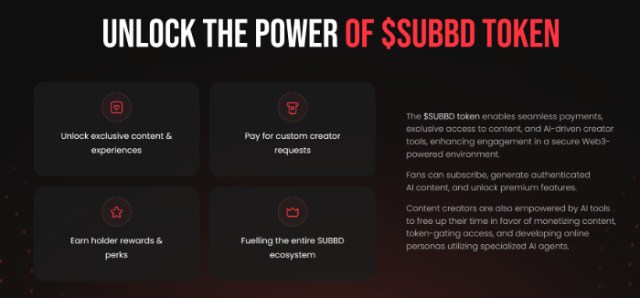
By tokenizing access, $SUBBD introduces a ‘HoneyHive’ governance model. Holders don’t just speculate; they vote on creator onboarding and platform themes. It shifts power from boardrooms to the community, mirroring the very transparency South Korean regulators are trying to impose on exchanges.

EXPLORE THE $SUBBD ECOSYSTEM

Smart Money Flows Into SUBBD Presale As Staking APY Hits 20%

You can see the market’s appetite for utility in the inflows. SUBBD Token has successfully raised over $1.4M, with the token currently priced at $0.057495. This steady accumulation suggests investors are positioning themselves early in a narrative combining two high-growth sectors: Artificial Intelligence and SocialFi.

Traders are particularly focused on the staking incentives, which are designed to prevent the exact type of ‘pump-and-dump’ volatility the FSS is investigating. SUBBD Token offers a fixed 20% APY for the first year to users who lock their tokens. This mechanism encourages long-term holding over short-term flipping, stabilizing the token’s velocity. Plus, staking grants access to benefits like ‘daily BTS drops’ and XP multipliers.

The integration of AI-driven revenue streams creates a sustainable demand loop. As creators use the AI Personal Assistant, $SUBBD functions as the essential utility currency. For retail participants, the presale represents an entry point into an $85B industry disruption before the token hits public exchanges, where liquidity and volatility usually increase.

GET YOUR $SUBBD NOW FOR $0.057495

This article is for informational purposes only and does not constitute financial advice. Cryptocurrency investments carry inherent risks, including high volatility and potential loss of capital. Always conduct your own due diligence before participating in any presale.

Editorial Process for bitcoinist is centered on delivering thoroughly researched, accurate, and unbiased content. We uphold strict sourcing standards, and each page undergoes diligent review by our team of top technology experts and seasoned editors. This process ensures the integrity, relevance, and value of our content for our readers.

Ben Wallis

Follow

Ben is a freelance writer, and AI editor specializing in crypto developments (mainly altcoins) and the intricate ways global economics shape the digital asset space. His B.Ed. in Education provides a unique foundation for his writing, enabling him to distill complex crypto concepts and market shifts into clear, digestible insights. This skill is key to helping readers adapt and apply their understanding to the ever-evolving world of crypto investment. Passionate about making crypto accessible, Ben crafts content designed to educate a broad audience, from current market events to the essential foundational knowledge that underpins them. His goal is to empower readers through understanding. When he’s not immersed in crypto analysis and breaking down complex topics, Ben is an avid Pokémon fan and enjoys all things Disney.

Full Profile

Related Posts

Vitalik Buterin’s Call for ‘Sovereign’ Stablecoins Meets Its Match in Bitcoin Hyper’s SVM Infrastructure

Bithumb Recovers 99.7% Of Erroneous Bitcoin Airdrop While BMIC Sets New Standards In Security

Infini Exploiter Hackers Resurface to Buy the $ETH Dip: How $BMIC Adds Security for the Future

Bessent Urges Senate to Fast-Track Warsh Nomination as Institutional Liquidity Pivot Favors LiquidChain

Turkey & Tether Freeze $544M: Why $BMIC Is The Safe Haven

Tether’s $23B Gold Hoard Rivals Nation States As Smart Money Pivots To $HYPER

Related Questions

QWhat is the Financial Supervisory Service (FSS) of South Korea investigating, and what tools are they using?

AThe FSS is investigating 'unfair trading practices,' specifically targeting whale manipulation like wash trading and spoofing on major exchanges such as Upbit and Bithumb. They are using new digital monitoring tools and a dedicated system to identify abnormal trading patterns, empowered by the Virtual Asset User Protection Act.

QHow does SUBBD Token ($SUBBD) aim to create fairness in the content economy?

ASUBBD Token uses Ethereum-based EVM-compatible smart contracts to ensure transparent and verifiable on-chain transactions. It eliminates opaque Web2 fee structures by allowing value to flow directly from fans to creators, and incorporates a 'HoneyHive' governance model where token holders vote on platform decisions, ensuring economic fairness.

QWhat are some key features of the SUBBD platform that differentiate it from traditional Web2 content platforms?

ASUBBD integrates proprietary AI models for content generation and voice cloning, offers a permissionless ecosystem with direct creator-fan transactions, and uses tokenized access for subscriptions and tips. It also provides a 20% staking APY to encourage long-term holding and reduces reliance on high-fee centralized intermediaries.

QHow much funding has SUBBD Token raised in its presale, and what is the current token price?

ASUBBD Token has raised over $1.47 million in its presale, with the token currently priced at $0.057495.

QWhat is the 'HoneyHive' governance model mentioned in the article?

AThe 'HoneyHive' governance model allows $SUBBD token holders to participate in platform decisions, such as voting on creator onboarding and platform themes. This shifts power from centralized authorities to the community, ensuring a more democratic and transparent operational structure.

Related Reads

The Gold Buy-on-the-Dip Guide: Watch Interest Rates, Not Just War

"Gold Buying Guide: Focus on Interest Rates, Not Just War" Four months ago, gold buyers likely didn't anticipate buying at a peak that even a war couldn't sustain. After hitting a record high of $5,596 on January 29, gold entered a bear market just 91 days later, its fastest decline since 2008. A key trigger was the Fed's hawkish shift, highlighting that monetary policy, not geopolitics, is the primary driver. The article argues that the traditional "buy gold in turmoil" script has changed. While the US-Iran conflict initially boosted prices, the sustained rally in oil prices heightened inflation fears, forcing central banks to maintain or consider tighter policy. Since gold yields no interest, higher rates increase its opportunity cost, eroding its appeal. This dynamic was evident when gold fell sharply on May 18 despite positive peace talks, as lower oil prices eased inflation and thus rate hike pressures. The recent sell-off is also part of a broader market deleveraging. Correlations between gold, Nasdaq, and Bitcoin spiked as leveraged investors sold liquid assets to cover losses, creating a synchronized downturn. Historically, gold bottoms align with policy shifts, not conflict resolutions. The 2008 and 2022 bear markets ended with shifts to extreme easing and peak inflation expectations, respectively. For potential buyers, the author suggests monitoring three signals: 1) Peak interest rate hike expectations, 2) Reopening of the Strait of Hormuz (to ease oil/inflation pressure), and 3) A return to net inflows for Gold ETFs, indicating the end of forced selling. While predicting the exact bottom is impossible, the author's personal strategy involves scaling into a position across price levels like $4000, $3700, and $3500, committing no more than 30% of the intended total allocation initially, and adding the remainder only if key signals emerge. The core conclusion: In turbulent times, watching interest rates is more crucial than watching wars.

marsbit6m ago

The Gold Buy-on-the-Dip Guide: Watch Interest Rates, Not Just War

marsbit6m ago

Recent On-Chain Review: No Clear Narrative Under U.S. Stock Market Pressure, Just Hype

This article analyzes the current state of the Solana meme coin and community token ecosystem, highlighting a market caught between two dominant forces: attention-based PvP and a gradual return to community-centric projects. The first part explores the "Attention PvP" dynamic, where success is driven by celebrity endorsements, viral events, and speed. Examples include $JOTCHUA, which surged after its meme creator's social media activity, and $WORLDCUP, which outperformed a similar Base chain project ($PITCH) largely due to influencer support. The recent "pump.fun GO" feature, allowing bounty tasks for token promotion, is critiqued for fostering sensationalist and often negative stunts—like people getting token tickers tattooed on their bodies for rewards—reminiscent of old internet shock content. In contrast, the article points to a resurgence of organic, community-driven tokens that survive market volatility through strong holder bases and shared ideology, not just hype. Influencer Ansem is cited, arguing that durable meme coins rely on communities willing to endure losses and promote their core message daily. Examples given are older tokens like $neet (anti-work ethos), $troll, $buttcoin, and $triplet, which have maintained relative price stability. A prime example of this community-build model is the new project $KINS, the token for the browser-based MMORPG Kintara. Its success stems not from advanced graphics but from consistently delivering updates, fostering player trust, and creating genuine engagement (e.g., in-game economies, events, property auctions). It has attracted a growing player base and even notable KOLs as participants, demonstrating that sustainable growth can come from building trust rather than orchestrating pumps. The article concludes by questioning whether the market is ultimately a game of mutual trust or mutual deception, expressing hope that such reflection might lead to a healthier ecosystem.

marsbit6m ago

Recent On-Chain Review: No Clear Narrative Under U.S. Stock Market Pressure, Just Hype

marsbit6m ago

On-Chain Scene on Opening Day: $20 Billion Already Staked, How Do On-Chain Contracts Know Who Wins?

On the opening day of the 2026 World Cup, over $2 billion had already been wagered on just the "tournament winner" contracts on platforms like Polymarket and Kalshi. This article explores how these blockchain-based prediction markets actually function once the games begin. It breaks down the massive volume and explains how single-game and tournament-long contracts are priced, with values moving between 1-99 cents to reflect implied probabilities. A key mechanism highlighted is "elimination zeroing," where a team's "champion yes" contract immediately settles to zero once they are mathematically eliminated. The core technical question answered is: how does a smart contract "know" who won a real-world match? The answer lies in oracles. The article details two primary paradigms: UMA's "optimistic oracle" (used by most of Polymarket), which allows a challenge period after a proposed result, and Chainlink's multi-source data aggregation (used by FIFA partners like ADI Predictstreet), which automates settlement with minimal dispute windows. Finally, the article injects a note of caution, citing research estimating that a significant portion of historical trading volume on these platforms might be "wash trading" to inflate numbers. It concludes by contrasting the legal status of these "event contracts" under CFTC rules in the U.S. versus traditional, state-regulated sports betting. As the tournament progresses, the real-time operation of this multi-billion dollar machine—its settlements, eliminations, and underlying mechanisms—becomes a story as compelling as the football itself.

marsbit21m ago

On-Chain Scene on Opening Day: $20 Billion Already Staked, How Do On-Chain Contracts Know Who Wins?

marsbit21m ago

Sequoia Dialogue with Jensen Huang: Computing Model Undergoes a 60-Year Transformation; You Won't Be Replaced by AI, But You Will Be Dimensionality-Reduced by 'Those Who Master AI'

NVIDIA founder and CEO Jensen Huang, in a conversation with Sequoia Capital's Konstantine Buhler, argues that we are witnessing the most significant computing shift in 60 years—from retrieval-based to generative computing. Instead of just storing and retrieving data, future systems will generate highly personalized content (text, images, video) on demand, powered by massive "AI factories." Huang envisions a global "intelligence network" that will envelop the planet, following the historical patterns of energy and communication grids. He outlines a five-layer investment framework: 1) Energy, 2) Chips/Computers, 3) Infrastructure (data centers), 4) AI Models, and 5) Applications. He predicts this ecosystem will reach a scale of $20 trillion annually. Crucially, Huang pushes back against fears of AI-driven job loss. He distinguishes between specific "tasks" (e.g., typing, analyzing images) and overall "jobs" (e.g., CEO, radiologist). While AI automates tasks, it increases efficiency and demand for the higher-value problem-solving aspects of professions, thus creating more jobs and "up-leveling" careers. The real risk, he asserts, is not being replaced by AI, but being outperformed by someone who effectively leverages it. He urges everyone to embrace AI as a tool for augmented capability and innovation.

marsbit1h ago

Sequoia Dialogue with Jensen Huang: Computing Model Undergoes a 60-Year Transformation; You Won't Be Replaced by AI, But You Will Be Dimensionality-Reduced by 'Those Who Master AI'

marsbit1h ago

Trading

Spot
Futures

Hot Articles

Discussions

Welcome to the HTX Community. Here, you can stay informed about the latest platform developments and gain access to professional market insights. Users' opinions on the price of S (S) are presented below.

活动图片














