Operation Chokepoint 2.0 Concludes as Fed Withdraws Crypto Restrictions: A Long-Overdue Institutional Shift

marsbit2025-12-19 tarihinde yayınlandı2025-12-19 tarihinde güncellendi

Özet

The article discusses the end of "Operation Chokepoint 2.0," a coordinated U.S. regulatory effort to restrict banking services for the cryptocurrency industry in 2023. Internal FDIC documents confirmed this de-banking campaign, which increased regulatory friction and limited crypto firms' access to banking services following the collapse of several banks. A key tool was a Federal Reserve policy that classified crypto-related activities—such as stablecoin services, on-chain settlement, and crypto custody—as "high-risk innovation," subjecting them to additional scrutiny. Recently, the Federal Reserve officially revoked this restrictive policy, signaling a shift in regulatory approach. This change is not due to a sudden pro-crypto stance but reflects the growing recognition that isolating the industry is increasingly impractical. Stablecoin adoption has expanded, on-chain dollar settlements have become more frequent, and capital flows have continued outside the traditional banking system, creating potential systemic risks. The case of Custodia Bank, which was denied a master account and access to the dollar clearing system, exemplifies the impact of these policies. Custodia has since sought a rehearing, and its legal challenge is seen as a test of whether regulators are moving from a default rejection to a compliance-based准入 approach. Concurrently, the SEC issued guidance on how broker-dealers should custody crypto assets, detailing requirements for private key management, bl...

"Operation Chokepoint 2.0" was never a conspiracy theory.

Previously disclosed internal documents from the Federal Deposit Insurance Corporation (FDIC) reveal that in 2023, U.S. regulators indeed launched an organized de-banking campaign against the cryptocurrency industry.

That year, following the successive collapses of Silvergate, Signature, and Silicon Valley Bank, regulators used institutional friction to restrict banks from providing services to crypto companies, leading to reduced liquidity and access for the sector. One of the core tools of this campaign was a key policy statement issued by the Federal Reserve that year—classifying banks' involvement in stablecoins, on-chain settlements, crypto custody, and other activities as "high-risk innovative activities" and imposing additional approval barriers.

But just yesterday, this blockade was dismantled by the Fed. Latest reports indicate that the Federal Reserve has formally revoked the restrictive policy issued in 2023. This is not a sudden shift to a "friendly" regulatory stance, but rather an acknowledgment that the past isolation strategy could no longer cope with the rapidly evolving on-chain capital flows and industry realities.

Early Signs of Risk

Over the past year, one fact has become increasingly clear:

· Stablecoin scale continues to expand

· On-chain dollar transactions are becoming more frequent

· Capital flows have not returned to the banking system

The most critical dollar settlement activities are instead occurring in regions with weaker regulatory reach. This has turned the isolation strategy originally intended to "prevent risks" into a source of systemic vulnerability.

It is against this backdrop that the Federal Reserve recently formally revoked its restrictive policy statement from 2023, reintegrating banks' involvement in crypto-related businesses into the conventional prudential regulatory framework.

Custodia's Counterattack

The direct consequence of the isolation policy and Operation Chokepoint was that some crypto banks were unable to access the dollar settlement system. Custodia Bank is the most typical case. This bank, focused on crypto custody, applied for a Federal Reserve master account for three years but never received approval, remaining excluded from the dollar clearing system.

Recently, Custodia submitted a petition for an en banc rehearing to the Tenth Circuit Court of Appeals, requesting a reconsideration of the previous ruling that denied its master account application. Although a ruling has not yet been issued, the lawsuit itself has become a crucial window for observing the shift in U.S. regulatory logic: the market can use Custodia's case to understand whether regulation is gradually moving from "presumptively no" to "compliant access."

How Regulation Manages

Almost simultaneously, the SEC released a "Statement on Broker-Dealer Custody of Crypto Asset Securities." The document shows that regulators are no longer纠结 on whether to allow it, but are systematically stipulating:

· How private keys should be managed

· How to assess blockchain technology risks

· How to respond to extreme scenarios like 51% attacks, hard forks, etc.

Crypto-related businesses are no longer treated as "exceptional items" but as常规 risks within the financial system that can be regulated.

Institutional Shift

Viewing recent developments together reveals a clear trend:

· The Fed revokes special restrictions targeting crypto

· The SEC provides an operational framework for custody

· The OCC expands recognition of stablecoins and custody institutions

· The regulatory focus shifts from blocking to structured management

The regulatory focus has shifted from blocking to structured management. Crypto is no longer isolated as a whole but broken down into manageable modules: settlement, custody, clearing, risk control.

Re-Entry

In 2023, U.S. regulators chose to "keep crypto out."

In 2025, they realized: long-term absence is itself the greatest risk.

This is not a victory for any one side, but an acknowledgment of reality—when on-chain dollars have become part of global capital flows, the only choice for regulators is not to ignore it, but to re-enter it.

Real change will not be reflected in short-term market movements, but in: who is allowed to participate in the next stage of the dollar settlement and custody system.

And this is the core significance of this policy adjustment.

*This content is for reference only and does not constitute investment advice. The market carries risks, and investment requires caution.


İlgili Sorular

QWhat was the core tool of Operation Chokepoint 2.0 as implemented by the Federal Reserve in 2023?

AThe core tool was a key policy statement from the Federal Reserve that classified bank involvement in activities like stablecoins, on-chain settlement, and crypto custody as 'high-risk innovation activities' and imposed additional approval requirements.

QWhy did the Federal Reserve recently revoke its 2023 restrictive policy on crypto-related banking activities?

AThe Fed revoked the policy because the isolation strategy became counterproductive, creating systemic risks as dollar settlement activity increasingly moved to less-regulated on-chain environments instead of returning to the banking system.

QWhat is the significance of the Custodia Bank case in the context of US regulatory changes?

AThe Custodia Bank case, where a crypto-focused bank was denied a master account, serves as an important test to see if US regulation is shifting from a default stance of prohibition ('default no') to a framework of compliant access.

QHow does the SEC's new statement on broker-dealer custody of crypto asset securities represent a shift in approach?

AThe SEC's statement represents a shift by no longer debating whether to allow the activity, but instead providing a systematic regulatory framework for how to manage private keys, assess blockchain risks, and handle extreme scenarios like 51% attacks.

QWhat is the overall trend in US regulatory approach to crypto based on recent actions by the Fed, SEC, and OCC?

AThe overall trend is a shift from blocking and isolating the crypto industry to structured management, where crypto activities are broken down into modular, regulatable components like settlement, clearing, and custody, and brought under conventional prudential oversight frameworks.

İlgili Okumalar

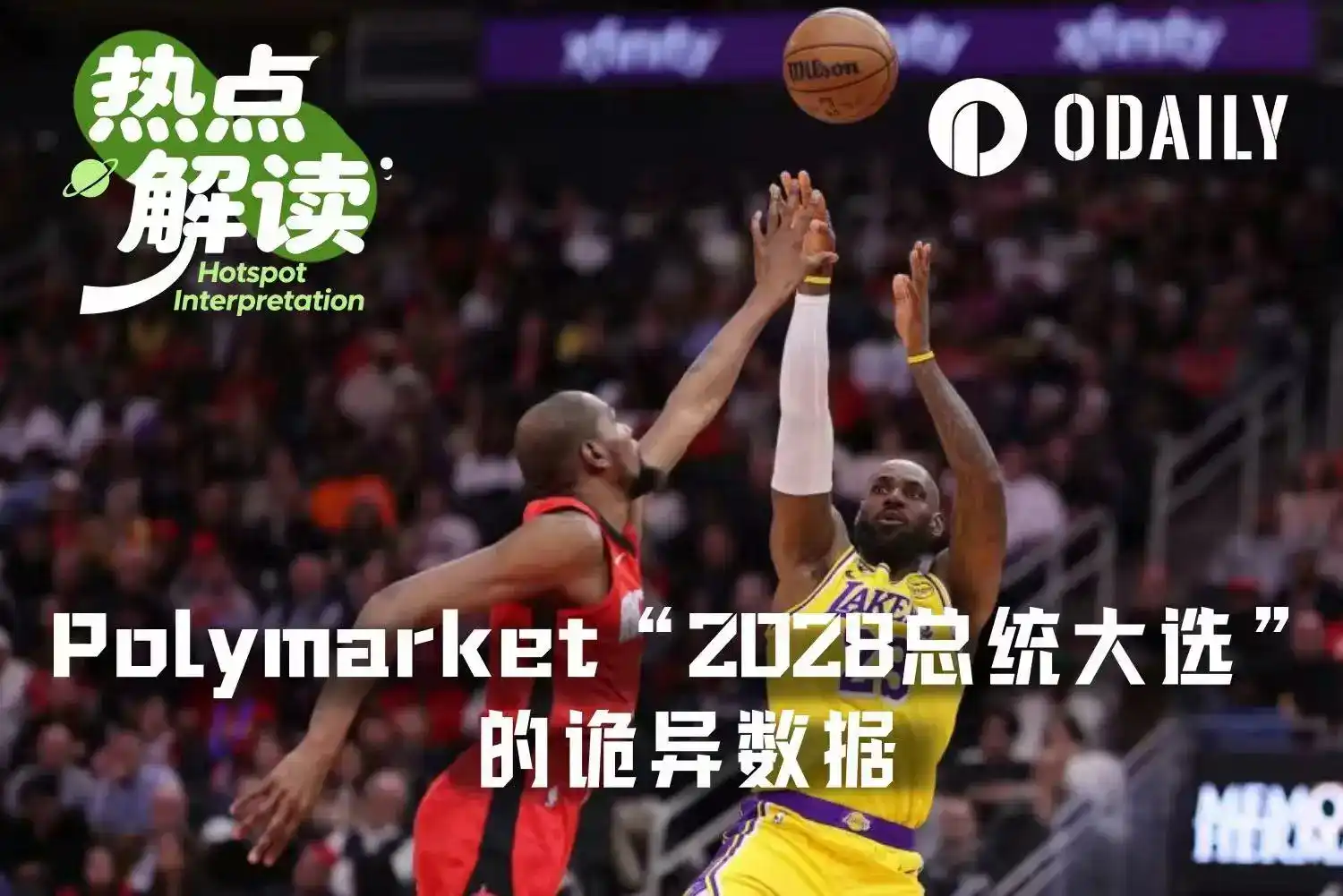
Polymarket's "2028 Presidential Election" Volume King Is... LeBron James???

An article from Odaily Planet Daily, authored by Azuma, discusses a peculiar phenomenon observed on the prediction market platform Polymarket regarding the "2028 US Presidential Election" event. Despite having a real-time probability of less than 1%, unlikely candidates such as NBA star LeBron James (with $48.41 million in trading volume), celebrity Kim Kardashian ($33.84 million), and even ineligible figures like Elon Musk ($23.14 million) and New York City Mayor Zohran Mamdani ($18.39 million) account for approximately 70% of the total trading volume. In contrast, high-probability candidates like Vice President JD Vance ($10.58 million), California Governor Gavin Newsom ($15.71 million), and Secretary of State Marco Rubio ($9.32 million) have significantly lower trading activity. The article explains that this counterintuitive trend is not driven by irrational speculation but by rational strategies. Polymarket offers a 4% annualized holding reward for certain markets, including the 2028 election, to maintain long-term pricing accuracy. This yield exceeds the current 5-year US Treasury rate (3.98%), attracting large investors ("whales") to hold "NO" shares on low-probability candidates for risk-free returns. Additionally, some users utilize a platform feature that allows converting a set of "NO" shares into corresponding "YES" shares for better liquidity or pricing efficiency, rather than directly buying "YES" shares for their preferred candidates. Thus, the seemingly absurd trading activity is strategically motivated.

marsbit1 saat önce

Polymarket's "2028 Presidential Election" Volume King Is... LeBron James???

marsbit1 saat önce

Dialogue with ViaBTC CEO Yang Haipo: Is the Essence of Blockchain a Libertarian Experiment?

"ViaBTC CEO Yang Haipo: Blockchain as a Hardcore Libertarian Experiment" In a deep-dive interview, ViaBTC CEO Yang Haipo reframes the essence of blockchain, arguing it is not merely a new technology or infrastructure but a hardcore libertarian experiment. This experiment, born from the 2008 financial crisis and decades of cypherpunk ideology, tests a fundamental question: to what extent can freedom and self-organization exist without centralized trust? The discussion highlights the experiment's verified outcomes. On one hand, it has proven its core value of censorship resistance, providing critical financial lifelines for entities like WikiLeaks and individuals in hyperinflationary or sanctioned countries via tools like stablecoins. However, Yang points out a key paradox: the most successful product, USDT, is itself a centralized compromise, showing users prioritize a less-controlled pipeline over pure decentralization. On the other hand, the experiment has exposed the severe costs of this freedom—a "dark forest" without safeguards. Events like the collapses of LUNA, Celsius, and FTX, resulting in massive wealth destruction and prison sentences for founders, underscore the system's fragility and the inherent risks of an unregulated environment. Yang observes that despite decentralized protocols, human nature inevitably recreates centralized power structures, speculative frenzies, and narrative-driven cycles (from ICOs to Meme coins), where emotion and belonging often trump technological substance. Looking forward, he believes blockchain's future is significant but niche. Its real value lies in serving specific, real-world needs for financial sovereignty and bypassing traditional controls, not as a universal infrastructure replacing all centralized systems. For the average participant, Yang's crucial advice is to cultivate independent judgment. True freedom is not holding a crypto wallet, but possessing a mind resilient to groupthink and narrative hype in a high-risk, often irrational market.

marsbit1 saat önce

Dialogue with ViaBTC CEO Yang Haipo: Is the Essence of Blockchain a Libertarian Experiment?

marsbit1 saat önce

İşlemler

Spot
Futures

Popüler Makaleler

CFG Nasıl Satın Alınır

HTX.com’a hoş geldiniz! Centrifuge (CFG) satın alma işlemlerini basit ve kullanışlı bir hâle getirdik. Adım adım açıkladığımız rehberimizi takip ederek kripto yolculuğunuza başlayın. 1. Adım: HTX Hesabınızı OluşturunHTX'te ücretsiz bir hesap açmak için e-posta adresinizi veya telefon numaranızı kullanın. Sorunsuzca kaydolun ve tüm özelliklerin kilidini açın. Hesabımı Aç2. Adım: Kripto Satın Al Bölümüne Gidin ve Ödeme Yönteminizi SeçinKredi/Banka Kartı: Visa veya Mastercard'ınızı kullanarak anında Centrifuge (CFG) satın alın.Bakiye: Sorunsuz bir şekilde işlem yapmak için HTX hesap bakiyenizdeki fonları kullanın.Üçüncü Taraflar: Kullanımı kolaylaştırmak için Google Pay ve Apple Pay gibi popüler ödeme yöntemlerini ekledik.P2P: HTX'teki diğer kullanıcılarla doğrudan işlem yapın.Borsa Dışı (OTC): Yatırımcılar için kişiye özel hizmetler ve rekabetçi döviz kurları sunuyoruz.3. Adım: Centrifuge (CFG) Varlıklarınızı SaklayınCentrifuge (CFG) satın aldıktan sonra HTX hesabınızda saklayın. Alternatif olarak, blok zinciri transferi yoluyla başka bir yere gönderebilir veya diğer kripto para birimlerini takas etmek için kullanabilirsiniz.4. Adım: Centrifuge (CFG) Varlıklarınızla İşlem YapınHTX'in spot piyasasında Centrifuge (CFG) ile kolayca işlemler yapın.Hesabınıza erişin, işlem çiftinizi seçin, işlemlerinizi gerçekleştirin ve gerçek zamanlı olarak izleyin. Hem yeni başlayanlar hem de deneyimli yatırımcılar için kullanıcı dostu bir deneyim sunuyoruz.

255 Toplam GörüntülenmeYayınlanma 2026.03.19Güncellenme 2026.03.19

CFG Nasıl Satın Alınır

WL Nedir

I. Proje TanıtımıWorldLand, Ethereum ekosistemini geliştirmek için tasarlanmış, Ethereum'un L2 veya yan zinciridir.II. Token Bilgileri1) Temel BilgilerToken adı: WL (WorldLand)III. İlgili BağlantılarWeb sitesi:https://worldland.foundation/Keşif Araçları:https://bscscan.com/address/0x8aaB31fbc69C92fa53f600910Cf0f215531F8239Sosyal Medya:https://x.com/WorldLand_space Not: Proje tanıtımı, resmi proje ekibi tarafından yayımlanan veya sağlanan materyallerden gelmektedir, yalnızca referans amaçlıdır ve yatırım tavsiyesi niteliği taşımaz. HTX, ortaya çıkan doğrudan veya dolaylı kayıplardan sorumluluk kabul etmez.

152 Toplam GörüntülenmeYayınlanma 2026.03.28Güncellenme 2026.03.28

WL Nedir

WL Nasıl Satın Alınır

HTX.com’a hoş geldiniz! WorldLand (WL) satın alma işlemlerini basit ve kullanışlı bir hâle getirdik. Adım adım açıkladığımız rehberimizi takip ederek kripto yolculuğunuza başlayın. 1. Adım: HTX Hesabınızı OluşturunHTX'te ücretsiz bir hesap açmak için e-posta adresinizi veya telefon numaranızı kullanın. Sorunsuzca kaydolun ve tüm özelliklerin kilidini açın. Hesabımı Aç2. Adım: Kripto Satın Al Bölümüne Gidin ve Ödeme Yönteminizi SeçinKredi/Banka Kartı: Visa veya Mastercard'ınızı kullanarak anında WorldLand (WL) satın alın.Bakiye: Sorunsuz bir şekilde işlem yapmak için HTX hesap bakiyenizdeki fonları kullanın.Üçüncü Taraflar: Kullanımı kolaylaştırmak için Google Pay ve Apple Pay gibi popüler ödeme yöntemlerini ekledik.P2P: HTX'teki diğer kullanıcılarla doğrudan işlem yapın.Borsa Dışı (OTC): Yatırımcılar için kişiye özel hizmetler ve rekabetçi döviz kurları sunuyoruz.3. Adım: WorldLand (WL) Varlıklarınızı SaklayınWorldLand (WL) satın aldıktan sonra HTX hesabınızda saklayın. Alternatif olarak, blok zinciri transferi yoluyla başka bir yere gönderebilir veya diğer kripto para birimlerini takas etmek için kullanabilirsiniz.4. Adım: WorldLand (WL) Varlıklarınızla İşlem YapınHTX'in spot piyasasında WorldLand (WL) ile kolayca işlemler yapın.Hesabınıza erişin, işlem çiftinizi seçin, işlemlerinizi gerçekleştirin ve gerçek zamanlı olarak izleyin. Hem yeni başlayanlar hem de deneyimli yatırımcılar için kullanıcı dostu bir deneyim sunuyoruz.

201 Toplam GörüntülenmeYayınlanma 2026.03.28Güncellenme 2026.03.28

WL Nasıl Satın Alınır

Tartışmalar

HTX Topluluğuna hoş geldiniz. Burada, en son platform gelişmeleri hakkında bilgi sahibi olabilir ve profesyonel piyasa görüşlerine erişebilirsiniz. Kullanıcıların A (A) fiyatı hakkındaki görüşleri aşağıda sunulmaktadır.

活动图片