Author: Claude, Deep Chao TechFlow
Deep Chao Introduction: The Wall Street Journal has revealed the scale of wealth creation inside OpenAI. In an employee stock sale last October, the company raised the individual cash-out cap from $10 million to $30 million. Over 600 current and former employees participated, cashing out a total of $6.6 billion, with about 75 individuals reaching the full $30 million limit each. President Brockman confirmed in court this week that his stake is worth approximately $30 billion. Never in Silicon Valley's history has a pre-IPO company created such a dense concentration of multi-millionaires.

Image source: Wall Street Journal
In the past Silicon Valley, the usual path for ordinary employees to become rich was one: wait for the company to go public. OpenAI is rewriting that rule.
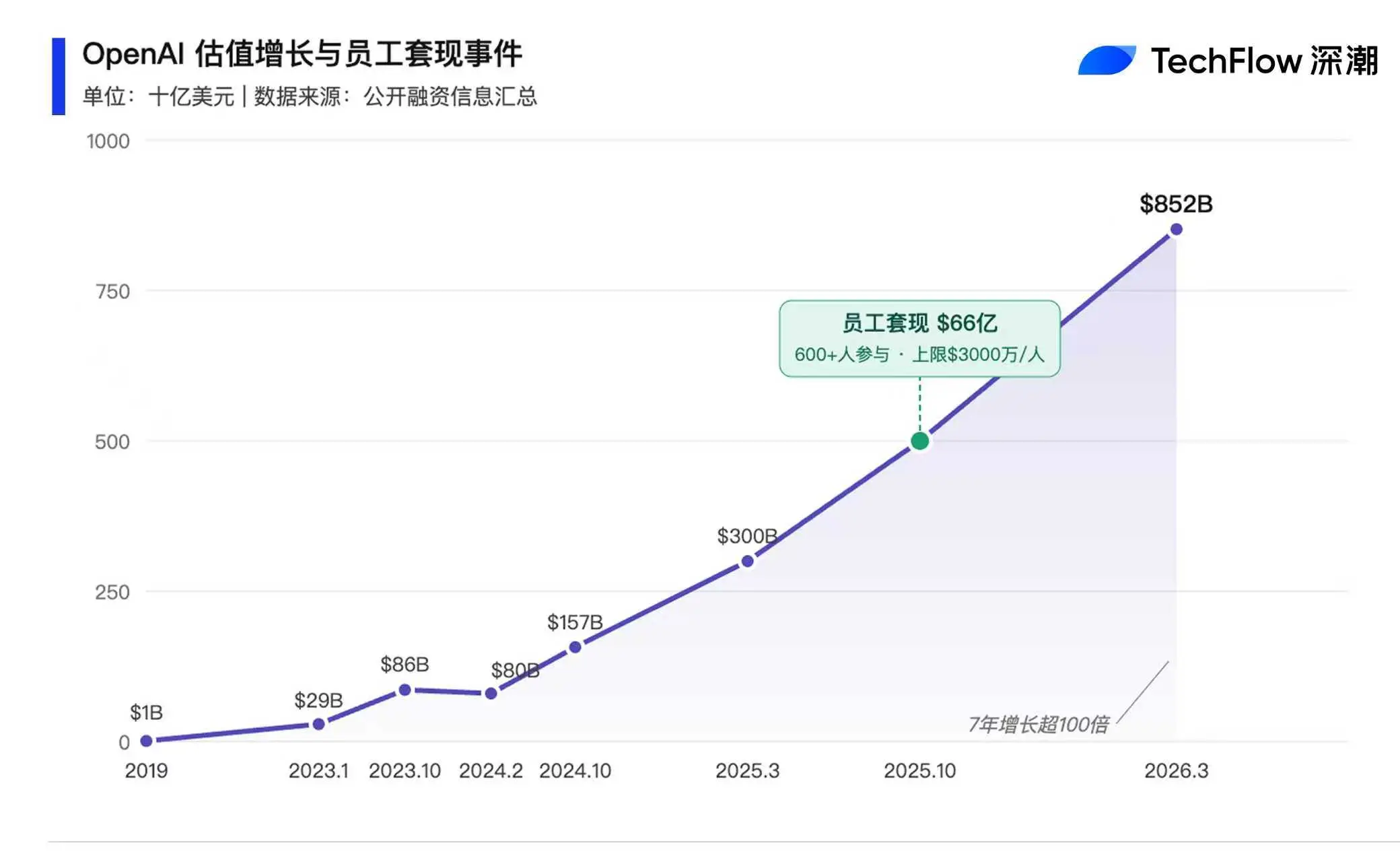
According to The Wall Street Journal, in an internal stock transaction completed last October, OpenAI allowed employees to sell up to $30 million worth of shares each. Over 600 current and former employees participated, cashing out a total of approximately $6.6 billion. Insiders revealed that about 75 of them reached the full $30 million limit each. This is the largest single employee stock sale event in the tech industry to date.
Cash-Out Cap Tripled, External Investor Demand Drove Up Limits
OpenAI originally set a single cash-out cap for employees at $10 million. However, due to external investor demand far exceeding expectations, the company tripled the limit to $30 million last autumn.
The transaction was completed at a valuation of $500 billion, with investors including Thrive Capital, SoftBank, Dragoneer Investment Group, Abu Dhabi MGX, and T. Rowe Price. According to a previous CNBC report, OpenAI initially planned a sale size of about $6 billion, which later expanded to $10.3 billion, but the final transaction settled at about $6.6 billion. Internally, the lower participation rate was interpreted as a vote of confidence by employees in the long-term prospects.
Under OpenAI's rules, employees can sell shares after being with the company for two years. This means many employees who joined only after ChatGPT's launch in late 2022 had their first opportunity to cash out options in this round. OpenAI's stock value has grown over 100 times in the past seven years.
Brockman Confirms $30 Billion Stake in Court, Musk's Lawyer Persistently Questions
The scale of wealth in the hands of executives is even more staggering. According to NBC, OpenAI President and co-founder Greg Brockman confirmed during his court testimony on May 4th that his current OpenAI equity is worth approximately $30 billion.
This figure was disclosed on the fourth day of the Musk v. OpenAI trial. Musk's lawyer, Steven Molo, repeatedly mentioned this number during over two hours of questioning, pressing Brockman on why he had not fulfilled a promised $100,000 donation while sitting on a $30 billion fortune. According to CNBC, Brockman admitted, "It is true, I did not ultimately make the donation."
According to Fortune, Musk's legal team also revealed multi-layered financial connections between Brockman and CEO Sam Altman: Altman provided Brockman with interests worth about $10 million in his family office as early as 2017; Brockman also holds stakes in AI chip startup Cerebras and fusion company Helion Energy. OpenAI had discussed acquiring Cerebras, and Altman has invested hundreds of millions in Helion. Musk's side argues these cross-holdings compromised Brockman's independence as a fiduciary.
Employees Hold 26% Stake, Average Paper Wealth Exceeds Total Returns of Most VC Funds
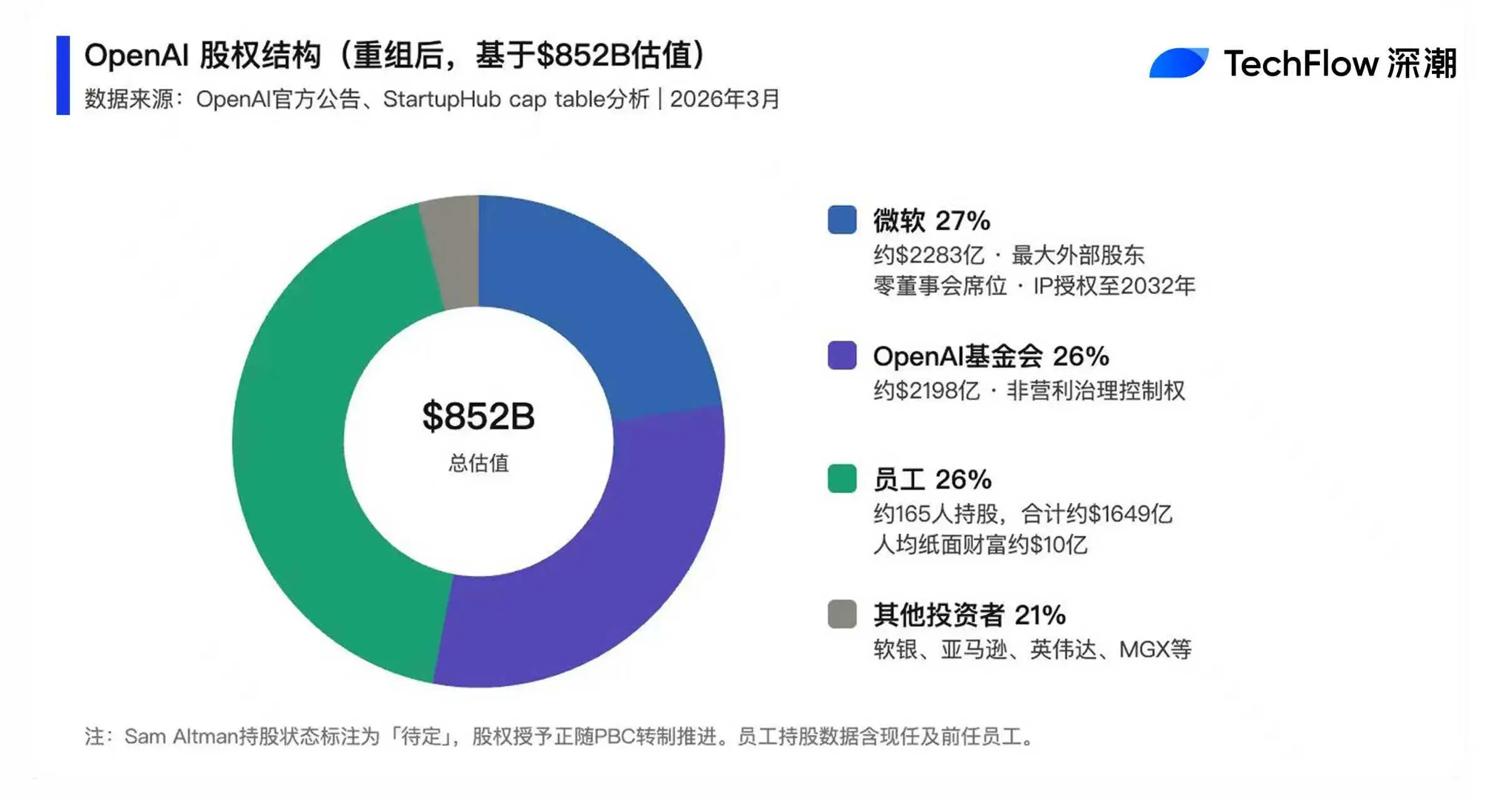
Following a company restructuring completed last October, OpenAI employees collectively hold about 26% of the company's equity.
According to StartupHub's analysis, approximately 165 current and former employees collectively hold equity worth about $164.9 billion, averaging about $1 billion in paper wealth per person, exceeding the total lifetime returns of most venture capital funds.
According to an analysis by The Wall Street Journal and data firm Equilar, OpenAI's per capita stock compensation in 2025 was about $1.5 million, which is over 7 times that of Google's in the year before its 2004 IPO, and 34 times the average of 18 large tech companies in the year before their IPOs over the past 25 years.
The company's equity incentive spending accounts for nearly half of its projected revenue, far exceeding peers like Palantir, Meta, and Salesforce.
$852 Billion Valuation, Trillion-Dollar IPO Ahead, Wealth Creation Machine Far From Stopping
OpenAI completed a $122 billion financing round at an $852 billion valuation on March 31st this year, setting a new record for the largest single private round in Silicon Valley history. Amazon led the investment with $50 billion, while Nvidia and SoftBank each invested $30 billion. The company currently has a monthly revenue of $2 billion, with ChatGPT's weekly active users exceeding 900 million and paid subscribers over 50 million.
According to multiple media reports, OpenAI is preparing to launch an IPO in the fourth quarter of 2026, with a target valuation potentially reaching $1 trillion. If successful, this would become one of the largest tech IPOs in history. CFO Sarah Friar previously stated at Davos that the company plans to allocate a portion of the IPO shares to retail investors.