1/ This monthly report will focus on our thoughts regarding the current accumulation of market risks. In brief, we believe that the disruptions to global supply chains since 2022 have gradually pushed the economic resilience and monetary/fiscal policy autonomy of countries like Japan, South Korea, and Europe into a predicament. This is quietly building momentum for future shocks in the global capital markets.
2/ Market trends have already profoundly revealed that a liquidity drought is actually occurring, except in AI and some sectors of the metals industry. Although we do not believe the bubble's burst is imminent, we observe that the aforementioned fragile countries are flocking to increase their stakes in concentrated trading. Such a desperate gamble is unlikely to end well under the current international political and economic landscape.
3/ For the crypto market, the fragility of the worldline has rapidly gathered into a thick cloud above prices since the end of last year. At this moment, we indeed need to seriously consider for the first time the possibility of MSTR continuously selling BTC. Moreover, the distant prospects for demand make the cost-effectiveness of using BTC as a hedge or short-selling strategy against other assets increasingly high. The medium-term outlook can be described as floating and sinking, battered by wind and rain.
Review and Commentary on Overall Market Conditions and Trends
From a technical analysis perspective, the market in concentrated trading has reached the middle-to-late stages. We can see:
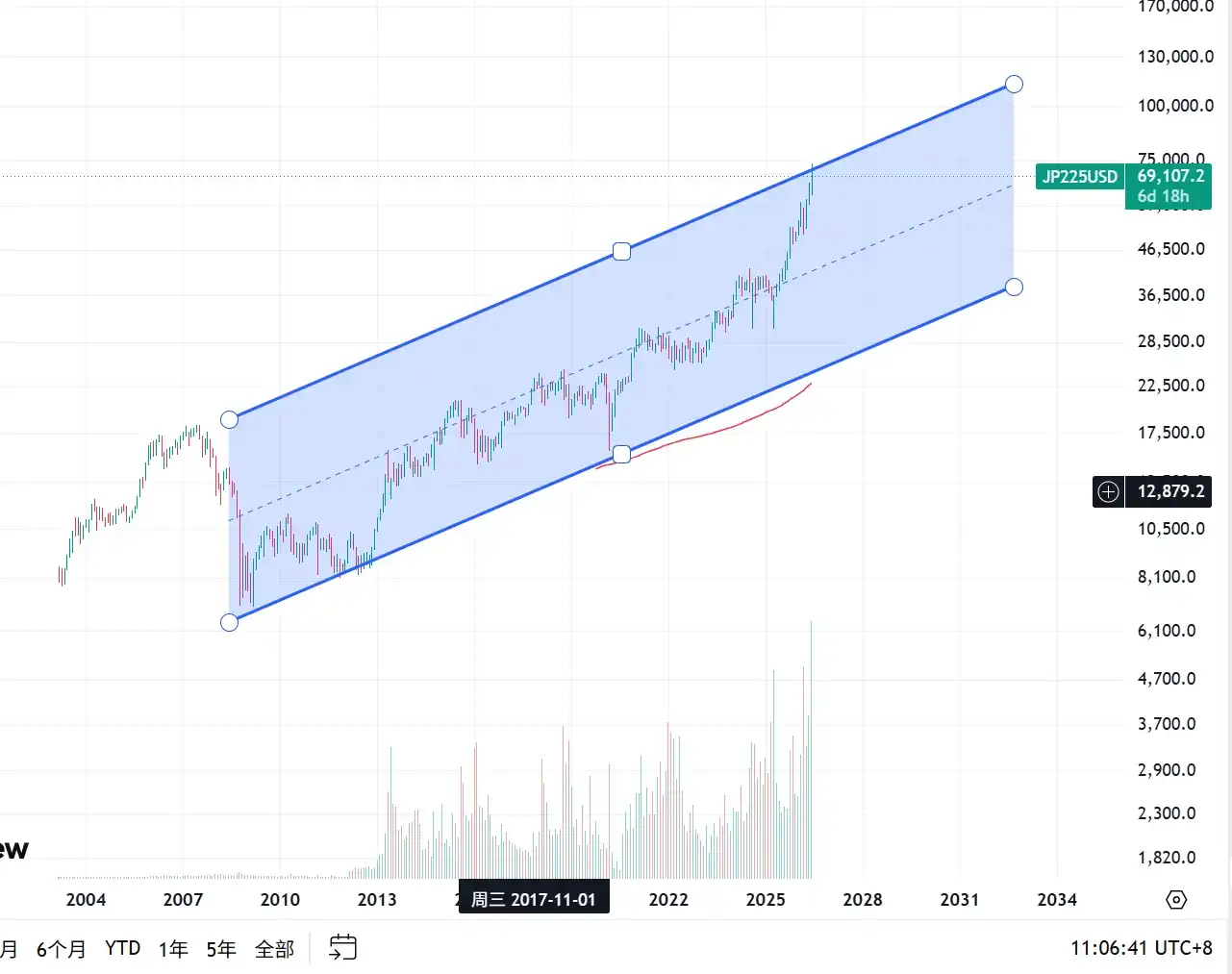
1. Japanese and South Korean stock markets, which have continuously experienced capital transfers supported by national will, have reached significant resistance levels of their long-term channels:
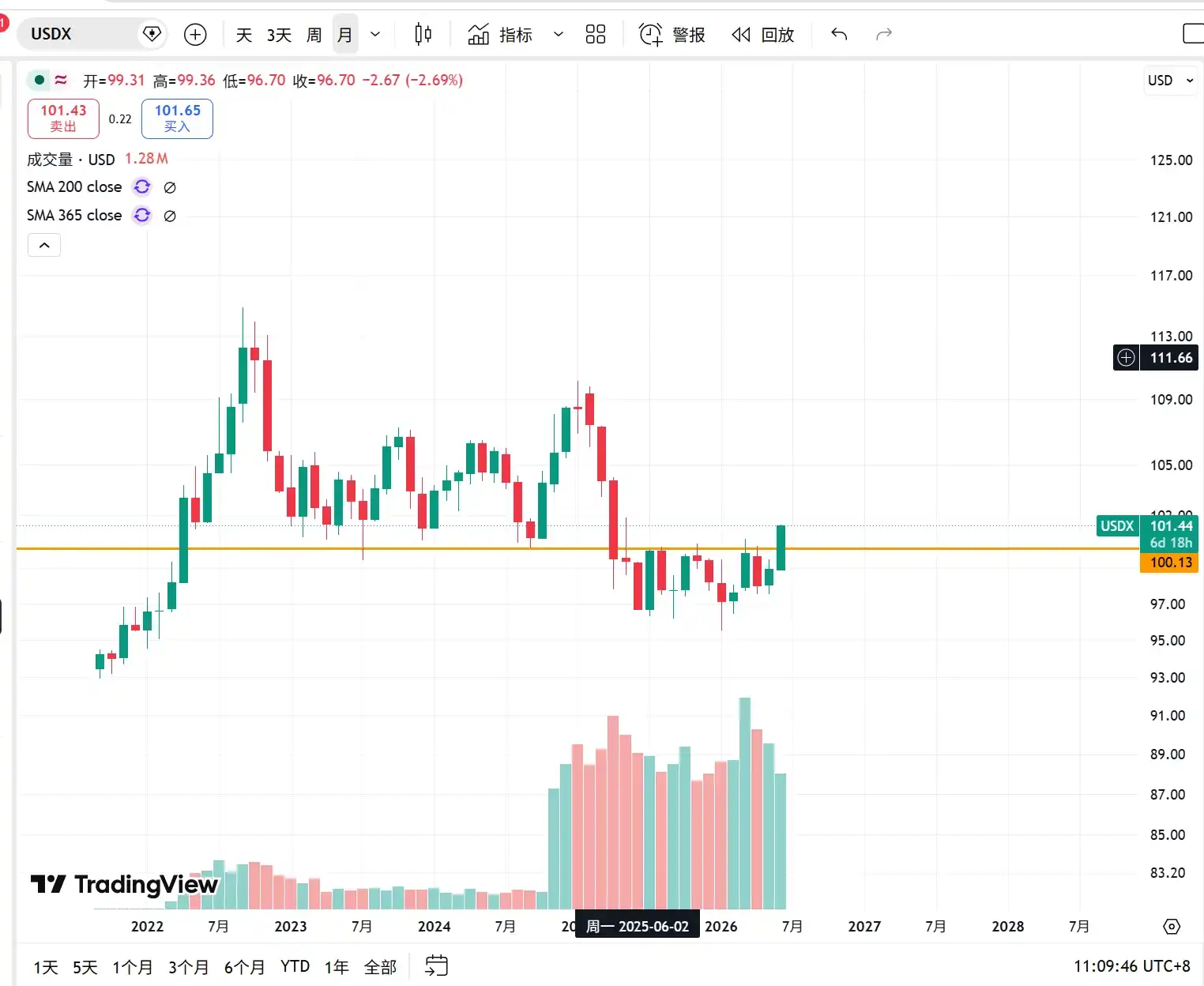
2. The US Dollar Index has broken through its resistance level from the past year:
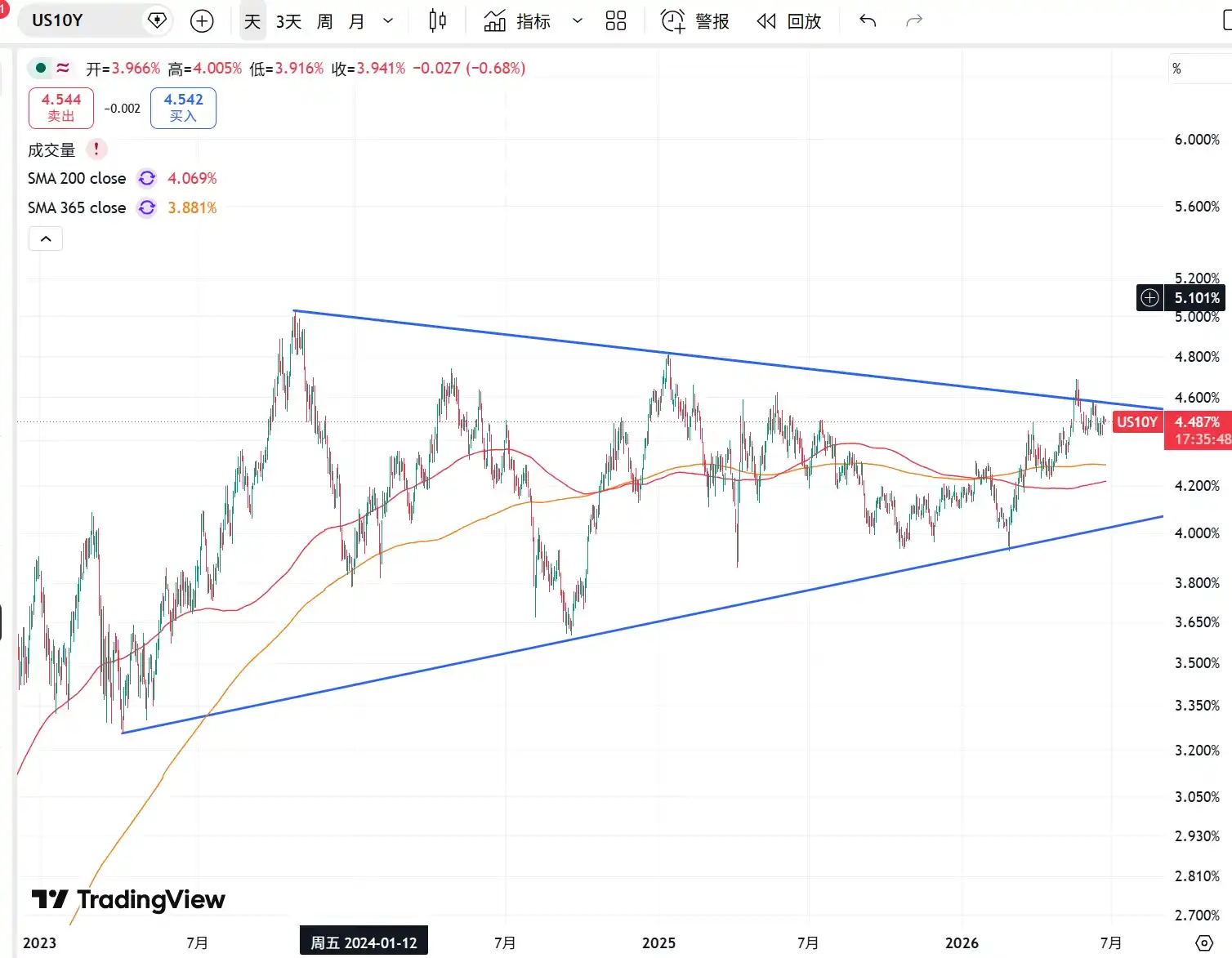
3. The US 10-Year Treasury yield remains stable while the 2-Year Treasury yield has formed a certain upward trend:
Standing at this moment, we see leveraged funds in SK Hynix exceeding the scale of Tesla's, and a massive number of white-collar workers are rapidly losing the valuation premium of their individual human capital, being forced into the endless game of the capital markets. Meanwhile, many countries deeply intertwined with the global trade system and trusting in capitalist globalization are paying the price for that past trust: the breakdown of global supply chains and the disintegration of international economic and trade alliances will severely damage the practical ability of their fiscal and monetary systems to regulate the economy. After all, printing money cannot produce oil, copper, or optical modules. Global division of labor has ultimately become a noose around their own necks.
One day, when liquidity is expected/actually contracts again, numerous leveraged funds will begin to cash out liquidity via algorithms, starting during Japanese and South Korean trading hours. This shock is bound to transmit to global fear indices and trigger greater waves. Furthermore, underlying national turmoil and fragile economies sustained by short-sighted, desperate measures will be further exposed during the turbulence, instead amplifying emotional swings. This will not end beautifully.
For metals we have been tracking, precious metals like gold and silver will be temporarily suppressed under such macro pressures due to the strong will of various countries to exchange for US dollars to secure commodity stockpiles—this is particularly evident in central banks led by Turkey. However, this shock is precisely the deep preparatory squat before the real major uptrend for gold and silver. The ultimate failure in the Hormuz Strait is the prelude to the loosening of the US dollar's dominance, and the market turmoil post-interest rate hikes will ultimately lead to a future of easing. For copper and numerous minor metals, the game is more complex. We tend to believe there will be a decent sweet spot when the battle over interest rate hike expectations reaches an extreme.
For Bitcoin, we need to seriously evaluate for the first time the possibility of whether MSTR, under future cash flow pressure and the risk of other parties front-running the potential sell-off of its 800,000 BTC holdings, might press that evil button. In the scenario described above, BTC will obviously not remain unscathed. Therefore, we need to think more seriously about BTC's positioning and tradable directions during this round of risk release. The bottom of this cycle might seem unbelievable at this moment, but a deeper adjustment level is not a fantasy during panic.
At the beginning of the year, it was hard to predict the events in the Hormuz Strait or that global capital markets would enter the second half of the year in this manner. But risk also brings opportunity. Let's encourage each other.