Man Who Set Fire to Sam Altman's Home Also Carried an 'Assassination List' of AI Executives

marsbitPublished on 2026-04-15Last updated on 2026-04-15

Author: Curry, Deep Tide TechFlow

Deep Tide Introduction: Daniel Moreno-Gama, a 20-year-old man from Texas, has been charged with attempted murder and arson among multiple federal and state charges for throwing an incendiary device at the San Francisco residence of OpenAI CEO Sam Altman.

Police found a document titled "Your Last Warning" on his person, containing the names and addresses of several AI company CEOs and investors. Prosecutors stated that if evidence shows his actions were motivated by a desire to change public policy, he will be charged with domestic terrorism.
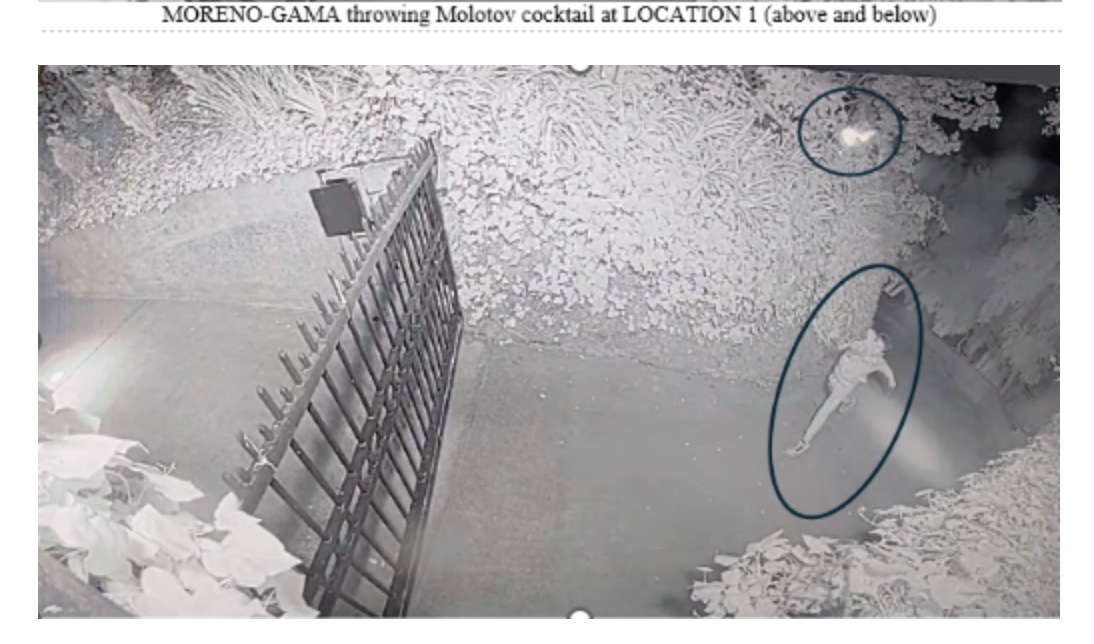
Image: Surveillance footage released by the U.S. Department of Justice showing the suspect throwing an incendiary device at Sam's home

At approximately 4 a.m. on April 10, Moreno-Gama threw a homemade incendiary device at Altman's residence in San Francisco's Russian Hill neighborhood, igniting the exterior iron gate before fleeing on foot. Less than an hour later, he appeared at the OpenAI headquarters about 3 miles away, hitting the glass doors with a chair and telling security personnel that he was there to "burn down the building and kill everyone inside." San Francisco police subsequently apprehended him at the scene and found an incendiary device, a can of kerosene, a lighter, and a three-part document on his person.

This incident is the latest manifestation of the escalating security crisis within the AI industry. Matt Cobo, Acting Special Agent in Charge of the FBI's San Francisco office, stated bluntly at a press conference on Monday that this was "not a spontaneous act, but a planned, targeted, and extremely serious one."
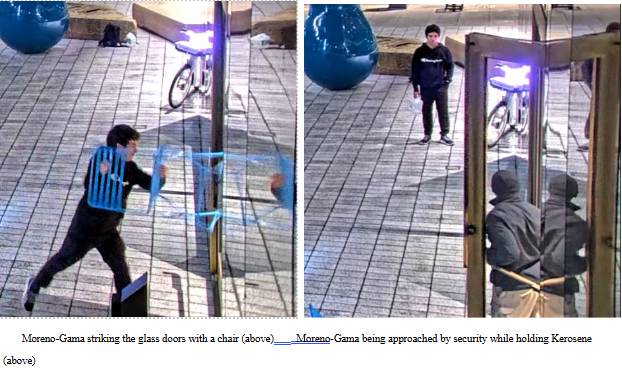
Image: After setting the residence on fire, the suspect attempted to break the doors of the OpenAI office

Document Contents Revealed: Calls for Killing AI Company CEOs, Lists Names and Addresses of Multiple Individuals

According to a U.S. Department of Justice press release on April 13, the document carried by Moreno-Gama was titled "Your Last Warning" in its first part. It advocated opposition to AI and promoted the killing of AI company CEOs and their investors, accompanied by names and addresses purportedly belonging to several CEOs and investors.

In the document, Moreno-Gama admitted to having "killed/attempted to kill" Altman. The second part, titled "More Words About Our Impending Extinction," elaborated on what he perceived as the existential threat AI poses to humanity.

The document concluded with a letter addressed to Altman, stating, "If you miraculously survive, I will take it as a sign from God for you to redeem yourself." On the same day, Moreno-Gama also emailed a version of the document to his former college in Texas, which, according to CNN citing FBI sources, is Lone Star College in Montgomery County, Texas.

An investigation by SF Examiner found that Moreno-Gama had been posting anti-AI content on Instagram and Substack as early as the summer of 2024. His Instagram account posted in December saying, "If we don't act soon, we will die, I am very sure of that." In January, an article published on his Substack described AI company CEOs as "likely sociopathic/psychopathic" and referred to Altman as "consistently reported as a pathological liar."

Altman Issues Lengthy Response: 'I Underestimated the Power of Words and Narrative'

Hours after the attack, Altman posted a photo of his husband and young child on his personal blog, writing, "We are usually very private, but this time I'm sharing a photo in the hope of deterring the next person who wants to throw a Molotov cocktail at our house."

In the blog post, Altman acknowledged that "a provocative article was written about me a few days ago" (referring to a recent in-depth investigation by The New Yorker), and that he had been warned that the article appeared at a time of heightened public anxiety about AI, potentially putting him at greater risk. "I brushed that aside. Now I'm waking up in the middle of the night to the smell of gas, starting to think I underestimated the power of words and narrative."

Altman also expressed understanding for anti-technology sentiments, stating that the fear and anxiety caused by AI "are reasonable," but called on all parties to "lower the temperature of the rhetoric and the means."

OpenAI, in a statement, called for resolving AI controversies "through the democratic process," "welcoming good-faith debate," but stated that "violence has no place in our democracy."

Residence Shot At Two Days Later, Silicon Valley Executive Security Crisis Intensifies

Just two days after the incendiary device attack, Altman's residence was attacked again.

According to the San Francisco Police Department, at approximately 2:56 a.m. on April 12, police received a report of a possible shooting in the Russian Hill neighborhood. Initial police reports cited by SF Standard indicate that a Honda sedan stopped in front of Altman's residence, and the passenger in the front seat reached a hand out the window and fired a shot towards the house. According to Newsweek, police subsequently arrested 25-year-old Amanda Tom and 23-year-old Muhamad Tarik Hussein and recovered three firearms from their residence. The two were charged with "negligent discharge of a firearm."

An OpenAI spokesperson told Newsweek that the shooting incident was unrelated to Altman, with no indication that his residence was the intended target. However, a notable detail is that, according to SF Standard, Hussein's father lives in Spring, Texas, and Moreno-Gama's registered address is also in Spring, Texas. Police have not yet confirmed any connection between the two incidents.

Previously, on December 4, 2024, UnitedHealth Group CEO Brian Thompson was shot and killed in New York, a case that sparked widespread public discussion about the safety of corporate executives.

San Francisco District Attorney Jenkins criticized what she called "inflammatory rhetoric" regarding the potential impact of AI at a press conference, suggesting a causal link between polarized public discourse and violent acts targeting tech leaders.


Related Questions

QWho was charged with throwing a Molotov cocktail at Sam Altman's residence and what were the charges?

ADaniel Moreno-Gama, a 20-year-old man from Texas, was charged with attempted murder and arson, among other federal and state charges.

QWhat was the title of the document found on the suspect and what did it contain?

AThe document was titled 'Your Last Warning' and it contained the names and addresses of several AI company CEOs and investors, advocating for their killing and opposing AI.

QHow did Sam Altman respond to the attack on his home?

ASam Altman posted a photo of his husband and young child on his blog, stating he underestimated the power of words and narratives. He acknowledged the reasonable fears about AI but called for de-escalating the rhetoric and methods.

QWhat happened at Sam Altman's residence just two days after the Molotov cocktail attack?

ATwo days later, a gunshot was fired towards Altman's residence from a Honda car. Two individuals, Amanda Tom and Muhamad Tarik Hussein, were arrested and charged with negligent discharge of a firearm.

QWhat connection was noted between the suspect of the Molotov attack and the gunshot incident?

AA potential connection was noted as Muhamad Tarik Hussein's father, one of the gunshot suspects, lives in Spring, Texas, which is the same town where Daniel Moreno-Gama, the Molotov suspect, is registered to live. However, have not confirmed a link between the two events.

Related Reads

ZEC Co-Founder Responds to Orchard Vulnerability: No Signs of Theft, Orchard Pool to Be Sealed

ZEC Co-Founder Addresses Orchard Vulnerability: No Signs of Theft, Plans to Sunset Orchard Pool A security vulnerability was recently discovered in Zcash's Orchard shielded pool, raising key concerns. The primary questions are whether the flaw was exploited, if user funds are safe, whether users can verify the total ZEC supply, and if other similar vulnerabilities exist. Analysis suggests the vulnerability was likely not exploited prior to its discovery. It was found proactively by a researcher using specialized tools, not due to an active breach. The development team and mining pools acted quickly to contain the issue. Typical financially-motivated attacks would likely have left visible on-chain evidence, which has not been observed. User funds in Orchard are considered safe and should be recoverable, assuming no prior exploitation. If the flaw was never used, all legitimate funds can be withdrawn. The article outlines risks associated with moving funds to transparent addresses or other pools, but concludes that leaving assets in place is a reasonable option. Currently, users cannot independently verify that the total ZEC supply hasn't been inflated due to this bug. However, the planned Ironwood network upgrade is designed to resolve this. It will permanently close the Orchard pool to new deposits and internal transfers, allowing only withdrawals. This mechanism will cap total withdrawals at the amount of legitimately deposited funds, enabling anyone to cryptographically verify the supply post-upgrade. Multiple teams, including Shielded Labs, have conducted extensive audits focused on counterfeiting vulnerabilities, assisted by advanced AI tools. No additional flaws of this type have been found so far, increasing confidence that no other similar undisclosed vulnerabilities exist. In summary, evidence indicates the Orchard bug was probably not used, user funds are secure, and no other counterfeiting flaws are currently known. The upcoming Ironwood upgrade will restore users' ability to independently verify the total ZEC supply, closing this chapter.

Foresight News4m ago

ZEC Co-Founder Responds to Orchard Vulnerability: No Signs of Theft, Orchard Pool to Be Sealed

Foresight News4m ago

Microsoft Announces Commercial-Grade Quantum Computer to be Completed in Three Years: Will the Boots Land?

Microsoft announces plans to build a commercially viable quantum computer by 2029, a significant acceleration from the previous industry consensus of a decade. The breakthrough is fueled by their new Majorana 2 quantum chip, which boasts a record-breaking average qubit lifetime of 20 seconds—a 1,000-fold reliability improvement over its predecessor. This leap was achieved by leveraging topological qubits, a theoretically more stable technology using Majorana zero modes, and switching the core superconducting material from aluminum to lead. Crucially, Microsoft's "Discovery" agentic AI platform accelerated the R&D process. AI agents autonomously analyzed vast experimental data, optimized manufacturing parameters (like the lead alloy composition), and solved issues like "ghost noise," dramatically speeding up experimentation. While the 20-second coherence time is a landmark, challenges remain: scaling from 12 qubits to the millions needed for practical applications, managing compilation costs, and verifying quantum results. Skeptics call for peer-reviewed data, and questions persist about whether even 20 seconds is sufficient for complex algorithms like breaking RSA encryption. The race is on with other approaches (superconducting, trapped ions), but Microsoft's confidence in its topological roadmap signals a potential shortcut to a scalable quantum future.

marsbit23m ago

Microsoft Announces Commercial-Grade Quantum Computer to be Completed in Three Years: Will the Boots Land?

marsbit23m ago

Is There Really a "World Cup Curse" in the Market?

Is there really a "World Cup Curse" affecting markets? Historical data shows global equity markets often underperform during the tournament. The S&P 500 has averaged negative returns of -1.5% to -2.11% across 19 World Cups since 1950, with declines in 58% of events. China's Shanghai Composite fell in 71% of tournaments since 1994. Studies confirm reduced trading activity during matches, with volumes dropping significantly, especially when a home nation plays. A team's loss can also lead to negative sentiment and selling pressure in its domestic market the next day. However, the "curse" may be partly attributed to seasonal weakness. Many tournaments are held in June-July, a historically weaker period for stocks ("Sell in May and go away"). The 2022 Qatar World Cup, held in November-December, saw a smaller drop in trading volume compared to summer events, suggesting timing plays a role. The cryptocurrency market's performance during World Cups has been mixed and largely driven by its own major catalysts (e.g., Mt. Gox hack, FTX collapse, halving cycles) rather than the tournament. Investment opportunities have shifted over time. Traditional beneficiaries like TV manufacturers have seen fading returns as streaming platforms become the core viewing channel. Classic consumer plays like beer and sportswear face challenges from changing consumption trends. Newer digital assets, like fractionalized collectible player cards on blockchain, have seen explosive growth. While gambling is a traditional sector, prediction markets are emerging. In conclusion, while a statistical correlation exists, the World Cup's direct impact on markets is likely limited and intertwined with seasonal patterns. With lower liquidity during the event, the simplest strategy for many might be to step back from trading and enjoy the games.

marsbit30m ago

Is There Really a "World Cup Curse" in the Market?

marsbit30m ago

Trading

Spot
Futures

Hot Articles

Discussions

Welcome to the HTX Community. Here, you can stay informed about the latest platform developments and gain access to professional market insights. Users' opinions on the price of S (S) are presented below.

活动图片













