LBank launches physical Visa crypto card with up to 10% cashback for real-world Web3 payments

cointelegraphPublished on 2026-08-27Last updated on 2026-08-27

Abstract

LBank, a global cryptocurrency exchange, has launched a physical Visa card, enabling users to spend their crypto holdings at Visa merchants and ATMs worldwide. The card allows direct payments from the user's LBank spot account, with digital assets converted to local currency in real-time. It features zero monthly, top-up, and foreign-exchange fees, a 0.8% spending fee, and support for Apple Pay and Google Pay. Key benefits include up to 10% cashback on transactions, referral commissions of up to 30%, and monthly spending limits up to 1,000,000 USDT for higher-tier users. Idle USDT can also earn up to 10% APR through flexible savings, with promotional boosts. Complementing the card is LBank Pay, a QR-based payment solution supporting multiple digital assets and integrated with local payment networks in regions like Southeast Asia and Latin America. According to LBank's Eric He, these products aim to reduce friction and integrate digital assets into everyday financial habits and existing payment infrastructure.

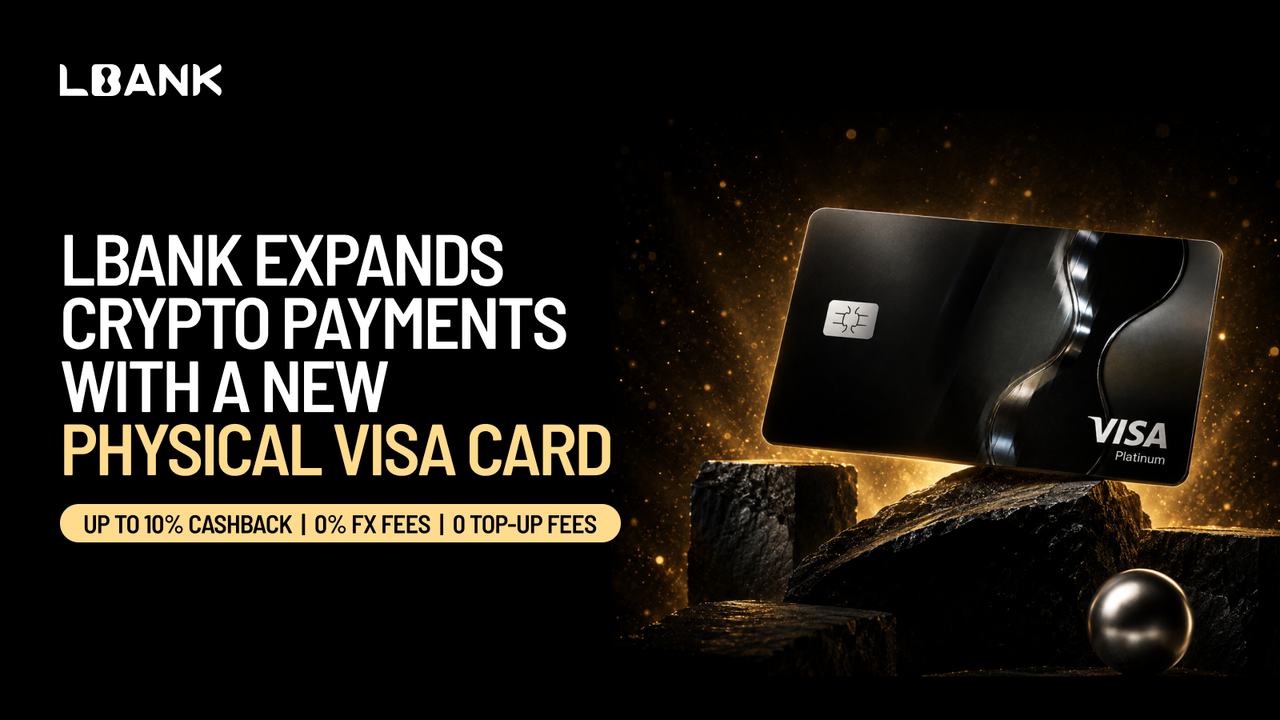
Singapore, Singapore, August 27, 2026, Chainwire – LBank, a global cryptocurrency exchange, has officially launched the Physical Card, expanding its digital asset ecosystem into everyday payments through the global Visa network. Eligible users can now apply for the card through the official application page and use their LBank spot account balance at supported Visa merchants and ATMs worldwide. The launch gives users a new way to move digital assets beyond trading and into everyday spending, including dining, hotels, shopping, transportation, and cross-border travel.

LBank Card is built around a simplified payment experience designed to reduce the friction between holding crypto and using it in the real world. The card features zero monthly fees, zero top-up fees, and zero foreign-exchange fees, with a 0.8% spending fee, and supports both Apple Pay and Google Pay. Through Visa’s global merchant network, users can access a broad range of everyday payment scenarios without being limited to crypto-native merchants. More importantly, users can pay directly from their LBank spot account balance, without separately topping up or transferring funds to a dedicated card wallet. Digital assets are converted into the required transaction currency in real time when a payment is made, eliminating the need to manually exchange assets, prepare local fiat or complete multiple transfers. This allows users to move from holding digital assets to making a payment with fewer steps and a more familiar card experience.
LBank Card also introduces a range of rewards and financial benefits designed to provide additional value beyond payments:

  • Up to 10% cashback: Eligible users can earn up to 10% cashback on qualifying transactions, including the dedicated coffee cashback program.
  • Up to 30% referral commissions: Individual users can earn up to 10% commission through eligible referral programs, while business partners and agents can access commission rates of up to 30%.
  • Up to 1,000,000 USDT monthly limit: Higher-tier users can access monthly spending limits of up to 1,000,000 USDT, supporting frequent and high-value transactions.
  • Up to 10% APR + 300% promotional boosts: Eligible idle USDT can be automatically allocated to LBank’s flexible savings products, offering yields of up to 10% APR, with promotional campaigns providing up to 300% additional interest.

Together, these features extend LBank Card beyond a conventional payment product, allowing users to spend digital assets, earn rewards and access eligible financial benefits within the same ecosystem.

Complementing LBank Card, LBank Pay is already live as the exchange’s QR-based digital asset payment solution, providing an alternative for users and markets where QR payments are a primary part of everyday commerce. LBank Pay supports BTC, USDT, ETH and more than 20 additional digital assets, and connects with more than 10 major local payment networks, including PIX, VietQR and DuitNow QR, across multiple markets in Southeast Asia and Latin America. Users can scan supported merchant QR codes directly through the LBank App, with their digital assets converted in real time and applicable fees displayed before confirmation. While LBank Card extends crypto spending through the global Visa network, LBank Pay connects digital assets with established local payment infrastructure, giving users complementary options for everyday purchases, travel and cross-border spending.

“Crypto is moving beyond trading into a broader financial use case, and payments are an important part of that transition,” said Eric He, LBank’s Community Angel Officer and Risk Control Adviser. “The challenge is no longer simply giving users access to digital assets, but making those assets easier to use within the financial systems and payment habits they already rely on. LBank Card and LBank Pay approach this from two complementary directions — connecting crypto with global card acceptance while also integrating with local payment networks. Our goal is to reduce the friction between holding digital assets and using them in everyday life, making crypto payments increasingly simple, accessible and practical.”

As the crypto market matures, digital assets are evolving beyond trading into a broader financial layer spanning payments, savings and everyday commerce. LBank believes the next stage of adoption will depend on closing the gap between digital assets and real-world financial infrastructure, making the movement from holding to spending faster, simpler and more seamless. Through LBank Card and LBank Pay, LBank is building toward a more integrated payment ecosystem while continuing to expand payment coverage, local integrations and financial services that bring digital assets closer to everyday use.

To ensure normal access to and use of LBank Card physical card features, users should update the LBank App to iOS v6.1.2 or Android v8.1.4. For more information about the LBank Physical Card, visit here.

About LBank

Founded in 2015, LBank is a leading global cryptocurrency exchange serving over 25 million registered users in 210 countries and regions. With a daily trading volume exceeding $23.81 billion and 10 years of safety with zero security incidents, LBank is dedicated to providing a comprehensive and user-friendly trading experience. Through innovative trading solutions, the platform has enabled users to achieve average returns of over 130% on newly listed assets.

LBank has listed over 300 mainstream coins and more than 50 high-potential gems. Ranked No. 1 in 100x Gems, Highest Gains, and Meme Share, LBank leads the market with the fastest altcoin listings, unmatched liquidity, and industry-first trading guarantees, making it the go-to platform for crypto investors worldwide.

Website: https://www.lbank.com/

Twitter: https://twitter.com/LBank_Exchange

Telegram: https://t.me/LBank_en

Instagram: https://www.instagram.com/lbank_exchange

LinkedIn: https://www.linkedin.com/company/lbank

Media contact

press@lbank.com

Related Questions

QWhat are the key features and benefits of the newly launched LBank Physical Visa crypto card?

AThe LBank Physical Card is a Visa card that allows users to spend their LBank spot account balance worldwide at supported merchants and ATMs. Key features include: zero monthly, top-up, and foreign-exchange fees (with a 0.8% spending fee), support for Apple Pay/Google Pay, and real-time conversion of digital assets for payment. Benefits include up to 10% cashback on transactions, up to 30% referral commissions, monthly spending limits up to 1,000,000 USDT for higher-tier users, and the ability to earn up to 10% APR (with promotional boosts up to 300%) on idle USDT through flexible savings.

QHow does LBank Card aim to reduce friction between holding crypto and using it for real-world payments?

AThe LBank Card reduces friction by allowing users to pay directly from their LBank spot account balance without needing to manually top up a separate card wallet or convert assets beforehand. Digital assets are automatically converted to the required transaction currency in real-time at the point of sale. This eliminates steps like manual asset exchange, preparing local fiat, or completing multiple transfers, offering a more familiar and streamlined card payment experience.

QWhat is LBank Pay and how does it complement the LBank Card?

ALBank Pay is LBank's QR code-based digital asset payment solution, already live. It supports assets like BTC, USDT, ETH, and over 20 others, and integrates with more than 10 major local payment networks (e.g., PIX, VietQR) in Southeast Asia and Latin America. While the LBank Card extends crypto spending through the global Visa network, LBank Pay connects digital assets with established local QR payment infrastructure. Together, they provide complementary options for everyday purchases, travel, and cross-border spending, catering to different regional payment habits.

QAccording to LBank's Eric He, what is the challenge in crypto's transition to broader financial use cases like payments?

AAccording to Eric He, LBank's Community Angel Officer and Risk Control Adviser, the challenge is no longer simply providing users access to digital assets, but making those assets easier to use within the existing financial systems and payment habits people already rely on. The goal is to reduce the friction between holding digital assets and using them in everyday life.

QWhat are the technical requirements for users to access and use the LBank Physical Card features normally?

ATo ensure normal access and use of the LBank Physical Card features, users need to update their LBank App to at least iOS version 6.1.2 or Android version 8.1.4.

Related Reads

The Battle for Control of the Tracks Enters the Second Half: Banks vs. Crypto, Who Will Have the Last Laugh?

The competition for control over the tokenization infrastructure, or the "rails," is intensifying, moving beyond initial asset listing to dominance over settlement, custody, and regulatory layers. Recent developments signal a shift in power towards traditional finance. Key evidence includes: the formation of the BankChain Alliance by 39 U.S. state banking associations to launch a banking-owned blockchain network; moves by market infrastructure giants like DTCC, ICE, and Citadel Securities to establish their own institutional-grade on-chain systems; the struggle of crypto-native custodians like ZeroHash (re-applying for a bank charter) and Copper (facing a severe valuation drop), highlighting that regulatory "license moats" are now more critical than technical advantages; and the launch of stablecoin USD1 by licensed trust bank BitGo on the permissioned Canton network, showing convergence of stablecoin issuance towards regulated entities. The analysis concludes this is not a simple "banks vs. crypto" battle but a redefinition of the foundational infrastructure. A clear division of labor is emerging: open public chains for DeFi and innovation, while bank-led consortium chains and licensed entities capture institutional settlement, tokenized deposits, and regulated custody. The defining question is no longer *if* an asset is tokenized, but *on which rails* it runs and *who controls* those rails, with regulation and牌照 providing the ultimate backstop.

marsbit7m ago

The Battle for Control of the Tracks Enters the Second Half: Banks vs. Crypto, Who Will Have the Last Laugh?

marsbit7m ago

SEC Submits Proposal to White House for Revising Crypto Asset Custody Rules

The U.S. Securities and Exchange Commission (SEC) has submitted a proposal to the White House for revising rules governing the custody of crypto-assets by investment advisers and funds. Dated August 25, 2026, the proposal—known as Amendments to the Custody Rules (RIN 3235-AN46)—has entered review by the Office of Information and Regulatory Affairs (OIRA). The SEC aims to clarify the regulatory framework for crypto-asset custody and modernize certain requirements it deems outdated in light of market and technological evolution. The proposal, classified as economically significant and deregulatory under Executive Order 14192, seeks to alleviate industry burdens by removing redundant rules rather than imposing new ones. This initiative emerges amid Congressional delays in passing the comprehensive Digital Asset Market Clarity Act (CLARITY). SEC Chair Paul Atkins previously indicated the agency would proceed with its own rules if CLARITY stalled. The SEC plans to publish a Notice of Proposed Rulemaking (NPRM) in October 2026, followed by a standard public comment period. The move marks a shift from the post-2008 Madoff scandal era, which spurred stricter custody rules, toward a more flexible approach for crypto markets. However, unresolved technical questions, such as the regulatory treatment of private key custody, remain. The proposal balances industry adaptability against potential risks, as reduced oversight could delay the detection of custody issues.

cryptonews.ru19m ago

SEC Submits Proposal to White House for Revising Crypto Asset Custody Rules

cryptonews.ru19m ago

Trading

Spot
活动图片