How SWIFT Could End Up Working With XRP For Global Payments

bitcoinist2026-01-06 tarihinde yayınlandı2026-01-06 tarihinde güncellendi

Özet

Cryptocurrency analyst SMQKE suggests that SWIFT could eventually adopt XRP for global payments as regulatory clarity improves. He references former SWIFT CEO Gottfried Leibbrandt's past concerns about crypto due to regulatory uncertainty, noting the environment has since evolved. SWIFT has already taken steps toward crypto integration by partnering with Consensys to develop a distributed ledger for faster, cheaper cross-border transactions, seen as competition for Ripple. However, SWIFT may still utilize existing crypto assets like XRP rather than issuing its own token. The connection between Ripple and SWIFT is highlighted through Ripple-owned GTreasury's participation in SWIFT's partner program. Ripple's recent conditional approval to operate as a national trust bank could further deepen this relationship, potentially paving the way for XRP integration into SWIFT's system. XRP's price was up over 12% at the time of writing.

Crypto pundit SMQKE has revealed how SWIFT could end up adopting XRP for its global payment services. The pundit highlighted a statement by the company’s former CEO, Gottfried Leibbrandt, explaining why the company was hesitant to adopt cryptocurrencies.

How SWIFT Could End Up Adopting XRP For Global Payments

In an X post, SMQKE declared that SWIFT will adopt cryptocurrencies like XRP as regulations become clearer. He then pointed to a document that highlighted Leibbrandt’s statement, in which the former SWIFT CEO said they were hesitant to use cryptocurrencies due to issues such as the uncertain regulatory environment at the time. He added that risk-averse institutions were unlikely to adopt crypto until regulations become clearer.

However, the regulatory environment has improved significantly since Leibbrandt’s statement, indicating that SWIFT could soon adopt cryptocurrencies such as XRP. It is worth noting that the payment provider already took the first step towards embracing crypto last year by announcing plans to launch its distributed ledger.

SWIFT has partnered with Joe Lubin’s Consensys to launch a distributed ledger that will enable faster, cheaper, and more efficient cross-border transactions, thereby boosting its payment services. This move has been largely viewed as a way to directly compete with Ripple, which uses the XRP Ledger for its payment services. Meanwhile, there have also been concerns that it could impact the altcoin’s utility if Ripple gains less traction due to the competition from SWIFT.

However, there is still the possibility that SWIFT could adopt the token alongside other crypto assets for its on-chain payment services. SMQKE previously highlighted a statement by SWIFT executive Stephen Grainger that they had no plans to issue their native token. If that is the case, then the company’s distributed ledger is likely to utilize other crypto assets instead.

The Ripple And SWIFT Connection

Crypto pundit BankXRP highlighted a connection between Ripple and SWIFT amid talks of the latter potentially adopting the token. The pundit pointed out that GTreasury, which Ripple owns, is part of the SWIFT Certified Partner Program. As such, it offers global bank connectivity and hosting options for SWIFT’s Alliance Lite2 Program. GTreasury has also partnered to offer SWIFTRef data for IBAN and ABA lookups directly within its workflow.

Ripple could also deepen its relationship with SWIFT, as the crypto firm is set to operate as a national trust bank following the conditional approval from the OCC. This is bullish for the altcoin, as it could pave the way for SWIFT to integrate XRP into its payment system. XRP is already gaining momentum as Ripple looks to onboard more institutions on the Ledger by introducing new upgrades on the network.

At the time of writing, the altcoin price is trading at around $2.38, up over 12% in the last 24 hours, according to data from CoinMarketCap.

XRP trading at $2.33 on the 1D chart | Source: XRPUSDT on Tradingview.com

Trend Kriptolar

İlgili Sorular

QAccording to crypto pundit SMQKE, what is the key factor that could lead SWIFT to adopt cryptocurrencies like XRP?

AThe key factor is that regulations for cryptocurrencies have become significantly clearer since the time of former SWIFT CEO Gottfried Leibbrandt's statement, making adoption by risk-averse institutions more likely.

QWhat was the first major step SWIFT took towards embracing cryptocurrency technology last year?

ASWIFT announced plans to launch its own distributed ledger in partnership with Joe Lubin's Consensys, aimed at enabling faster, cheaper, and more efficient cross-border transactions.

QWhat connection exists between Ripple and SWIFT, as highlighted by the pundit BankXRP?

AGTreasury, a company owned by Ripple, is part of the SWIFT Certified Partner Program. It offers global bank connectivity and hosting for SWIFT's Alliance Lite2 Program and has partnered to integrate SWIFTRef data into its workflow.

QHow could Ripple's recent regulatory approval potentially affect its relationship with SWIFT?

ARipple received conditional approval from the OCC to operate as a national trust bank, which could deepen its relationship with SWIFT and potentially pave the way for SWIFT to integrate XRP into its payment system.

QWhat was the former SWIFT CEO's primary concern regarding the adoption of cryptocurrencies, as mentioned in the article?

AFormer SWIFT CEO Gottfried Leibbrandt stated that the company was hesitant to use cryptocurrencies due to the uncertain regulatory environment at the time, which made risk-averse institutions unlikely to adopt them.

İlgili Okumalar

Wall Street's Most Famous 'Cassandra' Now Has His Sights Set on Nvidia

Michael Burry, the famed "Big Short" investor, has once again captured Wall Street's attention with a series of short positions against major tech and semiconductor stocks, most notably Nvidia. In late June and July, through his "Cassandra Unchained" newsletter, Burry disclosed short bets against Nvidia, Tesla, Applied Materials, Caterpillar, the SOXX semiconductor ETF, and later, Micron Technology. His core thesis revolves around potential distortions in the AI infrastructure boom, specifically questioning whether extended depreciation schedules (e.g., 6 years vs. a realistic 2-3 years for AI chips) by cloud giants like Microsoft and Google artificially inflate profits. He also raises concerns about possible "off-balance-sheet circular financing," where chip demand might be propped up by vendor-backed funding to clients. Nvidia's stock experienced volatility following these disclosures, briefly dipping but largely holding near Burry's reported entry points, leaving his positions roughly flat or slightly underwater as of late July. This move is part of a pattern for Burry, whose track record since his legendary 2008 bet is mixed. He has faced notable losses, such as on Tesla in 2021, while scoring on broader market turns like the 2020 pandemic crash. His methodology focuses intensely on free cash flow and scrutinizing original financial documents to spot overvaluation and structural risks, but it often struggles with timing the market. The article contrasts Burry's stance with other prominent investors. Steve Eisman, another "Big Short" figure, is not shorting Nvidia, citing strong fundamentals but expressing nervousness about sustainability. Jim Chanos agrees with the broad "accounting mismatch" concern—comparing it to the dot-com bubble—but targets financial leverage in private equity firms rather than the chip stocks themselves. While Nvidia's short interest remains relatively low at 1.3-1.4% of float, the massive stock size means absolute short losses have been significant, exceeding $5 billion earlier this year. The piece concludes that for ordinary investors, the key takeaway is not replicating specific short bets but learning from the critical frameworks these investors use: questioning rosy accounting, identifying structural vulnerabilities, and maintaining skepticism during market euphoria, even if pinpointing the exact catalyst for a downturn remains elusive.

marsbit10 dk önce

Wall Street's Most Famous 'Cassandra' Now Has His Sights Set on Nvidia

marsbit10 dk önce

Weekly Selection丨Epic Stock Market Volatility, Changxin Tech's IPO Reshapes Storage Landscape, Saylor Aims to Re-Anchor STRC Around September 8th

PANews Weekly Digest: Market Turmoil, Tech Breakthroughs, and Crypto Developments. The week saw significant volatility across global markets. South Korea's KOSPI index experienced extreme turbulence, including multiple trading halts, largely driven by sharp declines in AI hardware stocks like SK Hynix. In contrast, China's Changxin Xinqiao (CXC) achieved a landmark IPO with a market cap surpassing 4 trillion yuan, marking a major success for the domestic DRAM industry after a decade of losses. In the crypto and Web3 space, several key narratives emerged. AI is driving demand for new infrastructure, with projects like AI agent wallets and programmable payments gaining traction, attracting interest from firms like Coinbase. The Bitcoin mining sector is pivoting, with companies like MARA focusing on energy management as electricity becomes a core AI-era asset. Meanwhile, the RWA (Real World Assets) sector faces a "utilization puzzle," with hundreds of billions in on-chain assets remaining dormant. Notable market movements included a historic single-day surge of over 17% for the KOSPI index and a significant migration of $16.5 billion in staked ETH within the Lido ecosystem. Michael Saylor announced a target to re-peg the STRC stablecoin around September 8th. Other highlights include discussions on Ethereum's ambitious 2030 roadmap for scaling and privacy, analysis showing high protocol revenues not always translating to token price gains, and warnings from Citi about potential extreme commodity price shocks by late 2026.

marsbit15 dk önce

Weekly Selection丨Epic Stock Market Volatility, Changxin Tech's IPO Reshapes Storage Landscape, Saylor Aims to Re-Anchor STRC Around September 8th

marsbit15 dk önce

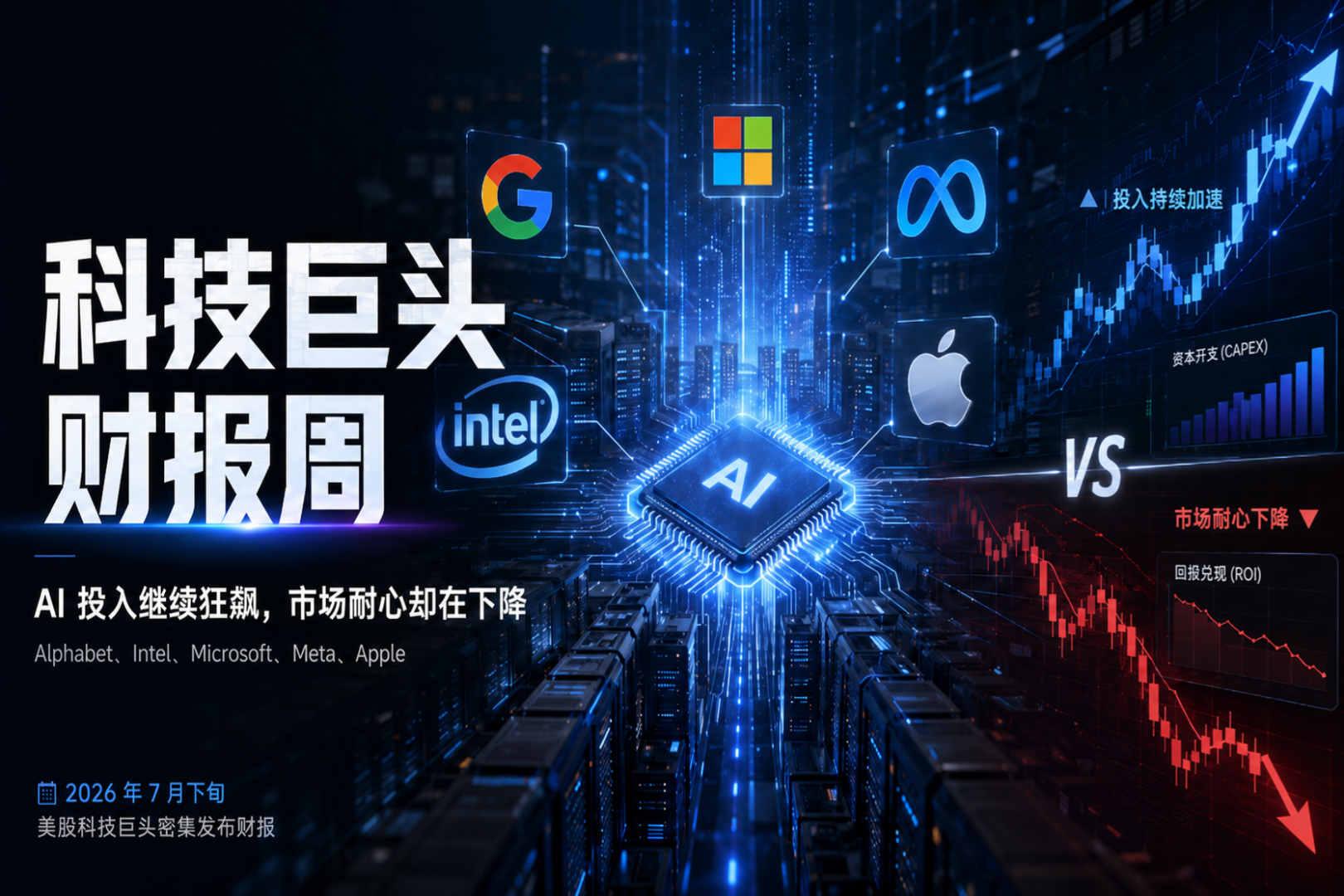
When the Market Begins to Question AI Capex: A Full Analysis of Q2 Earnings Reports from Five Tech Giants

In late July 2026, five major US tech giants—Alphabet, Intel, Microsoft, Meta, and Apple—released their Q2 earnings reports. While all companies exceeded revenue and profit expectations, driven by strong AI-related business growth, investor reactions diverged sharply due to concerns over escalating AI capital expenditures (capex) and their impact on free cash flow. Alphabet reported strong revenue growth and a surging cloud business, but its stock fell after announcing a doubled year-on-year capex and negative quarterly free cash flow for the first time. Intel posted its strongest revenue growth in over 15 years, but its stock experienced volatile trading after significantly raising its full-year capex guidance. Microsoft saw its stock surge after beating estimates and, crucially, lowering its capex forecast while projecting positive free cash flow. Meta faced the most severe sell-off as its profits declined despite revenue beats, with free cash flow plunging over 90% and its capex guidance raised. Apple reported record June-quarter results, but its stock plummeted after providing Q4 revenue guidance that fell short of expectations, citing supply chain constraints and forex headwinds. The overall takeaway is that the market's focus has shifted from validating AI demand to scrutinizing the timeline for returns on massive AI investments. Companies demonstrating a clearer path to managing capex and preserving free cash flow, like Microsoft, were rewarded, while those signaling continued aggressive spending faced investor skepticism.

Odaily星球日报24 dk önce

When the Market Begins to Question AI Capex: A Full Analysis of Q2 Earnings Reports from Five Tech Giants

Odaily星球日报24 dk önce

a16z: From Companies to DAOs, DUNA May Become the Next Generation Organizational Form

This article, "From Companies to DAOs: How DUNA Could Become the Next Organizational Form," traces the 500-year evolution of business collaboration. It begins with medieval structures like the *commenda* and Florentine *compagnia*, which exposed partners to personal risk. The modern corporation, exemplified by the Dutch East India Company (VOC), was a revolutionary leap, enabling large-scale, capital-intensive ventures by offering limited liability and reducing coordination costs. However, corporations introduced new challenges like principal-agent problems and bureaucratic overhead. The piece argues that software and internet-native protocols are now reducing these traditional overheads. Decentralized Autonomous Organizations (DAOs) emerged as a new model for coordination without centralized management. Yet, DAOs face a significant legal vacuum: they lack legal recognition, leaving members exposed to unlimited personal liability, and their tokens are vulnerable to being classified as securities under unclear regulations (e.g., the Howey Test). This has forced projects into suboptimal workarounds like offshore foundations. The article identifies the Decentralized Unincorporated Nonprofit Association (DUNA) as a potential solution. Recently legalized in states like Wyoming, the DUNA provides a legal wrapper for decentralized networks. It grants key protections—legal personality, limited liability, and perpetual existence—to a group without imposing a traditional hierarchical management structure. This allows token-holder communities to govern, hold assets, and contract as a single legal entity, aligning with their decentralized nature. While DUNA doesn't solve all governance challenges or magically resolve securities law questions, it represents a crucial step. It fills the legal recognition gap, offering a native legal form for internet-scale, decentralized collaboration and extending the separation of personal risk from organizational venture into a new domain.

marsbit1 saat önce

a16z: From Companies to DAOs, DUNA May Become the Next Generation Organizational Form

marsbit1 saat önce

2026 Mid-Year Report On-Chain RWA: Tokenized Stock Market Cap Doubles in a Year, But 90% of Rights Are Hollow Shells

The 2026 Mid-Year Report on On-Chain RWA highlights a significant growth in tokenized stock market capitalization, which nearly doubled from $951 million in March to $1.89 billion by July. However, the report reveals a fundamental contradiction in this "layer 2.5" ecosystem: products with the strongest legal foundation (like regulated U.S. infrastructure) lack liquidity and distribution, while freely tradable offshored wrapper products often lack substantive ownership rights. The increase is driven largely by a few products (SECZ, FGRS, STRCx) and platforms (Ondo, xStocks, Securitize collectively hold over 85% share). While distributed value across networks like Ethereum, Solana, and BNB Chain has grown, the market remains fragmented. Products referencing the same underlying asset (e.g., Apple stock) are distinct legal liabilities with different intermediaries and jurisdictional rules, offering varying degrees of legal claim. The report cautions that headline numbers are misleading, as they reflect changes in distributed token value—driven by issuance, conversions, and price movements—not pure investor inflows. True "canonical shares" with legal ownership, wide wallet distribution, institutional liquidity, and independent on-chain price discovery do not yet exist at scale. Tokenized treasuries show stronger product-market fit, and ETFs may be easier to scale than single stocks. The core takeaway is a trade-off: legal certainty versus liquidity and composability.

marsbit1 saat önce

2026 Mid-Year Report On-Chain RWA: Tokenized Stock Market Cap Doubles in a Year, But 90% of Rights Are Hollow Shells

marsbit1 saat önce

İşlemler

Spot

Popüler Makaleler

XRP 2.0 Nedir

XRP 2.0: Kriptopara Manzarasında Yeni Bir Sınır XRP 2.0'a Giriş Kriptopara alanı sürekli olarak evriliyor, yeni projeler sürekli olarak dikkat ve benimseme için mücadele ediyor. Bu vaatkar girişimlerden biri, ileri düzey blok zinciri teknolojisi ve güçlü şifreleme yöntemlerini kullanmak üzere tasarlanmış yeni bir kriptopara projesi olan XRP 2.0'dır. İsim Ripple’ın XRP'si ile benzerlikler taşısa da, XRP 2.0'un bağımsız olarak çalıştığını, işlem güvenliğini, gizliliği ve ölçeklenebilirliği artırmaya odaklandığını belirtmek önemlidir. Dijital finansal alan giderek merkeziyetsiz çözümleri benimsedikçe, XRP 2.0, web3'e ve genel olarak kriptopara projelerinin genişlemesine anlamlı bir şekilde katkıda bulunmayı hedeflemektedir. XRP 2.0 Nedir? XRP 2.0'ın temelinde, güvenli ve merkeziyetsiz bir dijital para ekosistemi yaratmayı amaçlayan bir kriptopara projesidir. Temel teknolojisi, karmaşık blok zinciri prensiplerini ileri düzey şifreleme teknikleriyle entegre eder. XRP 2.0'ın ana hedefi, hızlı işlem yürütümünü sağlarken kullanıcılar için artırılmış gizlilik korumalarını öncelikli hale getirerek kendini güvenilir ve etkili bir platform olarak kurmaktır. Proje, mevcut kriptoparaların karşılaştığı birçok sınırlamanın çözümü olarak tanıtılmakta ve daha yüksek işlem hacimlerini, geliştirilmiş hız ve gizlilikle yönetebilen bir sistem önermektedir. Bu çok yönlülük, XRP 2.0'ı çeşitli dijital para birimleriyle dolu bir pazarda önemli bir rakip haline getiriyor. XRP 2.0’ın Yaratıcıları Kimdir? XRP 2.0'ın yaratıcısının kimliği 'Wilbur' olarak belirtilmiştir. Ancak, Wilbur veya ona bağlı varlıklar hakkında kapsamlı bilgiler ulaşılmaz durumdadır. Birçok kriptopara yaratıcısının anonimliği, genellikle bir derece gizlilik ve güvenliği korumayı amaçlayan endüstride yaygın bir olgudur. XRP 2.0’ın Yatırımcıları Kimlerdir? Şu anda, XRP 2.0’ı destekleyen yatırım kuruluşları veya organizasyonlarına dair spesifik bilgiler kamuya açık değildir. Kriptopara sektöründe, tanınmış yatırımcılar tarafından desteklenmek bir projenin güvenilirliğini ve başarısını önemli ölçüde etkileyebilir; ancak XRP 2.0'ın finansal destekçileri ile ilgili şeffaflık henüz sağlanmamıştır. XRP 2.0 Nasıl Çalışır? XRP 2.0, güvenli ve merkeziyetsiz işlemler sağlamak için blok zinciri teknolojisi ve gelişmiş şifreleme algoritmalarının bir kombinasyonunu kullanarak öne çıkmaktadır. Yenilikçi yapısı, kullanıcı etkileşimini artırmaya ve geleneksel kriptopara işlemlerinin ötesinde işlevselliği genişletmeye yönelik tasarlanmış benzersiz özellikler içerir. Bu özellikler arasında, XRP 2.0, metin-görüntü ve metin-ses işlevsellikleri gibi yapay zeka destekli yetenekler entegre etmektedir. Bu eklemeler, kullanıcılar için etkileşimli deneyimi artırmayı ve çeşitli sektörlerde daha geniş uygulama alanını teşvik etmeyi amaçlamaktadır. Teknolojik ilerlemeleri, kullanıcı odaklı tasarımla birleştirerek, XRP 2.0, kriptopara çözümlerini operasyonel çerçevelerine entegre etmeyi düşünen çeşitli bireyler ve işletmelerin dikkatini çekmeyi hedeflemektedir. XRP 2.0 Zaman Çizelgesi XRP 2.0'ı anlamak, şu ana kadar tanımladığı dönüm noktalarını incelemeyi gerektirir: 23 Temmuz 2023: XRP 2.0, blok zinciri alanında güvenli ve merkeziyetsiz işlem kabiliyetlerini devrim niteliğinde sunmayı hedefleyen yeni bir kriptopara projesi olarak tanıtıldı. 8 Eylül 2023: XRP20 adlı başka bir projenin lansmanı gerçekleşti, bu, XRP 2.0 ile ilgisi olmayan Ethereum blok zincirinde bir ERC-20 token'ın ortaya çıkışını işaret ediyor. 13 Kasım 2023: XRP Defteri, rippled sunucu yazılımının 2.0.0 versiyonunun yayınlanmasıyla önemli bir güncelleme aldı. Bu gelişmenin XRP 2.0 kriptopara projesi ile bağlantılı olmadığını belirtmek önemlidir. XRP 2.0 Hakkında Anahtar Noktalar XRP 2.0'ın özünü distile etmek için birkaç kritik faktör öne çıkmaktadır: Benzersiz Özellikler: AI destekli metin-görüntü ve metin-ses gibi özelliklerin eklenmesi, XRP 2.0'ın potansiyel uygulamalarını daha da çeşitlendirir. Blockchain Teknolojisi: Çerçeve, işlemler için güvenli ve merkeziyetsiz bir ortam sağlamak üzere gelişmiş blok zinciri mekanizmaları ve şifreleme protokolleri kullanır. Ölçeklenebilirlik ve Gizlilik: XRP 2.0, işlem süreçlerinde artırılmış gizlilik korumalarını ve büyüyen kullanıcı tabanını karşılamak için gerekli ölçeklenebilirliği önceliklendirir. Ripple ile İlişki Yok: Önemli olarak, adıyla birlikte hareket etmemesine rağmen, XRP 2.0’ın Ripple’ın XRP’si ile herhangi bir bağı veya iş birliği bulunmamaktadır; bu, onun kriptopara ekosistemindeki operasyonel çerçevesini ve hedeflerini belirgin bir şekilde ayırmaktadır. Sonuç XRP 2.0, kriptopara alanında güvenlik, gizlilik ve verimlilik kombinasyonu sunmayı hedefleyen iddialı bir girişimi temsil etmektedir. Karmaşık teknolojileri ve kullanıcı dostu özellikleri entegre ederek, proje kriptoparanın günümüz dijital ekonomisinde neler başarabileceğinin ufkunu genişletmeyi hedefliyor. Yaratıcısının anonimliği ve açıklanmayan yatırımcıların eksikliği bazıları için soru işaretleri oluşturabilir, ancak XRP 2.0'ın ileri düzey işlevsellikler ve merkeziyetsizlik konusundaki odaklanması, onu giderek kalabalıklaşan bir kriptopara pazarında çekici kılmaktadır. Kriptopara manzarası evrimini sürdürdükçe, XRP 2.0, güvenli ve ölçeklenebilir blok zinciri çözümlerinin genişlemesinde önemli bir oyuncu olarak ortaya çıkabilir.

224 Toplam GörüntülenmeYayınlanma 2024.04.05Güncellenme 2024.12.03

XRP 2.0 Nedir

XRP Nasıl Satın Alınır

HTX.com’a hoş geldiniz! XRP (XRP) satın alma işlemlerini basit ve kullanışlı bir hâle getirdik. Adım adım açıkladığımız rehberimizi takip ederek kripto yolculuğunuza başlayın. 1. Adım: HTX Hesabınızı OluşturunHTX'te ücretsiz bir hesap açmak için e-posta adresinizi veya telefon numaranızı kullanın. Sorunsuzca kaydolun ve tüm özelliklerin kilidini açın. Hesabımı Aç2. Adım: Kripto Satın Al Bölümüne Gidin ve Ödeme Yönteminizi SeçinKredi/Banka Kartı: Visa veya Mastercard'ınızı kullanarak anında XRP (XRP) satın alın.Bakiye: Sorunsuz bir şekilde işlem yapmak için HTX hesap bakiyenizdeki fonları kullanın.Üçüncü Taraflar: Kullanımı kolaylaştırmak için Google Pay ve Apple Pay gibi popüler ödeme yöntemlerini ekledik.P2P: HTX'teki diğer kullanıcılarla doğrudan işlem yapın.Borsa Dışı (OTC): Yatırımcılar için kişiye özel hizmetler ve rekabetçi döviz kurları sunuyoruz.3. Adım: XRP (XRP) Varlıklarınızı SaklayınXRP (XRP) satın aldıktan sonra HTX hesabınızda saklayın. Alternatif olarak, blok zinciri transferi yoluyla başka bir yere gönderebilir veya diğer kripto para birimlerini takas etmek için kullanabilirsiniz.4. Adım: XRP (XRP) Varlıklarınızla İşlem YapınHTX'in spot piyasasında XRP (XRP) ile kolayca işlemler yapın.Hesabınıza erişin, işlem çiftinizi seçin, işlemlerinizi gerçekleştirin ve gerçek zamanlı olarak izleyin. Hem yeni başlayanlar hem de deneyimli yatırımcılar için kullanıcı dostu bir deneyim sunuyoruz.

2.2k Toplam GörüntülenmeYayınlanma 2024.12.10Güncellenme 2026.06.02

XRP Nasıl Satın Alınır

Tartışmalar

HTX Topluluğuna hoş geldiniz. Burada, en son platform gelişmeleri hakkında bilgi sahibi olabilir ve profesyonel piyasa görüşlerine erişebilirsiniz. Kullanıcıların XRP (XRP) fiyatı hakkındaki görüşleri aşağıda sunulmaktadır.

活动图片