Heat Rises for TermMax and Renaiss: How to Engage with These Two Projects Incubated by YZi Labs?

Odaily星球日报Published on 2026-05-28Last updated on 2026-05-28

Abstract

The article introduces TermMax and Renaiss, two projects recently gaining attention from the YZi Labs EASY Residency program incubator. It explains how users can potentially participate in them. TermMax is a DeFi protocol offering fixed-rate, fixed-term lending, functioning as a "lending AMM" to provide predictable interest rates. It has launched its V2 version, which improves capital efficiency and liquidity. Users can engage through its "Season 0" event on its V2 platform by connecting a wallet, daily check-ins, and completing tasks (deposit, trading, social) to earn points. Renaiss is a RWA infrastructure project focused on "collectible finance," specifically tokenizing real-world collectible trading cards (like Pokémon) onto the blockchain to enhance their liquidity and enable financial applications. Users can participate by visiting its official website, funding their account, and purchasing card packs (e.g., the OMEGA pack) with varying rarity tiers for a chance to obtain different card grades. Both projects represent specialized approaches within DeFi and RWA, aiming to offer users new avenues for fixed-income lending and investing in tokenized physical collectibles.

Original | Odaily Planet Daily (@OdailyChina)

Author | Asher (@Asher_ 0210)

Earlier this month, YZi Labs announced the 25 graduating projects from the third season of its flagship incubation program EASY Residency (For more details, read: EASY Residency Season 3 Graduation List Released, Which Sectors Has YZi Lab Focused On?). This round focused on directions such as restructuring on-chain financial markets, AI agents, tokenizing real-world assets, prediction markets, and privacy compliance.

Most projects are still in very early stages, with limited public information and relatively sparse community discussion. However, Odaily Planet Daily has observed that two projects in particular have seen a noticeable increase in heat recently: TermMax, which focuses on fixed-rate lending, and Renaiss, which revolves around the financialization of real-world collectible card assets.

Below, Odaily Planet Daily will examine TermMax and Renaiss from the perspectives of project positioning, product mechanisms, and potential engagement opportunities.

TermMax: A New DeFi Solution for Fixed-Rate Lending

Project Introduction
TermMax is a DeFi protocol focused on fixed-rate, fixed-term lending, which can be understood as a "Lending AMM." Compared to floating-rate lending protocols like Aave and Compound, TermMax emphasizes interest rate predictability—borrowers can lock in financing costs before opening a position, and lenders can also determine their yield at maturity in advance.

In terms of product mechanism, TermMax draws inspiration from the AMM concept of Uniswap V3 and tokenizes leverage and fixed-income exposure through Gearing Token and Fixed-rate Token. Users can complete fixed-rate lending, one-click Looping, Range Orders, and custom pricing curves within the platform. Operations such as lending, leveraging, and interest rate trading, which previously required repeated actions across multiple protocols, are now integrated into a single market.

Key Developments

Since its mainnet launch in April 2025, TermMax's TVL recently surpassed $71 million. The project currently supports multiple networks including Ethereum, Arbitrum, BNB Chain, and is expanding to ecosystems like X Layer and Base. Previously, on March 25, 2026, TermMax ranked second on Token Terminal's daily active address leaderboard for DeFi lending protocols, second only to Aave.
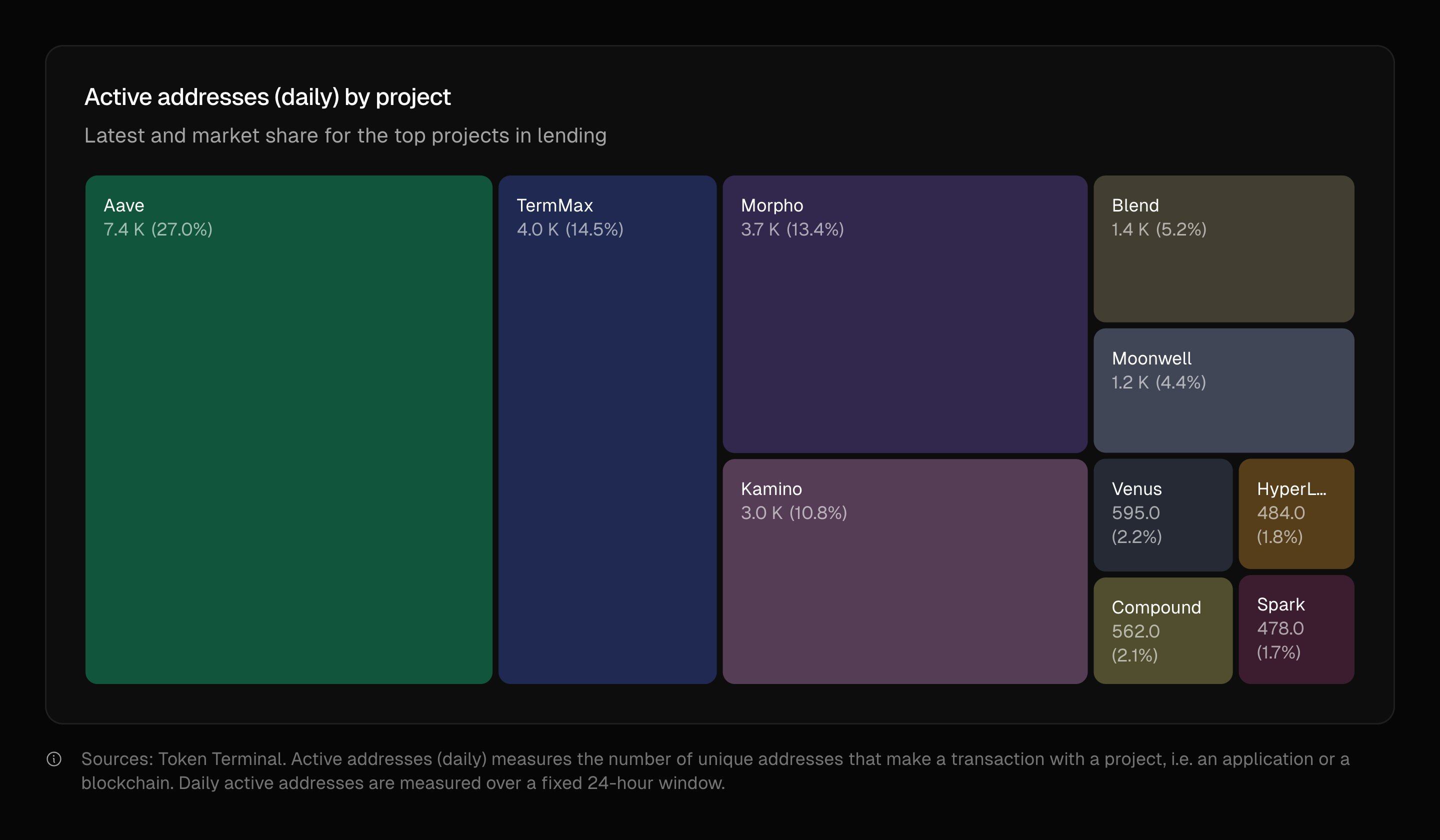
Daily Active Address Leaderboard for DeFi Lending Protocols (March 25, 2026)

Furthermore, TermMax is integrating fixed-rate lending with RWA scenarios. In January 2026, TermMax launched a fixed-rate market on BNB Chain supporting Ondo tokenized stocks as collateral, allowing users to access funds without selling their tokenized stock assets. Additionally, TermMax launched a single-asset USD₮0 lending product on X Layer with a fixed APY of up to about 5.07%, and collaborated with Morpho to introduce one-click Rollover, enhancing the flexibility of fixed-term debt.

Last night, TermMax announced on platform X the launch of its V2 version. Compared to V1, the V2 version primarily restructures to address issues like liquidity fragmentation, low idle fund utilization, and insufficient order matching efficiency.
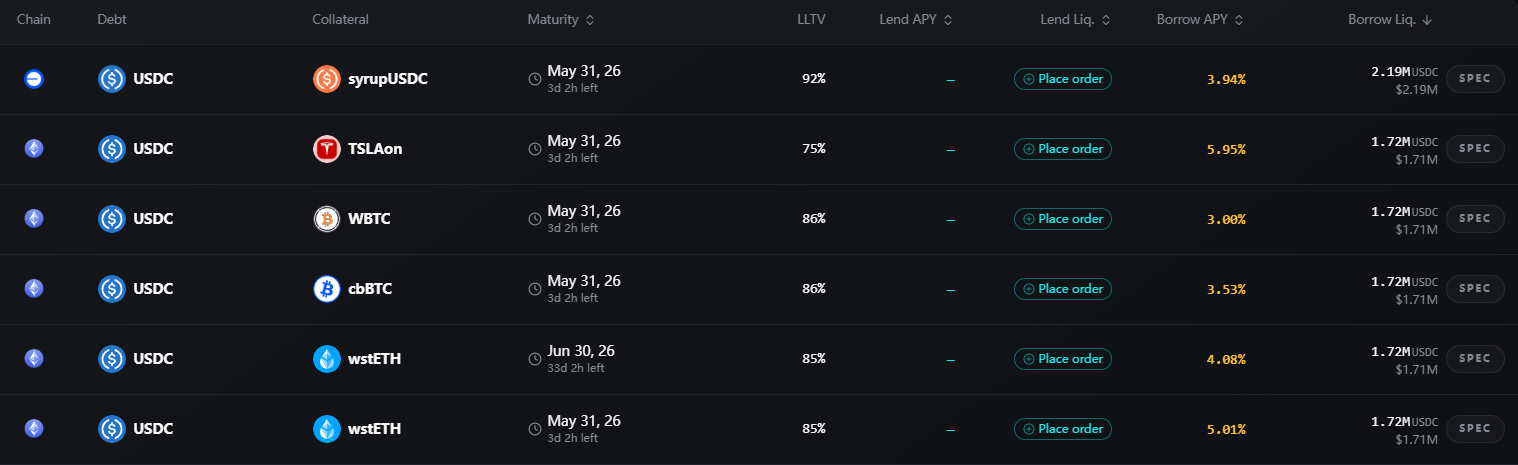
TermMax V2 Version Now Live

Specifically, V2 introduces Composable Base Yield, allowing Vaults to connect to ERC-4626 yield sources like Aave and Morpho, enabling idle funds that are not yet matched to generate base yield; Atomic Order allows the same liquidity to be listed in multiple markets simultaneously but can only be consumed once, thereby improving liquidity utilization; Order Aggregator automatically scans different order types to match users with better interest rate paths.

Additionally, V2 incorporates Smart Unwind and Alpha Zone. The former enhances the exit and fund recycling efficiency of debt positions, while the latter supports the more flexible creation of new markets. Overall, the focus of TermMax V2 is not on adding more complex features, but on making the fixed-rate lending market deeper in liquidity, more efficient in capital use, and simpler for users to operate.

Engagement Opportunities

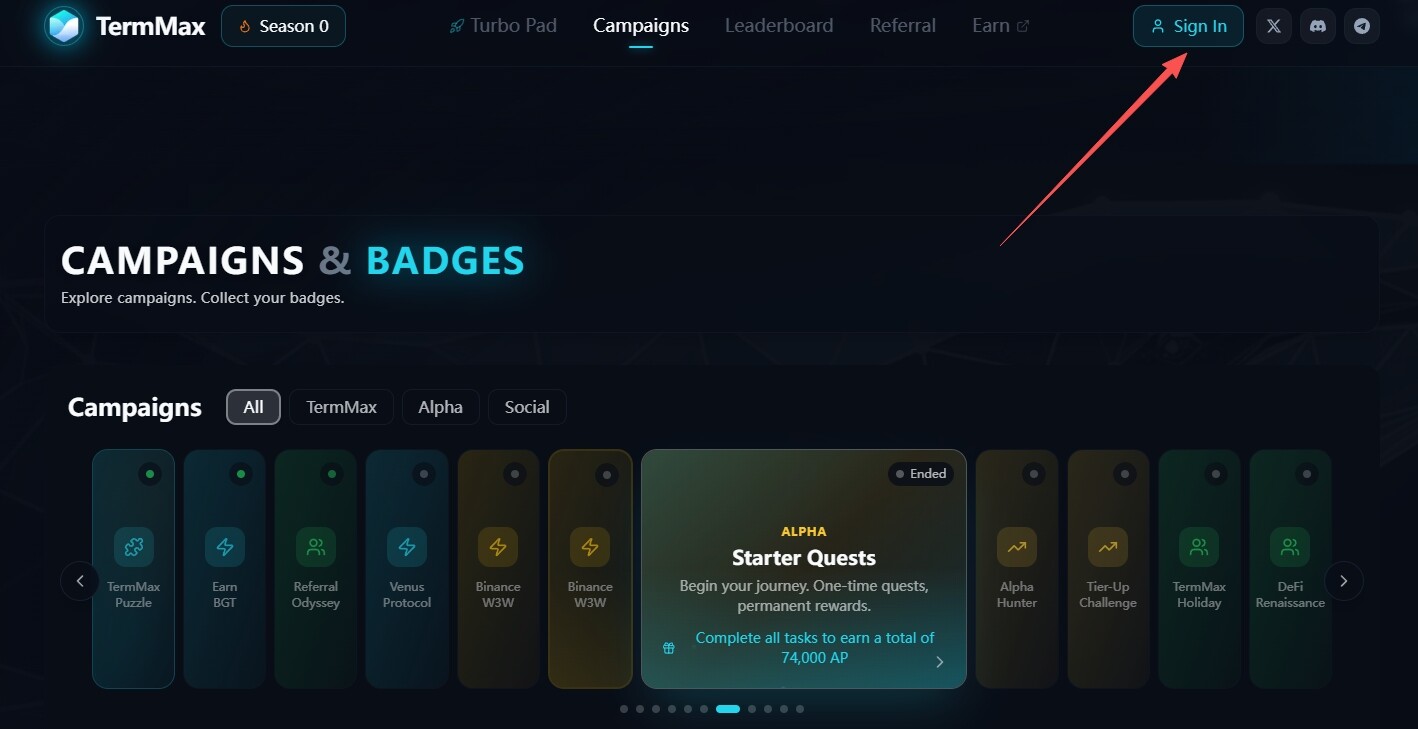
STEP 1. After entering the V2 version, click "Leaderboard" at the top to jump to the TermMax Season 0 event interface.

STEP 2. Click "Sign In" and connect your Web3 wallet to complete personal account login.
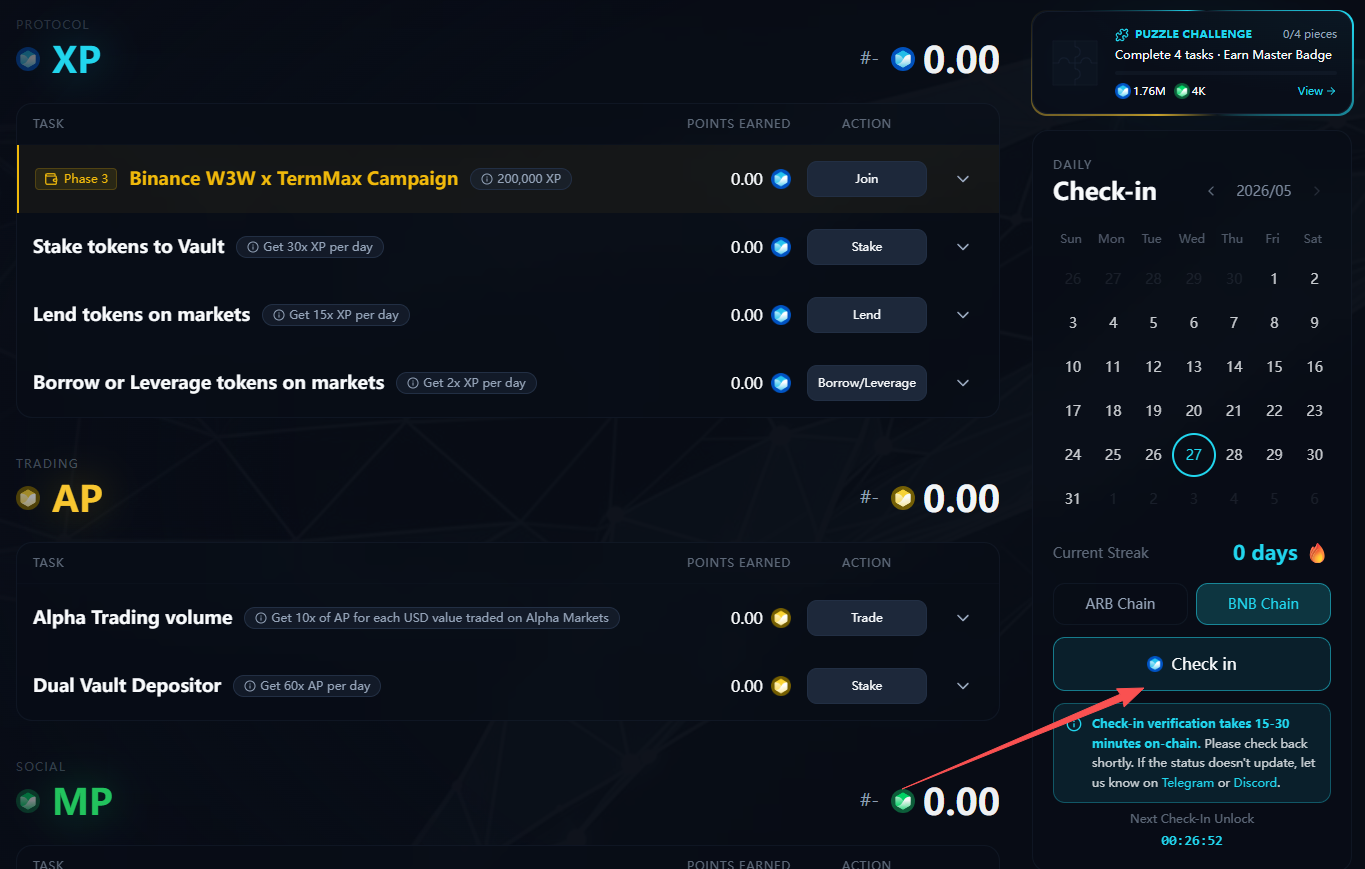
STEP 3. Complete daily check-ins (resets daily at 8 AM) to earn points.
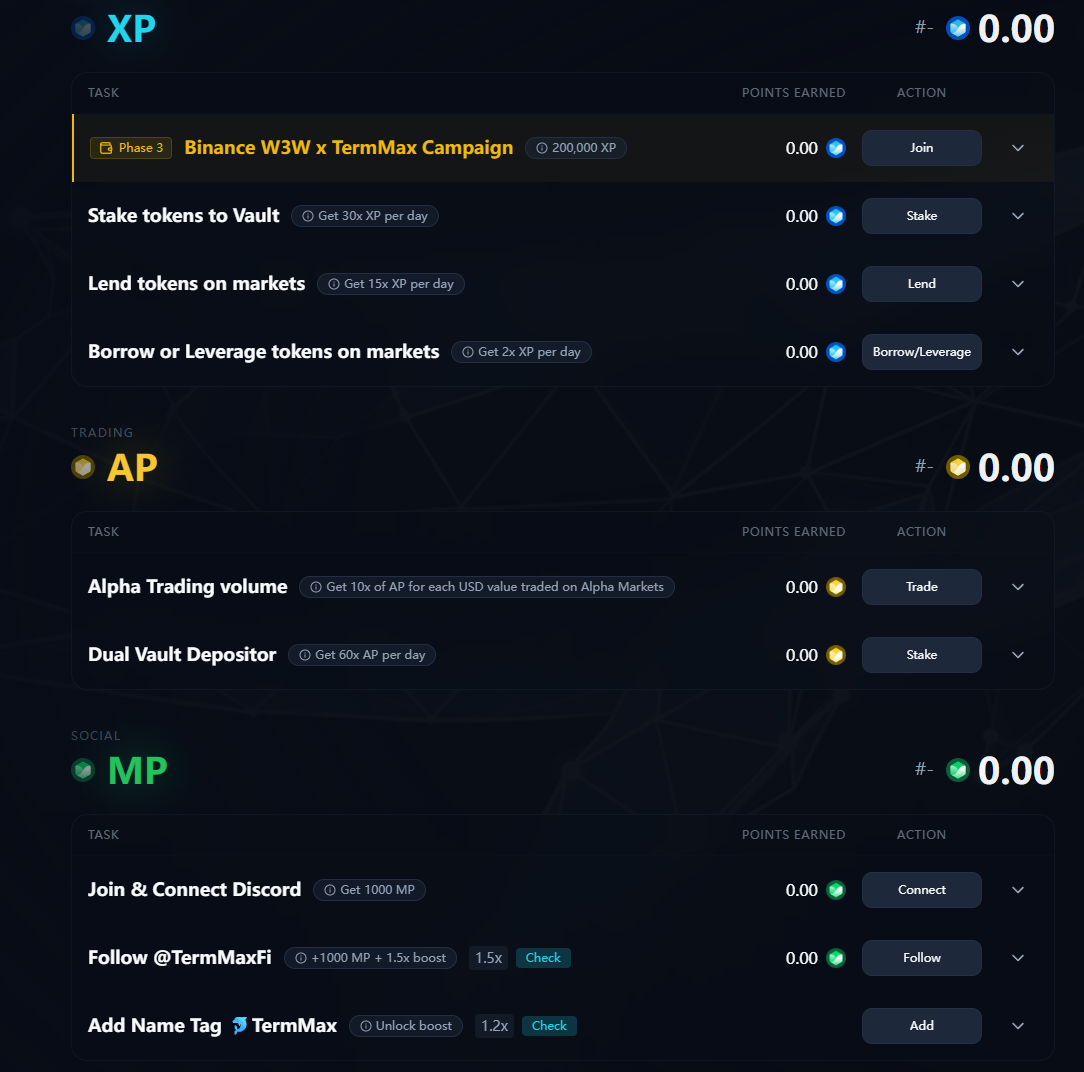
STEP 4. Points are divided into XP tasks (deposit-related), AP tasks (trade-related), and MP tasks (social-related). Complete the corresponding tasks according to the specified requirements to earn the respective point rewards.
Renaiss: Providing On-Chain Liquidity for Real-World Collectible Cards

Project Introduction
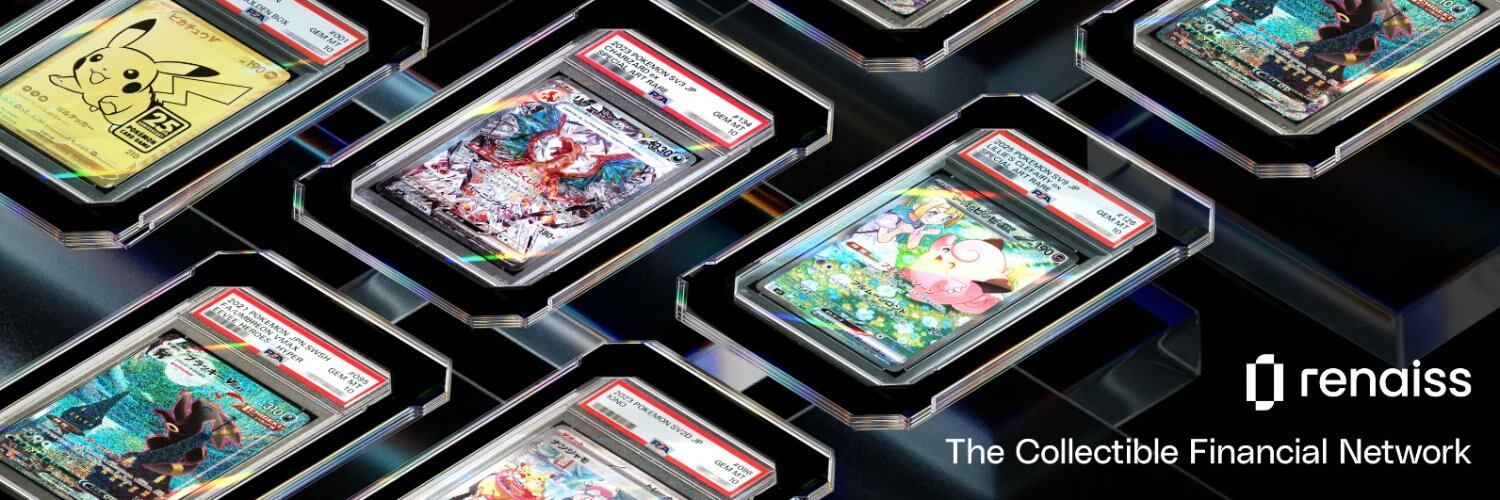
Renaiss is an RWA liquidity infrastructure project centered around real-world collectibles, focusing on collectible finance. Compared to common RWA categories like government bonds, stocks, and funds, Renaiss targets the more niche collectibles market, particularly real-world collectible assets such as trading cards and Pokémon cards. To date, Renaiss platform trading volume has exceeded $15 million.

Renaiss aims to address long-standing pain points in the real-world collectibles market, including high costs for physical custody and authenticity verification, opaque price data, fragmented trading liquidity, and difficulty in further financializing assets. The project uses on-chain ownership certificates, third-party custody, and data pricing systems to turn real-world cards and other collectibles into verifiable, tradable, and composable on-chain assets.

Renaiss enables more real-world collectibles to become verifiable, tradable, and usable in DeFi as on-chain assets. For example, once a high-value collectible card undergoes custody and on-chain mapping, it can not only be bought and sold but also has the potential to enter on-chain financial scenarios like staking and lending, ultimately becoming a protocol-layer project for real-world collectibles. This also distinguishes Renaiss from typical NFT projects. It does not reissue a batch of purely on-chain image assets but connects physically existing cards with established offline value and collector demand to the blockchain, allowing collectors to retain ownership of the physical asset while gaining higher liquidity on-chain.

Key Developments

On May 22, announced the launch of the Magma Pack series card packs, with a total of 1,000 packs. The top cards have a maximum value of up to $2,900, and they sold out on the same day.
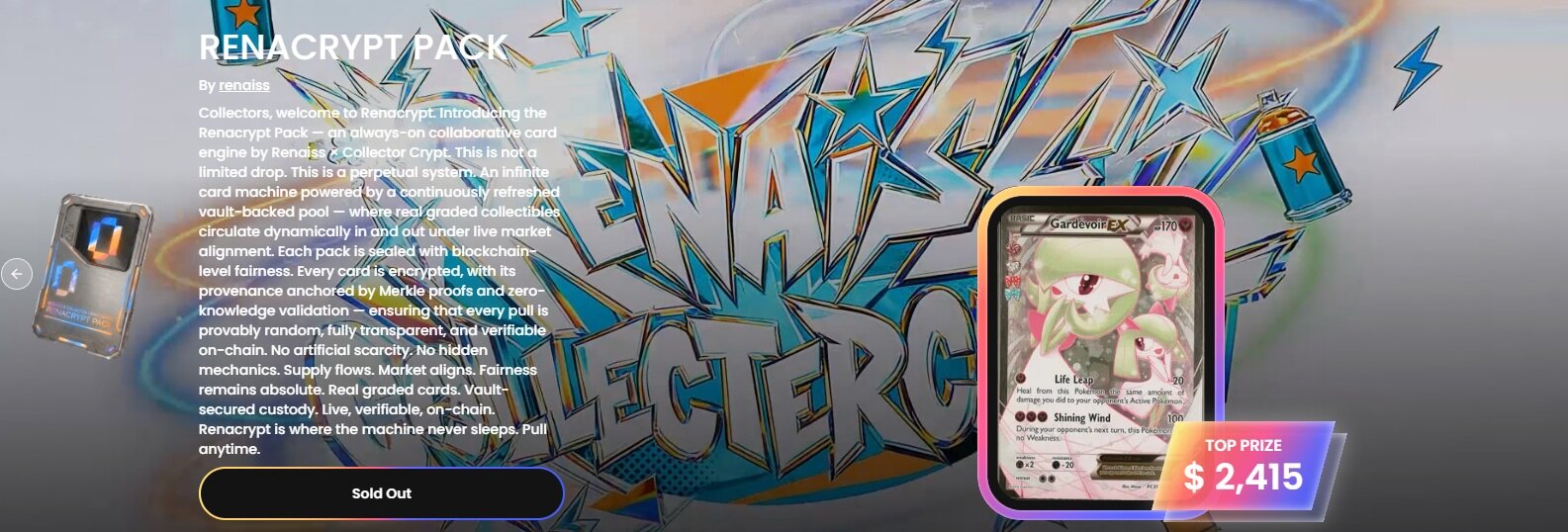
On May 26, announced the upcoming launch of the Eden Pack series card packs, themed around One Piece. The total number was not disclosed, but it includes over 100 top-grade cards.

Engagement Opportunities

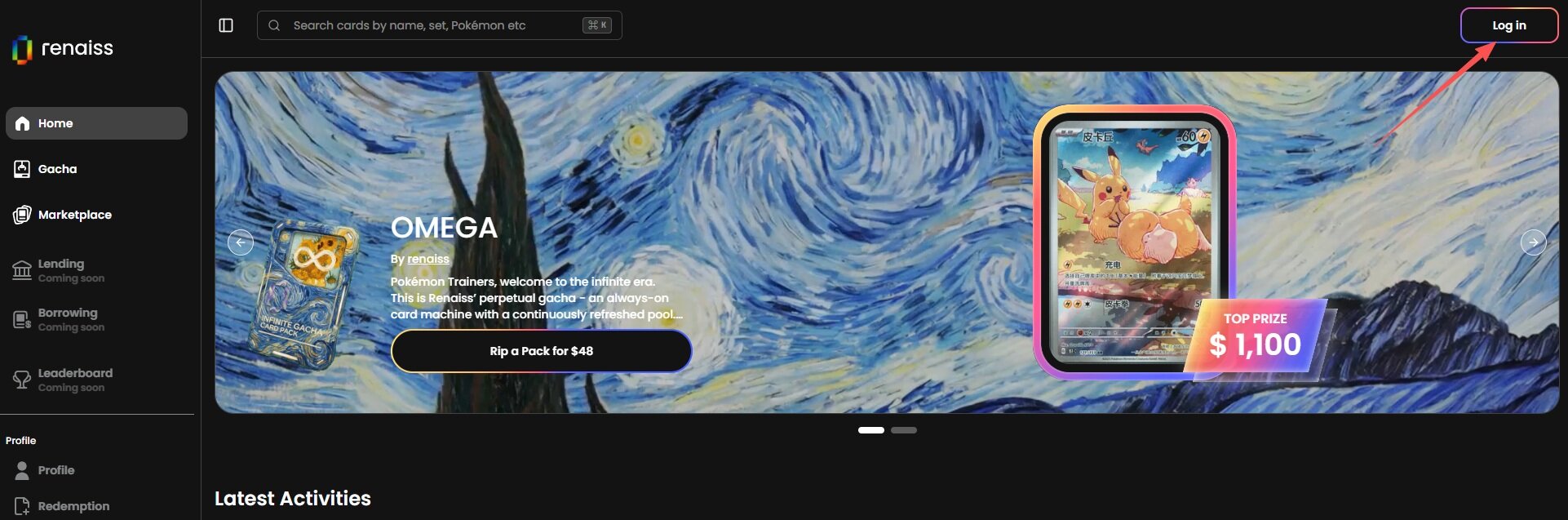
STEP 1. Go to the official website (link: https://www.renaiss.xyz/) and click "Log in" for personal account login.
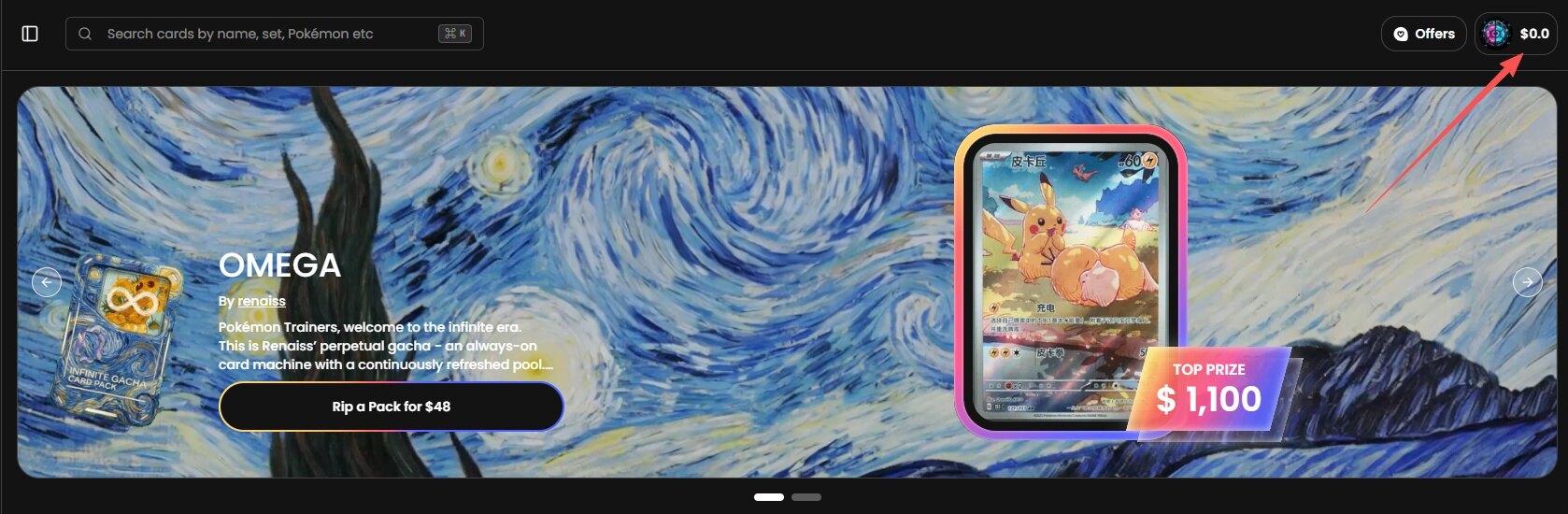
STEP 2. Click the avatar in the top right corner to deposit funds.
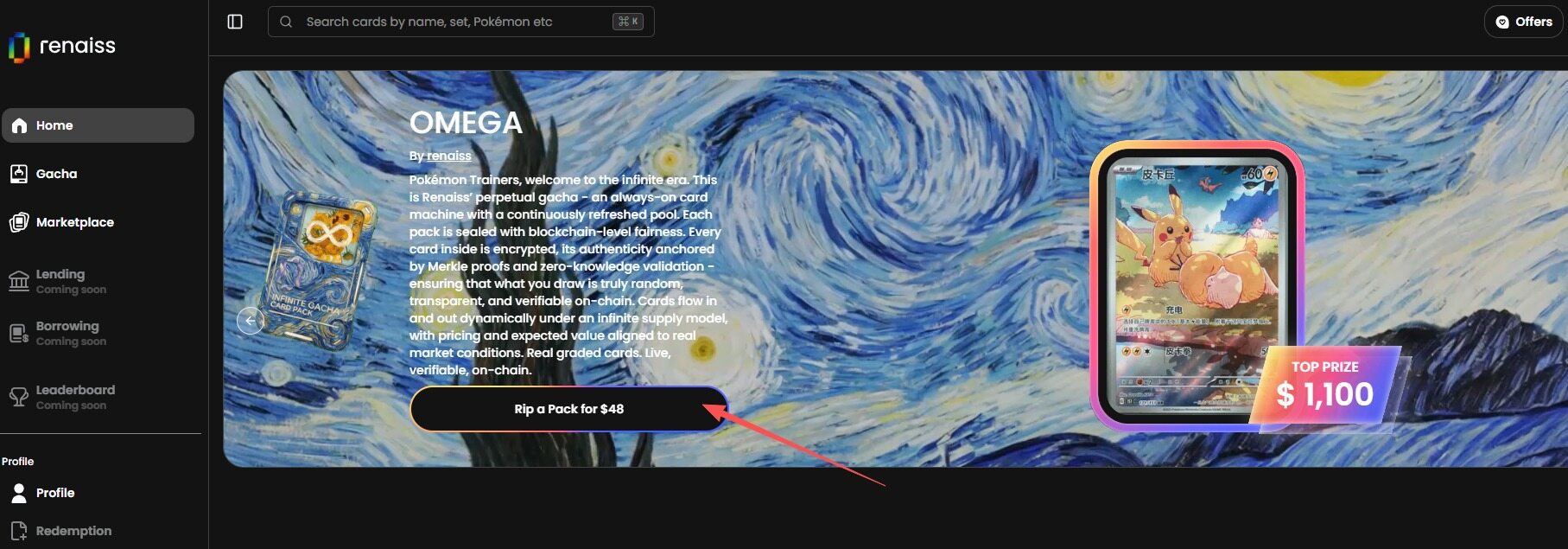
STEP 3. Click on the OMEGA card opening event on the homepage. Each card pack costs $48. There is a 90% chance of opening a C-grade card; a 7% chance for a B-grade card; a 2% chance for an A-grade card; and less than a 1% chance for an S-grade card.
Related Questions

QAccording to the article, what are the two projects incubated by YZi Labs that have seen a significant rise in popularity recently?

AAccording to the article, the two projects are TermMax, a fixed-rate lending protocol, and Renaiss, a platform for the financialization of real-world collectible card assets.

QWhat is the core problem TermMax V2 aims to solve, and what are the key new features introduced?

ATermMax V2 aims to address issues like fragmented liquidity, low utilization of idle funds, and inefficient order matching. Key new features include Composable Base Yield (integrating ERC-4626 yield sources like Aave), Atomic Order (allowing single liquidity to be listed across multiple markets), Order Aggregator (for better rate matching), Smart Unwind (for efficient position exit), and Alpha Zone (for flexible market creation).

QHow does Renaiss differentiate itself from typical NFT projects?

ARenaiss differentiates itself by not minting purely digital art assets. Instead, it focuses on bringing real-world collectible assets (like trading cards) with existing offline value and demand onto the blockchain through custody, verification, and on-chain representation. This allows owners to retain physical ownership while gaining enhanced on-chain liquidity and enabling potential DeFi use cases like staking or lending.

QWhat are the three types of points (and their corresponding tasks) users can earn in TermMax's Season 0 activity?

AIn TermMax's Season 0 activity, users can earn three types of points: XP points from deposit-related tasks, AP points from trading-related tasks, and MP points from social-related tasks.

QWhat specific feature did TermMax launch on BNB Chain in January 2026 to connect fixed-rate lending with the RWA sector?

AIn January 2026, TermMax launched a fixed-rate lending market on BNB Chain that supports Ondo tokenized stock as collateral, allowing users to borrow funds without selling their tokenized stock assets.

Related Reads

When Vitalik Stops Blogging to Write Sci-Fi

Vitalik Buterin, founder of Ethereum, has announced a pause in his long-form technical blogging to instead write a science fiction novel exploring decentralized governance. The story, set in a fictional nation called Veridia, follows a member of a governance body that uses complex systems like quadratic voting, privacy-preserving audits, and AI-assisted decision-making to guide society through incentive structures rather than outright bans. This creative shift comes at a pivotal moment for the Ethereum ecosystem. The Ethereum Foundation has seen significant internal upheaval in 2026, with at least nine core contributors, including key protocol leaders, departing. Just days before his announcement, Vitalik published a statement addressing this turbulence, framing the Foundation as a "smaller ship" that will now focus on core principles like censorship resistance and security, while moving from a growth-oriented to a sustainability-focused organization. The novel's themes directly mirror Vitalik's long-standing technical interests in governance mechanisms. Community reactions are mixed: some see it as a thoughtful exploration of ideas through narrative, while others view the timing—amidst core team departures and a significant drop in ETH's price—as pointedly symbolic. The move is also interpreted as a personal transition, signaling Vitalik's evolving role from a central executive figure to one of many decentralized thought leaders within the Ethereum ecosystem.

marsbit14m ago

When Vitalik Stops Blogging to Write Sci-Fi

marsbit14m ago

Morning News | Coinbase Partners with Standard Chartered to Expand Multi-Currency Fiat Channels; Sharplink and Forward to be Included in Russell Indices; JPMorgan May Issue Stablecoin in the Future

Daily Crypto Recap: Key Developments Institutional adoption continues: Coinbase partners with Standard Chartered to expand multi-currency fiat rails for institutions via Coinbase Prime, supporting AUD, SGD, CAD, CHF, EUR, and GBP. Meanwhile, Sharplink and Forward Industries, companies holding significant ETH and SOL reserves respectively, are set to be included in the Russell indexes, providing indirect crypto exposure to traditional index investors. Regulatory and compliance moves are in focus. Hong Kong's monetary authority announced new measures for investment accounts of mainland Chinese investors, including retroactive document checks to January 2023. Prediction market Polymarket is considering implementing KYC requirements to address sanctions and legal risks. Major financial players signal deeper involvement. JPMorgan Chase CEO Jamie Dimon suggested the bank might issue a stablecoin in the future. Concurrently, Falcon Finance and Anchorage Digital launched fUSD, a compliant, institution-focused stablecoin. Market sentiment presents a mixed picture. Bitmine's Tom Lee predicts an incoming crypto "supercycle," driven by Wall Street tokenization and AI agents, with Ethereum as a key beneficiary. However, a prominent trader cautions that the current period of investor losses may not be long enough to confirm a bear market bottom, and TD Cowen analysts note diminished chances for U.S. crypto market structure legislation this year due to a worsening political climate. Other notable news includes a16z crypto's observation that most tokenized assets are merely "digitized" and not actively used in DeFi, South Korea's crypto trading volume falling to about 8% of KOSPI's, and the Chinese Supreme Court stating it will research judicial rules for virtual currency cases.

链捕手1h ago

Morning News | Coinbase Partners with Standard Chartered to Expand Multi-Currency Fiat Channels; Sharplink and Forward to be Included in Russell Indices; JPMorgan May Issue Stablecoin in the Future

链捕手1h ago

Sitting on a Trillion-Dollar Market, Why Hasn't Real Estate Tokenization Taken Off?

For years, real estate tokenization has been hailed as a breakthrough technology poised to democratize property investment. In theory, it promises fractional ownership of premium assets, rapid transactions, and enhanced liquidity. Yet, in practice, it has failed to gain traction, accounting for less than 0.1% of the global real estate market. The core issue is not a lack of tokens, but the absence of a robust legal, operational, and compliant framework that grants them credibility as financial instruments. The industry initially erred by prioritizing technology over investor needs, creating products with unclear ownership and unreliable liquidity. Key infrastructure remains missing: legally sound ownership structures, compliant transfer mechanisms, professional servicing, and interoperability with traditional finance. This regulatory ambiguity and operational complexity deter institutional investors, who already have access to established, well-governed investment channels. A mature model would feature low minimum investments in institutional-grade assets, transparent rental income distribution, and genuine liquidity through regulated secondary markets. While regulatory progress in regions like the UAE and growth in other tokenized asset sectors (like treasuries) are positive signs, the focus must shift from issuing tokens to building foundational systems. The investment proposition of tokenized real estate is not to create new returns, but to improve access, efficiency, and liquidity for existing income-generating properties. For mainstream adoption, the sector must demonstrate tangible economic advantages over traditional models, not just technical novelty. The next phase depends on proving scalable, compliant operations with auditable track records. The barrier is no longer technology, but infrastructure and regulation. The vision remains unfulfilled until this gap is bridged.

marsbit1h ago

Sitting on a Trillion-Dollar Market, Why Hasn't Real Estate Tokenization Taken Off?

marsbit1h ago

Trading

Spot
Futures
活动图片