Developer Harbor: Hong Kong's New Opportunities in the AI Era (Beijing Station) Concludes Successfully, Ushering in a New Journey for Alpha Builders

marsbitPublished on 2026-03-12Last updated on 2026-03-12

Abstract

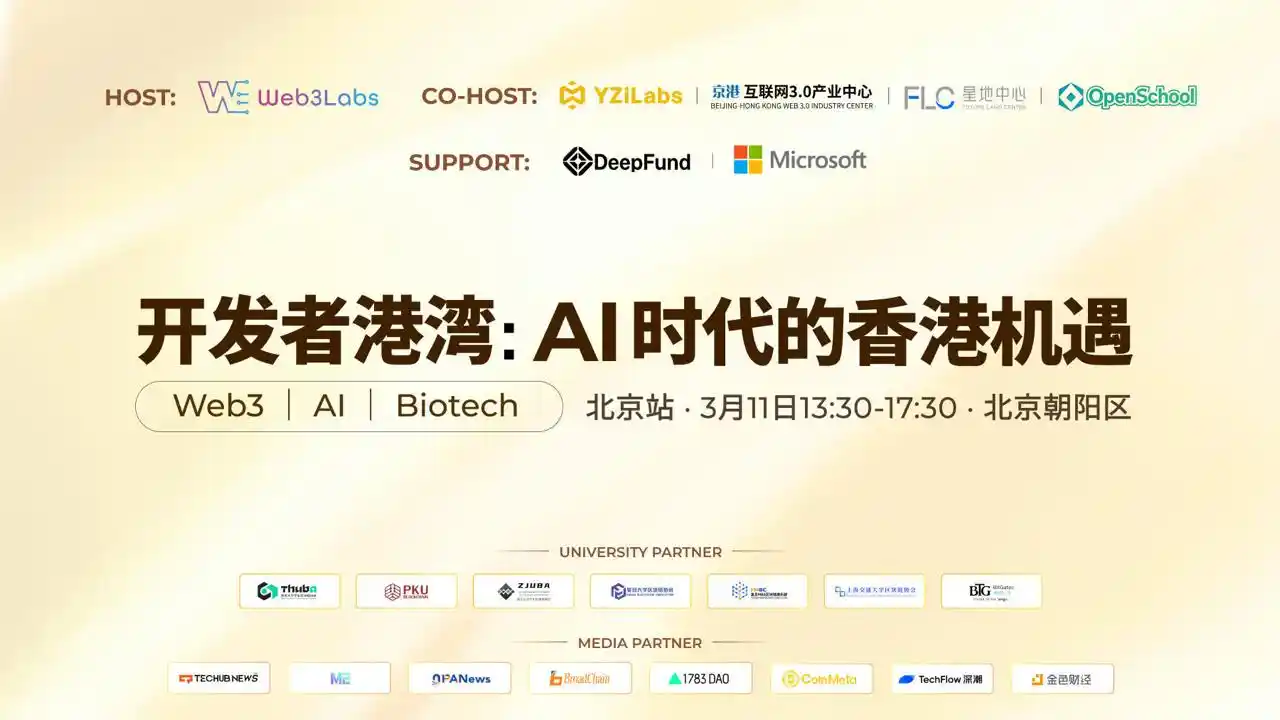
On March 11, 2026, the "Developer Harbor: Hong Kong's New Opportunities in the AI Era (Beijing)" event, co-hosted by Web3Labs and YZi Labs, was successfully held at StarLand Center in Beijing. The event brought together over a hundred builders from universities and tech organizations across China to explore Hong Kong's role as an international tech innovation hub in the AI age. The event featured opening remarks from government representatives, including officials from Beijing and Hong Kong, who emphasized the strategic synergy between the two cities in tech innovation, talent mobility, and industrial collaboration. A representative from the Hong Kong government also introduced talent admission policies to support mainland tech professionals seeking opportunities in Hong Kong. Web3Labs CEO Caspar Wong delivered a keynote, arguing that the convergence of AI and Web3 lies at the protocol layer rather than the application layer, with future investment logic focusing on composable, verifiable, and operational infrastructure of real value. A major highlight was the introduction of the "Alpha Builders Innovation Recruitment Program," an initiative by Web3Labs and YZi Labs aimed at identifying and empowering China’s most promising tech builders. Seven teams from top universities such as Tsinghua, Peking, Fudan, and Zhejiang presented projects spanning AI agents, Web3 infrastructure, biocomputing, and privacy computing. Selected teams will gain access to mentorship, ecosystem reso...

On March 11, 2026, "Developer Harbor: Hong Kong's New Opportunities in the AI Era," hosted by Web3Labs and YZi Labs, and co-hosted by the Beijing-Hong Kong Web3.0 Industrial Center, Star Land Center, and OpenSchool, was successfully held at the Star Land Center in Chaoyang District, Beijing. The event brought together over a hundred builders from innovative teams at universities nationwide and industry organizations to jointly explore the new opportunities for Hong Kong as an international hub for technological innovation in the AI era.

🔹 Twin-City Collaboration, Building an Innovation Bridge

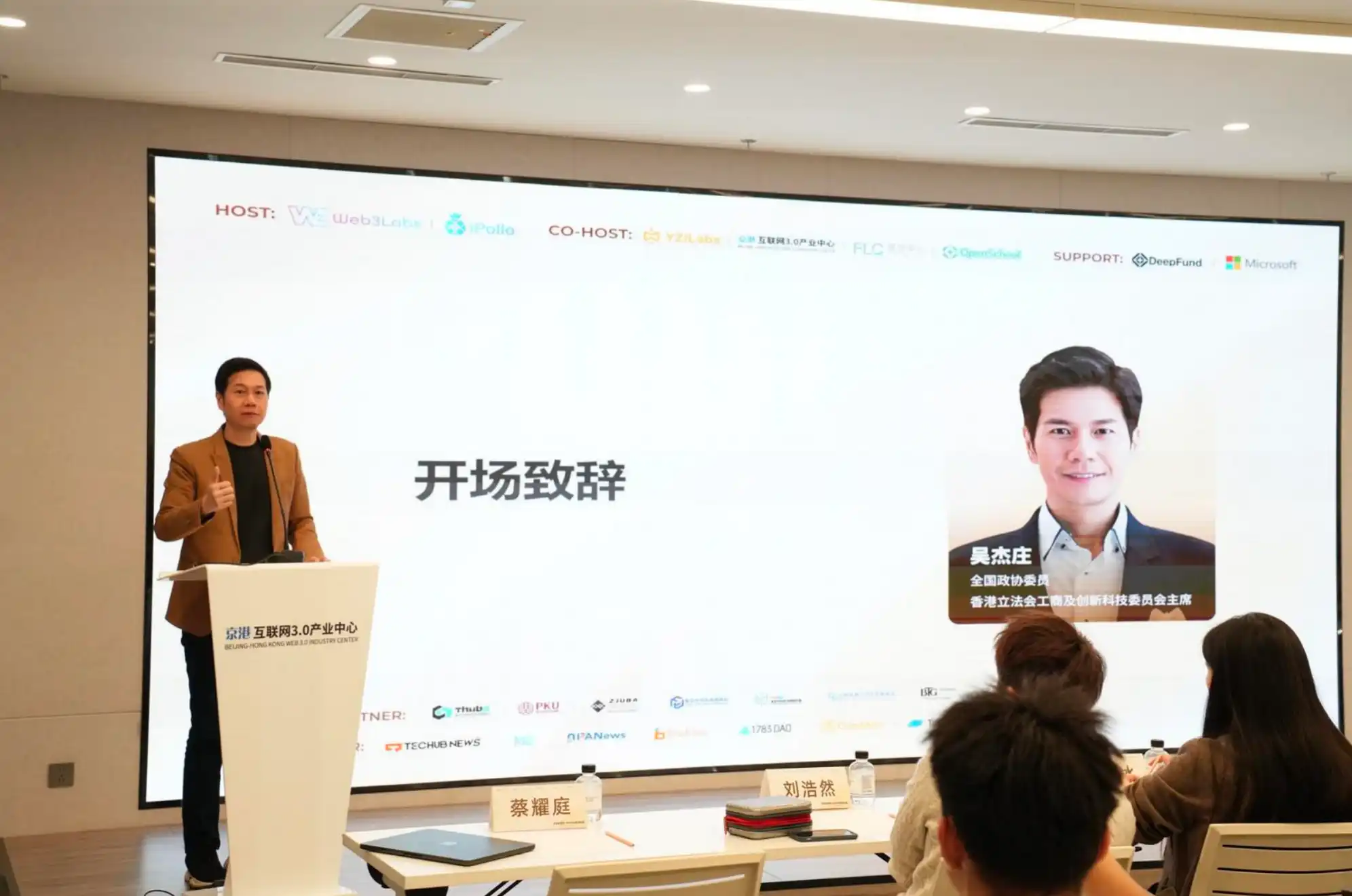
The event gathered over a hundred innovators from universities and cutting-edge technology fields across the country, witnessing a complete ecosystem from policy empowerment to technology implementation. The event kicked off with joint opening remarks by Chen Lei, Member of the Party Working Committee and Deputy Director of the Management Committee of Zhongguancun Chaoyang Park, and Dr. Wu Jiezhuang, Member of the National Committee of the Chinese People's Political Consultative Conference and Chairman of the Hong Kong Legislative Council's Commerce, Industry, and Technology Innovation Committee. Both guests emphasized the strategic complementarity between Beijing and Hong Kong in technological innovation, talent mobility, and industrial collaboration, injecting confidence into the joint building of a world-class innovation ecosystem between the two cities.
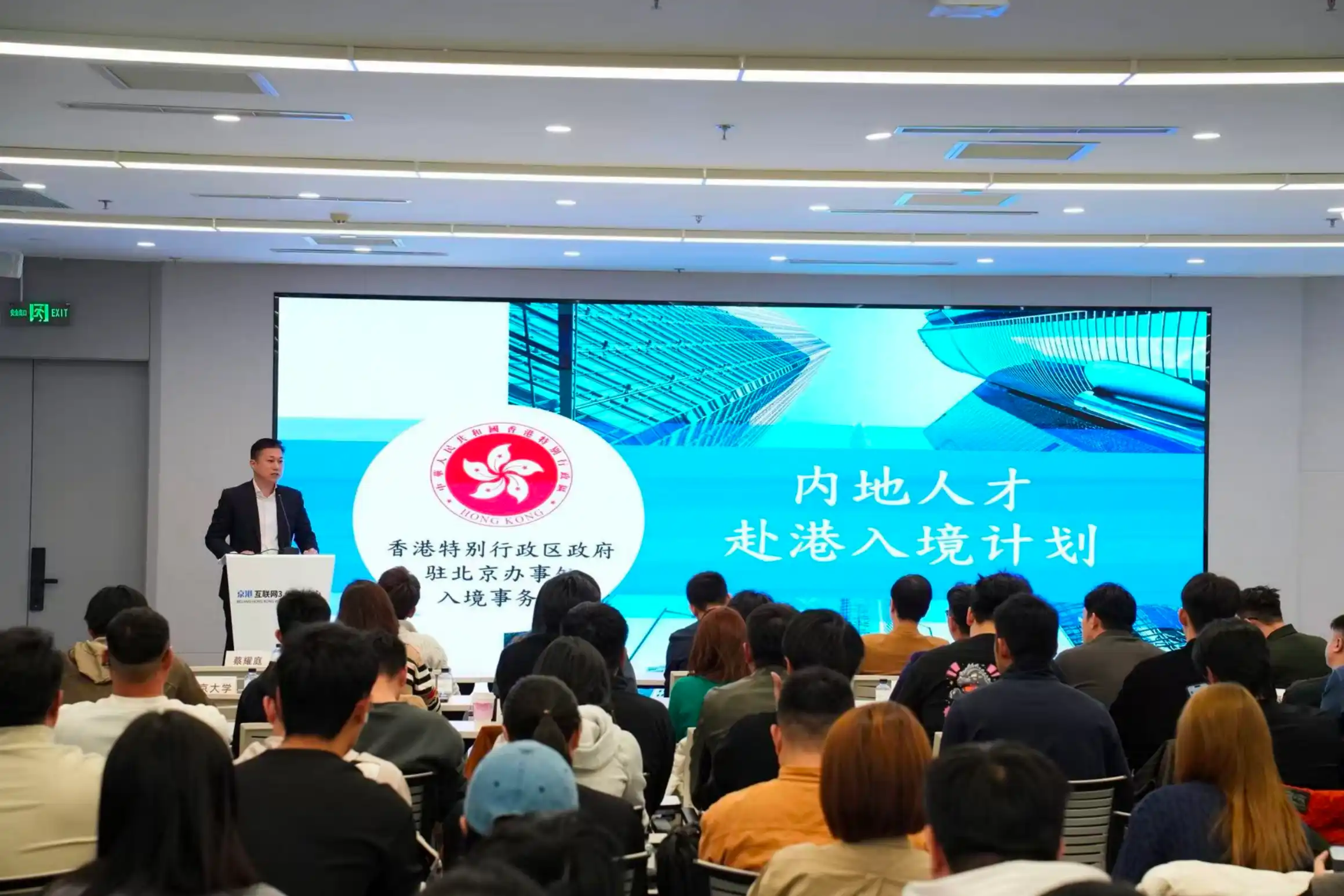
Subsequently, Huang Weiqi, Chief Affairs Director of the Hong Kong Special Administrative Region Government's Beijing Office, systematically interpreted the "Mainland Talent Admission Scheme for Hong Kong," providing detailed explanations of application channels, support measures, and development paths in Hong Kong, offering clear policy guidance for tech talents interested in cross-border development.
Web3Labs CEO Caspar Wong delivered a keynote speech, proposing that "the convergence of AI and Web3 lies not at the application layer but at the protocol layer," and revealing that the next generation of investment logic will focus on composable, verifiable, and operational real-value infrastructure.

🔹 Alpha Builders Gather for the First Time, Showcasing Their Potential

The core highlight of "Developer Harbor: Hong Kong's New Opportunities in the AI Era (Beijing Station)" was undoubtedly the debut of the innovative teams under the "Alpha Builders Innovator Recruitment Plan." This plan, jointly launched by Web3Labs and YZi Labs, aims to discover and empower China's most promising next-generation technical builders (Builders), bridging the critical path from campus innovation to global ecosystem implementation.

At the event, seven cutting-edge innovative teams from top domestic universities such as Tsinghua University, Peking University, Fudan University, and Zhejiang University took the stage to showcase their projects, covering frontier interdisciplinary fields such as AI agents, Web3 infrastructure, biocomputing, and privacy computing. These teams not only possess solid engineering capabilities but also demonstrate a deep understanding of "real-world problems"—a vivid reflection of the "value-driven innovation"理念 advocated by both parties.
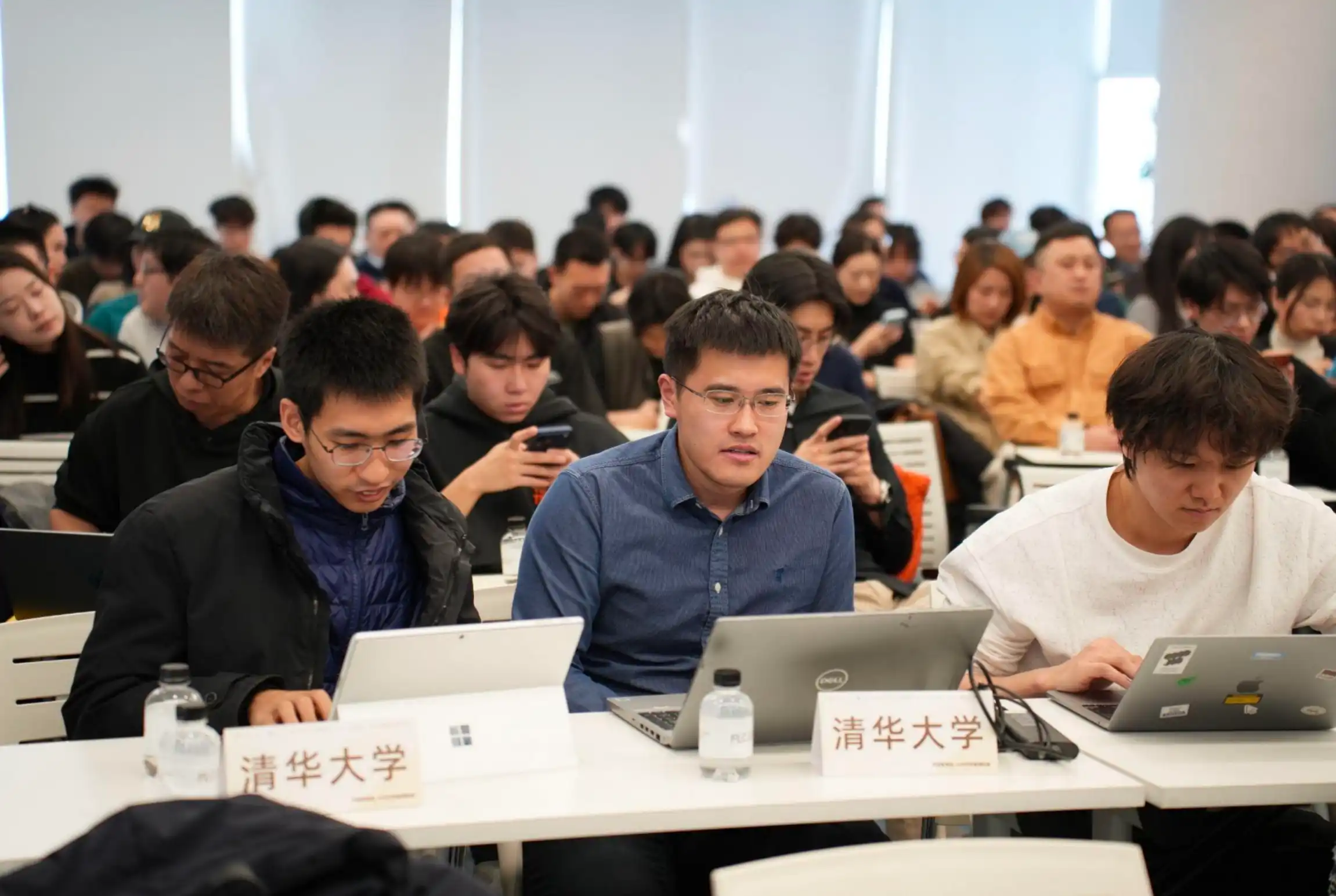
As a globally leading Web3 investment and incubation platform, Web3Labs, in collaboration with YZi Labs, is seeking builders who use technology to solve real-world challenges in Web3, AI, Biotech, and more." This Alpha Builders plan is a practical implementation of this vision—selected teams will have the opportunity to enter the interview process for the EASY Residency program launched by YZi Labs, receiving technical guidance, ecosystem resource connections, and early-stage funding support to accelerate their journey from prototype to product.

From campus laboratories to the international stage, Alpha Builders are constructing a high-speed channel for "youth innovation power × global Web3 ecosystem." This may well be the most anticipated answer to shaping the future in the AI era.
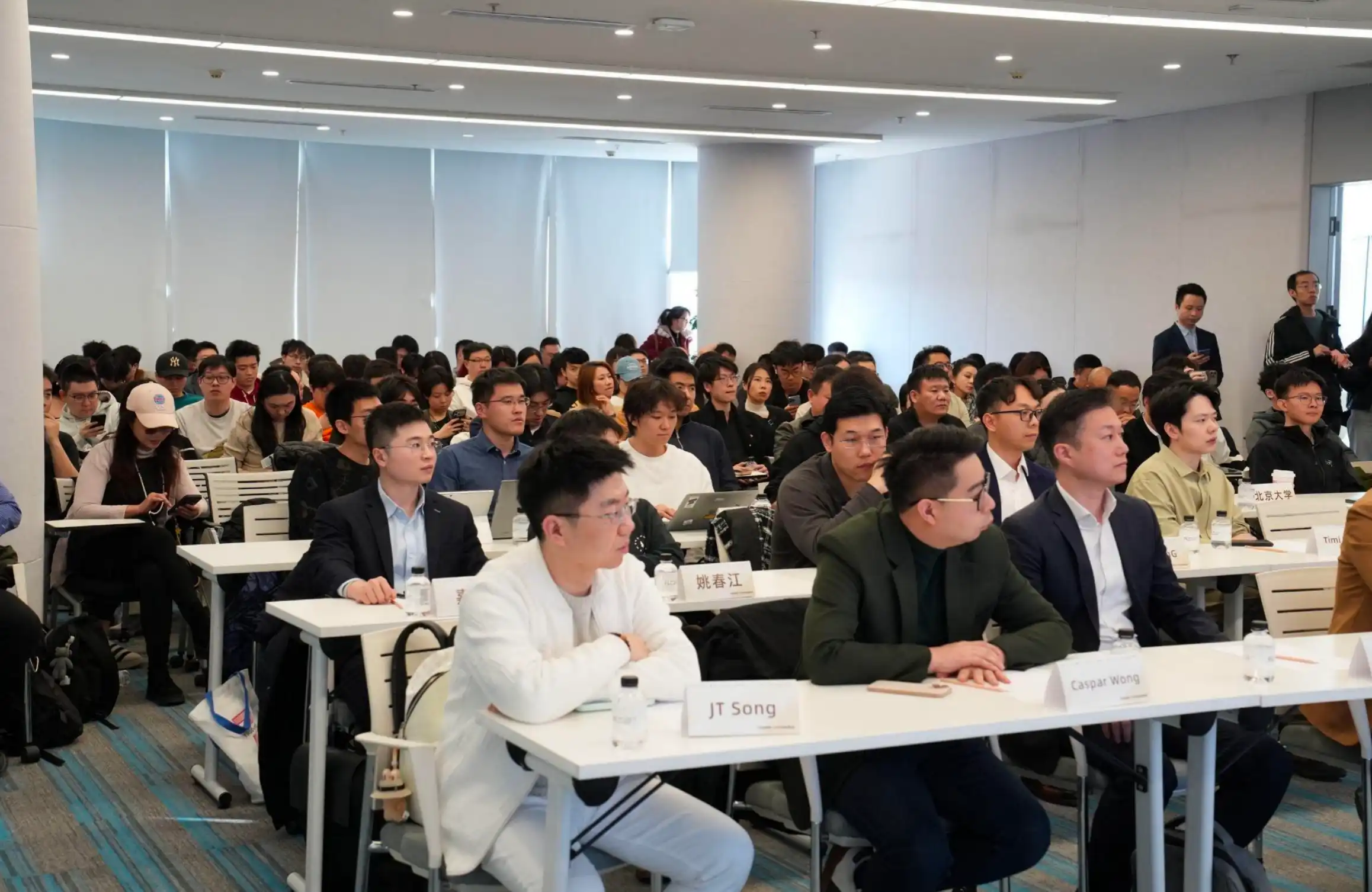
As AI and Web3 reshape the global technological landscape, Hong Kong, with its open system, international ecosystem, and forward-looking policies, is becoming a key hub connecting outstanding innovative forces with the world stage. Web3Labs will continue to collaborate with YZi Labs to discover those Alpha Builders who dare to build, jointly creating a more real, intelligent, and composable digital future.


Related Questions

QWhat was the main theme of the 'Developer Harbor: Hong Kong's New Opportunities in the AI Era (Beijing Station)' event?

AThe main theme was exploring Hong Kong's new opportunities as an international technology and innovation hub in the AI era, with a focus on the 'Alpha Builders' initiative to empower the next generation of technical builders.

QWhich organizations co-hosted the event in Beijing?

AThe event was hosted by Web3Labs and YZi Labs, and co-hosted by the Beijing-Hong Kong Web3.0 Industrial Center, Star Land Center, and OpenSchool.

QWhat did Web3Labs CEO Caspar Wong propose in his keynote speech regarding AI and Web3?

AHe proposed that 'the convergence of AI and Web3 is not at the application layer, but at the protocol layer,' and revealed that the next generation of investment logic will focus on composable, verifiable, and operational real-value infrastructure.

QWhat is the purpose of the 'Alpha Builders Innovation Recruitment Program'?

AThe program aims to discover and empower China's most promising next-generation technical builders (Builders), providing a pathway from campus innovation to global ecosystem implementation, including technical guidance, resource connections, and early funding support.

QFrom which top Chinese universities did the innovative teams participating in the Alpha Builders program come from?

AThe teams came from top universities including Tsinghua University, Peking University, Fudan University, and Zhejiang University.

Related Reads

Following US Ban on Fable 5, Zhipu AI's Stock Soars 47%

On June 15th, shares of Zhipu AI surged dramatically on the Hong Kong stock market, peaking at a 47.6% gain before closing 32.82% higher. This sharp increase was directly triggered by two recent industry events. On June 12th, Anthropic announced it was suspending global access to its latest flagship models, Claude Fable 5 and Claude Mythos 5, to comply with a U.S. government export control order. The next day, Zhipu AI announced it would open access to its latest open-source flagship model, GLM-5.2, under the permissive MIT license. The Anthropic incident highlighted a critical issue beyond raw model capability: the risk of sudden, unpredictable loss of access to advanced AI models, especially for developers and enterprises deeply integrated with them. This has shifted industry and market focus toward factors like stability, sustainable access, and controllability. Zhipu's move, promoting "frontier intelligence for all," positions its openly available model as a reliable and accessible alternative. The GLM-5.2 model emphasizes "Long Horizon Task" capabilities with a 1M context window, targeting complex, multi-step coding and engineering workflows where maintaining context is crucial. Analysts note this event exposes the risk of dependency on closed-source models subject to single jurisdictional controls, potentially accelerating a shift toward domestic base models and localized deployments. The market's reaction signals a new valuation dimension in AI: providers who can offer stable, long-term, and sustainably accessible AI capabilities are gaining strategic importance.

marsbit26m ago

Following US Ban on Fable 5, Zhipu AI's Stock Soars 47%

marsbit26m ago

Fully Entering the AI Era: Alipay Bets on Conversation, WeChat Holds Fast to Social

In May 2026, Alipay announced over 300 million AI payment transactions. Shortly after, WeChat opened its mini-programs for AI integration, sparking controversy by requiring developer source code access. This highlights their diverging approaches to AI integration. Alipay is testing "Project Treasure," an optional AI-native interface replacing traditional app grids with a conversational window. Users can command complex tasks (e.g., "book a ride and order coffee") handled end-to-end by AI. This shift follows an abandoned standalone AI app, focusing instead on enhancing its existing user base. For unmodified mini-programs, Alipay's AI uses "screen-reading" to simulate user interactions, bypassing the need for developer overhaul. It also introduced "Token Pay" for micro-transactions and "AI Wallets" for autonomous agent spending. WeChat, prioritizing its core social function, is taking an embedded approach. Its AI agent will operate within existing contexts like group chats and official accounts, assisting without a separate interface. To enable this, WeChat offers developers two paths: granting source code access for direct AI control ("Automatic Mode") or manually encapsulating services into standardized "Skills." Both place significant burden on developers. Key differences emerge in handling legacy services: WeChat demands developer cooperation (code or labor), while Alipay's screen-reading offers immediate, if potentially less stable, compatibility. Alipay's 3 billion AI transactions demonstrate user acceptance of AI-driven commercial actions. The divergent strategies may reshape mini-program ecosystems—Alipay passively "AI-fying" services, WeChat potentially favoring resource-rich developers—and set competing technical standards. Ultimately, the competition centers on where users entrust the command to "help me get things done."

marsbit26m ago

Fully Entering the AI Era: Alipay Bets on Conversation, WeChat Holds Fast to Social

marsbit26m ago

Trading

Spot
Futures

Hot Articles

Ethena: Building a New Era of Web3‑Native Digital Dollars

Ethena is an Ethereum‑based synthetic dollar protocol that delivers crypto‑native monetary solutions, including USDe, a synthetic dollar, and sUSDe, a globally accessible U.S. dollar savings asset.

53.2k Total ViewsPublished 2026.03.16Updated 2026.03.16

Ethena: Building a New Era of Web3‑Native Digital Dollars

Discussions

Welcome to the HTX Community. Here, you can stay informed about the latest platform developments and gain access to professional market insights. Users' opinions on the price of ERA (ERA) are presented below.

活动图片












